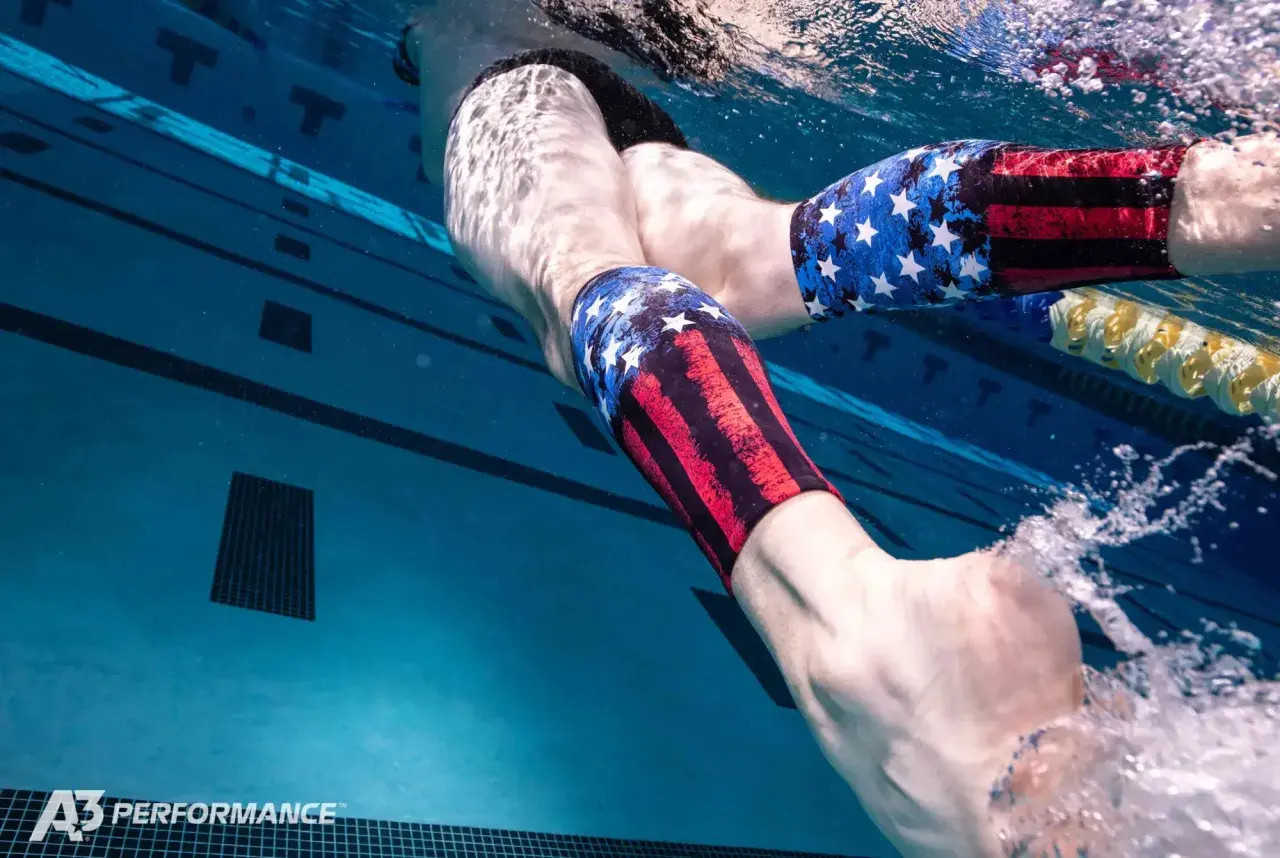
Foot cramps in the pool usually come from a mix of muscle fatigue, a hard pointed-foot position, and not quite enough fluid or recovery. In practice, I look first at how hard the kick was, how tight the calves and ankles felt before the set, and whether the swimmer had been under-fuelled or under-hydrated earlier in the day. This article breaks down the most likely causes, what the cramp is actually doing, what to do the moment it starts, and how to keep it from coming back.
The quickest fix is usually a better warm-up, better hydration, and a less aggressive foot position
- Pool cramps usually hit the sole of the foot, toes, or calf because those muscles are working hard during kicking and push-offs.
- Fatigue, tight calves, dehydration, and sometimes cold water are the most common triggers.
- When a cramp starts, stop hard kicking, pull the toes up toward the shin, and stretch the muscle gently.
- For longer or harder sessions, a useful hydration benchmark is about 500 ml two hours before training, 125-250 ml just before, and 125-200 ml every 15 minutes during exercise.
- Recurrent cramps, numbness, swelling, or cramps lasting longer than 10 minutes deserve a medical check.
What is actually cramping when your foot seizes up
A foot cramp is a sudden, involuntary contraction of the small muscles in the foot, often with help from the calf. When you swim, the ankle spends a lot of time in plantarflexion, which is the pointed-foot position used in streamline, flutter kick, dolphin kick, and many turn exits. That position is efficient, but it also keeps the foot and lower leg under constant tension.
The NHS notes that cramps in the feet or calves can last from a few seconds to 10 minutes, and the muscle may feel sore for up to 24 hours afterwards. That is why the cramp itself is only part of the problem; the aftermath can make the rest of the session feel awkward and weak. Once you understand that, the next question is not just what hurts, but why swimming makes that muscle seize in the first place.
The pool-specific triggers I would check first
Swimming.org’s masters advice points out that cramp often follows a fatigued freestyle kick or a turn, which matches what I see most often in the pool. The muscle is already working close to its limit, then the next push-off, sprint, or tight streamline asks for a little more than it has left. That is why foot cramps often appear in the middle of a hard set, not during an easy warm-up.
| Trigger | Typical clue | Why it sets off the cramp | What I would change |
|---|---|---|---|
| Fatigue from kicking or turns | The cramp appears late in a set or after repeated push-offs | The foot and calf are already tired when the next effort arrives | Reduce kick volume, add more rest, and build intensity more gradually |
| Hard pointed-foot position | The sole, arch, or toes cramp during streamline or underwater work | The ankle stays in a loaded position for too long | Relax the ankle between efforts and stop over-pointing the toes |
| Dehydration or electrolyte loss | You feel flat, thirsty, or unusually heavy in the legs as well | Muscles are less tolerant of repeated contraction when fluid balance slips | Drink before, during, and after longer sessions |
| Cold water | The cramp shows up in an early set or in a chilly pool | Cold muscle tissue is slower to relax and can feel more reactive | Warm up longer and ease into fast kicking |
| Tight calves and limited ankle mobility | Your feet feel rigid when you try to point or flex them | The calf-foot chain has less room to absorb load | Work on calf mobility and ankle range outside the pool |
My blunt take is this: I would not blame electrolytes first every time. In many swimmers, the problem starts with fatigue and a loaded foot position, then hydration makes it worse or better depending on how prepared you are. That matters because it changes what you fix first, and that is what the next section is about.
What to do the moment it starts
Once the cramp hits, the goal is simple: stop making the muscle fight you. The more you try to sprint through it, the more the foot and calf can lock down.
- Slow down immediately and get to the wall, lane line, or pool edge safely.
- Pull the toes up toward the shin to stretch the cramped muscle.
- If it is the calf, straighten the leg gently and hold a steady stretch.
- Massage the arch or calf lightly if you can do so without losing balance.
- Breathe normally and wait for the muscle to release before swimming on.
- If the cramp is severe, the leg feels weak, or you cannot regain control, get out of the water.
In pool terms, I care less about bravery and more about control. A cramp is usually short-lived, but while it is active you are mechanically compromised, and that is exactly when swimmers make sloppy turns or awkward kick-outs. Once the muscle settles, the bigger win is preventing the next one.

How I would prevent recurring cramps in training
Recurring cramps are rarely solved by one magic fix. I usually treat them as a combination problem: the session may be too sharp, the warm-up too short, the ankles too stiff, or the hydration plan too casual. If cramps keep happening, I would tighten up the routine in three places.
Before you get in
Start with a proper warm-up, not a rushed splash-around. A few minutes of easy swimming, controlled kick work, and gentle ankle mobility can make a real difference because the foot and calf are not being asked to fire cold. If cramps are a pattern for you, a simple calf-stretch routine done consistently matters more than a once-off aggressive stretch.
The NHS suggests calf stretching for 5 minutes, 3 times a day when cramps are recurring. I would adapt that into a practical swimmer’s habit: a short mobility block before training, then a longer stretch later in the day if the calves are tight. For longer or harder sessions, I also like a hydration benchmark of about 500 ml two hours before training, 125-250 ml just before, and 125-200 ml every 15 minutes during exercise.
During the session
Do not jump straight from rest into a hard kick set or repeated fast turns. If your cramps arrive during underwater work, streamline, or sprint kick, the fix is often to lower the volume first and rebuild tolerance gradually. I would also keep an eye on session length: if you are swimming hard in a warm pool, or if you are the sort of swimmer who sweats heavily, drinking only after the workout is usually too late.
A simple rule I use is this: if the session gets longer, hotter, or more kick-heavy, the hydration plan needs to become more deliberate. That is especially true if you know you tend to cramp after a few strong efforts rather than at the end of a long easy swim.
Read Also: Protect Skin from Chlorine - Simple Swim Routine
After the session
Use the cool-down to relax the same muscles that cramped. Easy swimming, calf stretches, ankle circles, and a bit of foot work all help reduce that tight, post-set feeling that can carry into the next session. If you are repeatedly losing around 2% of body weight across training, that is a sign your fluid replacement is not keeping up and the cramps are likely part of a wider fatigue problem.
I would also look at the bigger training picture. If cramps started after you increased kick sets, added more fins, or came back from a break, the issue may be load rather than a deficiency. That is useful to know, because the answer is then to build tolerance, not to keep adding random supplements and hoping for the best.
When foot cramps are more than a pool nuisance
Most swim cramps are benign, but I do not ignore a pattern that keeps repeating. If cramps are happening outside the pool as well, disturbing sleep, or arriving with numbness, swelling, or weakness, that is no longer a simple training annoyance. The NHS says to see a GP if cramps last longer than 10 minutes, disturb your sleep, or come with numbness or swelling.
I would also pay attention if the problem is very one-sided, if your foot feels cold or unusually pale, or if you have a medical condition or medicine that could affect muscles, nerves, or circulation. In those cases, the pool is not the place to keep guessing. A proper check can rule out things like circulation issues, nerve irritation, or a medication-related cramp pattern, which changes the plan completely.
The routine I would use before the next lap session
If I wanted the simplest possible plan, I would keep it boring and repeatable. Boring is good here, because cramp prevention is usually about consistency rather than a clever trick.
- Begin with 5 minutes of easy swimming before any hard kick or sprint work.
- Do a few controlled calf and ankle movements before getting in, especially if the pool is cold.
- Drink ahead of the session instead of waiting until you feel thirsty.
- Back off repeated underwater push-offs or heavy kick sets for a few sessions if cramps are recurring.
- Stretch the calves and the soles of the feet after swimming, then again later in the day if they feel tight.
If those changes reduce the cramps, you have probably found a training and recovery issue rather than a medical one. If they do not, or the cramps start showing up away from the pool, I would stop trying to self-diagnose and get them checked properly.