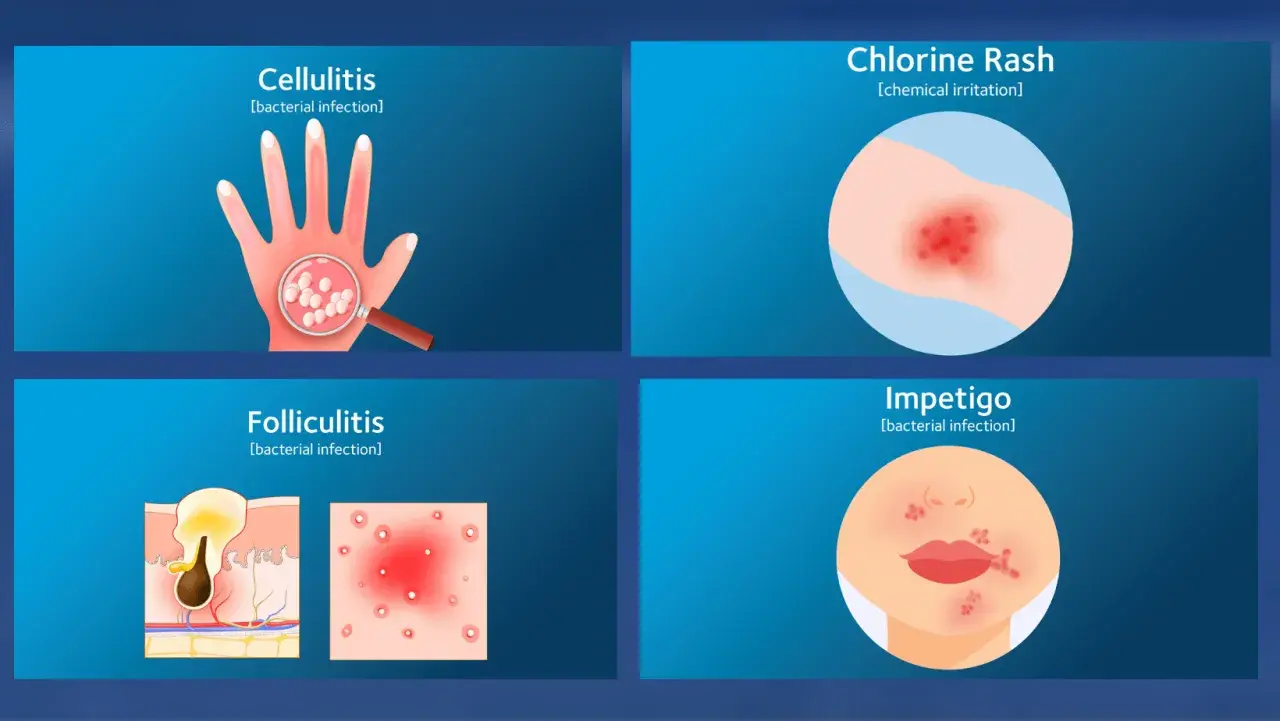
What matters most before you get back in the water
- Active impetigo is too contagious for pool sessions, even if you feel otherwise well.
- UKHSA school guidance uses a 48-hour-after-antibiotics rule or scabbed blisters, but Swim England’s pool advice is stricter and waits for full recovery.
- Do not rely on a plaster or waterproof dressing as a shortcut back into the water.
- Open water and hot tubs are not a better option while the rash is active.
- Use the break for dryland work, hygiene, and kit cleaning so you can return cleanly.
Why the pool rule is stricter than the school rule
For attendance at school or nursery, the practical rule is often 48 hours after starting antibiotics or waiting until the blisters have scabbed. For swimming, I would not use that as my finish line. Swim England’s advice is more conservative: impetigo is one of the skin conditions where swimming should wait until the skin has fully recovered.
That difference matters because a pool is not just “being in water”. You are sharing lane ropes, benches, showers, towelling space, and sometimes close contact before and after the session. A chlorinated pool does not cancel an active infection, and it does not make wet, fragile skin any less likely to spread bacteria. Once you accept that, the decision gets simpler: if the rash is still active, the session stays on the calendar but not in the pool.
The next step is knowing what “active” actually looks like in real life, because that is where swimmers tend to misjudge the timing.
How to tell whether the infection is still active
I look for three things: moisture, new spots, and inflammation. If the sores are weeping, fresh blisters are still appearing, or the crusts are soft and easy to break open, I treat the infection as active and keep out of the pool.
- Still active means wet or leaking sores, yellow crusting, new blisters, or skin that is being scratched open.
- Probably settling means the spots are dry, flat, and no longer producing fluid, with no new lesions appearing.
- Not safe enough on its own means “I put a waterproof dressing over it.” That may help day-to-day hygiene, but it is not a reliable pool clearance test.
If the skin around the rash is red, hot, swollen, or painful, I assume there may be more going on than a simple surface infection and I would not risk a swim session on guesswork. That is the point where the return decision becomes less about convenience and more about healing properly.
What the return window looks like in practice
The cleanest way to think about it is to separate minimum public-health exclusion from actual swim-safe return. They are not the same thing, and swimmers often blur them.
| Situation | Swim? | My take |
|---|---|---|
| Fresh, weeping sores or new blisters | No | Too contagious and too easy to irritate further. |
| Less than 48 hours after starting antibiotics | No | Too early, even if symptoms are already improving. |
| 48 hours or more on antibiotics, but the skin is still crusted, fragile, or sore | Usually no | This may be enough for school attendance, but I would still wait for full recovery before pool training. |
| Skin is dry, flat, and fully settled, with no new spots | Usually yes | This is the point where a return starts to make sense, assuming your coach or pool has no extra restrictions. |
| Open water or hot tub while the rash is active | Definitely no | Higher exposure, more irritation, and less control over hygiene. |
The practical rule I use is simple: if you would hesitate to let another swimmer share a towel, a bench, or changing space with you, you are probably not ready to share the water either. That may sound cautious, but caution is exactly what keeps a short skin infection from turning into a longer interruption.
How to keep training moving without the pool
A missed swim session does not have to become a wasted week. I usually steer swimmers towards work that keeps fitness and rhythm moving without rubbing the rash or exposing other people.
- Easy bike or brisk walking for aerobic work, if the skin is comfortable.
- Core stability, shoulder prehab, and mobility work that does not involve sweaty skin friction.
- Technique review, race planning, or video analysis if you are in a squad or preparing for a meet.
- Sleep, hydration, and proper meals so the skin barrier can settle faster.
- Dryland starts, turns, and streamlining drills if they can be done safely and without contact.
If I had a race coming up, I would tell the coach early. That creates room to adjust relays, warm-up plans, or lane timing instead of trying to squeeze in one risky session at the last minute.
How to stop it spreading at home and in the changing room
This is where swimmers can quietly make things better or worse. Impetigo spreads through close contact and shared items, so the basic hygiene rules matter more than people think. Separate kit from day one, because once a towel, face cloth, or swim bag is shared, the infection gets extra opportunities.
- Use your own towel, flannel, and bedding.
- Wash hands after touching the affected skin.
- Keep nails short so scratching does not spread the infection to new areas.
- Wash swim kit, towels, and bedding regularly on a hot cycle if the fabric allows.
- Do not share razors, drink bottles, kickboards, or other close-contact kit.
- Keep the sores clean and dry, and cover them loosely when you are off the pool deck.
There is also a small but important mindset shift here: the goal is not to “tough it out” in a shared environment. The goal is to make the infection boring enough that it stops being a problem for everyone around you.
When I would get medical help before getting back in
I would ask for medical advice if the rash is spreading quickly, the skin is getting more painful, or there is any fever, as those signs can point to a deeper infection or a complication. I would also be more careful if the sores are on the face, near the eyes, or repeatedly returning after they clear.
Recurrent impetigo is worth taking seriously. It can be linked to skin irritation, eczema, or bacteria lingering on the skin or in the nose, and it often needs more than a simple “wait and see” approach. If a child or adult is getting repeated episodes, I would want that pattern checked rather than just repeatedly patching it over.If you are unsure whether the skin is improving normally, a GP or pharmacist can usually help you decide whether the infection is settling or still too active for the pool.
The checklist I would use before the first lane session back
Before I book the first swim after impetigo, I want every box below ticked. If even one is missing, I wait another day rather than pretending the risk has gone away.
- No new spots or blisters for at least a short run of time.
- All sores are dry, flat, and not weeping.
- Any prescribed antibiotics have been taken long enough for the infection to settle.
- No fever, spreading redness, or increasing pain.
- Personal kit is clean, and no towels or other items are being shared.
- The pool or club does not have a stricter rule than the general return guidance.
If you use that checklist honestly, the answer becomes much clearer. The right move is usually to miss one session, not to gamble with a contagious rash in a shared pool.