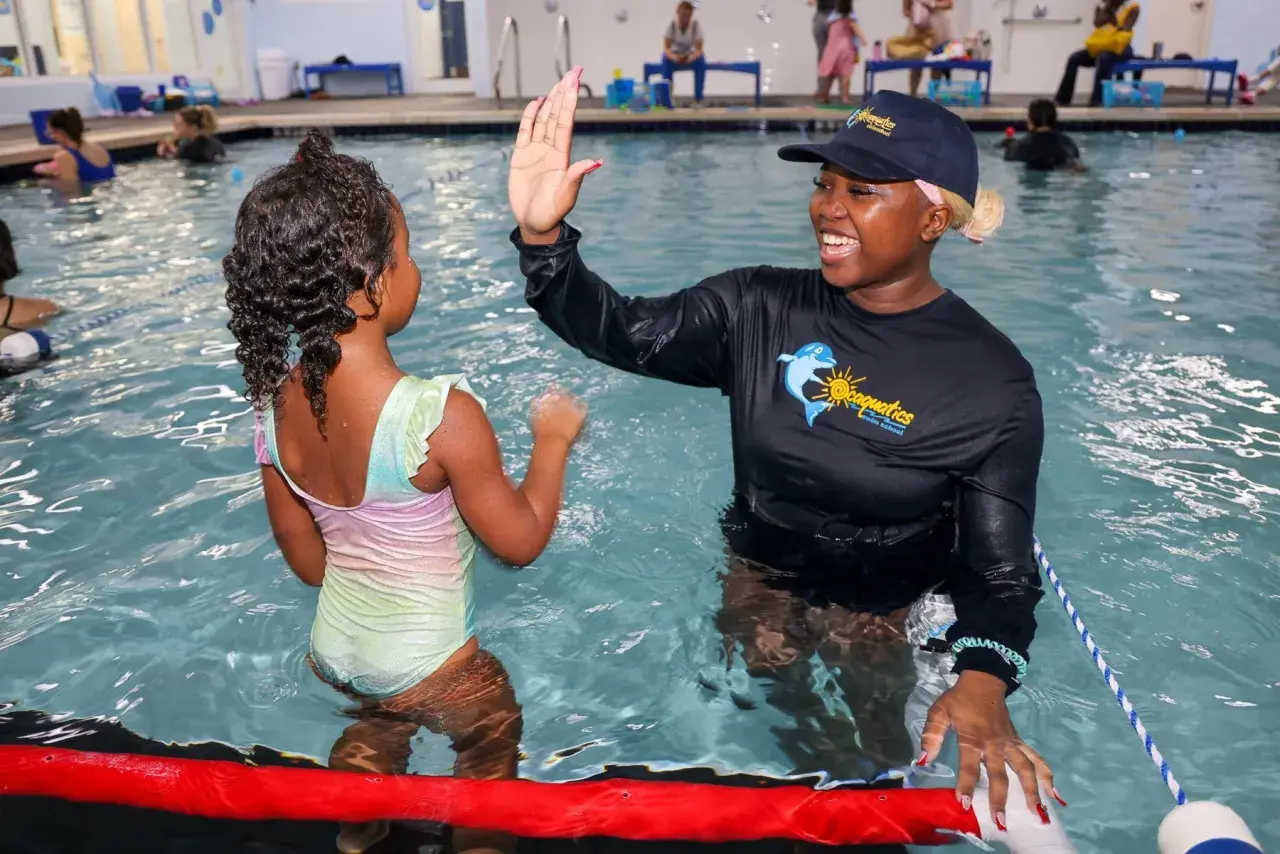
Good swim stroke lessons should do more than keep you busy in the lane. The real goal is to clean up body position, breathing, timing, and confidence so every lap costs less energy and feels more controlled. In this guide, I break down what effective instruction should fix, how the main strokes should be coached, how to choose between private and group formats, and what to practice between sessions.
Key takeaways for better stroke instruction
- Strong lessons fix the root problem first. Body line, breathing, timing, and kick matter more than random drill volume.
- Private instruction is fastest for stubborn technique issues. Group lessons are usually better for budget and repetition.
- In the U.S., lesson lengths usually run 30 to 60 minutes. Prices often range from about $25 to $100+ depending on format and market.
- A good instructor gives one clear cue at a time. If the coach cannot explain why a drill matters, the lesson is probably too loose.
- For young beginners, smaller ratios help. A 1:4 setup or smaller usually gives more useful feedback than a crowded class.
- Progress sticks between lessons. Two short practice sessions a week are often enough to make the correction feel real.
What stroke-focused lessons should fix first
I usually look for four things before I worry about speed: a stable body line, relaxed breathing, efficient arm action, and a kick that supports the stroke instead of fighting it. When one of those pieces breaks, the swimmer works harder but moves less, which is why a good lesson feels more precise than exhausting.
For adults, that often means getting past tension first. The Red Cross adult progression moves from learning the basics to improving skills and swimming strokes, then to swimming for fitness, and that sequence makes sense because you cannot refine a stroke that still feels unsafe or chaotic.
- Body position keeps the hips from sinking and cuts drag.
- Breathing should be quick and quiet, not a head lift that destroys rhythm.
- Timing links the pull, kick, and glide so the stroke keeps moving.
- Efficiency matters more than force; if you feel strain in the shoulders and neck, something is off.
- Turns and push-offs come after the stroke pattern is stable, because sloppy walls waste a lot of free speed.
Once those priorities are clear, the coach can match the right correction to each stroke rather than throwing generic drills at the pool deck.

How I coach each major stroke differently
Every stroke fails in a different way, so I do not coach freestyle the same way I coach breaststroke or butterfly. The details matter: some swimmers need more line and rotation, while others need timing or a calmer recovery.
| Stroke | What I fix first | Common mistake | Useful cue or drill |
|---|---|---|---|
| Freestyle, or front crawl | Long body line, side breathing, relaxed recovery | Lifting the head and crossing the hands over the center line | One-goggle breathing, side-kick balance, and short repeats with a quiet exhale |
| Backstroke | Quiet head, steady hip rotation, continuous kick | Sitting low in the water and overreaching across the body | Single-arm backstroke with a still head and a strong kick |
| Breaststroke | Pull-breathe-kick-glide timing | Rushing the kick or skipping the glide | Slow pull-breathe-kick-glide repeats with full control |
| Butterfly | Chest press, body wave, and relaxed arm recovery | Muscling the stroke with the shoulders and kicking only from the knees | Dolphin kick work on the front, then single-arm butterfly |
| Sidestroke | Balance on one side, smooth scissor kick, calm breathing | Collapsing the lead shoulder or rushing the kick | Side glide drills with careful kick timing |
| Elementary backstroke | Easy rhythm on the back and controlled knee bend | Dropping the hips or making the kick too wide | Slow coordination work with short repeats |
If a swimmer is not ready for butterfly, I would rather build dolphin kick and body rhythm first than force the full stroke. That same logic carries into lesson format, because the structure of the class changes how fast corrections actually stick.
Which lesson format fits your goal and budget
The format matters as much as the coach. In 2026, I would budget roughly $50 to $100+ for a private lesson in many U.S. markets, with group classes often landing closer to $25 to $40 per class or about $90 to $300+ per month depending on frequency, pool access, and city. I also ask about registration or annual service fees, because they can add another $20 to $65 before the first lesson even starts.
| Format | Best for | Typical length | Typical U.S. cost | Main tradeoff |
|---|---|---|---|---|
| Private | Fearful swimmers, adults relearning, stubborn stroke flaws | 30 to 60 minutes | About $50 to $100+ per session | Fastest feedback, highest cost |
| Semi-private | Siblings, partners, two swimmers with similar skills | 30 to 60 minutes | About $35 to $75 per swimmer | Shared attention, still somewhat individualized |
| Small group | Confidence, routine, lower-cost repetition | 25 to 45 minutes | About $25 to $40 per class or $90 to $300+ monthly | Less personalized correction |
| Clinic or intensive block | One issue such as breathing, breaststroke timing, or turns | 45 to 90 minute blocks or a short series | Varies widely | Efficient, but too narrow for a full rebuild |
If the problem is fear or a stroke pattern that falls apart as soon as the face hits the water, I lean private. If the goal is comfort, rhythm, and repetition, a group class is often enough. The right format keeps the lesson focused instead of making the swimmer repeat bad habits in public.
What a strong instructor or program looks like
The best programs feel organized. USA Swimming’s lesson network emphasizes trained and certified instructors and lifeguards, low student-to-teacher ratios, and proven techniques and curricula, and that combination is exactly what I want to see when the goal is real stroke improvement rather than simple water time.
- One cue at a time. If the coach gives three corrections at once, the swimmer usually remembers none of them.
- Visible demonstration. I want to see the movement, not just hear it described.
- Immediate feedback. The correction should happen during the rep, not ten minutes later.
- Age-appropriate language. Adults can handle technical terms; young children need short, concrete cues.
- Real safety coverage. Lifeguarding, CPR, and a clear emergency plan should never be optional.
- Progress notes. A good instructor can tell you what is fixed, what still needs work, and what comes next.
For young or beginner swimmers, a ratio around 1:4 or smaller is where feedback starts to become genuinely useful. Some lesson-provider networks allow up to 6:1, but that is the upper edge, not the sweet spot, if the goal is technique change.
As a rule, I also watch how the instructor responds when a swimmer misses a cue. If the answer is to repeat the same drill with no adjustment, the lesson is usually weaker than it looks.
How to make progress between lessons
This is the part most swimmers skip. I prefer two short practice sessions between lessons, each 15 to 25 minutes, because that is enough to rehearse the correction without turning the stroke into tired, sloppy laps.
- Pick one cue. For freestyle, it might be a quiet exhale; for breaststroke, it might be pull-breathe-kick-glide.
- Use short repeats. Four to six 25-yard repeats are usually enough to keep attention high in a U.S. pool.
- Stop before form breaks. The moment the head starts lifting or the kick gets wild, rest.
- Use simple tools sparingly. Fins can help body position, and a snorkel can remove breathing stress, but neither should replace real technique.
- Track one metric. Stroke count, easier breathing, or smoother turns is more useful than chasing raw speed right away.
For example, a cleaner freestyle session might be 6 x 25 yards with side-breathing focus, while breaststroke might be 4 x 25 yards of slow pull-breathe-kick-glide work with full rest between repeats. The point is not volume; it is a repeatable movement that the nervous system can actually remember.
If the swimmer can stay organized for those 15 to 25 minutes, the next lesson usually has something real to build on instead of spending half the hour undoing fatigue.
The next month should be about one stroke and one metric
If I had to compress the whole approach into one rule, it would be this: choose the stroke that limits you most, choose one measurable change, and stay on that target until it looks cleaner. For many swimmers that means breathing and body line first, because once those two settle, everything else becomes easier to teach.
- Need faster correction? Start with a private block, then move to group practice once the pattern holds.
- Need confidence and repetition? Keep the class format, but demand clearer drills and smaller feedback loops.
- Need endurance after the technique is stable? Add easy aerobic repeats, not more random hard swimming.
The best stroke work is usually boring in the right way: a small set of cues, repeated well, until the water feels less resistant and the swimmer stops fighting it.
