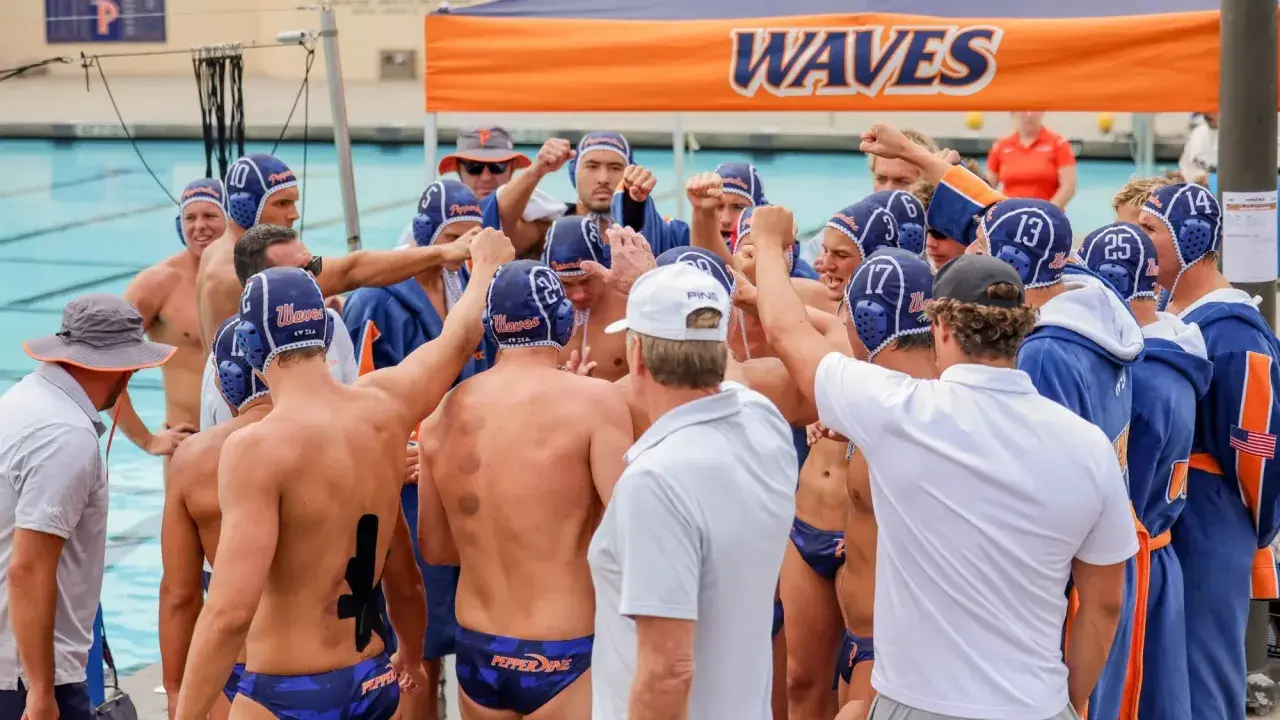
Water polo development is really about turning raw athleticism into repeatable decisions under pressure. The sport rewards players who can stay high in the water, pass and shoot cleanly while tired, and read contact without losing their shape. For athletes coming from swimming or diving, the transition can be useful, but the gaps show up quickly if leg work, contact tolerance, and tactical awareness are ignored.
In the United States, the pathway usually runs from learn-to-swim confidence into Splashball, then age-group club play, ODP-style training, and eventually college or senior competition. That progression matters because the game has become faster, more structured, and far less forgiving of technical shortcuts.
The biggest gains come from skill, legs, and decision speed
- Water polo is a vertical sport in a horizontal pool, so balance and leg power matter as much as sprint speed.
- Diving helps with body control and confidence in the water, but it does not replace eggbeater strength or contact readiness.
- In the U.S., Splashball and club pathways give young players a clear entry point, especially for ages 5-12.
- Modern rules favor faster restarts and quicker attacking choices, which makes game IQ part of training, not an afterthought.
- The fastest improvement usually comes from short, focused skill work, not from endless conditioning blocks.
What real development looks like in modern water polo
I think the easiest way to misunderstand this sport is to treat development as simple fitness. A standard championship course is 30m x 20m for men and 25m x 20m for women, with a minimum depth of 1.8m, and each team puts seven players in the water. That size and structure create constant pressure on spacing, timing, and stamina, which is why a good player must solve problems quickly, not just swim hard.
In practical terms, development means a player can repeat quality actions across four quarters. That includes holding position in traffic, making the right pass when a defender closes, and staying calm when the whistle changes the rhythm of the game. I care less about who looks powerful in warm-up and more about who still makes clean decisions in the last five minutes.
That is also why the sport rewards athletes who learn to manage both the ball and the body. The next question is how much help a diving background actually gives, and where it stops being enough.

How diving skills transfer and where they stop helping
Divers often arrive with useful advantages. They usually have better body awareness, more comfort with inversion and entry, and less fear of moving through the water at speed. Those traits matter in water polo, especially when a player has to accelerate, change direction, or recover after contact.
| Skill area | What diving helps with | What water polo still demands |
|---|---|---|
| Body line and streamline | Cleaner alignment and less drag in the water | Stable vertical posture while fighting for space |
| Breath control | Comfort under pressure and better recovery between efforts | Repeated high-intensity bursts with almost no reset time |
| Spatial awareness | Confidence with rotation and entry mechanics | Reading defenders, the ball, and the shot clock at the same time |
| Explosiveness | Useful fast-twitch transfer from takeoff training | Eggbeater power, lateral movement, and upper-body stability |
The gap is just as important as the overlap. A diver can look elegant but still struggle in water polo if they cannot sustain a strong eggbeater, absorb contact, or release the ball fast enough under pressure. I have seen swimmers and divers try to “carry over” their old mechanics too literally, and that usually shows up as low hips, slow hands, or a body position that disappears the moment a defender bumps them.
So yes, diving can be a strong foundation. It is not the finish line, though, and that is where the U.S. development pathway becomes useful.
A practical U.S. pathway from first splash to high performance
The American route works best when it is staged. USA Water Polo’s Splashball model is built for children roughly ages 5-12 and is meant to bridge learn-to-swim and the sport itself. That is the right idea, because the first job is not tactical genius, it is confidence, comfort, and basic ball familiarity.
| Stage | Main goal | What I would prioritize | Common mistake |
|---|---|---|---|
| Splashball and early entry | Make the sport fun and approachable | Floating, catching, simple treading, basic passing | Overloading kids with systems and full-pool scrimmage |
| Age-group club play | Build repeatable technique | Eggbeater, passing on the move, shot form, defensive shape | Playing too many games and not enough structured reps |
| ODP and high-performance training | Raise competition speed | Decision-making, counterattack habits, pressure passing | Chasing conditioning without clearer technique |
| College and senior level | Perform under fatigue and scouting pressure | Role discipline, video study, recovery, toughness under contact | Assuming fitness alone will carry the athlete |
The ecosystem matters too. In the U.S., referees now take a yearly rules exam and complete in-person school every two years, which helps standardize the game and forces coaches to teach more precisely. That does not make development easier, but it does make good coaching more visible and bad habits harder to hide.
Once the pathway is clear, the next question is simple: which skills actually move the needle fastest?
The skills that move the needle fastest
When I watch young players improve quickly, the gains usually come from a small cluster of skills rather than a dozen scattered drills. If a player gets these right, everything else starts to look easier.
- Eggbeater and hip mobility. This is the engine of the sport. Strong legs let a player rise, absorb contact, and keep the upper body free for passing and shooting.
- Passing under pressure. Good passing is not just accuracy. It is a release that arrives before the defender finishes closing the lane.
- Catching without resetting the body. If the catch forces a player to sink or twist, the attack slows immediately.
- Shooting while off balance. In real games, perfect set shots are rare. The best scorers can still generate power when their hips are not perfectly square.
- Defensive positioning. Fronting, dropping, and recovering in the right order often matters more than pure reach.
In my experience, short skill blocks work better than marathon sessions. I would rather see 10 to 15 focused minutes on one movement pattern, followed by a small-sided game that forces the same pattern under pressure. That approach teaches transfer, which is the real measure of development.
But skill alone does not explain why the modern game feels faster. Rules and tactics now shape development just as much as conditioning does.
Why tactics and rules matter more than raw conditioning
Water polo has become a quicker, cleaner game over time. When the new rule set was tested, USA Water Polo reported a 25% uptick in goals per game and a 24% decrease in fouls called per game. That matters because it shows where the sport is headed: faster restarts, clearer advantage, and more value placed on the first good decision.
| Rule or structure | What it changes in the game | What coaches should train |
|---|---|---|
| Shot-clock resets on certain restarts | Offenses have less time to settle | Outlet passing, first-look decisions, quick spacing |
| Direct scoring chances on fouls at range | Defenders cannot foul casually | Recognition of advantage and immediate release mechanics |
| Flying substitutions and faster transitions | Counterattack lanes open sooner | Conditioning for all seven players, not just the fastest two |
That shift changes how I think about development. Pure endurance still matters, but it is no longer enough by itself. A player also has to read the whistle, understand spacing, and know when a foul is actually an opportunity rather than a pause. World Aquatics has been pushing development workshops and biomechanical feedback in recent major events, and that lines up with what I see on deck: the best athletes are getting coached more precisely, not just worked harder.
Once tactics become part of training, the biggest mistakes become easier to spot.
The mistakes that stall progress
There are a few patterns I see again and again, and they slow players down more than most people realize.
- Training fitness instead of technique. Hard swimming does not fix weak body position or slow hands.
- Copying swimming habits without adaptation. A swimmer’s shape can be efficient in a lane but unstable in a contact sport.
- Assuming diving background is enough. Diving helps with confidence and control, but it does not teach eggbeater load, wrestling for position, or fast passing choices.
- Scrimmaging too much, too early. Games reveal problems, but they do not always solve them. Young athletes still need isolated reps.
- Ignoring shoulders, hips, and recovery. Water polo punishes poor load management, especially once shot volume and contact rise.
- Not teaching foul awareness. Players who do not understand spacing and advantage spend half the game confused by the whistle.
When those errors are removed, the remaining gains come from program design rather than luck. That is the part I would prioritize next if I were building a U.S. water polo environment from the ground up.
What I would prioritize next in a U.S. program
If I were building a development cycle for swimmers, divers, or true beginners, I would keep the plan brutally simple.
- Start with comfort in the water, then layer in ball handling.
- Teach eggbeater mechanics before asking for heavy contact or complex systems.
- Use small-sided games to connect technique with decision-making.
- Review video early, especially for release speed, body position, and defensive shape.
- Build strength around the shoulders, trunk, hips, and legs, not around vanity lifting.
- Check progress every few weeks so players know what improved and what still breaks under pressure.
If I had to reduce the whole subject to one principle, it would be this: the best programs teach players to stay balanced, think early, and move the ball before the defense settles. That is what real water polo growth looks like in the United States, and it is also the cleanest bridge from diving or swimming into a sharper, more complete version of the sport.