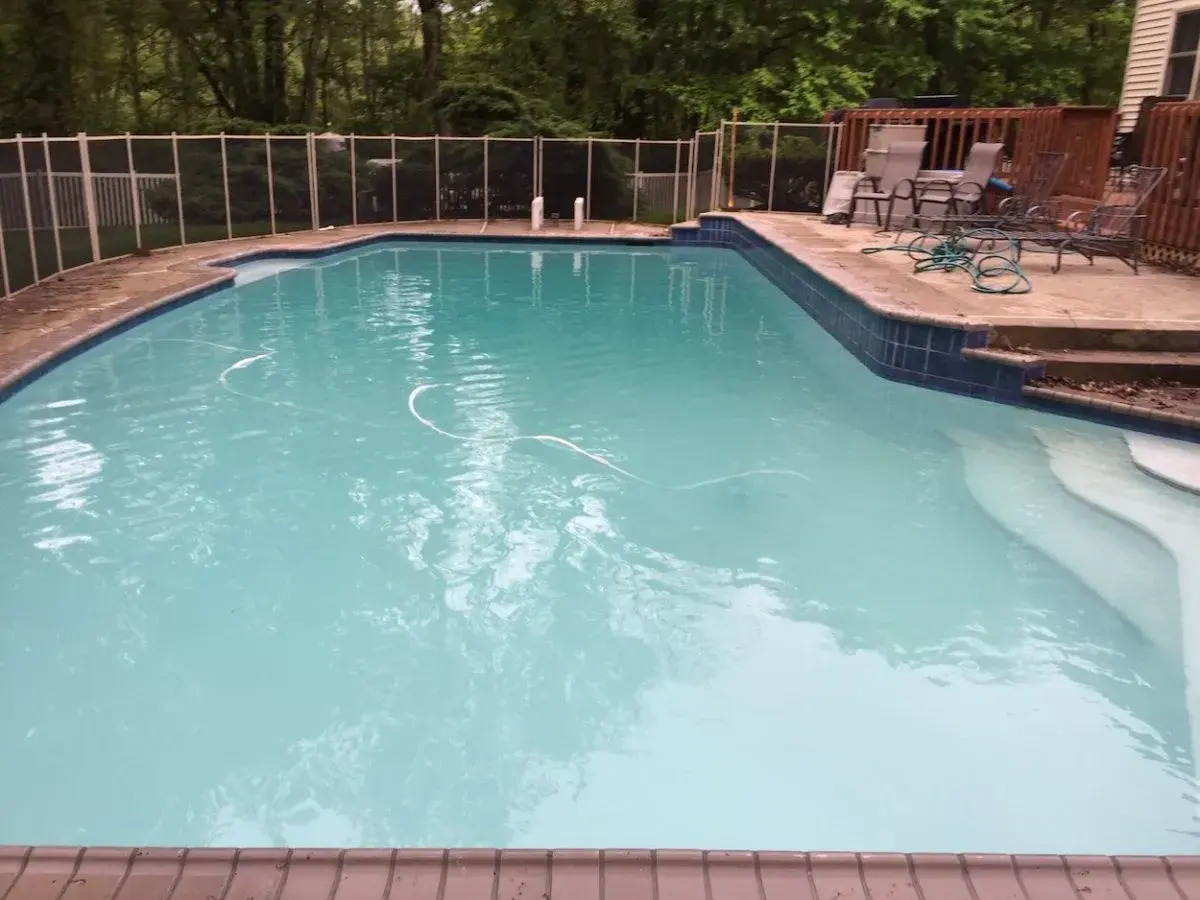
A pool can look only slightly hazy and still deserve your attention. The short answer to can you swim in a cloudy pool is usually no: cloudy water may signal poor filtration, unbalanced chemicals, contamination, or simply poor underwater visibility. I’ll show you how to judge the risk, which test results matter, and what to do before anyone gets back in.
The safest choice is to wait until the water is clear and properly tested
- Do not swim if you cannot clearly see the pool drain or bottom.
- Cloudiness is a warning sign, not proof of one specific problem.
- Check pH and sanitizer before reopening a home pool.
- Green, yellow, foul-smelling, or rapidly worsening water calls for extra caution.
- Never add chemicals blindly or mix products together.

Why cloudy water should stop your swim
Cloudy water is not automatically toxic, but it is a poor safety condition. It can reduce the effectiveness of chlorine, indicate suspended debris or algae, and make it harder to see a swimmer in trouble. The CDC also treats cloudy recreational water as a possible warning that germs may be present at higher-than-normal levels.
For me, the simplest rule is visual rather than chemical. If I cannot clearly see the bottom, drain, or a child’s body under the surface, I would keep the pool closed until the water clears. Visibility is part of water safety, especially around children, inexperienced swimmers, and anyone using diving equipment.
Cloudy does not always mean contaminated
A pool may turn hazy after heavy use, rain, brushing, or a filter cycle that has not finished. Fine particles can remain suspended even when the water does not contain dangerous bacteria. That uncertainty is exactly why swimming is a bad idea until the cause has been checked.
A clear-looking pool is not automatically safe either. Water can contain germs while appearing normal, and a strong chlorine smell does not prove that the chemistry is correct. Appearance is an important first check, not a complete water test.
What causes a pool to become cloudy
Most cloudy-water problems come from a handful of common issues. Identifying the pattern helps you choose the right fix instead of repeatedly pouring in more chlorine.
| What the water looks like | Likely cause | What it means |
|---|---|---|
| White or gray haze | Fine debris, poor filtration, high pH, or high calcium | The water may need better circulation, filter cleaning, or chemical adjustment. |
| Green or blue-green cloudiness | Algae growth | Keep swimmers out while the algae and sanitizer levels are addressed. |
| Yellow or brown tint | Metals, dirt, pollen, or runoff | Rainwater and contaminants may have entered the pool. |
| Cloudiness after a busy pool day | Sweat, oils, sunscreen, and organic debris | The sanitizer may have been consumed faster than usual. |
| Cloudiness with a sharp chemical odor | Imbalanced chemistry or chloramines | Swimming may cause eye, skin, or breathing irritation. |
One common mistake is assuming that cloudy water always needs a larger dose of chlorine. Sometimes the real problem is a clogged filter, weak circulation, excessive calcium hardness, or a pH that prevents chlorine from working efficiently. The appearance tells you there is a problem, but not which product to use.
How to decide whether the pool is ready
Before anyone swims, I use a short sequence that combines visibility, water testing, and recent pool history. A test strip is useful for a quick check, although a liquid test kit is often more precise for troubleshooting persistent cloudiness.
- Check visibility. You should be able to see the drain or the deepest part of the pool clearly from the deck.
- Look for contamination. Do not enter after fecal contamination, vomiting, a dead animal, chemical spills, or heavy storm runoff until the pool has been properly treated.
- Test pH. The CDC recommends a pool pH between 7.0 and 7.8.
- Test free chlorine. A typical minimum for a pool without cyanuric acid is 1 part per million. Pools using cyanuric acid may require at least 2 ppm under CDC guidance.
- Check the filter and circulation. Confirm that the pump is running, the filter is clean enough to operate, and the return jets are moving water.
- Wait for stable results. Do not reopen the pool immediately after adding chemicals. Follow the product label and retest when the water has circulated.
These numbers are useful for a residential pool, but local rules can be stricter. Public pools should be managed by the operator, and a swimmer should follow posted closures or a lifeguard’s instructions rather than trying to judge the water independently.
Why the pool bottom matters so much
Being unable to see the bottom is more than an aesthetic complaint. A submerged swimmer can be difficult to spot, and a cloudy surface can hide toys, steps, drains, or another person. If visibility is poor, do not dive, jump, or allow children into the water.
How to clear cloudy pool water safely
Start by keeping everyone out of the pool. Swimming adds more sweat, oils, sunscreen, and dirt, which can make an already stressed filtration and sanitation system work even harder.
Read Also: How Cold Is Too Cold to Swim? Your Guide to Safe Water Temps
Use this practical sequence
- Remove leaves and debris from the surface, skimmer, and pool floor.
- Inspect the filter and clean or backwash it according to the manufacturer’s instructions.
- Test pH and sanitizer before adding treatment chemicals.
- Correct the water balance using products approved for pools and the doses shown on their labels.
- Run the circulation system long enough to move the water through the filter.
- Use a clarifier only when appropriate. Clarifiers bind tiny particles so the filter can capture them, but they cannot replace proper sanitation.
Flocculant is sometimes used when particles need to settle so they can be vacuumed out, but it requires more careful cleanup and is not the first answer to every cloudy pool. I would also avoid adding several products in quick succession because chemical interactions can damage equipment or create unsafe water.
If the water becomes green, develops a bad odor, or remains cloudy after a full day of proper circulation and testing, get help from a qualified pool professional. Persistent cloudiness is a diagnosis problem, not an invitation to keep guessing with chemicals.
The health and safety risks people often underestimate
The most immediate danger is reduced visibility. In a private pool, that can delay a rescue; in a public pool, it can make it harder for lifeguards to monitor the bottom. The risk becomes more serious when the pool is used by young children, weak swimmers, or people who are tired after training.
Cloudy water can also accompany low sanitizer levels or a pH outside the recommended range. That combination may allow germs to survive longer and can contribute to irritated eyes, itchy skin, or respiratory discomfort. It does not mean every hazy pool will make you sick, but there is no good reason to accept an avoidable exposure.
Do not swim if you have diarrhea, open wounds, or an illness that could contaminate the water. Do not swallow pool water, and shower before entering. Those habits reduce contamination even after the pool has returned to normal clarity.
When a public or hotel pool looks cloudy
Do not try to solve a commercial pool problem yourself. Tell the lifeguard, front desk, or pool manager and ask whether the pool is open and recently tested. A responsible operator should be able to explain a temporary closure or confirm that the water meets local operating requirements.
If staff dismiss the problem while the bottom remains difficult to see, I would choose another pool. Missing a swim is a small inconvenience compared with poor visibility, chemical irritation, or a delayed response to an emergency.
At a hotel or water park, also pay attention to warning signs such as a strong chemical odor, foamy water, visible algae, missing safety equipment, or no lifeguard where one would normally be expected. Cloudiness combined with any of these signs is a clear reason to stay out.
A simple poolside rule I actually use
When water looks cloudy, I do not debate whether it is probably fine. I ask three questions: Can I see the bottom? Are the pH and sanitizer levels in range? Has anyone confirmed that the water is safe after the problem appeared?
If the answer to any of those questions is no, wait. Clear water, tested chemistry, working circulation, and good supervision give you the conditions needed for a safer swim, while patience keeps a short maintenance problem from becoming a health or rescue emergency.