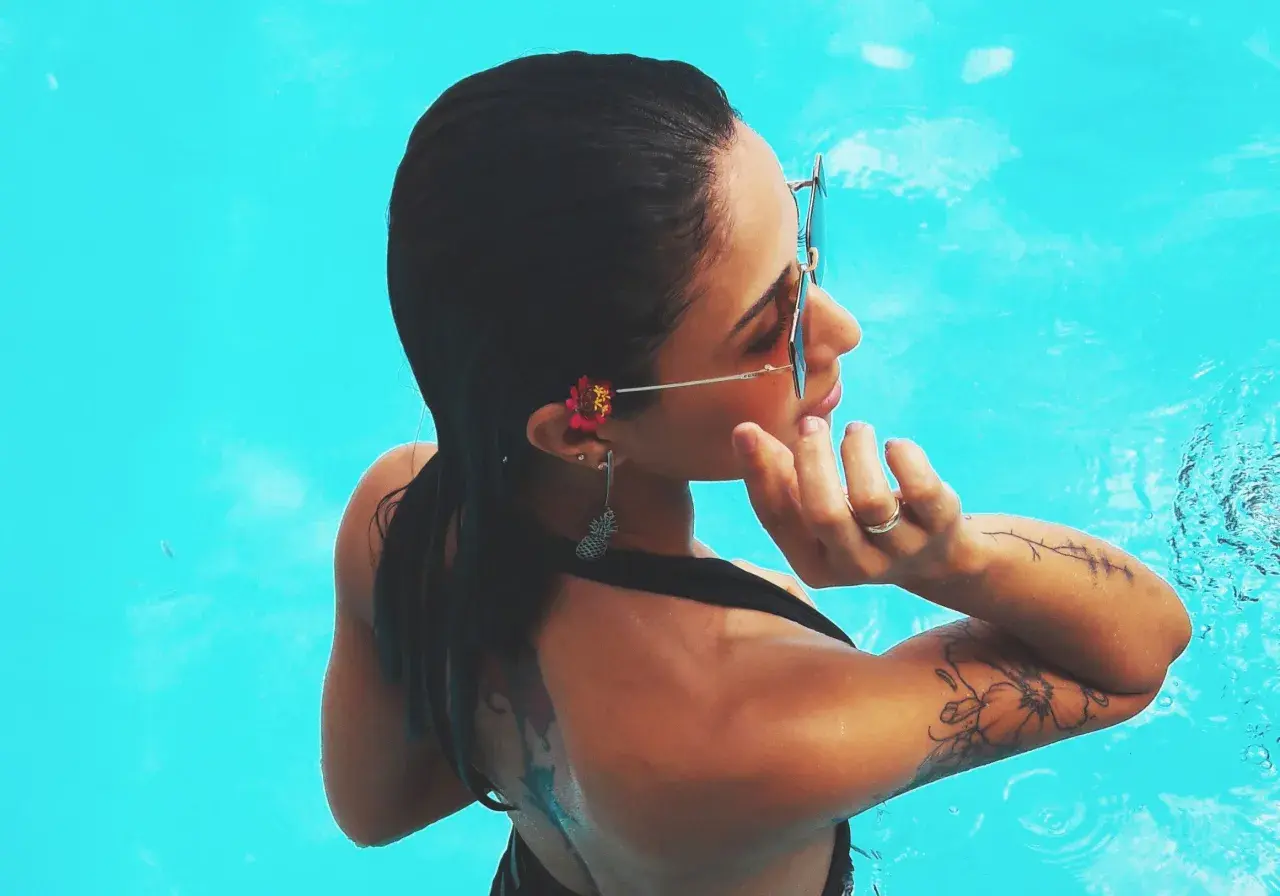
Key points before you get back in the water
- Do not swim in a pool until the tattoo is fully healed, not just dry on the surface.
- For many people that means at least 2 weeks, but 3 to 6 weeks is common for larger or slower-healing tattoos.
- Chlorinated water can irritate new skin, slow healing, and increase the risk of infection or patchy colour.
- Showering is usually fine once the initial wrap is off, but soaking is the real problem.
- If the tattoo is still peeling, scabbing, red, warm, or tender, it is not ready for lane time.
Why pool water is a bad trade for a fresh tattoo
I treat a new tattoo like a controlled wound, because that is effectively what it is. A swimming pool may be cleaned and chlorinated, but that does not make it friendly to broken skin. The combination of soaking, friction, chemicals, and whatever bacteria may still be present is exactly what you do not want while the skin barrier is rebuilding.
Chlorine is the part most people focus on, but it is not the only issue. Long immersion softens scabs, opens tiny gaps in the skin, and can pull away the protective layer that needs to form over the tattoo. That can mean irritation, longer healing, and sometimes faded or uneven pigment where the skin was disturbed too early.
| Water type | Main risk to a new tattoo | My practical take |
|---|---|---|
| Swimming pool | Chlorine, repeated soaking, bacteria exposure | Avoid until fully healed |
| Hot tub or jacuzzi | Heat, chemicals, and prolonged soaking | Usually the worst option |
| Sea or lake | Bacteria, salt, sand, and debris | Still not safe for fresh ink |
| Shower | Brief contact only | Usually acceptable if you keep it gentle |
That distinction matters because a quick shower and a proper swim are not remotely the same thing. Next, the real question is timing, and that is where people often underestimate how long the skin needs.
How long to wait before swimming again
I keep the waiting rule straightforward: do not swim until the tattoo has fully healed. For many people, the surface looks settled after about 2 weeks, but that does not always mean the skin underneath is ready. Small tattoos in low-friction areas may be fine sooner than a large back piece or a colour-heavy design, yet I still would not rush the decision.
A realistic guide looks like this:
- Small, clean-healing tattoo - around 2 weeks minimum, and only if the skin is fully closed.
- Medium tattoo or one with shading/colour - often 3 to 4 weeks.
- Large piece, heavy saturation, or high-friction area - 4 to 6 weeks or longer.
The important word there is minimum. Some tattoos heal quickly on the surface but are still fragile underneath, especially if the skin is regularly rubbed by swimwear, goggles straps, kickboard work, or training kit. If I cannot look at the area and see intact skin with no peeling or tenderness, I do not call it ready.
There is also a practical reality for competitive swimmers: if you train several times a week, a few extra days off the pool is far less costly than a tattoo infection or a ruined heal. I would rather lose one session than spend weeks dealing with a setback.
How to tell the tattoo is actually ready
People often ask whether a tattoo is ready because it “looks fine”. That is not enough. A tattoo can look acceptable and still be too vulnerable for swimming. I want to see a few clear signs before I would consider a pool session.
- No scabs or peeling skin left on the surface.
- No soreness when the area stretches or is lightly touched.
- No redness, heat, or swelling around the tattoo.
- No weeping, shine, or damp-looking spots on the skin.
- The area feels smooth and closed, not tight and irritated.
If clothing still rubs the tattoo in a way that annoys you, that is a warning sign. If the skin is itchy but finished peeling, that can be normal, but I still prefer to wait until the irritation has settled before going back into chlorinated water. In practice, healed enough means the skin feels boring again.
What to do if you already went in too early
If you accidentally got the tattoo in the pool, do not panic and do not attack it with harsh products. The right response is calm and simple: get out, rinse the area with clean lukewarm water, wash gently with a mild fragrance-free soap, and pat it dry with a clean towel. Then apply the aftercare your tattoo artist recommended in a thin layer, not a thick, suffocating one.
What I would not do is scrub the tattoo, pick at softened scabs, or keep re-washing it every hour. That usually makes matters worse. Instead, watch the area over the next 24 to 72 hours for signs of infection: increasing redness, rising pain, warmth, swelling, discharge, or a general feeling that the skin is getting angrier rather than calmer.
If those signs appear, get medical advice promptly. In the UK, your GP or NHS 111 is the sensible next step if you are unsure, especially if the redness is spreading or you feel unwell. A fresh tattoo can sometimes recover from a brief mistake, but a worsening infection should not be left to guesswork.
How to get back into training without irritating the skin
Once the tattoo is fully healed, I still like to reintroduce pool time sensibly. That matters more if you swim often, because repeated chlorine exposure can dry the skin out and make a healed tattoo look tired faster than you expect.
Here is the approach I would use:
- Schedule the tattoo around a lighter training block if you can.
- Use the first swim back as a short, low-friction session rather than a hard set day.
- Rinse the tattoo with clean water as soon as you leave the pool.
- Pat it dry instead of rubbing it.
- Moisturise later with a simple, fragrance-free product once the skin has settled.
- If the tattoo will be in the sun after swimming, protect it with sunscreen only after it is healed.
That last point matters because a healed tattoo can still fade if you combine chlorine and UV exposure over time. For outdoor training, I would treat sun protection as part of tattoo maintenance, not an optional extra. The same is true for anything that traps heat and friction against the skin, like tight straps or long sessions with equipment pressing over the area.
The rule I use before the first lap back
My rule is simple: if the skin is still peeling, tender, or open in any way, it stays out of the pool. If it is fully closed, flat, and comfortable, then a careful return to swimming becomes reasonable. That is the cleanest way to handle pool after tattoo timing without gambling on the heal.
When in doubt, I always choose a little more healing time. The extra wait is usually minor, but the downside of going too early can be a longer recovery, irritated skin, and a tattoo that does not settle as cleanly as it should. For swimmers, that trade-off is rarely worth it.
