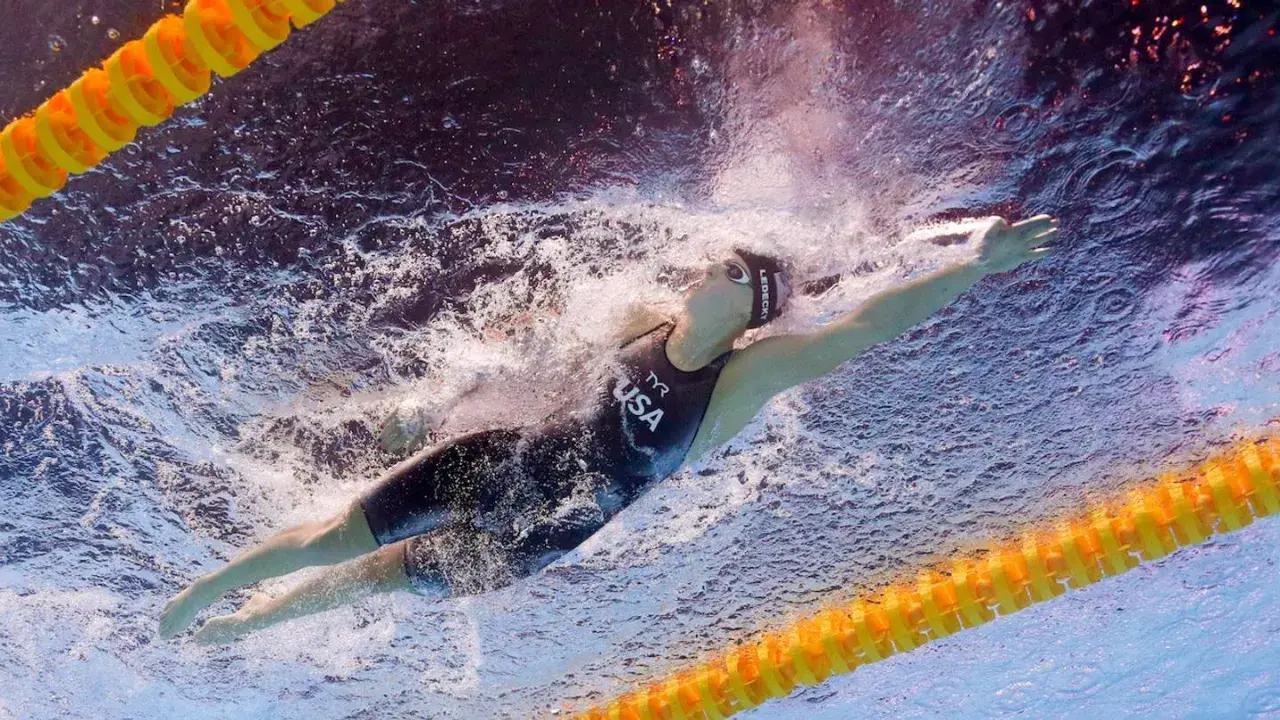
Katie Ledecky’s success is not built on one magical workout. It comes from a system: high swim volume, disciplined dryland work, efficient technique, and recovery habits that let hard sessions actually add up. Here I break down how that system works, what recent interviews suggest about her daily routine, and which parts are worth borrowing if you want to swim faster without burning out.
The core pattern behind her success is repeatable training, not a secret workout
- Two-a-day training is central to her schedule, with morning pool work, weights, and an afternoon swim on many days.
- Efficiency in the water matters as much as endurance, because her stroke is built to conserve energy over long races.
- Dryland strength work supports power, starts, turns, and durability, instead of replacing pool time.
- Recovery and fueling are treated like part of the plan, not a bonus after the hard work is done.
- Consistency and goal-setting are what make the whole structure sustainable across years, not just one meet.

How her weekly load is built to last
When people talk about Katie Ledecky training, they usually picture huge mileage. That is part of the story, but not the whole story. What matters more is that the work is organized around repeatability: enough volume to build an enormous aerobic base, enough intensity to keep race pace sharp, and enough structure that the body can handle it day after day.
In recent interviews, she has described a routine built around waking early, swimming in the morning, lifting weights afterward, then coming back for a second pool session later in the day. On heavy blocks, that can mean roughly 20 to 30 hours of training time per week, depending on the phase of the season and the race calendar. For an elite distance swimmer, that is not random grind. It is a carefully layered load.
| Component | What it looks like | Why it matters |
|---|---|---|
| Morning swim | Long aerobic or quality pool work, often before most people are awake | Builds endurance and makes the body comfortable working hard early |
| Weights | A separate strength block after the first practice | Maintains power, protects against breakdown, and supports starts and turns |
| Afternoon swim | A second pool session, usually several hours later | Lets her train while slightly fatigued, which is closer to race reality |
| Recovery gap | Food, a nap, mobility, and downtime between sessions | Keeps the quality of the second session high instead of just surviving it |
The part many swimmers miss is that the schedule is not valuable because it is brutal. It is valuable because each piece has a job. That structure only works if the stroke itself is economical, which is where the technique piece starts.
Why her technique keeps working when other swimmers fade
The reason Ledecky can hold speed so late in races is not just fitness. It is efficiency. A swimmer with a sloppy stroke spends more energy fighting the water, which is exactly what you cannot afford in the 400, 800, or 1500 freestyle. Her style is built to reduce drag, keep rhythm steady, and preserve enough reserve to finish hard when others are already hanging on.
There are a few technical ideas I would pull out from her style, even if I were coaching a very ordinary swimmer:
- High body position keeps the hips near the surface and reduces drag.
- Rotation and rhythm help the stroke feel smooth instead of forced.
- Early vertical forearm means the forearm and hand catch water more effectively after entry.
- A controlled two-beat kick helps conserve the legs during distance work instead of draining them early.
- Stroke length under fatigue matters because distance racing is often won by the swimmer who loses the least form late.
I think the two-beat kick is especially instructive. Distance swimmers do not usually win by kicking harder all the time; they win by using the kick intelligently. Save energy where you can, then spend it when the race turns. That same logic carries into strength work, which is why the gym matters so much.
Why dryland matters as much as pool time
Pool work builds the engine, but dryland keeps the chassis from falling apart. Ledecky’s strength routine is not about looking like a bodybuilder. It is about producing force efficiently, keeping the body balanced, and making sure the shoulders, hips, and core can handle the repetitive load of elite swimming.
In practice, that usually means compound lifts and athletic movements rather than isolated exercises. Think cleans, squats, deadlifts, pull-ups, sled pushes, and bike sprints. Those patterns matter because they train the body to apply force quickly, and that translates well to starts, turns, and the first strokes off each wall.
Recent coverage in Business Insider also shows how practical her approach is: the dryland work is paired with simple food choices and recovery habits rather than an overcomplicated performance system. That is the part worth noticing. The gym is not there to replace swimming; it is there to make the swimming more sustainable.
For most swimmers, the mistake is either doing too little strength work or doing the wrong kind. Endless biceps curls will not make you faster in the water. A small number of well-chosen compound movements, done consistently, usually does much more. Once the water work is efficient, the gym has a much clearer job to do.
Recovery and fuel are programmed, not improvised
At Ledecky’s level, recovery is part of training because the body has to absorb two hard sessions in one day. That means sleep, naps when possible, and food that is easy to use and easy to repeat. She has described an early snack before morning practice, a protein shake after training, a straightforward breakfast, another snack or lunch before the afternoon session, and a protein-focused dinner later in the day.
That pattern matters more than the exact menu. The principle is simple: fuel before work, refuel after work, and do it consistently enough that the body never falls too far behind. For a swimmer, under-eating is one of the fastest ways to flatten training quality. The second-fastest is pretending recovery is optional.
There are a few recovery habits I would copy immediately:
- Eat soon after training so the body can start repairing itself while the session is still fresh.
- Use carbs for training energy and protein for repair, instead of treating every meal like a generic fitness plate.
- Protect sleep as aggressively as you protect the workout itself.
- Keep meals simple enough that busy days do not destroy consistency.
That simplicity is the real lesson. She is not chasing novelty. She is making sure the basics happen reliably, which is exactly what keeps the next hard practice useful rather than merely painful. The same repeatable mindset shows up in the way she sets goals and handles pressure.
The mental routine that makes the plan repeatable
One reason Ledecky’s training stays effective over time is that she treats progress as a sequence of controllable steps. In an Olympics.com interview, she framed goal-setting as a process of defining the target, laying out the steps, and then resetting once the work is done. That sounds simple, but it is one of the most important habits in elite sport.
Most swimmers do not break down mentally because they are not strong enough. They break down because they make the whole season depend on motivation. Ledecky’s model is more durable than that. She seems to rely on routine, confidence built through repetition, and a mindset that focuses on the next useful rep rather than the whole mountain at once.
What I take from that is straightforward:
- Set goals that are measurable, not vague.
- Separate daily effort from short-term results.
- Expect hard sessions to feel hard, and do not turn that into a crisis.
- Use competition as confirmation of the work, not as a reason to rewrite the entire plan.
That mental discipline is what makes the physical work repeatable. With that in mind, the useful question is not how to copy her entire plan, but what to borrow and what to leave alone.
The version of her method that actually helps most swimmers
If I were translating her model for a non-Olympic swimmer, I would not start with more yardage. I would start with better structure. The right amount of work depends on the athlete, but the principles are transferable at almost any level.
| Swimmer level | A better version of the model | What to avoid |
|---|---|---|
| Masters or fitness swimmer | 3 to 5 swims per week, 1 to 2 short strength sessions, one clear technique focus | Copying elite volume or turning every practice into a test |
| Age-group or club distance swimmer | 5 to 7 swims per week, one threshold set, one speed touch, one or two dryland sessions | Adding intensity to every set and calling it toughness |
| Serious collegiate or elite swimmer | Structured two-a-days when appropriate, planned lifting, and strict recovery habits | Training hard without enough sleep, food, or coaching feedback |
The biggest mistakes I see are predictable. Swimmers copy mileage without copying technique. They lift too much or too randomly. They under-fuel because they want to stay lean. Or they chase intensity every day and then wonder why progress stalls. Ledecky’s system works because it is balanced, not because it is maximal.
If you want the short version, it is this: build a large aerobic base, keep the stroke efficient, add strength that actually supports swimming, and protect recovery so the next session still has quality. That is the part worth keeping, whether you are training for a local meet or trying to shave seconds off a distance race.
