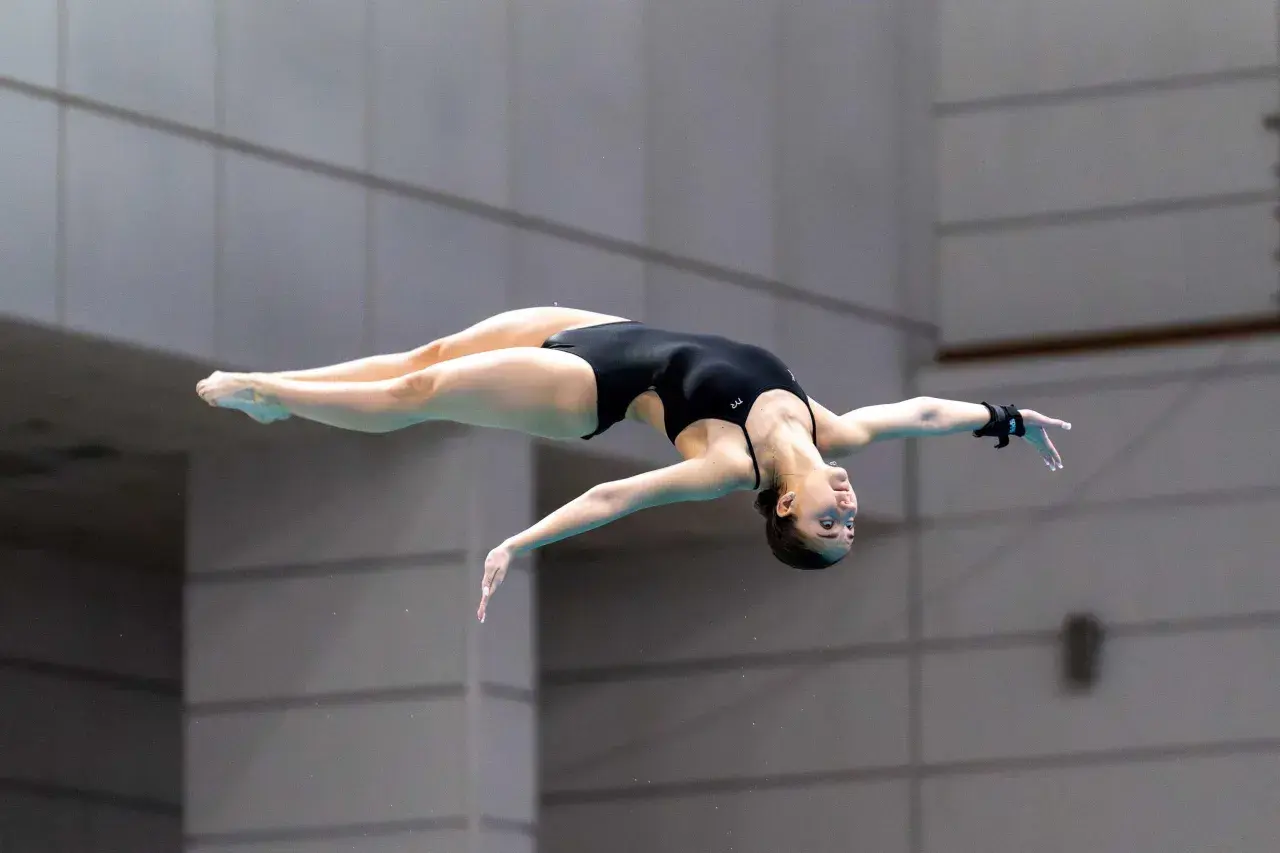
The pike position is one of those shapes that looks simple until an athlete has to hold it cleanly under pressure. In diving, it affects rotation, line, and entry quality; in swimming starts, it helps the body move from launch to streamline; and in water polo, the same hip control shows up in mobility, balance, and explosive movement. I’m focusing on the practical side here: what the shape is, where it matters, what goes wrong, and how to train it without wasting time.
The main things to keep in mind before you train this shape
- In diving, the position is defined by a bend at the hips, straight knees, tight feet, and enough control to keep the line clean.
- Open and closed versions serve different purposes, and the closed version is usually the tighter rotation tool.
- Swimmers use a brief hip fold during starts and underwater transitions, but the goal is still streamlining, not living in the fold.
- Water polo players rarely hold this shape in play, yet they benefit from the hip mobility and trunk control behind it.
- The biggest errors are soft knees, a broken back line, and folding from the waist without tension through the core.

What the shape actually looks like in the water
In simple terms, this is a hip hinge with intent. USA Diving defines the position by a body bend at the hips, straight knees, pointed toes, and the feet held together, which is exactly why it looks so tidy when done well and so messy when the line breaks. I think of it as a shape built from tension, not just flexibility.
The two useful variants are easy to separate:
- Open pike - the torso stays folded, but the arms are extended away from the legs, which keeps the body line longer and more readable.
- Closed pike - the arms and legs come in tighter, which helps when the athlete needs a more compact rotation.
The difference matters because the same-looking fold can serve two very different jobs. Once that is clear, the real question becomes when the shape helps performance and when it starts to work against it.
Why divers care about it so much
Diving rewards control, and this is one of the clearest tests of control in the sport. A clean fold changes how fast the body rotates, how visible the line is to judges, and how early the diver can prepare for entry. Swim England notes that a piked dive is slower than a tuck, which means technical flaws such as bent legs, flat feet, or an arched back are easier to spot.
That slower rotation is not a disadvantage when the dive is planned correctly. It simply means the athlete must create and maintain a tighter shape for longer. I usually tell divers to think about three checkpoints:
- Hip angle - the fold starts from the hips, not from rounding the shoulders.
- Leg discipline - straight knees and pointed toes keep the line honest.
- Exit timing - the athlete has to come out of the fold early enough to set the entry.
That is also why this shape shows technical quality so quickly. If the hips open too early, rotation gets sloppy. If the knees soften, the position loses its usefulness. From there, the next step is seeing how the same body control shows up in swimming starts.
How swimmers borrow the same fold on starts
In a racing start, the hip fold is not the main event. It is a brief transition between drive, flight, and entry. Swim England’s masters coaching notes that a slight pike in the body line can help a swimmer move more cleanly into the horizontal underwater phase, which is exactly the kind of detail that saves time without adding drama.
What I look for in a good start is simple: the body should stay organized while the swimmer moves from power to streamline. A useful cue is to keep the fold small enough that the torso can still set the entry line before the hands break the surface. If the fold becomes a crunch, the head lifts, the hips drop, and the water catches the body instead of letting it knife through.
- Keep the gaze down or slightly forward as the body leaves the block.
- Let the torso extend first, then settle into the entry line.
- Hold the legs quiet while the upper body transitions underwater.
That is the big lesson from swimming: the fold should support a fast shape change, not become a shape you hang onto. For water polo athletes, that distinction is even more important.
What water polo players should take from it
In water polo, this is not a standard in-game posture. Players spend most of their time vertical, unstable, and reacting to contact, so a deep hip fold is not something they live inside during competition. What matters is the physical base behind it: hip mobility, core stiffness, and the ability to shift force without losing balance.
USA Water Polo has consistently emphasized core and hip flexibility in athlete preparation, and that makes sense. A player who can hinge cleanly on land usually has an easier time controlling the torso in the water, especially during starts, recoveries, and strong passing or shooting patterns. The same is true for the eggbeater: if the hips are locked up, power leaks out through the wrong places.
| Sport | Where the shape shows up | What good looks like | What usually breaks down |
|---|---|---|---|
| Diving | Somersaults, twists, and entry setup | Compact hip fold, straight knees, pointed toes | Bent legs, loose feet, early opening |
| Swimming starts | Flight to entry and underwater transition | Brief hinge that feeds a clean streamline | Head lifting, over-folding, dropped hips |
| Water polo | Dryland mobility, balance, and explosive transfers | Hip mobility with trunk control | Stiff hips, overextended back, poor force transfer |
For water polo athletes, I care less about whether the posture looks elegant on a mat and more about whether it improves movement under load. If it does not carry over into balance, rotation, or explosive force, it is just a stretch. That brings us to the mistakes that usually block progress.
The mistakes that break the line
Most technical problems come from the same handful of errors. They are easy to miss because they do not always feel dramatic to the athlete, but they show up fast in the water.
- Bending the knees - this turns a clean fold into a soft collapse and makes rotation less efficient.
- Rounding the back instead of hinging at the hips - the body looks folded, but the shape is weak and hard to control.
- Letting the toes relax - pointed feet matter because they keep the lower body disciplined and the line cleaner.
- Opening too early - common in divers who rush the entry and in swimmers who lose the underwater transition.
- Trying to force depth without mobility - the position becomes ugly quickly when the hips do not have the range to support it.
The error I see most often is pretending flexibility alone solves the problem. It does not. Range without control creates a shape that looks available on land and disappears in motion. That is why the best training approach has to combine mobility, strength, and timing.
How I would train it without overloading the hips
I prefer a progression that moves from position to control to speed. Start by learning the fold, then own it, then use it fast. If the athlete cannot hold the shape calmly on dry land, I do not expect it to improve much in the pool.
| Drill | Simple dosage | What it builds |
|---|---|---|
| Seated pike hold | 2-3 sets of 20-30 seconds | Hip range, hamstring tolerance, posture awareness |
| Wall-supported hip hinge | 2 sets of 6 slow reps | Clean hinge mechanics without collapsing the back |
| Hollow-to-pike transitions | 2 sets of 5 controlled reps | Core tension during shape changes |
| Snap-to-streamline drill | 2 sets of 6 reps | Fast opening from a compact body line |
Two details matter here. First, keep the reps crisp; once the back starts compensating, the drill stops teaching the right thing. Second, treat discomfort as information, not a badge of honor. A deep fold should feel demanding, but it should not pinch the hips or tug sharply at the low back.
The version that actually helps performance
The most useful version of this shape is the one that can survive pressure. In diving, that means a tight, readable line that still leaves room to open for entry. In swimming, it means a brief hip hinge that improves the underwater transition instead of slowing it down. In water polo, it means better mobility and trunk control, not a prettier pose on deck.
If I had to reduce the whole topic to one coaching cue, it would be this: fold with control, not with collapse. That is the difference between a shape that looks familiar and a shape that actually helps performance. Once an athlete understands that, the pike stops being a static position and starts becoming a tool.