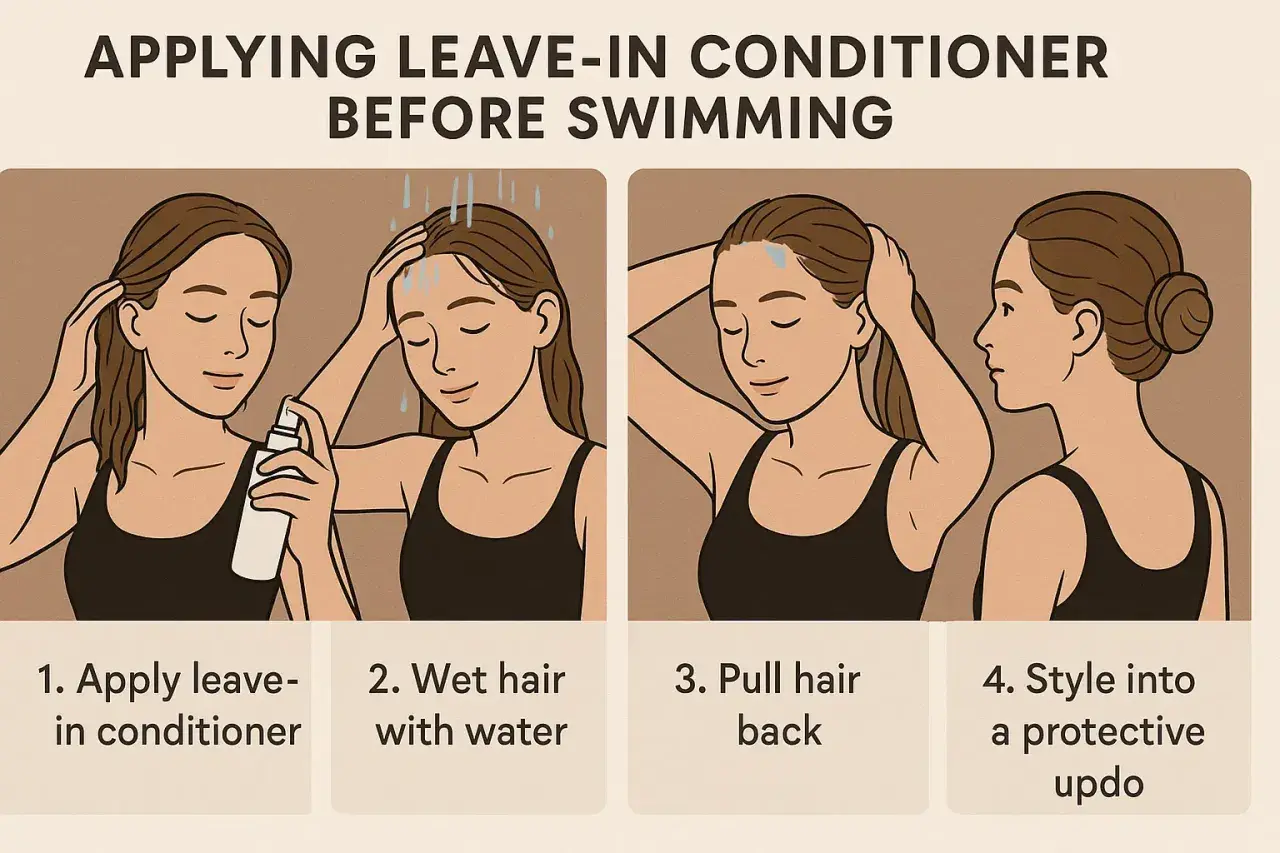
Chlorinated pools are part of normal swim life, but they do not have to leave your hair dry, rough, or stripped. The practical answer is a repeatable routine that limits how much pool water reaches the hair, then removes residue quickly after you get out. This guide explains how to protect hair from chlorine with simple steps that actually fit real pool sessions, not just ideal ones.
The quickest wins are a pre-wet, a light barrier, and an immediate rinse after swimming
- Wet hair with fresh water before you enter the pool so it absorbs less chlorinated water.
- Use a small amount of leave-in conditioner or a light oil to add slip and reduce moisture loss.
- Wear a well-fitting swim cap if you swim regularly or have dry, coloured, curly, or long hair.
- Rinse as soon as you leave the pool, then shampoo and condition before chlorine has time to sit on the hair.
- Match the routine to your hair type instead of relying on one product to do everything.
What chlorine actually does to hair in the pool
Chlorine is there to keep pool water hygienic, but it can be harsh on hair because it strips away the natural oils that help the fibre stay smooth and flexible. Once those oils are reduced, hair tends to feel drier, tangle more easily, and pick up a rough texture. In my experience, the damage is rarely dramatic after one swim; it builds when the same hair is exposed again and again without much protection.
Porous hair feels the effect fastest. That includes hair that is already coloured, bleached, heat-styled, curly, or naturally dry, because it absorbs water more readily and loses moisture faster once it is out of the pool. If your hair starts to feel straw-like, dull, or harder to detangle after swimming, that is usually the sign that your routine needs tightening up. Once you understand the mechanism, the real question becomes what to do before you even touch the water.How to protect hair from chlorine before you swim
The best pre-swim defence is unglamorous but effective: make the hair wet first, then give it a light barrier. Hair that is already saturated with clean water has less room to absorb pool water, which is why a quick shower before the pool still matters. I would treat this as the base layer, not the whole solution, because a pre-wet alone is helpful but not enough for frequent swimmers.
| Pre-swim step | What it does | Best use | Limitation |
|---|---|---|---|
| Rinse with fresh water | Reduces how much pool water the hair can absorb | Every swimmer | Helps, but does not seal the hair |
| Leave-in conditioner | Adds slip and a light protective layer | Dry, long, curly, or coloured hair | Can feel heavy if overapplied |
| Light oil | Slows down water entry and reduces friction | Very dry or porous hair | May make a cap slip if used too generously |
| Loose braid or bun | Limits tangling and breakage | Long hair and lap swimming | Does not block chlorine on its own |
My rule is simple: keep the layer thin. Too much product can leave hair greasy, make it harder for a cap to stay put, and create more build-up to wash out later. If you swim casually, fresh water plus a small amount of leave-in may be enough. If you swim several times a week, you will usually want a cap as well, which leads to the part people often get wrong.
Choosing the right swim cap for your hair
A swim cap helps by reducing how much chlorinated water reaches the hair and by cutting friction in the pool. It is not waterproof, and it should never be treated like a dry bag for your head. Fit matters more than price, and a cap that sits well will usually protect better than a fancier one that keeps slipping.
| Cap type | Pros | Cons | Best for |
|---|---|---|---|
| Silicone | Durable, smoother fit, better overall seal | Can feel snug if the size is wrong | Most regular swimmers |
| Latex | Thin, light, usually cheaper | Less durable and can bother sensitive skin | Short sessions and budget buys |
| Lycra or fabric | Comfortable and easy to wear | Minimal water resistance | Casual swimmers who value comfort over protection |
For long, thick, or curly hair, I prefer a silicone cap with enough room to tuck hair in without forcing it flat. Braiding or loosely twisting the hair before putting the cap on helps reduce snagging and keeps loose strands from escaping. If your hair is very dense, two caps can sometimes help with fit, but only if the first one already feels secure; stacking badly fitted caps usually just creates pressure and annoyance. Once the cap is sorted, the next step is removing chlorine as quickly as possible after the swim.
What to do immediately after swimming
The moment you leave the pool, rinse your hair. Do not wait until you get home if you can avoid it, because chlorine and pool residue are easier to remove before they dry into the fibre. A quick shower is the simplest habit that keeps damage from compounding.
After rinsing, use a shampoo that suits how often you swim. A swimmers’ shampoo or a chelating shampoo can be useful because chelating means it is designed to bind and lift away residue that ordinary cleansing may leave behind. That said, I would not use a strong clarifying wash on every single swim if your hair is already dry or chemically treated. For many people, alternating a gentler shampoo with a stronger cleansing wash works better than being aggressive every time.
Conditioner matters just as much as shampoo here. Put more of it through the mid-lengths and ends, where chlorine damage shows up first, and rinse it out carefully rather than leaving hair coated in product. If your hair is long, finish with a microfiber towel or a soft cotton T-shirt instead of rubbing hard with a regular towel, because rough drying creates extra breakage when the hair is already vulnerable. With that routine in place, the best version of the advice still depends on the hair you actually have.
How to adapt the routine for different hair types
There is no single chlorine routine that works equally well for every swimmer. Fine hair needs a lighter touch so it does not get weighed down, while curly or high-porosity hair usually needs more moisture support and better friction control. Colour-treated and bleached hair sit in a different category again, because they tend to show dryness sooner and can look dull after only a little pool time.
| Hair type | Main priority | Best adjustment |
|---|---|---|
| Fine or straight hair | Avoid build-up and tangles | Use a small amount of leave-in and choose a cap that does not pull at the roots |
| Curly, coily, or high-porosity hair | Reduce moisture loss and friction | Use a richer conditioner, a protective style, and a cap with enough space |
| Colour-treated or bleached hair | Limit dryness and fading | Rinse quickly, cap up, and use deeper conditioning more often |
| Children or occasional swimmers | Keep the routine simple | Rinse before and after the pool, then use a mild shampoo and conditioner |
For curly and coily hair, I would focus less on forcing the hair flat and more on protecting the shape underneath a cap. For coloured hair, I would also be stricter about post-swim rinsing, because the visible dryness shows up faster than people expect. The point is not to build a perfect salon routine around every swim; it is to choose the smallest routine that works for your hair’s needs. That leads directly to the mistakes I see most often, because most damage comes from inconsistency rather than a lack of expensive products.
Mistakes that quietly undo your progress
The biggest mistake is assuming a swim cap makes the hair dry. It does not. It reduces exposure, but some water will still get in, especially if the cap fits badly or the hair is left loose underneath. Another common mistake is skipping the pre-rinse because people assume a quick swim does not count. It does.
I also see swimmers overusing harsh shampoo in the hope of “resetting” the hair after every session. That usually backfires. If you strip the hair hard every time, you can end up with more dryness than the chlorine caused in the first place. On the other side of the spectrum, leaving pool water in the hair until the evening is a slow way to make even healthy hair look tired. The smarter approach is consistent, not dramatic: protect before, rinse after, and only clean as aggressively as your hair actually needs. Once that habit is in place, the whole routine becomes much easier to repeat.
A pool-day routine that is easy to repeat
If I had to keep this as simple as possible for a regular UK pool session, I would use four steps. First, wet the hair with fresh water before entering the pool. Second, add a small amount of leave-in conditioner or a light oil. Third, use a properly fitting cap if you are swimming laps or spend a lot of time in chlorinated water. Fourth, rinse and condition as soon as you finish.
That routine is not flashy, but it works because it attacks the problem from both ends: less chlorine gets in, and less residue stays behind. If you only change one thing, make it the post-swim rinse, because that is the step most people skip when they are in a rush. If you change two, add the pre-wet as well. Together, those habits do more for hair health than most special products ever will.