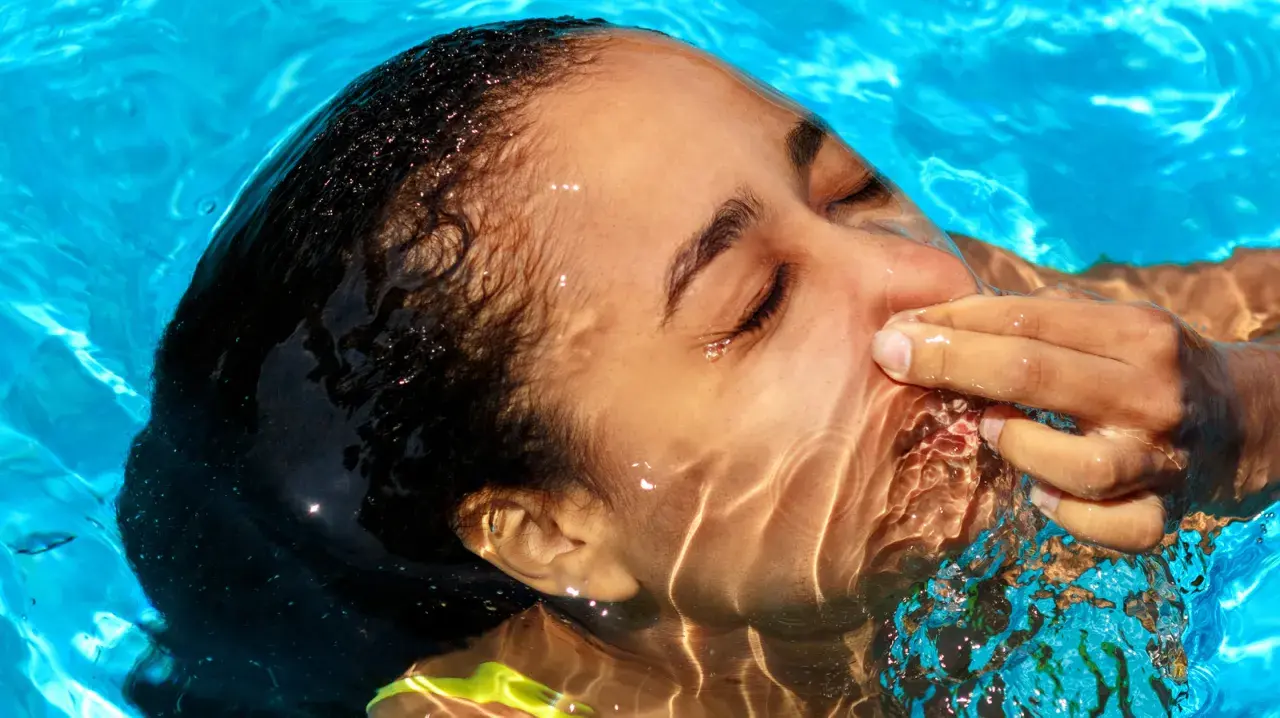
A stuffy nose after pool time is usually less about “catching something” and more about irritation in the nasal passages. In this article I break down the most likely causes, how to tell simple pool-related congestion from a sinus problem or allergy flare, and the steps that actually help before your next swim. I also cover the warning signs that mean it is time to stop guessing and get checked.
What usually causes post-swim congestion and what helps fastest
- Chloramines, not just chlorine, are often the real irritant in indoor pools.
- If the blockage starts right after dives, flip turns, or underwater work, water forced into the sinuses is a likely trigger.
- A quick shower, saline rinse, and hydration can calm mild irritation within hours.
- Symptoms that last more than a few days, come with fever, or repeat after every swim deserve medical attention.
- Pool smell, poor ventilation, and crowded indoor sessions make the problem more likely.
Why your nose blocks up after swimming
When I look at this problem, I usually think in two layers: irritation and water entry. The lining of the nose is sensitive, and even a properly maintained pool can dry or inflame it enough to trigger swelling, mucus, and that blocked feeling. In practical terms, the nose reacts by narrowing its own passages, which is why breathing feels heavy even when there is no infection.
Irritation rather than infection
This is the pattern that often gets mislabeled as “allergies” or a “chlorine allergy.” More often, it is a non-allergic rhinitis pattern, which simply means the nose is reacting to an irritant instead of an allergen. The symptoms can include congestion, sneezing, a runny nose, or a mild burning feeling that shows up during the swim or soon after you leave the pool.
Water pressure and sinus entry
The other common trigger is mechanical. Dive starts, flip turns, and even strong surface kick sets can push water into the sinus openings, especially if your breathing pattern is rushed or you swim with your face in the water a lot. That can create one-sided pressure, a blocked feeling around the cheeks or forehead, and congestion that starts almost immediately after practice.
In practice, I separate “air irritant” cases from “water got forced in” cases because the fix is different, and that distinction points straight to the next question: is the pool chemistry itself part of the problem?

Chlorine is part of it, but chloramines are usually the bigger clue
That sharp pool smell people notice indoors is often chloramines, not “clean chlorine.” Chloramines form when disinfectant binds to sweat, skin oils, urine, and other swimmer waste, and they are the compounds most likely to irritate the nose, eyes, and throat. The CDC notes that chloramines can irritate the nose and respiratory tract and that buildup is worse indoors without enough fresh air; it also recommends keeping pool pH between 7.0 and 7.8 with at least 1 ppm free chlorine in pools.
| Likely trigger | What it usually feels like | What tends to help |
|---|---|---|
| Chloramine irritation | Strong odor, stinging eyes, congestion that starts indoors or soon after leaving the pool | Better ventilation, shower before swimming, rinse afterward, shorter exposure |
| Water forced into the sinuses | Pressure after dives or flip turns, one-sided blockage, discomfort around the face | Nose clip, gentler entries, steadier exhale through the nose underwater |
| Dry indoor air | Dryness, scratchy nose, symptoms worse in winter or crowded indoor sessions | Outdoors when possible, better air exchange, saline rinse after the session |
| Cold or allergy flare | Symptoms started before the swim or continue away from the pool | Treat the underlying issue instead of blaming the pool alone |
When I hear someone say the pool “smells strongly of chlorine,” I usually suspect the air handling more than the sanitizer itself. The smartest next step is not to obsess over the smell, but to treat the irritation quickly and then see whether the pattern repeats in the next session.
What to do in the first 24 hours
If the congestion is mild, I treat the first day like a reset: clear the irritant, calm the lining of the nose, and avoid making it worse. Most swimmers do best with simple measures rather than aggressive ones.
- Shower as soon as you can and let clean water run over your face and nose.
- Use a saline nasal spray or a saline rinse to flush out residue. If you use a neti pot, stick to sterile, distilled, or previously boiled and cooled water.
- Hydrate well, because dryness makes congestion feel more stubborn.
- Take a break from more swimming if the nose is inflamed or the pool air was harsh.
- Sleep with your head slightly elevated if pressure builds overnight.
What I would not overdo
I would not keep reaching for a decongestant spray for several days in a row, because rebound congestion can create a second problem that is harder to untangle. I would also be careful about assuming that every blocked nose needs an antibiotic or a “sinus cleanse.” If the symptoms fade within hours, the pool was probably the irritant, not an infection.
If the nose settles quickly after this routine, you are probably dealing with a short-lived irritation reaction. If it keeps happening, prevention matters more than rescue treatment, which is where your next swim session comes in.

How to keep it from coming back at the next swim
The fix is usually a combination of better pool choice, better timing, and a few small habits that reduce how much irritant reaches the nose. None of these is dramatic on its own, but together they can make a real difference.
- Shower before you get in. This helps reduce sweat, lotions, and other residue that contributes to chloramine formation.
- Choose the right pool. If one indoor facility reliably leaves you congested and another does not, that is useful data, not coincidence.
- Use a nose clip when water entry is the trigger. This is especially useful for flip-turn sets, dive starts, and underwater drills.
- Exhale steadily through your nose underwater. A gentle, continuous exhale can reduce the chance of water getting pushed upward.
- Rinse again after training. A quick saline rinse or shower can shorten the irritation window.
- Skip the pool when you already have a cold or flare-up. Starting from a congested baseline makes every irritant feel worse.
When a nose clip helps
A nose clip is most useful when the problem is water going into the sinus area. It will not fix poor air quality, but it can be a game changer for swimmers who feel pressure after turns or underwater work.
Read Also: Chlorine Allergy? Spot Symptoms & Swim Safely
When a different pool is the better fix
If the issue shows up mainly in a crowded indoor pool, especially one with a strong chemical smell or poor air circulation, I would focus on the environment rather than just your technique. In that situation, more breathing drills will not solve an air-quality problem.
These habits are boring, but they do more than most quick-fix remedies, especially for swimmers who train indoors several times a week. The real issue is knowing when the pattern is no longer simple irritation.
When a blocked nose is more than pool irritation
Some symptoms deserve a closer look because they suggest infection, asthma, or another nasal condition instead of a temporary pool reaction. I pay attention when symptoms are persistent, severe, or repeating in the same pattern.
- Congestion lasts longer than about 7 to 10 days or keeps worsening.
- You develop fever, facial pain, tooth pain, or thick colored mucus.
- The pressure is strongly one-sided or the discharge has blood in it.
- You also have wheezing, chest tightness, or a cough that does not settle.
- The same symptoms happen even on days you do not swim.
| Symptom pattern | What it may mean | Next move |
|---|---|---|
| Clears within hours after swimming | Temporary irritation | Rinse, hydrate, and improve pool routine |
| Returns after every indoor session | Chloramine or ventilation issue | Try a different pool or report the smell and air quality |
| Lasts a week or more with facial pressure | Possible sinusitis or lingering inflammation | Get a clinician’s evaluation |
| Includes cough, wheeze, or chest tightness | Lower-airway irritation or asthma flare | Stop swimming until you are assessed |
If you have asthma, allergic rhinitis, nasal polyps, or a history of sinus infections, pool exposure can amplify a problem that was already there. That is why recurring symptoms deserve a closer look instead of endless guessing.
The pattern that tells me it is the pool, not just your nose
When I want to separate a real pool trigger from a random bad day, I watch for patterns. If congestion is worse in indoor sessions, improves outdoors, and flares after hard underwater work, the pool is probably part of the cause. If it happens even when you have not swum, or it comes with a cold-like illness that lingers, the nose itself may be the main problem.
The shortest path to relief is usually a combination of better pool air, less water forced into the nose, and a rinse routine that starts before you leave the deck. Once you know which of those three matters most for you, the congestion stops feeling random and starts becoming manageable.