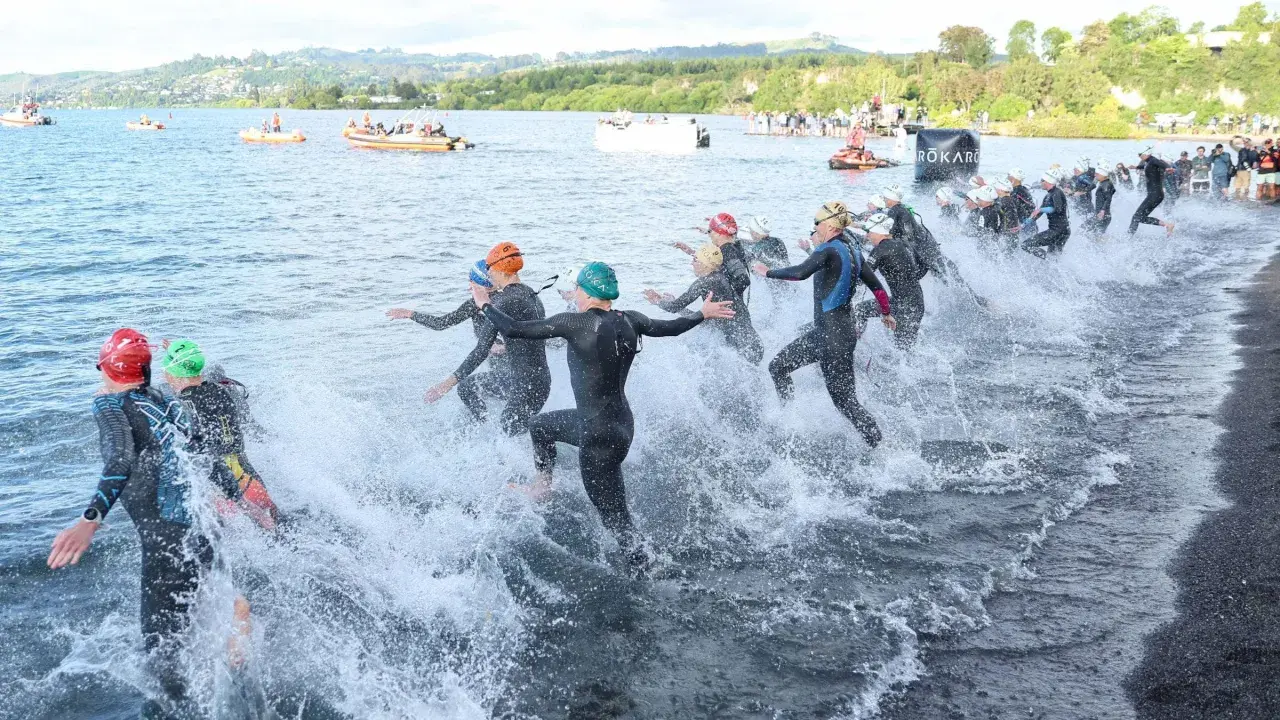
The boulder half ironman is a race that rewards discipline more than bravado: altitude changes how hard every mile feels, the reservoir swim demands calm technique, and the bike-to-run transition punishes anyone who spends too much energy early. In this article I focus on the parts that matter most on the ground: how the Boulder course behaves, how to pace the swim, bike, and run, and what to adjust in training and race week so you arrive ready to perform.
What matters most when racing Boulder well
- IRONMAN lists the event as a 1.2-mile swim, 56-mile bike, and 13.1-mile run, so every discipline needs its own pacing plan.
- Boulder’s altitude is high enough to make effort feel sharper than on a sea-level course, even when the weather looks friendly.
- The swim is won by staying calm, sighting efficiently, and holding form under pressure rather than chasing early speed.
- The bike is where many athletes overspend; steady power and disciplined fueling matter more than attacks on every rise.
- The run usually exposes poor bike pacing, so the goal is to enter T2 controlled, not heroic.
- Race-week logistics matter: for 2026, Boulder County says the race returns on Saturday, June 13, and road delays around the course are possible.

Why Boulder changes the race more than the distance does
The course looks straightforward on paper, but Boulder changes the math in ways that matter. The official race format is a 1.2-mile swim, a 56-mile bike, and a 13.1-mile run, yet the venue adds altitude, sun, and enough terrain to expose weak pacing very quickly.
| Leg | What Boulder changes | What I would do |
|---|---|---|
| Swim | Open-water pressure, crowded starts, and the need to settle fast | Start controlled, sight often, and protect your breathing rhythm |
| Bike | Rolling terrain and altitude make surges more expensive | Ride by effort or power, not by ego or the person ahead of you |
| Run | Residual fatigue shows up early if the bike was too ambitious | Begin under control and let the pace come to you after the first miles |
That combination is why I treat this race as a pacing problem before I treat it as a fitness test. If you respect the venue, you can race it aggressively later; if you ignore it, the course usually collects its debt before the finish. From here, the most important place to start is the water, because that is where a calm day begins.
How to swim Boulder Reservoir without wasting energy
The reservoir swim is not about looking smooth in the first minute. It is about keeping your body quiet when the start feels messy and the pack tightens around you. I care less about a perfect pool split and more about whether your stroke survives contact with race stress.
What works best here is simple:
- Start the first 200 to 300 meters at a pace that feels almost too easy.
- Exhale continuously so you never stack tension into the first breathing cycle.
- Sight just often enough to stay on line, but not so often that you lift and brake every few strokes.
- If you get bumped or boxed in, reset your rhythm before you try to regain speed.
- Hold form under pressure; a clean catch and relaxed recovery matter more than muscling the water.
For training, I would rather see two useful swims per week than five random ones. One session should build threshold comfort, and one should resemble race conditions more closely. That can mean sighting every six to eight strokes, swimming a few longer repeats without pushing off the wall, or practicing fast starts followed by immediate settling. If you are weaker in the swim, a third short technique session usually pays off more than another hard interval day somewhere else.
The practical lesson is this: if you exit the reservoir calm, straight, and breathing normally, you have already protected the rest of the day. That matters because the bike in Boulder rewards restraint, not early heroics.
How to ride the bike leg without paying for it on the run
The bike is where many strong triathletes accidentally lose their best race. Boulder’s altitude and rolling profile make repeated surges more expensive than they look, especially when you are trying to stay with a pack or answer every small rise in speed. I always think of this leg as a discipline test disguised as a bike course.
My bias is to keep the first hour below the intensity you think you can hold. If you use power, stay honest with your caps. If you use heart rate, expect it to drift and do not panic if it climbs a little earlier than usual. If you ride by feel, ask one question often: could I repeat this effort for another hour without drama?
Fueling is just as important as pacing. A solid starting point for most well-trained athletes is 60 to 90 grams of carbohydrate per hour on the bike, with fluid adjusted to conditions and sweat rate. Many athletes also do well with a sodium range around 300 to 600 milligrams per hour, but only if that matches their sweat profile and gut training. The key is not the exact number; it is the fact that you begin early and stay consistent.
What I try to avoid is the classic Boulder mistake: feeling great early, then piling on small attacks because the course looks manageable. It may feel harmless at the time, but every surge steals from the run. Once the bike is under control, the race becomes much simpler. The next question is how to make the half marathon feel like a race instead of a survival walk.
How to run the half marathon with something left
The run is where the race tells the truth. If you overbiked, the opening miles feel oddly heavy; if you fueled badly, the legs start bargaining; if you ignored the altitude and dry air, your effort drifts even when your pace looks reasonable. That is why I prefer a controlled first 5K over a brave first mile.
On this kind of course, I would focus on three things:
- Keep the stride short and quick instead of overreaching in the first mile.
- Use the aid stations early, not only when thirst or fatigue has already caught up.
- Run by effort, because pace can look flattering on paper while the body is quietly getting overcooked.
The dry Colorado air also makes cooling and hydration more important than athletes sometimes expect. A small amount of fluid at regular intervals usually beats waiting until you feel behind. If you tolerate it well, taking calories on the run can help too, but the real win is to arrive in T2 with enough reserves that you can still absorb them. I would rather see a steady second half than a flashy first six miles.
This is also where the swim and bike choices come together. A patient start in the water, a steady bike, and a controlled run are not separate ideas; they are one pacing system. The next step is making sure that system is built in training rather than improvised on race day.
How I would train for Boulder in the final 8 to 12 weeks
The most useful training block for this race is not exotic. It is specific, repeatable, and honest about weaknesses. If I were building for Boulder from scratch, I would keep the week centered on swim quality, bike durability, and one or two run sessions that teach the body to run well off the bike.
Swim work that actually transfers
- Two to three swims per week if the swim is a limiter, with at least one technique-focused session.
- One threshold set such as moderate-to-hard repeats that force you to hold form under fatigue.
- One longer aerobic swim that teaches you to stay relaxed while swimming continuously.
- One open-water or race-simulation session if conditions allow, especially for sighting and crowded starts.
Bike work that protects the run
- One long ride with blocks near race effort, not just a steady endurance spin.
- One shorter session with controlled hill or tempo work to teach smooth power application.
- At least one brick run every 1 to 2 weeks so you learn what controlled legs actually feel like.
Strength and recovery that keep the body intact
- Simple strength work two times a week: single-leg stability, calf strength, hip control, and trunk work.
- Enough recovery to absorb the work, because fatigue hides pacing problems in training the same way it does in racing.
- At least a few sessions where you practice race nutrition exactly as you plan to use it.
If your swim is the weak point, this is where extra technical attention pays off most. I have seen more athletes improve their race day by cleaning up body position and breathing than by chasing another set of maximal intervals. Once the training is in place, the final piece is race-week logistics, which is where a lot of good plans quietly fall apart.
Race-week details that can save or sink your day
For 2026, Boulder County says the race returns on Saturday, June 13, and the same notice warns that residents and visitors can encounter delays and detours around the course. That means I would not build a loose travel plan and hope for the best. I would arrive with enough time to handle check-in, bike setup, and at least one short recon session without rushing.
The boring checklist matters more than people admit:
- Confirm your race kit, timing chip, and bike setup before race morning.
- Bring a simple nutrition plan that you have already tested, not a new sports drink because it sounded good in the expo.
- Keep spare goggles, a backup bottle, and basic comfort items in your gear bag.
- Sleep and hydration matter more than adding one more hard workout at the end of the week.
- If you are coming from lower altitude, give yourself a little room to adapt instead of landing late and hoping race morning fixes everything.
In practice, the athletes who look the most composed on race day are often the ones who treated the week as part of the event, not as dead time before the gun. That mindset leads to the last thing I want you to take from this race.
The smartest way to race Boulder well
If you want a strong day in Boulder, make the first hour patient enough that the last 10K is still yours to race. That means swimming with control, riding with restraint, and starting the run in a position where your body can actually respond instead of just survive.
What usually works here is not complicated: calm water execution, honest bike pacing, and a run that begins under control and gets better rather than worse. Add good fueling, respect the altitude, and handle the logistics early. That is the difference between finishing Boulder and racing Boulder well.
If I were reducing the whole day to one principle, it would be this: protect your energy until the race really asks for it, because Boulder always asks more later than it does at the start.
