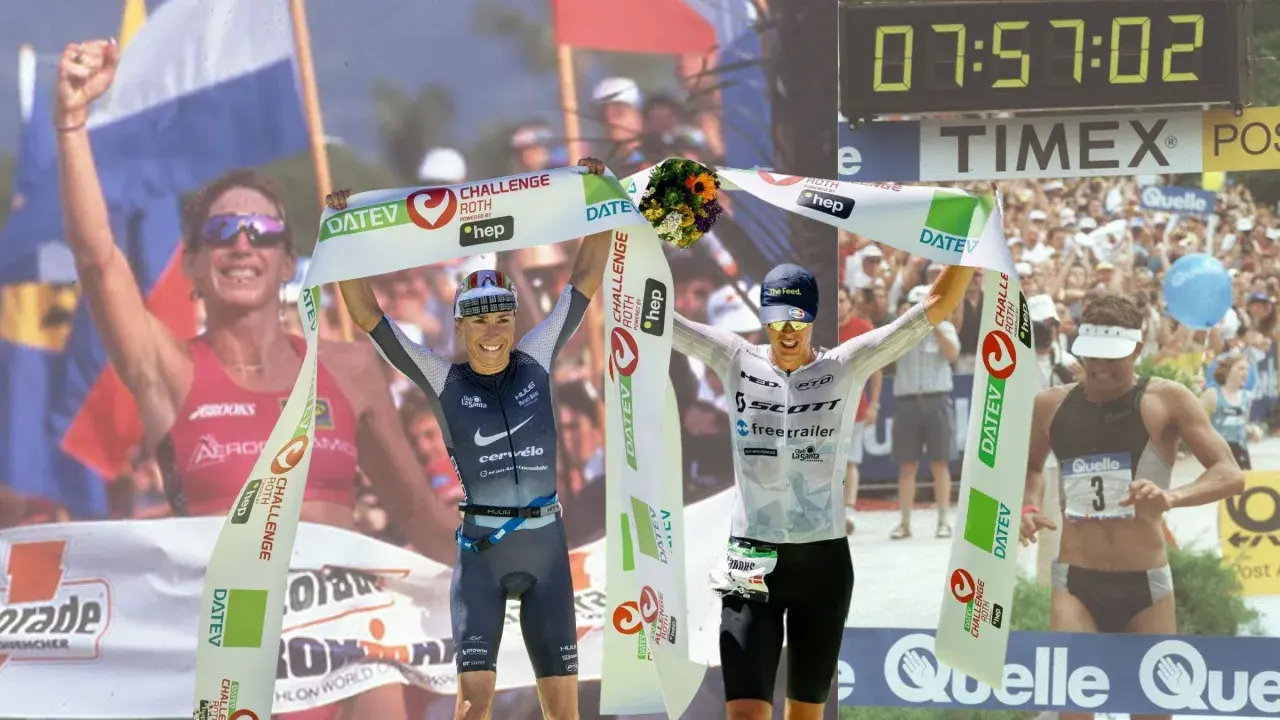
The fastest Ironman time is the number that gets repeated most, but the useful story is the one behind it: how a 140.6-mile day can be executed with almost no wasted motion. As of 2026, the official full-distance benchmark belongs to Kristian Blummenfelt, while Laura Philipp holds the women’s mark, and both performances say a lot about pacing, swim economy, bike efficiency, and race-day conditions. That is the part worth unpacking if you care about triathlon at any level.
The headline numbers are simple, but the context is what makes them useful
- Kristian Blummenfelt holds the fastest official full-distance IRONMAN finish with 7:12:12 in Cozumel in 2021.
- Laura Philipp holds the women’s mark with 8:05:13 in Hamburg in 2025.
- These are full-distance IRONMAN-branded records, not age-group PRs or course-only bests.
- Course profile, weather, and pacing often matter as much as raw fitness at this level.
- For most athletes, the biggest gains still come from swim economy, bike fit, and disciplined fueling.
The current record holders and the times that matter
According to IRONMAN’s current records page, the quickest official full-distance finish is Kristian Blummenfelt’s 7:12:12 in Cozumel in 2021. Laura Philipp’s 8:05:13 in Hamburg in 2025 is the women’s benchmark. If you only want one number to quote, Blummenfelt owns the overall mark; if you want the women’s record, Philipp’s is the one to remember.
| Category | Athlete | Time | Race | Why it stands out |
|---|---|---|---|---|
| Men’s overall fastest official finish | Kristian Blummenfelt | 7:12:12 | IRONMAN Cozumel, 2021 | The quickest full-distance IRONMAN result on record |
| Women’s fastest official finish | Laura Philipp | 8:05:13 | IRONMAN Hamburg, 2025 | The current women’s benchmark in the modern era of faster racing |
That distinction matters because a course best and a world-best are different animals. I would never compare two Ironman times without checking the venue, the weather, and the race dynamics first. The next section breaks down why that matters so much.
Why one great course can look faster than another
Some Ironman courses are built for speed, and some punish any small mistake. A flat bike course, calm water, cool air, and a straightforward run can produce a much faster finish than a hilly, windy, or hot venue, even when the athlete is equally strong.
| Factor | What helps a fast day | Why it matters |
|---|---|---|
| Swim conditions | Calm water, low chop, legal wetsuit conditions | Saves energy before the bike and keeps the athlete from starting the day stressed |
| Bike course | Flat roads, few sharp turns, low wind | Makes it easier to stay aero and hold steady power |
| Run course | Flat, shaded, and cool enough to run on rhythm | Reduces late-race slowdown and cramping risk |
| Fueling execution | Planned intake with no stomach drama | Prevents the fade that turns a great day into an average one |
| Transitions | Clean, practiced, and unhurried movement | Small gains matter when the front of the race is decided by minutes, not hours |
This is why I never treat a record as proof that “the sport has suddenly become easier.” Sometimes the course is simply more forgiving, and sometimes the athlete has done a better job of wasting less time and less energy. That leads straight into the split-by-split mechanics of the fastest races.

How the fastest races are built across swim, bike, and run
The swim sets the tone, not the whole script
In a full-distance race, the swim rarely creates the final record on its own, but it can absolutely set up the day. What I care about most is a swimmer who stays long, balanced, and calm under pressure. A clean body line, a useful catch, and controlled breathing save energy that later shows up on the bike and run.
- A quiet body position reduces drag more than brute force ever will.
- A stable catch keeps the stroke from leaking power as fatigue rises.
- Smart drafting, when available in the pack, saves energy without adding chaos.
The bike is usually where the record opens up
The bike leg is where elite athletes separate because it is the longest sustained effort in the race. Aero position matters, but so does restraint. The fastest riders are not the ones surging at random, they are the ones holding the right power, staying low, eating on schedule, and avoiding the kind of spikes that destroy the marathon later.
Read Also: What is a Triathlon? Your First Race Guide & Tips
The run exposes every mistake
By the time the marathon starts, the body is already paying for the first two legs. The fastest finishers are not “running fresh,” they are running efficiently enough to keep form when the legs are empty. That means posture, cadence, and fuel management are doing just as much work as pure speed.
When all three legs come together this cleanly, the result looks almost unreal from the outside. From the inside, though, it is controlled, deliberate, and usually built on dozens of small decisions that never show up in a highlight reel. That is the part age-group athletes can actually copy.
What age-group athletes can borrow from record pace
If I were coaching an age-group athlete who wanted to get meaningfully faster, I would start with the boring stuff that actually works. The record holders are special, but their performances still point to the same fundamentals that help everyone else.
- Fix swim economy first. A cleaner stroke, better balance, and less drag usually save more time than another hard interval set.
- Fit the bike before chasing more hardware. A strong aero position is often worth more than the latest flashy upgrade.
- Practice fueling like a skill. Many competitive long-course athletes build toward roughly 60 to 90 grams of carbohydrate per hour on the bike, then rehearse that exact plan in training.
- Choose courses that suit your strengths. Flat, cool, predictable races reward different athletes than hot and rolling ones.
- Start the marathon with restraint. The fastest Ironman finishes are almost never built on a heroic first 10K.
That is the most practical lesson in the whole conversation: the top end is getting faster because elite athletes are better at removing friction, not because they are magically suffering less. If you understand that, the next question becomes which conditions are most likely to produce the next breakthrough.
What the next benchmark will probably require
The next record attempt will almost certainly need a very specific setup. I would look for a fast course, mild weather, a deep field that forces pace, and a rider-runner who can stay controlled long enough to avoid the usual late-race blow-up.
- A flat or gently rolling course with minimal technical sections
- Cool enough conditions to protect the marathon
- Clean swim conditions that do not burn matches early
- Precise nutrition and zero major mechanical issues
In 2026, the real story is not just that records are fast, it is that they are now so fast that the margin for error is tiny. The headline time matters, but the race mechanics explain why it happened, and that is the part worth paying attention to if you want to understand where the sport is going next.