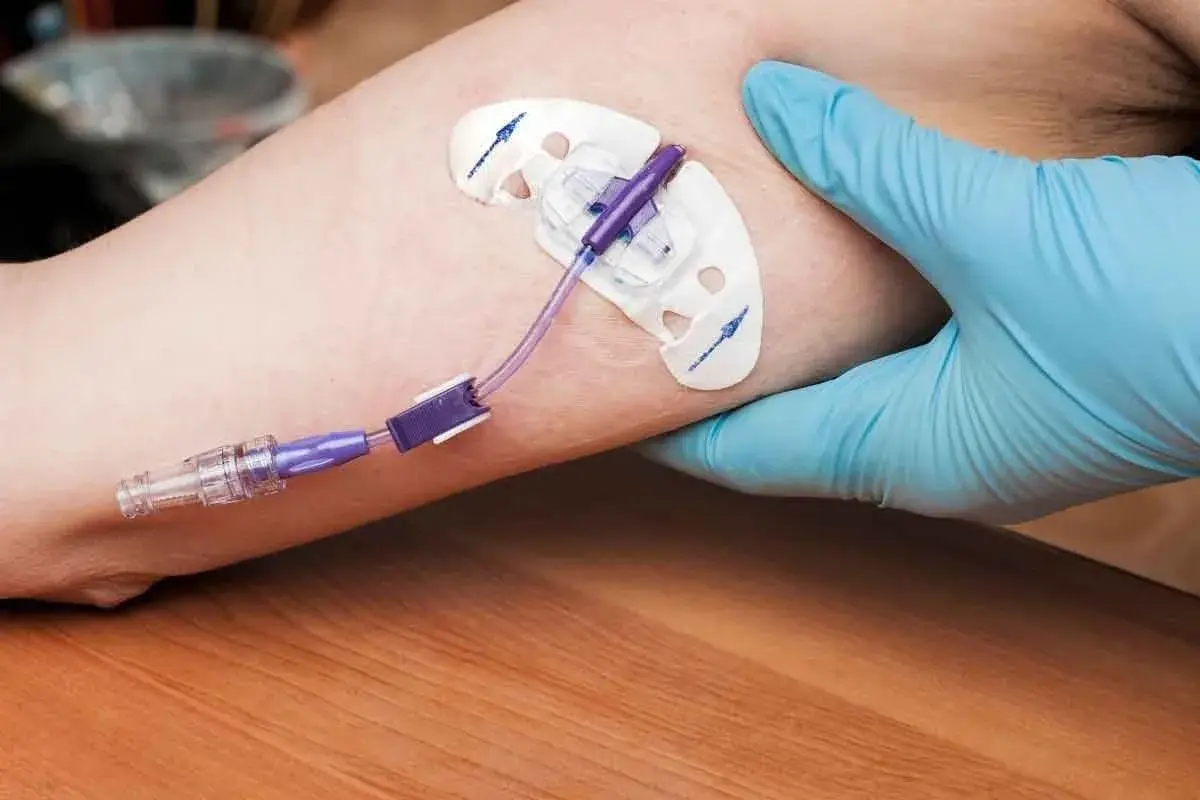
The key points at a glance
- Swimming is generally not recommended with a PICC line in place, including pools, open water, and hot tubs.
- Showering may be possible if your team approves and the dressing stays dry with a waterproof cover.
- The main risks are infection, a wet or loosened dressing, and accidental line movement.
- If swimming matters to your lifestyle, ask early whether a port/TIVAD or another access route is more suitable.
- Any dampness, lifting, redness, oozing, or pain around the site should be treated as a care issue, not a minor nuisance.
Can you swim with a PICC line
The short answer is no, and I would treat that as a firm rule rather than a grey area. UK hospital advice is very consistent on this point: a PICC line is designed to stay dry, and swimming creates too much risk for the exit site, dressing, and catheter itself. Even if the pool water looks clean, immersion and repeated arm movement make it hard to keep the line sealed and protected.
The important distinction is between brief water exposure and full submersion. A shower can sometimes be managed with the right cover and care instructions, but swimming is different because the dressing is exposed to water pressure, splashing, soaking, and friction for long enough to become unreliable. That is why this topic quickly becomes about infection control, not just comfort or convenience.
Once you accept that limitation, the next question is simple: what exactly is the risk, and why do clinicians draw such a hard line around it?
Why water creates a real problem for PICC care
A PICC line gives bacteria a direct route toward the bloodstream if the site is compromised, so the water issue is not theoretical. In my view, this is one of those situations where a small shortcut can create a disproportionately big problem.
- Infection risk - The insertion site and dressing are a barrier, not armour. If water gets under the dressing, the site can become a route for bacteria.
- Moisture weakens the dressing - Once adhesive starts to lift, the line is no longer properly protected. A dressing that looks mostly intact can still fail at the edges.
- Arm motion can tug the line - Swimming is repetitive overhead work. That movement can strain the line or shift it slightly, especially if the dressing has already loosened.
- Problems may show up later - You may not notice a small leak, damp patch, or edge lift until after the session, when the site is already exposed.
Pool water is not the only concern. Lakes, sea water, and hot tubs all add their own contamination or heat-related issues, which is why the advice usually stays the same across different settings. With that in mind, it helps to know what water-related activity is still realistic while the PICC is in place.
What you can still do around water at home
Showering is often possible, but only within the boundaries your team gives you. The usual goal is to keep the dressing dry, avoid soaking the site, and make sure the line is not rubbed by towels, sponges, or flannels. If you are using a waterproof sleeve or cover, it is there to reduce splash exposure during a shower, not to make the line pool-ready.
- Keep the spray away from the insertion site as much as possible.
- Use only the protection your nurse or unit recommends.
- Pat the area dry afterwards rather than rubbing it.
- Check for lifted edges, dampness, or a change in how the dressing sits.
- Call the team promptly if the dressing gets wet or compromised.
I would also be cautious about “testing” the cover in a bath, even if the water is shallow. A shower sleeve that works for a quick wash is not a reliable answer for swimming, and it should never be treated that way. From there, the real conversation becomes whether a different line would suit someone who wants to stay active in the water.
When a port may be a better fit than a PICC
If swimming is part of your normal routine, I would ask early whether a port or TIVAD might fit the treatment plan better than a PICC. Ports sit fully under the skin once healed, which is why they can be more compatible with swimming when they are not accessed. That does not make them right for everyone, but it does make them worth discussing if water sports matter to you.
| Access type | Swimming status | Typical use | Main trade-off |
|---|---|---|---|
| PICC line | Not recommended | Short- to medium-term treatment that needs central access | Simple to place, but strict water limits |
| Port / TIVAD | Often possible once healed and not accessed | Longer-term treatment plans where swim access matters | More invasive to insert and needs regular flushing |
| Tunneled external catheter | Usually not recommended | Longer-term central access when an external line is needed | More daily care and still water-sensitive |
That comparison matters because it shows the bigger point: the right access device is not just about treatment delivery, it is also about how you live while treatment is happening. Once you see that, it becomes easier to avoid the common mistakes people make when they try to “work around” a PICC line.
The mistakes that cause avoidable line problems
I see the same errors come up again and again when people are determined to stay in the water. Most of them are understandable, but that does not make them safe.
- Trying a quick swim - There is no such thing as a low-risk test dip with a PICC line.
- Trusting a shower cover for pool use - A cover that survives a shower is not designed for repeated immersion.
- Ignoring a damp edge - A dressing that is even slightly compromised should be reported.
- Going back to hard training too soon - Repetitive arm movement can still stress the line even out of the water.
- Waiting for the next scheduled visit - If the site looks wrong, do not sit on it until the next flush or dressing change.
The safest habit is boring but effective: keep the site dry, watch it closely, and escalate early if anything changes. That leads naturally to the final question, which is what I would ask before swimming becomes a deal-breaker in your routine.
What I would ask the team if swimming matters to you
If swimming is part of your fitness, rehab, or mental reset, I would bring that up before the line is placed, not after. Ask how long the PICC is expected to stay in, whether a different device is realistic, and exactly which water activities are off limits. That conversation is often the difference between a treatment plan that fits your life and one that quietly fights it.
My practical rule is simple: plan for no swimming with the PICC in place, and only change that plan if your vascular access team gives you a different device and a clear green light. If the line is already in and the dressing gets wet, the right move is to contact your team promptly rather than trying to dry it out and hope for the best. The safer you are with the access line, the sooner you get back to normal training once treatment is over.