What matters most before you get back in the water
- A healed, unaccessed implanted port is usually treated differently from a PICC or other external line.
- If the port still has a needle in it, do not swim.
- After insertion, many clinicians use a 1 to 2 week healing window, but the incision must look closed and dry.
- Public pools are generally lower risk than lakes, rivers, or hot tubs, but any water exposure with open skin still raises infection risk.
- Redness, pain, swelling, drainage, or fever means you should stop and get medical advice.
Why a port is different from a PICC or external line
An implanted port sits entirely under the skin when it is not being used. That matters because a healed port does not leave an open exit site exposed to pool water, while a PICC or other external line does. Macmillan’s guidance on central lines is stricter for exactly that reason: once there is tubing outside the body, water safety becomes a much bigger infection issue.
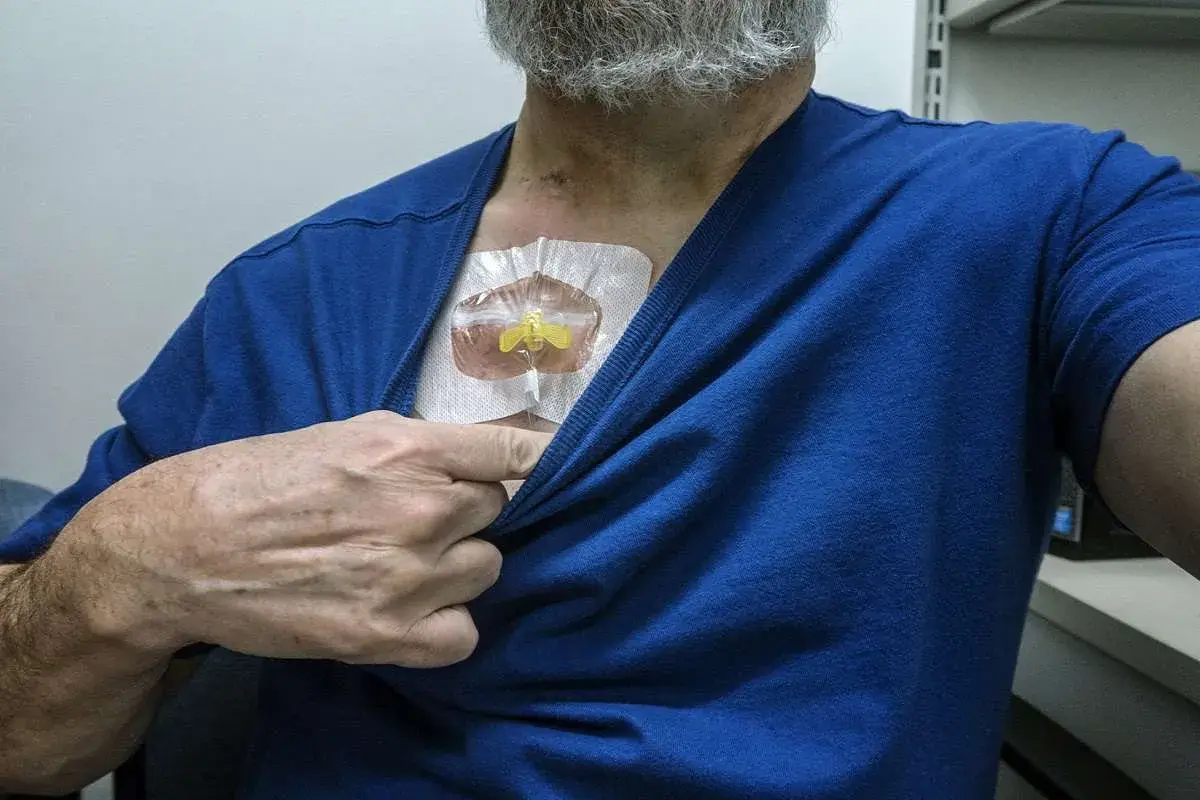
When the port is accessed, the picture changes. A needle, dressing, and access site are now part of the system, so swimming is no longer just about the incision on your chest; it is about protecting a live connection to the vein.
That is the first question I always separate out: is the device fully internal, or is it currently accessed? The answer decides almost everything that follows.
When swimming is usually allowed
In practical terms, swimming is usually back on the table when three things are true: the incision has healed, the port is not accessed, and your clinician is happy with the timing. Many NHS portacath leaflets use a healing window of about 1 to 2 weeks after insertion, but I would not treat the calendar alone as the decision-maker. Closed skin matters more than the number of days.
If you want a simple decision grid, I would use this one:
| Situation | Practical answer | Why it matters |
|---|---|---|
| Fresh incision, scab, oozing, or a dressing still needed | No | The skin barrier is not sealed, and dressing failure can invite infection. |
| Healed port, no needle in place | Usually yes, after clinician approval | The port is fully under the skin and not exposed. |
| Port accessed with a needle and dressing | No | Water can contaminate the access site and loosen the dressing. |
| Active treatment, low blood counts, or recent infection | Usually no or ask first | Your team may want a stricter rule because your infection risk is higher. |
For many people, a clean chlorinated pool is the first choice. Lakes, rivers, and hot tubs are less forgiving, so I would not make them the first swim after a port procedure.
When you should stay out of the water
The biggest red flags are simple: a fresh wound, any drainage, a port that is currently accessed, or signs of infection. If any of those are present, the question stops being “Should I swim?” and becomes “Why is this site not stable yet?”
- Redness spreading around the port
- Swelling, warmth, tenderness, or pain that is getting worse
- Drainage, bleeding, or a dressing that keeps getting wet
- Fever, especially 38°C or higher, or feeling generally unwell
- Any advice from your oncology or vascular-access team to avoid pools
A pool is not automatically “safe enough” just because the water is treated. If the skin is not sealed, the device is accessed, or you are medically fragile, the risk is still real.
How to make the first swim lower risk
Once your team has cleared you, I would treat the first swim like a controlled return, not a full training set. Start with a short pool session rather than a long open-water swim, then check the skin and how you feel later that day and again the next morning.
- Shower before and after swimming.
- Dry the port area gently and check for redness or tenderness.
- Choose a clean pool with normal upkeep, not a hot tub or lake.
- Wear a suit that does not rub the incision line.
- Stop if a dressing loosens or if the site starts to sting.
- Do not rely on a waterproof cover to make an accessed port safe for swimming.
I am deliberately conservative here. A waterproof film can be useful for showers, but it is not the same thing as permission to submerge a healing surgical site or an accessed port.
What to watch for after a swim
A lot of problems show up after the session, not during it. That is why I always look at the skin again a few hours later and again the next day, especially if the swim was longer than planned.
- New redness, swelling, warmth, or increasing pain around the port
- Any discharge, wetness, or crusting that was not there before
- A temperature of 38°C or more, chills, or feeling flu-like
- Difficulty flushing the port later, if it is being used for treatment
- Skin irritation from chlorine, wetsuit friction, or adhesive residue
If any of that appears, call your oncology day unit, vascular-access team, GP, or the urgent number you were given after the procedure. The earlier infection is spotted, the easier it is to manage, and that is not something I would gamble on after a pool session.
The simplest rule I use before giving the green light
My rule is short: healed, unaccessed, and cleared. If the port is still fresh, still covered by a healing incision, or currently accessed with a needle, the answer is no. If it is fully healed, sitting quietly under the skin, and your clinician has no objections, swimming is usually reasonable for most people.
That is the point where common sense beats bravado. If you swim regularly, ask for one clear instruction from your team on when pool training can restart, whether open water needs a longer delay, and what symptoms should stop you from getting back in. When the advice is specific, the decision becomes much easier to trust.