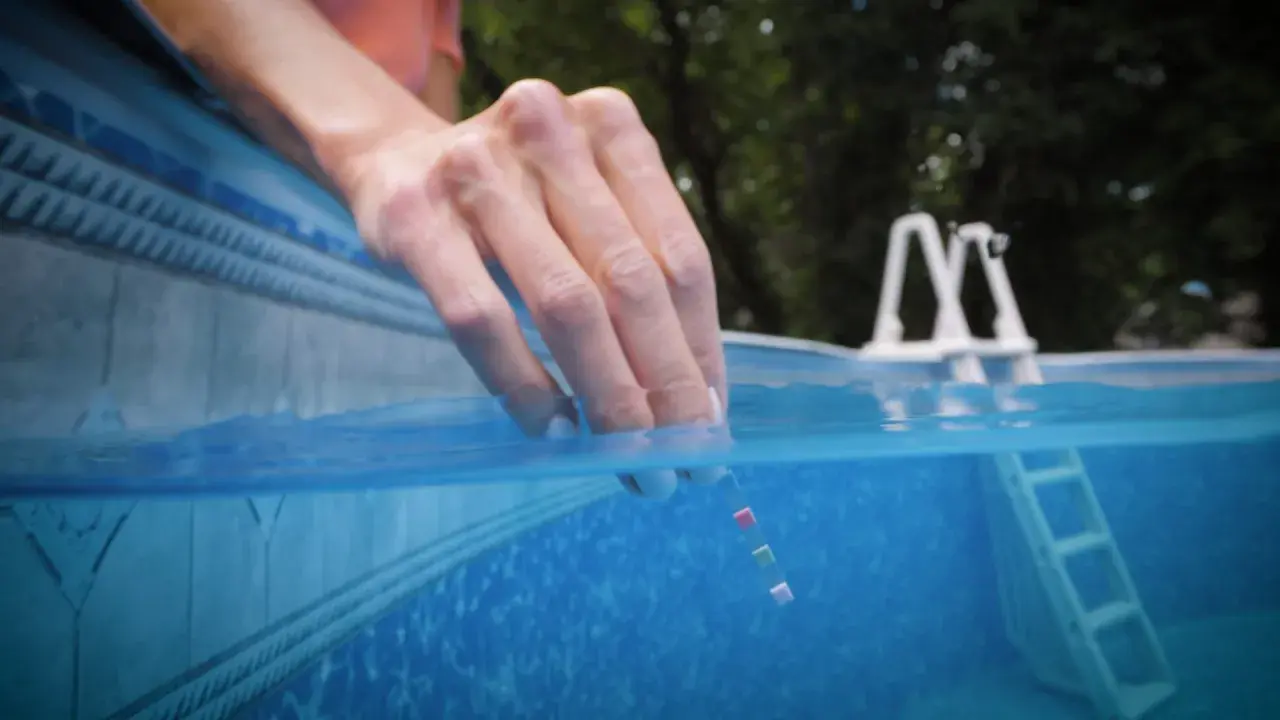
Chlorine is one of the main reasons a pool can stay safe enough for regular use, but it is not a cure-all. It can inactivate many fungal organisms when the water is correctly managed, yet it will not reliably treat an infection already living in skin or nails. For swimmers, the useful question is not just whether chlorine works, but where it works, how well it works, and what still needs to be done around the pool.
The practical answer in one glance
- Chlorine can kill or suppress many fungi on surfaces and in properly maintained pool water.
- Its effect depends on free chlorine, pH, circulation, and contact time.
- It does not reliably cure athlete's foot or fungal nail infection once those are established.
- Most swimmer-related fungal risk comes from damp feet, shared wet surfaces, and changing rooms, not the water alone.
- If symptoms start, the right move is antifungal treatment, not more time in chlorinated water.
Does chlorine kill fungus in swimming pools
The short answer is yes, but only under the right conditions. Chlorine is a disinfectant, so it can inactivate many fungal organisms in pool water and on cleaned hard surfaces. I would treat it as a strong line of defence, not a guarantee, because fungi are not all equally easy to eliminate and the environment around the pool matters just as much as the water.
| Situation | What chlorine can do | What you should assume |
|---|---|---|
| Well-managed pool water | Suppresses many germs and lowers the chance of spread. | Helpful barrier, not a perfect shield. |
| Hard surfaces cleaned with a chlorine-based disinfectant | Can disinfect if the product is used at the right strength and left wet for the full contact time. | Cleaning first, then disinfection, is what actually works. |
| Athlete's foot on skin | Will not reliably cure it. | Use a proper antifungal treatment. |
| Fungal nail infection | Poor penetration through the nail plate. | Expect months of treatment, not a quick fix. |
That distinction matters because chlorine is often credited with doing more than it really can. It helps with prevention, but once fungus has settled into skin or under a nail, you need a different approach. The next question is why swimmers still pick up these infections even when the pool itself is chlorinated.
Why swimmers still get athlete's foot and nail fungus
The pool water is only one part of the exposure chain. The bigger problem is often the warm, damp, shared environment around the pool - especially changing rooms, communal showers, deck areas, and anywhere barefoot traffic is high. The NHS notes that athlete's foot can come from swimming pools, changing rooms and showers, which is exactly why I pay so much attention to what happens before and after the swim, not just during it.Fungi like moisture. If your feet stay wet, if you walk barefoot on damp floors, or if you keep using sweaty shoes and socks, you make life easier for them. Fungal nail infection is even more stubborn because the organism sits in and under the nail plate, which is the hard nail surface that protects it from easy contact with disinfectants.
- Wet feet after swimming create a better environment for fungal growth.
- Shared floors and benches can transfer fungal particles between swimmers.
- Towels, socks, shoes, and nail tools can spread infection from one person to another.
- Minor cracks, peeling skin, or an existing athlete's foot problem make it easier for fungus to take hold.
So the real takeaway is simple: a chlorinated pool can still sit inside a fungal risk zone if the rest of the venue is not managed well. That leads straight into the part people usually underestimate - the water chemistry itself.
The chlorine conditions that actually matter
Chlorine only does its job when the pool is balanced properly. In pool water, the active part is free chlorine, meaning the chlorine that is available to disinfect rather than being tied up reacting with contamination. The CDC's pool guidance is clear: maintain at least 1 ppm free chlorine in pools, keep the water at pH 7.0-7.8, and test levels at least twice a day, or hourly when the pool is heavily used.
For hot tubs, the CDC recommends a higher minimum of 3 ppm free chlorine because the warm, high-use environment makes control harder. That is one reason hot tubs are less forgiving than lap pools. If the pH drifts too high, chlorine loses effectiveness. If the bather load rises, the disinfectant gets used up faster. If the circulation system is weak, the whole pool becomes less predictable.
| Factor | Practical target | Why it matters |
|---|---|---|
| Free chlorine | At least 1 ppm in pools, 3 ppm in hot tubs | Too little leaves germs less controlled. |
| pH | 7.0-7.8 | Outside this range, chlorine works less effectively. |
| Testing frequency | At least twice daily, more often in heavy use | Levels drift as the pool gets used. |
| Contact time | The surface must stay visibly wet for the full label time | If it dries early, the disinfectant may not finish the job. |
What to do when the infection has already started
If athlete's foot or fungal nail infection has already shown up, chlorine is no longer the answer. For athlete's foot, the practical route is a topical antifungal, usually one containing terbinafine, and you should keep using it for 2 weeks after the symptoms disappear to help stop it coming back. Wash socks and bed sheets at 60C, dry your feet carefully, and do not keep wearing the same damp trainers.
Fungal nail infection takes longer. NHS advice says brush-on antifungal treatments may need to be used daily or weekly for 6 to 12 months, and if that does not work, a GP may prescribe antifungal tablets for up to 6 months. If the infection is severe, spreading, or you have diabetes or a weakened immune system, I would not leave it to chance.
- Do not try to treat skin or nail fungus by soaking in pool water and hoping for the best.
- Do not ignore cracked, itchy, or peeling skin between the toes.
- Do not share towels, socks, shoes, or nail tools.
- Do not wait months if the nail is thickening, discolouring, or becoming painful.
This is where swimmers sometimes get misled by the idea that chlorine is the solution to everything. It is not. Once fungus has taken hold, treatment and prevention have to be separate jobs.
Habits that keep fungus from following you home
If I were building a simple swim-health routine for a regular pool user, I would focus less on the smell of chlorine and more on foot hygiene. Small habits do most of the work here, because they break the chain of moisture, shared surfaces, and skin contact that fungi depend on.
- Shower after swimming and dry your feet thoroughly, especially between the toes.
- Wear flip-flops or pool shoes in changing rooms and communal showers.
- Change out of wet swimwear as soon as you can.
- Use a clean towel every time and do not share it with anyone else.
- Let trainers dry fully between sessions and rotate pairs if you swim often.
- Keep toenails short and feet clean, because easier-to-manage feet are harder for fungus to colonise.
These habits sound basic because they are basic, and that is exactly why they matter. They are also more reliable than assuming that a pool's chlorine level will protect every part of the venue. Put another way, the water can be managed well and still leave you exposed if your feet stay wet and bare on communal surfaces.
What I would remember before trusting pool chlorine alone
The cleanest way to think about this is that chlorine is a venue-level control, not a personal treatment. It helps reduce fungal risk when the pool is correctly maintained, but it does not replace good hygiene, proper footwear, or antifungal medicine when infection is already present. That is the practical answer to whether chlorine kills fungus: yes, it can, but only within real-world limits.
If you swim regularly, the best protection is a layered routine - maintain the pool properly, dry your feet, protect them in shared spaces, and treat symptoms early. That approach is more realistic, and in practice it works better, than relying on one chemical to solve everything. If the pool is part of your weekly life, that is the standard I would use for swim health.