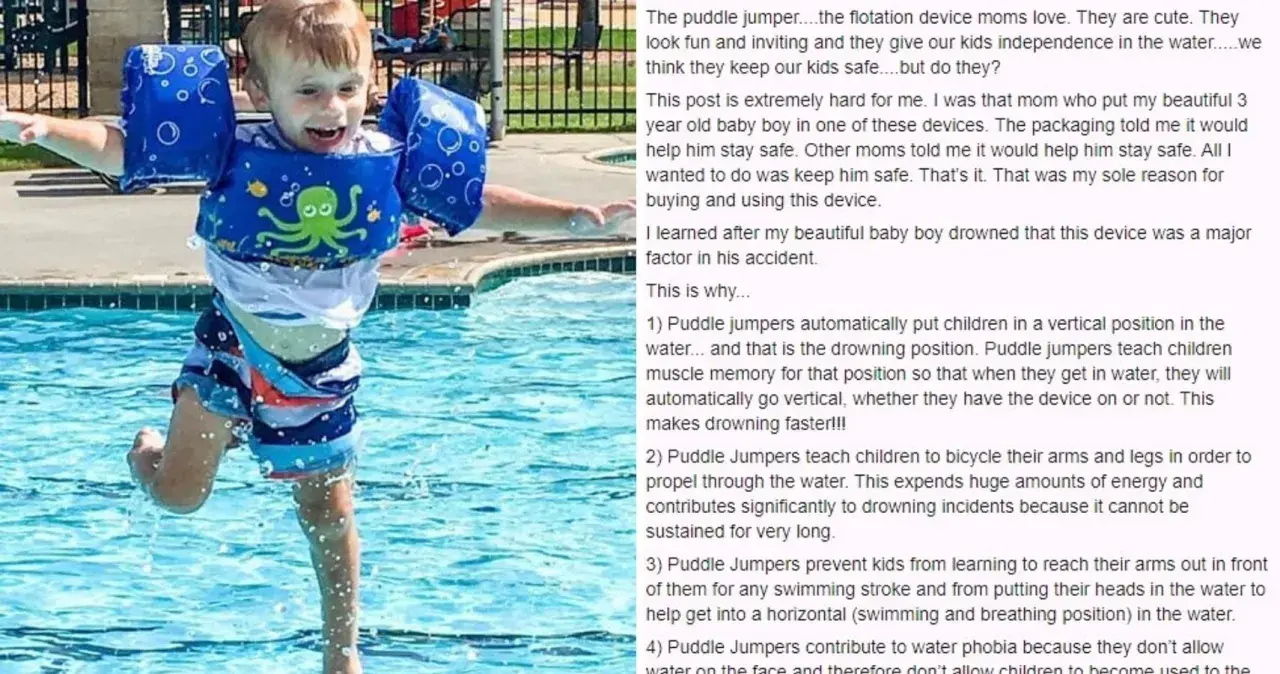
A child who is just beginning to swim often needs more support than confidence alone can provide. A puddle jumper is a child flotation vest designed to add buoyancy around the chest and arms, but its safety depends on proper approval, fit, supervision, and how it is used during lessons. I will explain what this device does, how to choose one in the United States, where it helps, and why it can never replace active adult supervision.
The right flotation aid adds protection without replacing swimming skills
- Choose USCG approval and check the label before buying.
- Fit matters more than appearance; the vest must stay secure when the child moves.
- Use it as one layer of safety in calm, shallow water, not as permission to swim alone.
- Inflatable toys and water wings are not substitutes for an approved life jacket.
- Continue with swim lessons so the child learns to float, turn, move, and reach safety without relying on the device.
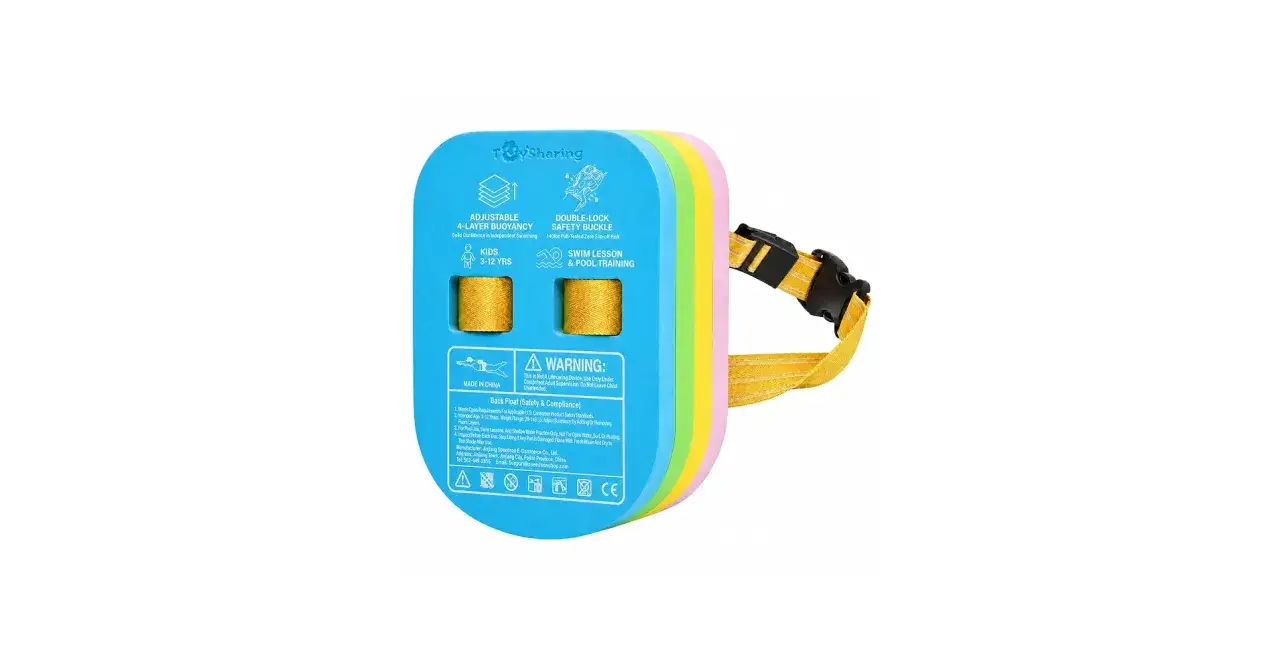
What this child flotation vest is designed to do
This type of wearable flotation aid usually combines two arm sections with a buoyant chest panel. The design helps a young child remain supported in the water while keeping the arms available for simple kicking, paddling, and instructor-led practice. Its main purpose is buoyancy and familiarization, not independent swimming.
The name can be misleading because similar-looking products are sold as toys, swim aids, or life jackets. I treat them as completely different categories. A product intended to protect a child must carry a clear U.S. Coast Guard approval statement and show the user size, weight range, and intended conditions.
An approved model may be appropriate for a child in a calm pool or shallow water when used correctly. It does not guarantee that the child will float face-up, remain in one position, or be able to recover after falling into unfamiliar water. Those limitations are why the American Academy of Pediatrics describes flotation devices as one part of a wider water-safety plan.
How to choose the right model for a young child
Start with the label, not the color
Look for the U.S. Coast Guard approval information on the product itself, not only in the online description. If the label is missing, difficult to read, or describes the item as a toy, I would not use it for safety. Bright colors and friendly designs may improve visibility, but they do not prove that a device meets life-jacket requirements.
Check size, weight, and body shape
Follow the manufacturer’s weight range, then test the fit on the child. The vest should sit securely against the torso, the arm sections should remain in place, and the child should not be able to pull it over the head. A loose device can shift or slip during a fall, while an overly tight one may restrict breathing and movement.
| What to check | What a safe fit looks like |
|---|---|
| Weight range | The child falls within the listed range, with no guesswork based only on age. |
| Chest strap | It closes fully and stays snug without pressing uncomfortably into the body. |
| Arm openings | The arms move freely, but the device cannot slide off easily. |
| Buoyant material | It is firm, intact, and free from tears, crushed foam, or damaged seams. |
| Visibility | The color contrasts clearly with the water and the child’s surroundings. |
Ask the child to lift both arms, bend forward, and turn gently while standing in shallow water. The flotation aid should remain positioned correctly. I find that a short supervised fitting test reveals more than choosing a size from a product photograph.
Where it helps and where it does not
In a calm swimming pool, an approved vest can give a beginner enough support to practice kicking and become comfortable putting the face near the water. It can also provide an extra safety layer during busy family swim time. Even then, the adult should remain within immediate reach of a young or inexperienced swimmer.
Open water requires more caution. Lakes, rivers, oceans, docks, and boats introduce waves, currents, cold water, poor visibility, and uneven surfaces. For those settings, use a flotation device specifically approved and appropriate for the activity. A pool-oriented model should never be treated as automatically suitable for boating or rough water.
The device is also not a substitute for a four-sided pool fence, a locked gate, swim lessons, or an adult who is watching continuously. The AAP emphasizes that drowning can happen quickly and quietly, including when a child has already taken swimming lessons or appears comfortable in the water.
| Situation | Recommended approach |
|---|---|
| Calm, shallow pool | Use an approved device with close, active supervision and structured practice. |
| Swim lesson | Follow the instructor’s plan and include time learning skills without flotation support. |
| Lake or ocean | Use an activity-appropriate, approved life jacket and account for currents and waves. |
| Boat or dock | Wear a properly fitted life jacket before entering the boat or standing near the edge. |
| Unsupervised access to water | Never rely on the vest. Use barriers, locked gates, alarms, and direct supervision. |
How to use it without slowing down swim development
I recommend treating the flotation aid as a temporary teaching support, not as the child’s permanent swimming position. Begin with simple skills such as entering calmly, holding the wall, kicking toward an adult, and responding to the word “stop.” These skills build useful habits while the child remains supported.
During lessons, children should also experience the water without the device when the instructor believes it is appropriate. They need to feel how the body floats, how to roll onto the back, and how to reach the wall. A child who only practices with buoyancy assistance may be surprised by the water without it.
- Inspect the device before every use.
- Put it on and fasten every strap before the child enters the water.
- Keep the child close enough to hold immediately.
- Practice one skill at a time instead of encouraging independent wandering.
- Remove it only in a controlled lesson or calm practice session with a capable adult present.
- End the session if the child becomes cold, tired, frightened, or unable to maintain a safe position.
One detail parents often miss is the difference between comfort and competence. A child may look relaxed because the vest is doing much of the work. That is useful for gradual exposure, but it should not be mistaken for proof that the child can swim safely without assistance.
Common mistakes that make flotation aids less safe
Using a toy as a life jacket
Inflatable rings, water wings, loungers, and novelty floats can deflate, move out of position, or slip away from a child. They may be fun for supervised play, but they are not personal flotation devices unless the label specifically confirms the required approval.
Buying a larger size to make it last longer
This is one of the most dangerous shortcuts. A device that is too large can ride up, expose the face to the water, or come off during a sudden movement. Buy for the child’s current size and replace it when the fit or condition changes.
Letting the device create false confidence
Some children begin to jump, walk toward deeper water, or move away from an adult because the vest makes them feel secure. I set the same boundaries with or without flotation support: no running, no jumping without permission, no climbing over barriers, and no water access without an adult.
Read Also: How Cold Is Too Cold to Swim? Your Guide to Safe Water Temps
Ignoring wear and storage
Foam, straps, buckles, and stitching can deteriorate after repeated exposure to chlorine, salt, sunscreen, and heat. Rinse the vest with fresh water, let it dry fully, and store it away from direct sunlight. Replace it immediately if the material is torn or the hardware no longer holds firmly.
A practical water-safety routine for families
Before swimming, I use a short routine that takes less than two minutes. I check the device, confirm the fit, identify the supervising adult, and set a clear rule about where the child may go. This prevents the common mistake of assuming that someone else is watching.
- One designated watcher stays focused on the child and avoids phone use.
- The device is fitted before the child approaches the water.
- A second adult knows who is supervising if the first person needs to leave.
- The child practices a simple emergency response such as reaching for the wall and calling for help.
- Pool access remains blocked when no adult is present.
- Adults learn CPR and safe rescue techniques instead of entering the water impulsively when a reaching rescue is possible.
For children around age one and older, swim lessons can introduce water competency when the child is developmentally ready. The most useful programs teach more than strokes. They build skills for floating, turning, reaching safety, recognizing danger, and understanding that a flotation aid does not make the water harmless.
The safest role for a child’s flotation aid
A properly approved and fitted vest can make early water experiences calmer and give a young swimmer useful support. Its role is limited, however. It should complement constant supervision, barriers, swim instruction, and an activity-appropriate life jacket, never replace them.
My rule is simple: use flotation equipment to support learning and reduce risk in the moment, then keep building the skills a child needs when the equipment is not available. That balance gives families practical protection today while moving the swimmer toward genuine water competence.