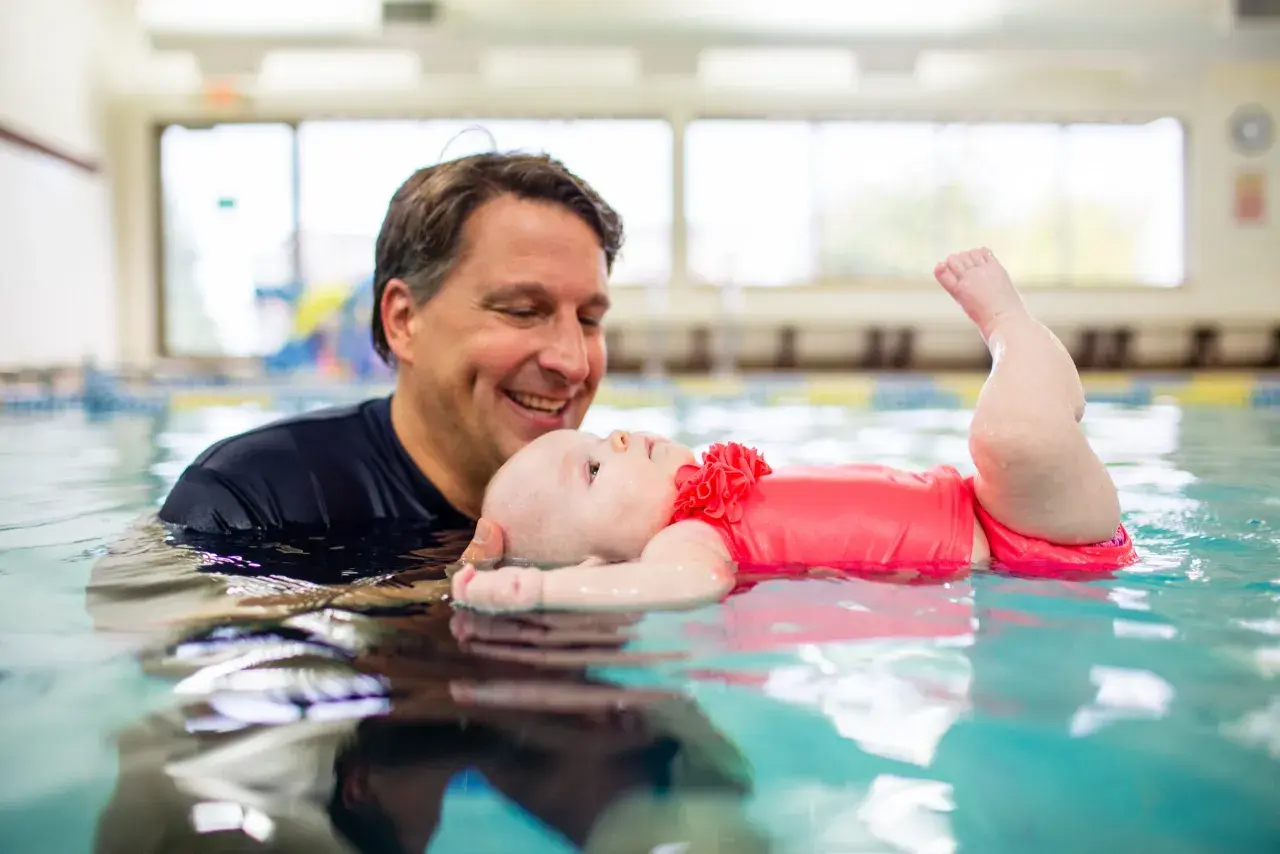
In the U.S., parents usually do best by treating swim lessons as a readiness decision, not a birthday milestone. The practical answer is a window: some children can start with parent-child water play in infancy, many are ready for structured lessons between ages 1 and 4, and most are ready for formal instruction by age 4. I look at development, comfort, and supervision before I look at the calendar, because those details tell you more than age alone.
What parents should know before choosing a swim class
- Children under 1 year old are not considered ready for formal swim lessons, though gentle water play can still build comfort.
- Between ages 1 and 4, readiness-based lessons can help children learn early water skills if they can handle structure and instruction.
- By age 4, most children are ready for formal lessons that teach floating, safe entries, exits, and basic water survival skills.
- By age 5 or 6, many kids can start refining strokes such as the front crawl.
- The best instructor teaches safety first, keeps expectations age-appropriate, and can explain how each skill reduces risk.
The short answer on age and readiness
I usually tell parents to stop looking for one perfect age and start looking for the right stage. The AAP's current guidance is straightforward: there is no evidence that formal infant classes under age 1 reduce drowning risk, but many children are developmentally ready for lessons once they are toddlers, and most are ready by their fourth birthday.
Once children become more mobile, the risk changes fast, which is why ages 1 to 4 deserve special attention. At that stage, the goal is not elegant stroke technique. It is basic water competence: getting comfortable in the pool, recovering after a slip, floating, and moving toward safety.
- Under 1 year: focus on water comfort, not formal swimming.
- Ages 1 to 3: a good window for parent-child classes and basic water familiarity.
- Ages 4 to 6: usually the sweet spot for structured lessons and skill progression.
- Older beginners: they can absolutely learn too; they often progress quickly if the class is age-appropriate.
The point is not to rush the calendar. It is to match the lesson to the child so the experience builds competence instead of fear, which leads naturally into the signs I watch for before enrolling.
How to tell whether your child is ready
Readiness is a mix of emotional maturity, physical coordination, and basic listening skills. I pay attention to whether a child can stay with the group, follow simple directions, and recover from small discomforts without spiraling into panic.
| Readiness sign | Why it matters | What I look for |
|---|---|---|
| Can follow 1-2 step instructions | Lessons depend on quick safety cues | Child can listen, wait, and respond to the teacher |
| Comfort with water on the face | Breath control starts here | Child can blow bubbles, splash, and tolerate brief submersion |
| Can separate from a parent briefly | Independent learning is easier | Some reassurance is fine, but not a meltdown every minute |
| Can move with purpose in the water | Motor control supports floating and kicking | Child can kick, reach, and turn without freezing up |
| Can accept gentle correction | Progress comes from repetition | Child does not need perfection, only enough focus to try again |
If a child is fearful, that does not automatically mean "wait a year." It often means start smaller. A shallow, quiet class with a patient instructor can work better than a crowded lesson that pushes too fast. If there are developmental, sensory, or medical concerns, I would ask a pediatrician for input before signing up. Once you know the child can handle the basics, the next question is which lesson format will actually fit the stage they are in.

What good lessons look like at each stage
The most useful swim program is the one that teaches the right thing at the right time. I like programs that build water confidence first, then survival skills, then stroke mechanics. That order matters, because a child who can float, turn, and reach the wall has a better foundation than one who can mimic arm strokes but panics when tired.
| Age band | Best lesson focus | What success looks like | What not to expect yet |
|---|---|---|---|
| 6 months to 3 years | Parent-child water play, comfort, entries, exits, back floating | Child relaxes in the water, accepts simple cues, and enjoys short, structured activities | Independent swimming or long practice sets |
| 3 to 4 years | Basic water survival, breath control, floating, kicking, short-distance movement | Child can move toward the wall, recover from a back float, and listen to a teacher | Perfect stroke form or endurance training |
| 5 to 6 years | Stroke foundations, rhythm, glide, treading water, wall safety | Child begins to coordinate breathing and arm action and can repeat skills with less help | Adult-style lap swimming or competitive speed |
| 7 years and up | Technique refinement, stamina, turns, safety in varied water settings | Child can swim farther, control breathing better, and practice with more independence | Assuming confidence equals safety |
There is a quiet trap here: parents often compare lessons by how "advanced" they sound. I would not. A strong beginner class can be more valuable than a flashy program that skips the basics. A child who can roll to a back float, reach the wall, and ask for help has learned something more important than an early butterfly kick. That is also why the instructor matters so much.
How to choose an instructor who teaches safety first
I look for three things first: current rescue and first-aid training, an orderly teaching plan, and a calm way of handling fear. The best instructors know how to explain a skill in plain language, demonstrate it, and then scale it down when a child is overwhelmed.
| What to check | What good looks like | Why it matters |
|---|---|---|
| Safety credentials | Current CPR, first aid, and water-safety training | Emergencies are rare, but preparation should never be vague |
| Teaching style | Calm, specific, repeatable cues | Children learn faster when expectations are simple |
| Class design | Clear levels and age-appropriate grouping | Progress stays realistic and less frustrating |
| Communication | The instructor can explain the next skill in plain English | You know what your child is actually working toward |
| Response to fear | Adjusts without shame, force, or pressure | Fear can shut learning down if it is handled poorly |
Red flags: the class is too crowded, the teacher seems rushed, no one can explain emergency procedures, or the program pushes a child underwater before trust is built. I also walk away from any lesson where fear is treated like misbehavior. Fear is information, not defiance. When the instructor is solid, practice between lessons becomes much more useful, which is the last piece I would not skip.
How to help the skills stick between classes
Swim lessons work best when the child gets small, repeatable opportunities to practice, not one big weekly event. I like short practice sessions, simple goals, and the same few skills over and over: getting in safely, turning to the wall, floating on the back, blowing bubbles, and climbing out without rushing.
- Keep practice brief enough that the child finishes before getting exhausted or discouraged.
- Use the same cues as the instructor so the child hears one message, not three.
- In open water, use a life jacket for weaker swimmers and never treat lessons as a substitute for supervision.
- When a child gets tired, make floating and reaching the wall the default safety habits.
- If a child regresses after a break, step back one level instead of pushing harder.
The CDC notes that formal lessons can reduce drowning risk, but children still need close, constant supervision in and around water. I would treat that as the baseline, not the fine print. Lessons build skill; supervision keeps skill from being overestimated. Once that is clear, the last question is how I would make the final enrollment decision.
What I would prioritize before enrolling this season
If I were choosing a class today, I would ignore the marketing and ask four practical questions: Is my child developmentally ready? Does this class match the stage they are in? Does the instructor treat safety as the main outcome? Can I keep the same routine long enough for repetition to work?
That is the part many families miss. The fastest path is not always the best path, and the most expensive class is not always the strongest one. A simple, well-run lesson with a patient instructor usually beats a flashy program that moves too quickly. If access or cost is the barrier, I would still start with what is available now, because consistency matters more than finding a perfect program that never gets booked.
The best time to start is the moment your child can handle the structure of the lesson and you can commit to the routine. For some families, that is near age 1 in a gentle water-play setting. For most, it is around age 4. Either way, the goal is the same: build a child who is comfortable, coached, and safer around water.