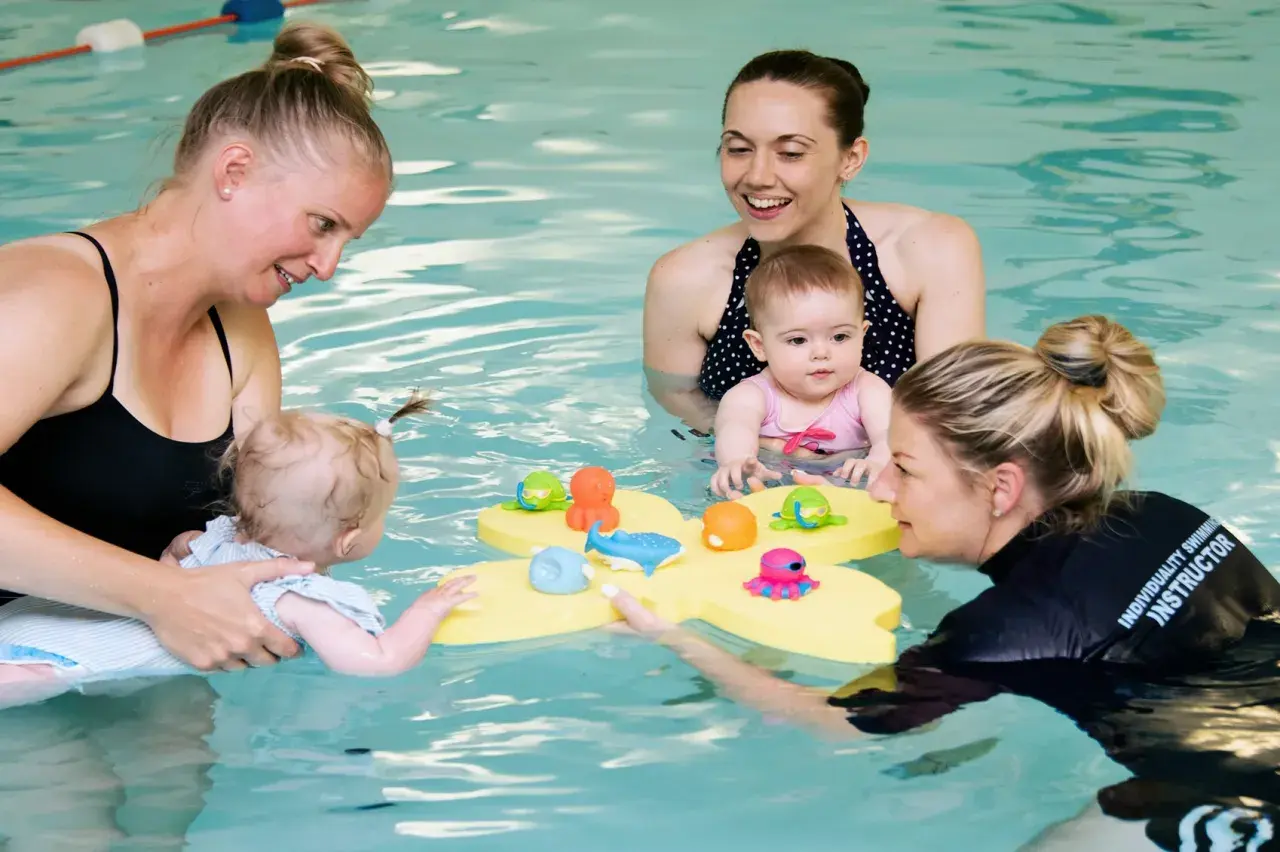
The practical answer is that most toddlers need more than a handful of lessons, but not an endless run of them. If the goal is simple comfort in the water, a small block may be enough; if the goal is safe, repeatable habits, you should expect a longer stretch of steady lessons. In the UK, the best results usually come from a calm instructor, a sensible class format, and enough repetition for skills to stick.
The short answer is that most toddlers need repeated lessons, not a one-off block
- 6 to 10 lessons can be enough for early comfort, provided the child is relaxed and the teacher is skilled.
- 10 to 20 lessons is a realistic range for basic water confidence, safe entries and exits, and early floating skills.
- 20 to 30+ lessons is often needed if you want those skills to become dependable rather than occasional.
- Weekly lessons usually work better than long gaps because toddlers forget fast when practice is too spread out.
- Intensive holiday blocks can help, but they work best when followed by regular sessions.
- Water confidence is not the same as competence, so the right number depends on what you want your toddler to be able to do safely.

A realistic lesson count for different goals
If I had to turn the question into a practical range, I would split it by outcome rather than age alone. A toddler who only needs to feel happier in the water may improve quickly, while a child who needs real safety habits usually needs a longer runway. The same lesson can produce both progress and frustration depending on how confident the child is on that day, which is why a fixed number rarely tells the whole story.
| Goal | Typical lesson range | What progress usually looks like |
|---|---|---|
| Becoming comfortable in water | 6 to 10 lessons | Less clinginess, happier face wetting, easier entries, more trust in the teacher |
| Learning basic safety habits | 10 to 20 lessons | Supported floating, blowing bubbles, safe exits, turning back to the wall, following simple instructions |
| Early independence in the pool | 20 to 30+ lessons | Short glides, stronger kicking, brief unsupported moments, calmer responses after splashes or slips |
| Reliable skill retention | 30+ lessons over time | Skills that still hold up after breaks, changes of pool, or small changes in routine |
That range is deliberately broad, because a toddler’s progress is often more about repetition than talent. If lessons are once a week, the child gets time to remember and rebuild each skill. If lessons are very irregular, the number climbs quickly because each session has to do the work of the last one all over again. That is why the next question matters even more: what exactly should those lessons be teaching?
What toddler lessons should teach first
With toddlers, I would not chase stroke technique first. That is the wrong target for most children at this age. The early job is to build a safe relationship with the water: entering without panic, getting the face wet, learning to listen, and recovering quickly after a small shock.
The strongest toddler classes usually focus on a small set of repeatable skills:
- Comfort entering and leaving the pool.
- Blowing bubbles and controlling breathing.
- Supported front and back floats.
- Simple kicking and body position in the water.
- Turning toward the wall or an adult when unsure.
- Waiting for instructions and responding consistently.
The NHS says babies can go swimming from a very young age, but that does not mean every child is ready for the same level of challenge. Readiness is individual. Some toddlers will accept face splashes almost immediately; others need several sessions before they stop tightening up at the edge of the pool. I treat that difference as normal, not as a sign that the child is behind.
Swim England’s Learn to Swim framework is built around stages, and that matters because it reminds parents that progress should be earned through clear outcomes, not guessed from age alone. In practice, that means a good toddler class is less about “doing swimming properly” and more about creating habits that make later swimming easier. Once those basics are clear, the real limiter becomes the child, not the syllabus.
Why the number changes from child to child
No two toddlers learn at the same pace, and I would be suspicious of anyone promising a universal number. Some children walk into the pool ready to explore; others need weeks just to stop gripping the parent’s arm. The lesson count changes because the starting point changes.
These are the biggest variables:
- Previous water exposure - a child who has had positive bath time, splash play, and frequent swimming usually settles faster.
- Emotional readiness - anxiety slows everything down, even when the child has the physical ability to do more.
- Lesson frequency - weekly lessons usually retain more than fortnightly sessions.
- Class size - smaller groups tend to give more repetitions and more direct correction.
- Parent involvement - some toddlers are braver with a parent in the water; others focus better when the teacher leads.
- Consistency of the teacher - toddlers often need the same voice, same rhythm, and same expectations.
There is also a simple practical truth: a child who misses three weeks of lessons often needs time to rebuild confidence before moving forward again. That does not mean the original lessons were wasted. It means toddler learning is fragile, and the pool rewards rhythm. That is why lesson format matters just as much as the number on the timetable.
Which lesson format works best in the UK
Most UK toddler programmes use around 30-minute sessions, which is a sensible length for this age group. It is long enough to repeat key movements, but short enough that attention and temperature do not become a problem. From there, the real choice is usually between a weekly class, a short intensive block, or a one-to-one format.| Format | Best for | Strength | Trade-off |
|---|---|---|---|
| Weekly group lessons | Steady progress and routine | Good repetition, social learning, easier to sustain long term | Progress can feel slow if the child is shy or misses weeks |
| Intensive holiday block | Jump-starting confidence | Fast exposure and strong short-term familiarity | Skills may fade without follow-up lessons |
| One-to-one lessons | Hesitant children or specific challenges | More personalised feedback and faster adjustment | Usually more expensive and less social |
| Parent-and-child classes | Younger toddlers and nervous beginners | Gentle transition into the pool environment | Progress depends partly on how calmly the parent participates |
What a good instructor does differently
A strong toddler teacher does more than keep the class cheerful. They know when to slow down, when to repeat a skill, and when to stop pushing for progress that is not emotionally ready yet. That balance is easy to miss, but it makes a huge difference to how many lessons the child actually needs.
When I look at a good toddler class, I expect to see these things:
- The teacher uses a calm, encouraging tone rather than forcing confidence.
- Skills are broken into small steps instead of being dumped on the child all at once.
- There is enough structure that the lesson has a purpose, not just play for its own sake.
- The teacher gives parents clear feedback about what is improving and what still needs work.
- The class keeps children moving, because idle waiting usually leads to cold, restless toddlers.
- Progress is measured by outcomes, not by how brave the child looked on a single day.
A good instructor also understands when not to rush submersion or independent movement. If a toddler is tense, the bottleneck is trust, not courage. In those cases, more pressure usually creates a slower child, not a faster one. Even with the right teacher, a few avoidable habits can still slow everything down.
The mistakes that slow progress
Parents usually do not fail at toddler swimming because they do nothing. They slow progress because they expect too much too soon, or because they change the setup every few weeks. I see the same pattern again and again: the child starts to improve, then the rhythm breaks, and everyone wonders why the gains vanished.- Expecting strokes too early - a toddler who cannot relax in the water is not ready for polished technique.
- Stopping as soon as the child looks happy - comfort is useful, but it is only the first layer.
- Leaving long gaps between lessons - this is one of the fastest ways to lose momentum.
- Changing teachers too often - toddlers benefit from familiarity and predictable cues.
- Using lessons as a test - pressure can make cautious children freeze up.
- Ignoring tiredness and temperature - a cold or overtired toddler learns poorly, no matter how good the class is.
If you want the lessons to work, keep the environment stable. Use the same towel, the same routine, and, where possible, the same time slot. Those small details sound minor, but for a toddler they often decide whether the pool feels safe or unpredictable. With those pitfalls out of the way, the last step is deciding what I would actually book next.
The number matters less than the next safe milestone
If I were choosing lessons for a toddler in the UK, I would not ask for one magic number. I would ask what the next milestone is. For some children that means tolerating bubbles and face splashes. For others it means floating with support, turning to the wall, or leaving the pool less upset than they entered it.
- Book 6 to 10 lessons if the main goal is comfort and familiarisation.
- Book 10 to 20 lessons if you want real basic safety habits to emerge.
- Plan for 20 to 30+ lessons if you want those habits to become dependable.
- Stay consistent rather than restarting from scratch every term.
- Move on only when the skill is repeatable, not when it happens once by accident.
That approach is more honest than chasing a neat total, and it usually saves money as well as frustration. For most toddlers, progress comes from a steady chain of small wins, not from one dramatic breakthrough. If the child is calmer, more responsive, and safer in the water after each block, the lessons are doing their job.