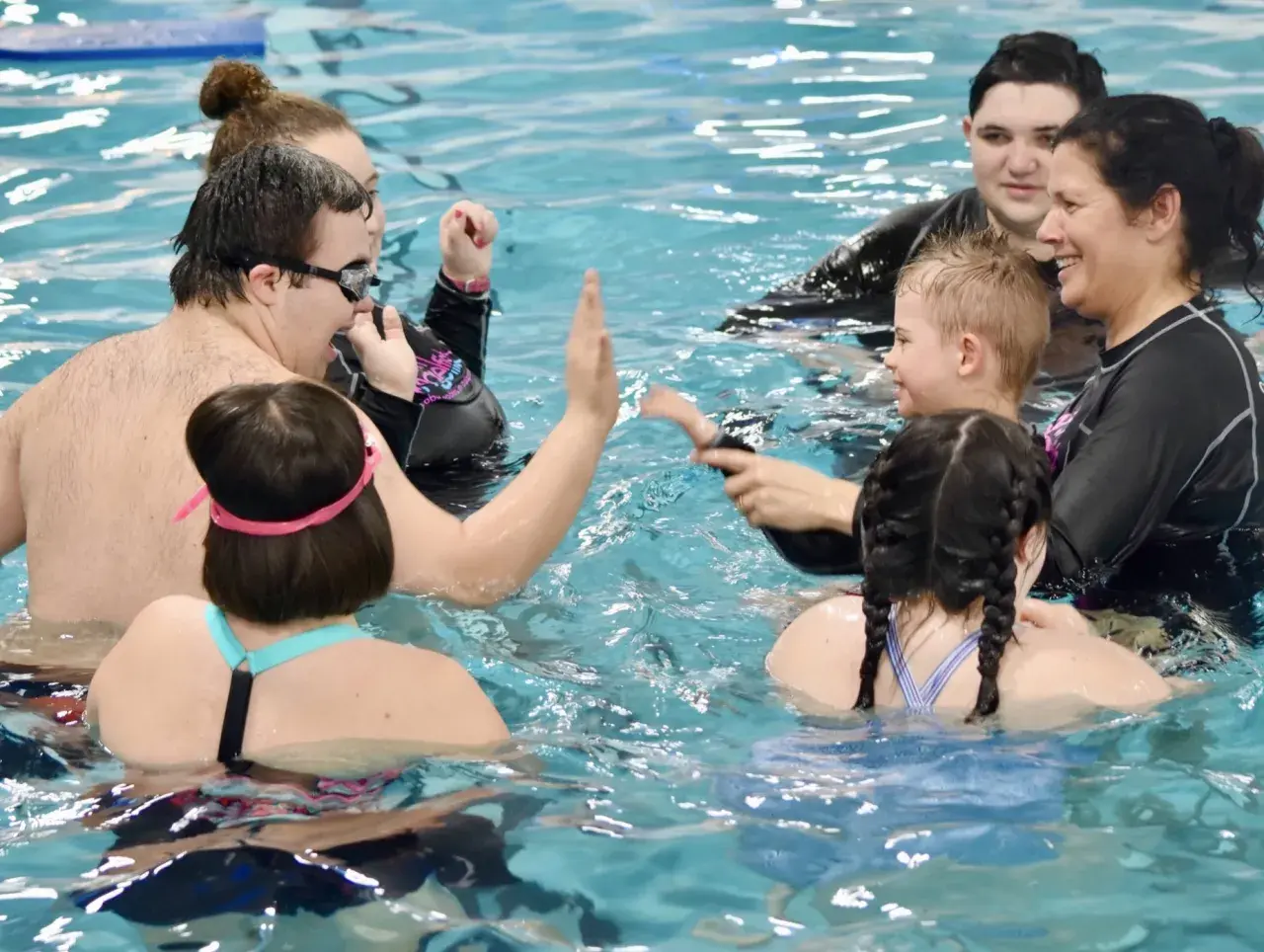
What matters most in inclusive swimming lessons
- Start with the learner’s comfort, communication style, and sensory needs before focusing on distance or technique.
- The best format may be a mainstream group, a small specialist group, or 1:1 support depending on the person.
- A strong instructor asks the right questions before the first lesson and adapts quickly when something is not working.
- Progress can mean entering the water calmly, tolerating the pool environment, floating, moving safely, or building toward longer distances.
- In the UK, school swimming still matters, but the route to success can be adjusted so the learner is not pushed beyond what is useful.
The best lessons adapt to the learner, not the other way around
When I evaluate a lesson for a child or adult with additional needs, I do not start with stroke count. I start with three questions: can this person feel safe, can they understand what is happening, and can the environment support learning instead of fighting it? That is the real foundation of inclusive swimming.
For some learners, the first win is simply walking onto the poolside without distress. For others, it is entering the water calmly, accepting a shower, or floating with support. A good teacher treats those steps as progress, not as delay. I would rather see a learner build one reliable skill at a time than rush through a standard sequence that does not hold.
In practical terms, good inclusive teaching recognises that disability, neurodivergence, fatigue, communication differences, or anxiety can change how a person learns on a given day. The best instructors stay flexible, explain clearly, and measure success by real movement in confidence and safety. That perspective matters because it changes the entire choice of lesson format.

Choosing the right lesson format makes a bigger difference than most people expect
There is no single best model for every swimmer. Some learners do well in mainstream classes with small adjustments. Others need a quieter specialist group or a dedicated 1:1 session before they can manage a group environment. When families ask me what to book first, I usually say: choose the format that reduces friction, not the one that looks most conventional.
| Lesson format | Best for | Strengths | Trade-offs |
|---|---|---|---|
| Mainstream group with adjustments | Learners who can follow group routines and tolerate some noise, waiting, and transitions | Good social model, usually easier to find, helps the swimmer learn alongside peers | Less individual attention; can be hard if sensory needs are high |
| Small specialist SEND group | Learners who need a calmer pace, more repetition, or extra communication support | More tailored teaching, often better routines, easier to manage sensory load | Availability can be limited; class times may be less flexible |
| 1:1 private lesson | Learners who need full attention, a very slow start, or specific physical or communication support | Maximum adaptation, easy to change plan mid-session, useful for building trust | Usually costs more and may not offer the peer modelling some swimmers benefit from |
| School-based swimming support | Children who need help accessing the curriculum during school hours | Can remove transport barriers and keep learning consistent with class routines | Not always designed for individual pacing, so advocacy is often needed |
There is a subtle but important rule here: the right format is the one that lets the learner stay regulated enough to learn. If a swimmer spends the whole lesson overwhelmed, they are not really getting instruction, only exposure. That is why I encourage parents and carers to ask whether the pool can offer quieter sessions, a support teacher in the water, or a short trial before committing.
What a strong instructor should do before the first splash
A competent instructor does more than “be patient.” They gather information before the learner arrives, because good adaptation starts early. I like to see teachers ask about communication preferences, mobility, medication or medical considerations, anxiety triggers, sensory sensitivity, previous water experience, and the learner’s own goals.
In the UK, Swim England’s inclusion guidance points teachers toward exactly that kind of preparation: observe the learner, adapt the lesson, and build the programme around what the swimmer can actually use. That is the right mindset. It is also why the best teachers are often the ones who ask practical questions instead of assuming they already know the answer.
Before booking, I would want the instructor or pool to be able to explain:
- How they adapt communication for visual learners, verbal learners, or non-speaking swimmers.
- Whether the lesson can be quieter, shorter in demand, or less crowded.
- How they handle transitions such as changing, showering, and entering the water.
- Whether a parent, carer, or support worker can stay close if needed.
- How they decide when a learner is ready to progress.
One detail I value highly is whether the centre uses a learner consultation form or a similar intake process. That is not paperwork for its own sake. It is how a teacher avoids the common mistake of discovering a child’s needs only after the lesson has already become stressful. The next step is making the first sessions feel manageable, not performative.
How to prepare for the first lessons without overwhelming the learner
The most successful first sessions are usually the ones with fewer surprises. I often suggest a short pool visit before the first lesson, especially if the learner is anxious, autistic, or sensitive to noise, echo, lighting, or crowding. Even a quick walk through the changing area can help the learner understand where they will go and what will happen first.
Routine matters. If possible, keep the same day, time, and arrival sequence for the first few lessons. A predictable pattern reduces decision-making and gives the learner something stable to hold onto. For many swimmers, that predictability is more useful than any motivational speech.
Useful preparation can include:
- A simple visual sequence of the session, such as arrive, change, shower, poolside, lesson, dry off.
- Goggles, a well-fitting costume or trunks, and a towel that feels familiar.
- Ear defenders or other sensory supports if noise is a problem.
- A clear agreement about whether the parent or carer stays poolside.
- One small goal for the session, such as entering the water calmly or blowing bubbles once.
I also encourage families to think about timing. Off-peak sessions can be noticeably easier than busy public slots because the noise level, visual clutter, and waiting time are all lower. That small change can completely alter how the learner experiences the lesson. Once the first lessons are calmer, progress becomes easier to see and easier to trust.
Progress should be measured in stages, not just metres
In England, school swimming has clear end goals: by the end of Key Stage 2, pupils are expected to swim 25 metres, use a range of strokes, and perform safe self-rescue. That benchmark is useful, but it should not be the only lens for a learner with additional needs. If a swimmer is working with complex physical, sensory, or cognitive barriers, progress often happens in smaller and more meaningful steps first.
Here is the framework I use when I want to see whether lessons are doing real work:
| Stage | What it may look like | Why it matters |
|---|---|---|
| Settling in | Walks into the pool area with less distress, accepts the routine, and stays engaged | Without regulation, the lesson cannot hold |
| Water comfort | Accepts splashing, showering, getting face wet, or entering deeper water with support | This reduces fear and opens the door to movement |
| Controlled movement | Kicks, reaches, floats, glides, or moves across short distances with help | This is where real swimming skill starts |
| Independence and safety | Can follow instructions, orient in the water, or respond to a safety cue | This is the bridge between learning and practical water safety |
| Distance and strokes | Builds toward 10 metres, 25 metres, and recognised stroke patterns where appropriate | This matters for school expectations and broader swimming competence |
The most common mistakes are usually about pace and assumptions
Most swimming setbacks for disabled or neurodivergent learners come from mismatched expectations, not from lack of ability. I see the same errors again and again, and they are usually easy to fix once someone notices them.
- Forcing group pace on everyone. A lesson that moves too fast can make the learner shut down before the useful work begins.
- Talking too much, too quickly. Long explanations are rarely better than short, consistent cues.
- Changing staff often. New faces can reset trust, especially for learners who rely on routine.
- Ignoring the pool environment. Lights, echoes, temperature, smells, and crowding can all matter more than the stroke being taught.
- Assuming “won’t do” means “can’t do.” Sometimes the learner is refusing because the task is badly presented, not because it is beyond reach.
- Measuring success only by distance. Distance matters, but it is not the only sign that the programme is working.
According to Swim England, some autism-friendly sessions reduce sensory load by adjusting the environment, such as lowering distractions and using quieter conditions. That is not a cosmetic change. It changes the learner’s ability to stay in the lesson long enough to benefit from it. Once you understand that, the UK-specific picture becomes clearer, because local policies and school obligations shape what is available.
What I would check in the UK before booking
In the UK, the main question is not whether swimming matters. It does. School swimming sits within the national curriculum in England, and pupils are expected to reach core water-safety outcomes by the end of Year 6. The better question is how a learner with special educational needs or disabilities can access that learning in a way that is realistic and humane.
Here is what I would check before committing to a provider:
- Does the pool have experience with SEND learners or neurodivergent swimmers?
- Can they offer quieter times, smaller groups, or a 1:1 start if needed?
- Will a parent, carer, or school support adult be allowed poolside or in the water when appropriate?
- Do they understand how to adapt the lesson rather than just “encourage” the learner?
- Can they explain how progress is tracked for a swimmer whose goals may differ from the standard class?
If the swimmer is a child, I would also speak to the school early, especially if lessons are happening through the curriculum. School staff should be able to explain what support they can put in place and whether they have links with local provision if the mainstream format is not enough. The important point is this: in the UK, there are routes into swimming beyond a standard group lesson, and the right one is the one that keeps the learner moving forward.
The lessons that last are the ones that respect the learner’s pace
When people ask me about swim lessons for special needs in the UK, my answer is simple: look for fit, not labels. The strongest lesson is the one that makes the water feel possible, then useful, then gradually familiar. That usually means a calm environment, an instructor who adapts without fuss, and goals that reflect the learner in front of them rather than a generic timetable.If you are choosing between options, start with the least restrictive version that still feels safe and manageable. For one learner that may be a mainstream class with support; for another, it may be a specialist group; for someone else, a short period of 1:1 teaching will unlock everything else that follows. I would treat the first few sessions as a test of comfort, clarity, and trust, not as a final verdict on ability.
Once those foundations are in place, swimming stops being something the learner has to endure and becomes something they can actually build on.