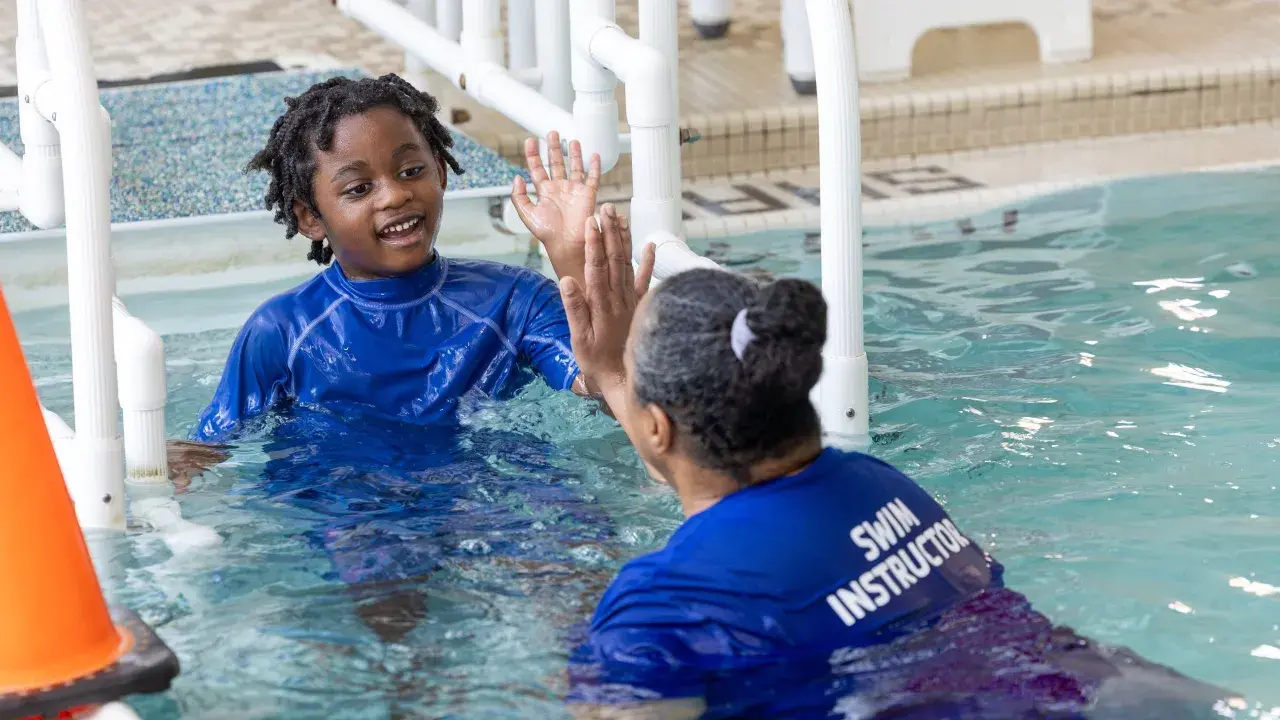
Adaptive swim instruction works best when it is built around trust, predictability, and water safety. The real value is not in chasing perfect strokes early; it is in helping a swimmer tolerate the pool, understand the rules, and gain skills that hold up in real life. In autism swim programs, that usually means smaller ratios, calmer teaching, and a clear plan for how each session will unfold.
Key points at a glance for families choosing swim lessons
- 1:1 or very small groups usually work best when a swimmer is anxious, sensory-sensitive, or easily overwhelmed.
- Thirty-minute sessions are common in U.S. adaptive programs, and many families get better results from short, focused lessons than from long classes.
- The right instructor uses visuals, simple cues, and patient repetition instead of assuming one teaching style fits everyone.
- Costs vary widely, but current U.S. listings often cluster around about $50-$100 for a 30-minute private adaptive lesson.
- Water safety at home still matters; fences, alarms, supervision, and clear rules remain necessary even if the swimmer is making progress.
- Aquatic therapy is not the same thing as lessons, and it can be the better choice when the main goals are regulation, motor planning, or body control.
How autism swim lessons differ from regular classes
Regular group lessons usually assume that children can follow a fast pace, tolerate noise, wait their turn, and copy demonstrations on the spot. That is not how many autistic swimmers learn. I usually see better progress when the lesson is built around one goal at a time, with enough repetition that the swimmer can predict what comes next.
The practical differences are easy to spot. Good adaptive lessons often use shorter blocks, fewer distractions, and a repeatable routine. In place of long verbal explanations, the instructor may rely on a visual schedule - a simple sequence of pictures or cues that shows what happens first, next, and last. That reduces uncertainty, which is often the real barrier in the pool.
Another difference is the goal itself. In standard classes, the focus may be on stroke technique. In autism-friendly lessons, I want to see water safety first: entering and exiting safely, floating, turning to the wall, breathing calmly, and responding to a cue. Stroke mechanics can come later. Once that distinction is clear, the instructor matters more than the marketing on the pool sign.

What a good instructor brings to the pool
A strong instructor does more than know how to swim. They know how to teach a swimmer who processes the world differently. Autism Speaks recommends using visuals such as picture cards and social stories, and that advice is practical because predictability lowers stress before the swimmer ever enters the water. A social story, in plain terms, is a short illustrated preview of what will happen.
When I evaluate an instructor, I look for four things: experience, flexibility, patience, and communication. Experience means they have taught autistic or otherwise neurodivergent swimmers before. Flexibility means they can change a plan without losing the lesson. Patience means they can wait for a response instead of filling every pause with more words. Communication means they can speak clearly to both the swimmer and the parent without sounding vague or rushed.
Here are the traits that matter most:
- Simple cueing such as one instruction at a time.
- Comfort with sensory differences like noise, water on the face, bright light, or pool echoes.
- Willingness to build trust first instead of forcing compliance.
- Clear behavior planning for breaks, transitions, and shutdowns.
- Parent collaboration so the lesson matches what works at home.
- Functional goals such as floating, rolling, breathing, and safe exits.
Red flags are just as useful. If an instructor says every child is taught exactly the same way, or if they focus on “fixing” behavior instead of understanding it, I would keep looking. The best instructors can explain why they use a method, not just insist that it works. Once you have the right teacher, the next decision is format, because lesson structure changes the experience a lot.
The lesson formats that usually work best
Current U.S. listings show a wide price spread, but the pattern is consistent: more individual attention costs more, and more structure usually helps the swimmer progress faster. I think about format as a tradeoff between focus, budget, and social load.
| Format | Best for | Typical strengths | Common limitations | Current U.S. planning range |
|---|---|---|---|---|
| Private 1:1 lessons | New swimmers, high anxiety, sensory overload, elopement risk | Fastest trust-building, fewer distractions, easier pacing | Highest cost, fewer peer models | About $50-$100 for 30 minutes; specialty programs may run higher |
| Semi-private or small group lessons | Swimmers who can tolerate peers and a little waiting | Lower cost per swimmer, social modeling, still fairly structured | More noise and transitions, slower individual pacing | Often about $30-$80 depending on length and group size |
| Aquatic therapy | Motor planning, regulation, strength, range of motion, clinical goals | Therapist-led, can connect to OT/PT goals, sometimes billable | Not a replacement for direct water-safety instruction | Commonly about $100-$200 per session in specialty settings |
| City or YMCA adaptive classes | Families who need broader access or lower-cost options | Often more affordable, familiar community setting | Waitlists, seasonal scheduling, less individualization | Can be much lower, but varies sharply by location |
If a swimmer shuts down in a crowded class, I would usually pay for fewer distractions before I pay for more time in the water. That sounds blunt, but it is often the cheapest way to get real learning. A good format gives the swimmer enough calm to repeat a skill several times, which is where progress actually happens.
Once the format is settled, the next question is what the first couple of months should realistically accomplish.
What the first 8 weeks should look like
Many programs work in eight-lesson blocks, often with 30-minute sessions, and that is a sensible rhythm for adaptive learning. It is long enough to build familiarity, but short enough that the swimmer does not spend the entire class regulating stress. In my view, the early goal is not to “finish” swimming; it is to make the pool feel structured enough that skills can repeat.
- Weeks 1-2 usually focus on entry, exit, body comfort, and the pool routine. Success may simply mean walking to the water calmly, accepting the instructor, and learning where to wait.
- Weeks 3-4 often add face wetting, bubbles, breath control, and brief floating practice. If the swimmer is sensitive, these steps should be tiny and predictable.
- Weeks 5-6 can introduce back float support, rolling to the back, and moving to the wall. This is where a simple cue like “back to breathe” can matter more than a long explanation.
- Weeks 7-8 may include short propulsion drills, safe turns, and repeatable exit practice. For some swimmers, this is also the time to practice skills in slightly different pool areas so the skill starts to generalize.
Generalization means using the same skill in a new place or with a new person. That matters because a skill that only works in one perfectly controlled lesson is not yet very useful. I also like when instructors build in task analysis, which is just a clean way of saying they break a skill into smaller steps instead of demanding the whole movement at once.
Some swimmers need slower progress than this, and that is fine. A first win might be tolerating water on the shoulders without distress, or entering the pool from the steps without panic. Once the lesson plan is realistic, the job shifts from skill-building to keeping the swimmer safe everywhere else around water.
The safety habits that still matter outside lessons
Swim lessons help, but they do not cancel risk. That is especially true when wandering, or elopement, is part of the picture. Elopement is the clinical term for unsafe wandering. The National Autism Association’s water-safety guidance is one reason I push a layered approach: barriers, alarms, supervision, and practice all matter at the same time.
For U.S. families, the most useful home protections are usually boring and physical, which is exactly why they work:
- Fence the pool and use a self-latching, self-closing gate.
- Add door and window alarms if the swimmer may leave the house unexpectedly.
- Remove temptation by clearing toys from the pool deck and emptying small water containers after use.
- Use visual rules such as “stop,” “wait,” and “ask” near any water source.
- Brief neighbors, caregivers, and babysitters so they understand the risk and the routine.
- Use a life jacket on boats and open water, even when swim skills are improving.
One practical drill I like is practicing safe exits in clothes and shoes once the swimmer is ready, because emergencies do not happen in ideal conditions. It is a realism check, not a party trick. When those safety layers are in place, you can think more clearly about whether the swimmer also needs therapy-based support.
When aquatic therapy makes more sense than lessons
Not every water program is trying to solve the same problem. If the main issue is motor planning, body awareness, regulation, or range of motion, aquatic therapy may be the better fit. Motor planning means turning an idea into a coordinated movement, and some swimmers need help with that before stroke work makes sense. If the main issue is surviving near water and learning practical swim and float skills, lessons are the better fit. In some families, the honest answer is both.
I separate the two like this: aquatic therapy supports the body, while adaptive swim instruction teaches the person how to function safely in the water. Therapy sessions often involve an occupational therapist or physical therapist, and they can connect directly to broader clinical goals. Lessons are usually more focused on behavior in the pool, entry and exit, floating, breathing, and simple propulsion.
That difference also changes the budget. Specialty providers in the U.S. often price therapy higher than standard lessons, and insurance is more likely to apply when the service is truly therapeutic rather than instructional. If the swimmer needs both types of support, I would not force one service to do the job of the other. The better move is to use each for what it does best, then coordinate them so the progress carries over.
After that, the final step is choosing a program that will actually deliver on its promises.
The call that tells me whether a program is worth it
Before I enroll, I want one short conversation that answers a few plain questions. If the staff can answer clearly, the program usually has structure. If they get defensive, vague, or strangely optimistic, I keep moving.
- What is the instructor-to-swimmer ratio for this class?
- How do you adapt for sensory needs, communication differences, or shutdowns?
- Can parents observe the first lesson and share what calms the swimmer?
- Do you teach water safety first, or do you start with stroke mechanics?
- What happens if the swimmer becomes overwhelmed midway through class?
- How do you handle elopement risk and pool-deck transitions?
- Do you use visual supports such as picture cards, timers, or a lesson board?
The best programs answer those questions without sounding rehearsed, because they actually work that way every day. That is the standard I use: calm structure, individualized pacing, and a real focus on safety over hype. When those pieces are in place, swim lessons become more than a skill class; they become a practical layer of protection and confidence that can make a real difference long after the session ends.
