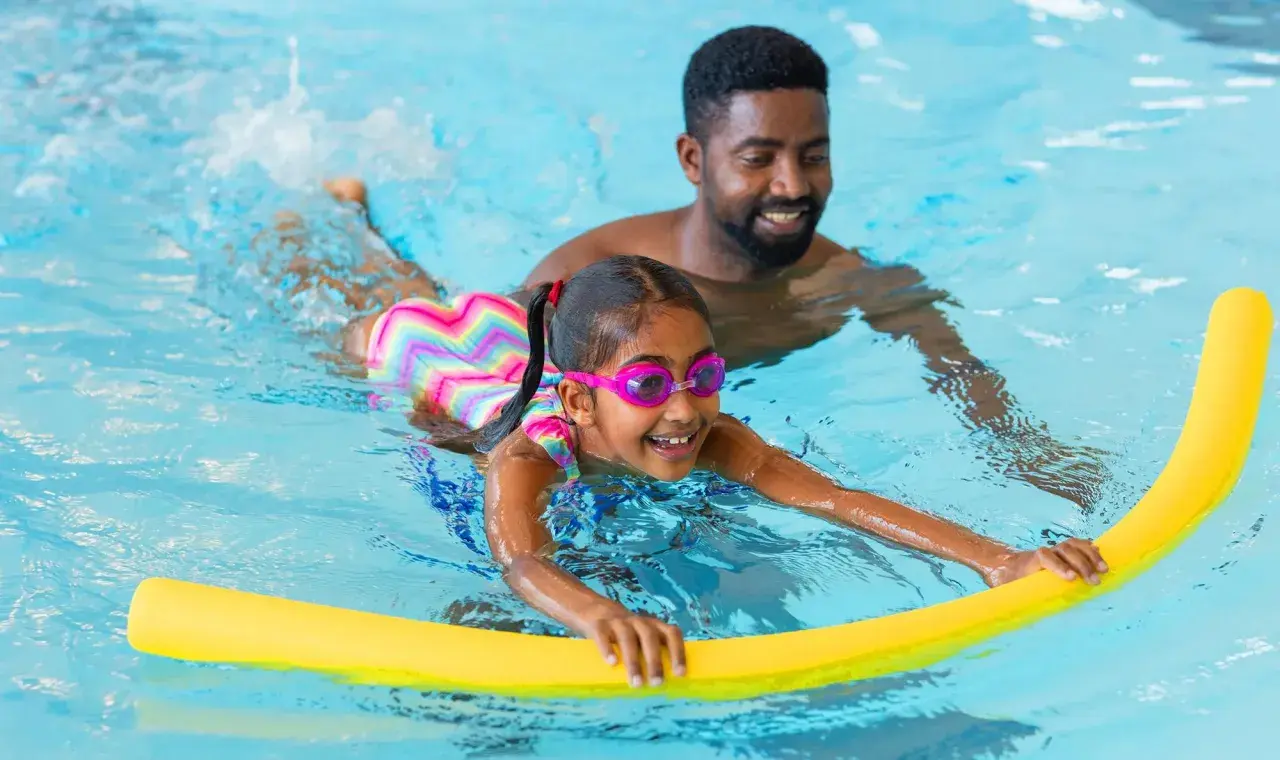
At two, swimming is less about formal technique and more about trust, rhythm, and safe habits. The right class helps a child feel comfortable in the water, respond to simple cues, and enjoy the pool without being pushed too fast. I’ll cover what a good toddler programme teaches, how to judge the instructor, what to pack, and how to tell whether the class is worth the money.
What matters most before you book
- For a two-year-old, the goal is water confidence first, not polished strokes.
- Short sessions, usually around 30 minutes, suit this age far better than long lessons.
- Small groups and a teacher with toddler-specific experience make a bigger difference than fancy gear.
- Parents or carers are often in the water at the start, because reassurance matters at this stage.
- Safety comes from supervision, repetition, and a sensible pool environment, not from floaties alone.
- In the UK, a structured pre-school programme is usually a stronger choice than a casual, one-size-fits-all class.
What a 2-year-old should actually learn in the pool
I would not judge a toddler class by how many metres a child can swim. At this age, the real wins are much simpler: getting into the water without panic, learning to listen, tolerating water on the face, and starting to understand what the pool feels like. A strong programme builds that comfort through repetition, play, and small wins rather than pressure.
Swim England’s pre-school framework gets this right: confidence first, then core aquatic skills through fun and games. That order matters. A two-year-old may not be ready for formal stroke work, but they can still learn useful foundations that make later lessons much easier.
- Safe entering and exiting with help.
- Blowing bubbles and getting used to water on the face.
- Floating with support, especially on the back.
- Simple kicking and body positioning.
- Turning, waiting, and following a basic instruction.
- Learning that the pool has rules, routines, and predictable boundaries.
The mistake I see most often is when adults expect a two-year-old to perform on command. That usually backfires. If a child leaves the pool calmer, more curious, and a little more comfortable than when they entered, the lesson is doing its job. Once that goal is clear, the next question is format: group, private, or parent-and-child?
Which lesson format works best at this age
For most two-year-olds, the best starting point is a short parent-and-child class with a small group and a teacher who is comfortable coaching the adult as much as the child. That setup gives the child a familiar anchor and gives you a chance to learn how to support them properly in the water.
| Format | Best for | Strengths | Limits |
|---|---|---|---|
| Parent-and-child group | Most families starting at age 2 | Reassuring, social, usually affordable, and ideal for learning through play | Less individual attention, and busy classes can overwhelm sensitive children |
| Small private lesson | Children who are anxious, sensory-sensitive, or need catch-up support | Fully tailored pace, stronger focus on one child, quicker adjustment to needs | More expensive and sometimes too intense if the child benefits from copying peers |
| Short intensive block | Families wanting a confidence reset during holidays | Frequent repetition can build familiarity quickly | Progress may fade if there is no weekly follow-up |
In the UK, a lot of toddler programmes run weekly and hover around the 30-minute mark, which is about right for this age. I would be cautious of long, crowded sessions that leave a two-year-old tired before the useful part even starts. Format matters, but the teacher matters more.

How to judge an instructor, not just a brand
When I evaluate a toddler swim teacher, I am not looking for performance. I am looking for control, patience, and the ability to keep the session moving without pushing a child beyond their tolerance. A good instructor can explain why each activity is there, when to slow down, and how to turn a hesitant moment into a manageable one.
In the UK, I like to see toddler-specific training, or at least a clearly structured pre-school programme behind the class. A Swim England-style framework is a good sign because it gives the lesson a real progression instead of random pool games. For this age, the teacher should be as comfortable guiding the parent as guiding the child.
Green flags
- The teacher explains the progression in plain English.
- Activities use songs, repetition, and simple routines.
- Parents are told exactly how to support the child in the water.
- Class sizes stay small enough for individual attention.
- The teacher can calm a nervous child without rushing them.
Read Also: 1:1 Swim Lessons UK Cost - Is Your Quote Fair?
Red flags
- There is pressure to go underwater too early.
- The instructor cannot explain the purpose of the session.
- Safety questions are brushed off with vague answers.
- The class feels like waiting around rather than learning.
- The child is repeatedly used as a demonstration rather than being taught at their own pace.
How to prepare a 2-year-old for the first few lessons
The first lesson usually goes better if the child has already met the pool, at least once. I like to familiarise toddlers with the building before class day: a quick visit, a look at the changing area, and a low-pressure splash session can take the edge off the unknown. Swim England recommends getting children comfortable with the pool environment in advance, and in practice that advice saves a lot of tears.- Keep the lesson close to a good nap and a light meal, not right at the edge of overtiredness.
- Pack a swim nappy, spare clothes, two towels, and something easy to slip on after the session.
- Bring a water bottle and a small snack for after class.
- Ask the venue whether it prefers reusable or disposable swim nappies, and whether any extra over-nappy is required.
- Leave goggles until later unless your child already likes them; at two, face comfort matters more than looking “ready”.
- Use bath time for gentle practice with pouring, splashing, and wet faces so the pool does not feel foreign.
I would also keep expectations deliberately low for the first two or three sessions. The point is not instant bravery. The point is to make the pool feel predictable. If your child has eczema, ear problems, or another medical issue, it is sensible to ask a GP or health visitor before starting. From there, the main job is simply to keep the routine steady.
Safety rules that matter more than floaties
This is the section people often want to skip, and it is the one I take most seriously. For a two-year-old, safety is mostly about supervision, environment, and restraint. Float aids can be useful for confidence, but they do not replace an adult who is alert and close enough to help instantly.
RLSS UK’s advice for young children is refreshingly plain: keep children within arm’s reach, stay alert, and do not assume that a lifeguard or buoyancy aid is enough on its own. I agree with that approach. It is far better to build safe habits than to rely on equipment that creates a false sense of security.
- Keep one adult fully focused on the child, with the phone away.
- Stay close enough to physically support the child whenever needed.
- Do not treat floats, arm bands, or jackets as life-saving devices.
- Choose a warm, child-friendly teaching pool if the venue offers one.
- Stop the session if the child is cold, exhausted, or overwhelmed.
- Teach simple pool rules early, including waiting, turning, and listening.
At this age, safety and confidence are linked. A child who feels secure learns better, and a child who learns better becomes safer. That is why the environment matters as much as the exercise itself, which brings us to the practical question of cost and progress.
What to expect on cost and progress in the UK
Prices vary quite a lot across the UK, but there are some realistic bands to keep in mind. For a 30-minute toddler group class, I would usually expect roughly £10 to £18 per session. Monthly direct debit models often land somewhere around £25 to £60+, depending on the provider, pool, and whether the lessons run year-round or by term. Private lessons are typically higher, often around £30 to £60+ for 30 minutes, and more in premium locations.
| Lesson type | Typical UK range | What to look for |
|---|---|---|
| Group toddler class | £10-£18 per 30 minutes | Small group size, clear structure, parent support |
| Monthly membership | £25-£60+ | How many weeks run each year and whether holidays are included |
| Private lesson | £30-£60+ per 30 minutes | Personalisation, especially for anxiety or sensory needs |
Price alone does not tell you much. A cheaper class with a crowded pool and an unstructured teacher can be poor value, while a pricier class with a warm teaching pool and a calm specialist can be worth it immediately. I would give a programme at least six to eight weeks before judging it properly, unless the fit is obviously wrong from the start. The NHS also recommends that under-fives stay active every day, so one swim lesson a week is best treated as part of a bigger movement routine, not the whole answer.
The mistakes I see parents make most often
Most problems at this age are not really about the child. They are about the setup. If the class is wrong, the child looks “difficult” even when the real issue is that the session is too long, too busy, or too ambitious.
- Choosing a class that is too long for a toddler’s attention span.
- Expecting stroke technique before the child is ready for water comfort.
- Using floatation aids to avoid proper adult support.
- Switching providers after only one or two sessions.
- Booking lessons when the child is hungry, tired, or overstimulated.
- Assuming crying means the child is not ready, when it may simply mean the pace is wrong.
The hidden mistake is comparing your two-year-old with older children who are already more independent. At this age, repetition is the work. If the class is patient and the routine is consistent, progress can look slow for a while and then suddenly become obvious. That is normal, not a failure.
The simplest way to pick the right class without overthinking it
If I had to narrow the decision down to a few checks, I would start here: small group, qualified toddler-focused teacher, parent involvement at the beginning, warm and well-run pool, and a lesson plan that prioritises confidence over performance. If a provider cannot clearly explain those basics, I would not book it.- Does the class feel calm rather than chaotic?
- Is the teacher comfortable explaining progress to a parent?
- Can the child participate without being rushed into submersion?
- Does the timetable fit a toddler’s energy level?
- Do you leave the pool feeling that the session had a clear purpose?
For most families, the best choice is the class your child will attend happily every week, with a teacher who understands toddler behaviour and a structure that builds confidence step by step. That is what turns swimming from a noisy outing into a useful early skill, and it is the standard I would hold every programme to.
