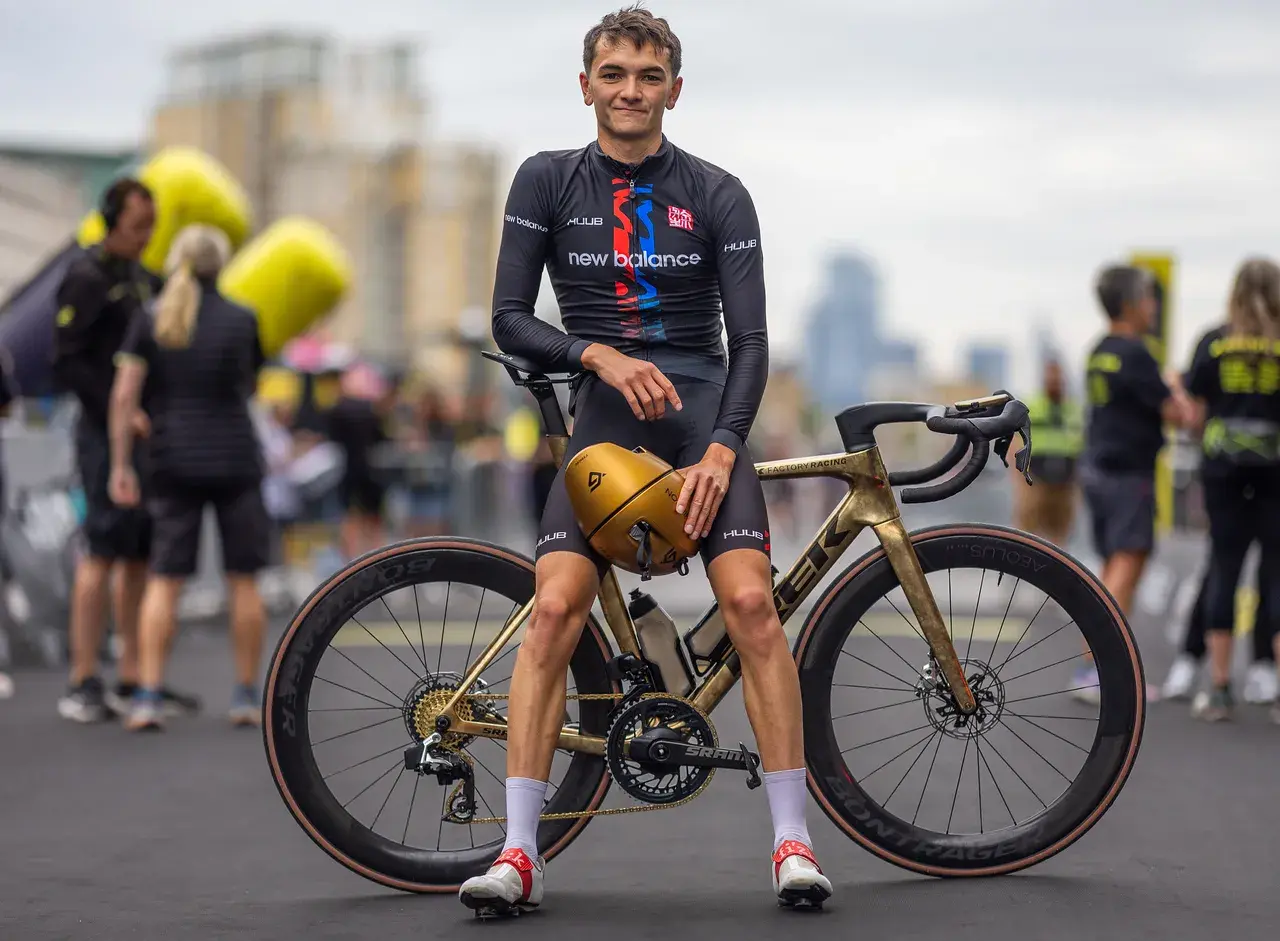
Triathlon rewards athletes who can move cleanly from one discipline to the next, and Alex Yee is a strong example of how that balance wins at the highest level. In the article below, I look at who he is, why his racing style stands out, and what swimmers and triathletes in the UK can learn from a career that now includes Olympic titles, a world crown, and a serious marathon detour.
The headline facts to know
- Alex Yee is a British triathlete from London, born in 1998, who became a global reference point in Olympic-distance racing.
- He is the most decorated Olympic triathlete in history, with two golds, one silver, and one bronze.
- His breakthrough came through a mix of strong running, disciplined swim-bike-run development, and sharp race execution.
- In 2025, he proved his range again with a 2:06:38 marathon in Valencia, then returned to triathlon racing in 2026.
- His value for age-group athletes is practical: lose less in the swim, stay efficient on the bike, and save enough for a decisive run.
- For UK readers, he is also a reminder that triathlon success is built on consistent discipline, not just raw talent.
Why Alex Yee matters in triathlon
He matters because he is more than a headline athlete. World Triathlon lists him with 64 starts, 35 podiums and 19 wins, which tells you this is not a story about one perfect day; it is a story about repeated performance under pressure. That kind of record is what separates a popular champion from a genuine benchmark for the sport.
What I find most interesting is how complete his profile has become. He first came through as a runner with obvious speed, but he turned that into a triathlon career by becoming good enough in the swim and bike to make his run count. For British fans, that matters because it fits a long national tradition of elite Olympic-distance racing, but with a more modern, more explosive edge.
He is also important because he helps explain where triathlon has moved. The sport is no longer won by the athlete who merely survives the swim and bike. It is won by the athlete who can stay close enough, stay calm enough, and then finish with real intent. That idea leads straight into the part of his racing that most people misread.

How his swim-bike-run profile actually works
Yee is often described as a runner first, and that is fair, but the better interpretation is that he has built a race shape where the swim and bike are strong enough to protect his run. In Olympic-distance triathlon, the standard format is a 1.5 km swim, 40 km bike and 10 km run, so any small error early on can become a much bigger problem later. He does not need to dominate the swim; he needs to stay in the right race.
| Discipline | What stands out in his profile | What an amateur can learn |
|---|---|---|
| Swim | He is strong enough to avoid chasing from too far back. | Open-water starts, sighting, and relaxed breathing matter more than chasing a perfect pool split. |
| Bike | He races efficiently instead of wasting energy with repeated surges. | Hold a power effort you can repeat and arrive at T2 with options, not damage. |
| Run | His closing speed is elite, and he is willing to use it late. | Train the final 3 km of the race, not only the first half of the run. |
For swimmers in particular, the lesson is simple. Pool fitness matters, but open-water control often matters more once you are in a triathlon pack. That means learning to breathe calmly, hold form when contact starts, and sight without losing rhythm. In practice, that is worth more than buying the flashiest wetsuit and hoping it will fix a weak race plan. Once you see that pattern, his career arc makes a lot more sense.
The results that built his reputation
His junior and U23 years hinted at a star, but the senior breakthrough took time. He had to absorb a major setback early on, then rebuild step by step. That kind of interruption usually exposes whether an athlete is just talented or genuinely durable. Yee answered that question the hard way, with results that kept improving when the level rose.
The milestones are easy to understand: a first World Cup gold in Cape Town, a silver in Abu Dhabi, his first WTCS win in Leeds, Olympic silver in Tokyo, mixed relay gold at the same Games, and then Olympic gold in Paris 2024. British Triathlon also notes that he became the first Brit to win both the Olympics and the World Championships in the same year, which is the sort of achievement that changes how a rider, swimmer or runner is viewed by the sport.
For me, the key detail is not simply the medal count. It is the timing of those results. The biggest days came in races where the pressure was real, the field was deep, and there was little room to hide. That is the difference between being fast and being race-ready, and it is exactly where triathlon gets brutal.
What changed in 2025 and why 2026 matters
His 2025 season showed something useful: even a champion can step sideways without disappearing. British Triathlon notes that he ran 2:11:08 in London, then 2:06:38 in Valencia, which made him the second fastest British marathon runner of all time. That is not a side note. It shows how much pure run ability he carries, and why he can cross between sports without losing credibility in either one.
He did not leave triathlon behind, either. The same source records a ninth place at the World Triathlon Championship Series race on the French Riviera and a win in Supertri Toronto, which shows that his engine was still there while the emphasis shifted. In 2026, the focus is clearly back on triathlon racing, and he has already produced a fifth-place finish in Yokohama. I would read that as a comeback season in motion, not as a finished verdict.
That matters for age-group athletes because the lesson is real-world, not romantic. Elite seasons are rarely clean. You do not need every race to be perfect; you need the overall direction to be correct. The same is true for anyone trying to get faster in the UK season, whether the target is a local sprint race or a long summer build toward a major event.
What to train if you want a similar profile
If I had to strip his example down to the essentials, I would start with this: he wins because he reduces losses across all three legs. That sounds obvious, but most athletes still train as if one discipline can compensate for the others. It cannot, at least not at the front of the sport.
- In the swim, focus on starts, drafting, and the ability to settle quickly after the first hard minute.
- In the bike, learn to ride at controlled intensity instead of chasing every surge.
- In the run, practice finishing fast off tired legs, because triathlon rarely rewards a fresh open run.
- In transition, rehearse the details until they stop costing you free seconds.
- In training weeks, protect recovery as seriously as intervals, because repeated quality sessions need adaptation.
That is why his story connects so well with a swimming-focused audience. Strong swimming still matters, but in triathlon it is only valuable if it helps you reach the bike with a useful position and reach the run with something left. The best version of that approach is not flashy. It is disciplined, repeatable and hard to break.
The part of his example worth copying first
If I had to choose one lesson to copy first, it would be his respect for the whole race. Not the podium moment, not the finish-line drama, but the boring foundation underneath it: swim efficiency, bike control, running economy, and the patience to build results over years rather than weeks. That is the part most athletes underestimate.For anyone training in the UK, especially swimmers moving into triathlon, that means treating the pool as one part of a larger system. Improve your open-water confidence. Learn to handle rough starts. Stop donating energy on the bike. And train the final stretch of the run like it is the only section that matters, because at this level it often does. That is the cleanest way to understand what makes Alex Yee such a useful athlete to study.
His career is still moving, and that is part of the appeal. In 2026, the most interesting question is not whether he has already proved himself; he has. The real question is how far he can push the standard again now that he is back inside the triathlon cycle, and for the rest of us the useful takeaway is simpler: build a race that leaves you with options, not just hopes.