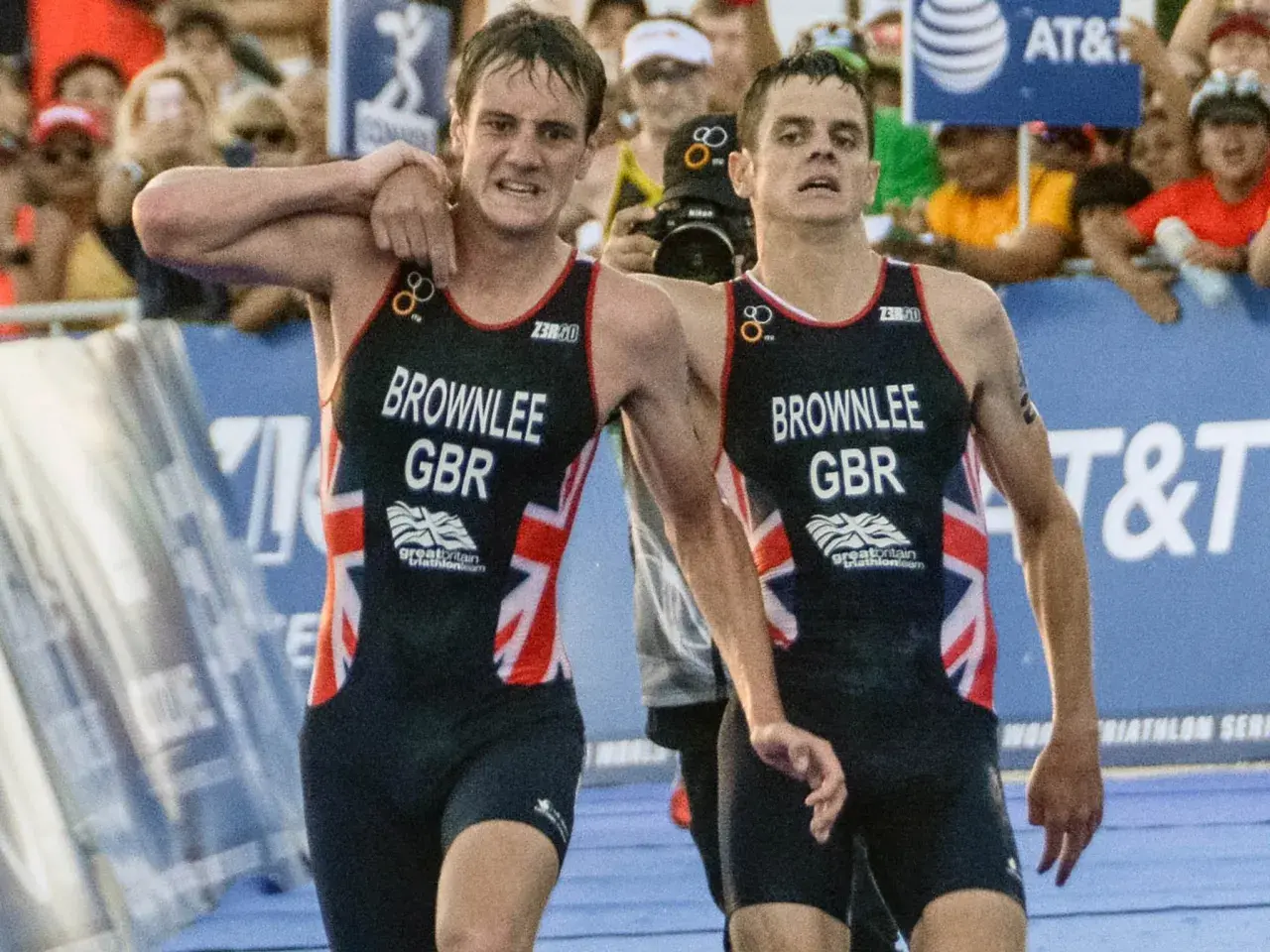
Alistair and Jonny Brownlee shaped modern triathlon through a mix of raw swim speed, relentless bike pressure, and the kind of run strength that punishes hesitation. The brownlee brothers are still the clearest example of how a strong swim can control an entire race, and that makes their story useful for swimmers, age-group triathletes, and anyone trying to understand why the first leg matters so much. In this article, I break down why they mattered, how they raced, and what you can actually borrow from them in training.
What matters most about their story
- Alistair and Jonny Brownlee became the defining names in Olympic-distance triathlon during the 2010s.
- Their biggest advantage started in the water, where they often turned the swim into a tactical weapon.
- Alistair stepped away from competitive racing in late 2024, while Jonny was still active in 2026.
- Their style was built on draft-legal racing, where position and timing matter as much as raw power.
- Most athletes should copy their principles, not their elite training volume.
- For swimmers, their career is a reminder that technique, composure, and speed under fatigue are worth more than flashy splits alone.
Why Alistair and Jonny Brownlee changed triathlon
What made the Brownlees special was not just the medal count. It was the way they made Olympic triathlon look like a hard, technical, tactical race instead of a simple endurance test. Alistair won Olympic gold in 2012 and 2016, Jonny won bronze in 2012, silver in 2016, and later added mixed-relay gold in Tokyo, and together they became the reference point for how a country could dominate the sport for a full era.I think that matters because they showed something many age-group athletes miss: a triathlon is not won by being average in three sports. It is won by using your strongest leg to create leverage, then protecting that advantage everywhere else. For them, the swim was rarely just about survival. It was about entering T1 with choice, not panic.
Their rise also changed the sport’s image. For a long time, many people thought of triathlon as a cycling race with a run at the end. The Brownlees made it obvious that swim competence and early positioning could dictate the whole day. That is the real lesson that still holds up in 2026, and it leads directly into how they raced.

How they raced when it mattered
Their shared strength was not one single engine part. It was the combination of a fast swim, aggressive but controlled bike work, and a run that could break rivals after everyone else had already spent too much energy. In draft-legal racing, you can ride in another athlete’s slipstream, so the swim decides whether you are chasing or conserving. That is why their front-pack speed was so important.
| Area | Alistair | Jonny | Why it mattered |
|---|---|---|---|
| Swim | Often the sharper opener and the more forceful race starter | Exceptionally steady, rarely giving away easy meters | Both could exit the water in a position that shaped the rest of the race |
| Bike | Liked to apply pressure and split fields when the moment was right | Excellent at handling surges and keeping the group honest | They used the bike to defend a lead, not just to survive the middle of the race |
| Run | Devastating once the race was already under control | Very resilient in tactical, changing races | Their running only looked easy because the earlier legs were so well managed |
| Transitions | Clean, fast, and deliberate | Equally efficient under pressure | Small gains in T1 and T2 often add up to real time |
What I notice when I watch their best races is how little wasted motion there is. They did not panic when the pace changed. They did not ride above themselves just to prove a point. They were ruthless in a very controlled way, which is a rare combination. That same principle is exactly what swimmers can borrow from their approach.
What swimmers can steal from their approach
If you come from swimming, the Brownlees are a useful reminder that open-water skill is not just a triathlon add-on. It is a performance multiplier. A good swim leg is not about looking smooth for 1,500 meters. It is about getting into position, staying relaxed when the pack surges, and leaving enough energy for the bike.
Here is the practical translation I would focus on:
- Start hard, then settle. The first 200 to 400 meters often decide whether you hold the right feet or spend the whole leg in traffic.
- Practice sighting under pressure. Lifting the head too high wastes energy, but not sighting at all sends you off course. Every 6 to 10 strokes is a good practical range to rehearse.
- Train pace changes. Triathlon swims rarely stay even. Short surges, then controlled breathing, is the real pattern.
- Learn to stay calm in contact. Open water is messy. Panicking about bumps or crowded starts costs more than the bump itself.
- Keep your stroke together when tired. The best triathlon swimmers do not just swim fast; they preserve form when the race gets ugly.
Read Also: First Ironman Race - Your Complete Guide to Finish Strong
A simple race-specific swim set
If you want a pool session that reflects their style, I would use something like this once a week:
- 6 x 200m at controlled race pace with 20 seconds rest, sighting every few lengths.
- 8 x 50m fast but technically clean, with the first 15m as the hardest part.
- 4 x 100m negative split, so the second half is faster than the first.
That kind of work builds the ability to swim fast without losing control, which is exactly the skill triathlon rewards. Once that is in place, the next question becomes how much training you should actually copy from elite athletes.
What their training model teaches age-group athletes
This is where most people get it wrong. They look at champions and assume the answer is volume. It usually is not. The better takeaway is structure. The Brownlees trained like professionals because they were professionals, but the logic behind their work is still useful for busy athletes who need precision more than heroics.
| Training element | Elite-style principle | Practical age-group version |
|---|---|---|
| Swim | Frequent race-pace work and high technical demand | 3 to 5 swims per week, with at least 2 focused on technique and pace |
| Bike | Enough volume to hold pressure after the swim | 2 to 4 rides per week, including one quality session |
| Run | Strong aerobic base plus the ability to close hard | 2 to 4 runs per week, with one brick session every 1 to 2 weeks |
| Strength | Support work for durability and power | 1 to 2 short sessions per week, especially for hips, core, and shoulders |
For most age-group athletes, a focused week around quality, recovery, and repeatability beats a chaotic week that is simply long. I would also keep the gear conversation practical. A well-fitting wetsuit, goggles that do not leak, and a cap you trust matter far more than chasing novelty equipment. If the swim setup reduces stress and drag, it is doing its job.
The key is not to chase their workload. It is to copy their discipline. That distinction becomes even more important when you look at the mistakes people make while trying to train like champions.
The mistakes that usually ruin a Brownlee-style build
The most common error is trying to train hard in every session. That looks impressive on paper and falls apart in real life. The Brownlees were aggressive, but they were not random. Their effort had shape. Every hard segment served a tactical purpose.
- Copying elite volume. More hours do not help if the athlete cannot recover from them or keep technique intact.
- Ignoring the swim-to-bike handoff. A great swim means little if you stumble through T1 and waste the advantage.
- Racing every interval like it is the final. Good triathlon training includes control, not constant panic.
- Underfueling the middle of the race. Many athletes pay for a hard swim and hard bike with a weak run because they never replaced the energy.
- Using one leg to hide weakness in another. The best triathletes reduce leakage across all three disciplines instead of hoping one magic weapon saves them.
For swimmers, one warning matters more than the rest: do not confuse a strong pool performance with triathlon readiness. If your stroke falls apart after a fast start, you need better pacing and open-water control, not just more yardage. That is the kind of honest correction the Brownlees’ racing style demands, and it explains why their legacy is still relevant now.
Why their legacy still matters in 2026
Alistair has now stepped away from competitive racing, but Jonny is still active in the sport, which keeps the Brownlee story from becoming a museum piece. Their influence is still visible in how athletes approach the swim leg, how coaches talk about race position, and how triathletes think about efficiency under pressure. They helped prove that a smart first 1,500 meters can shape everything that follows.
For me, the lasting lesson is simple. If you want to swim better for triathlon, do not just chase speed. Build a swim that gives you options. Learn to start well, sight well, stay calm in traffic, and exit the water with enough control to ride and run on purpose. That is the real Brownlee lesson, and it still pays off long after the headlines have moved on.