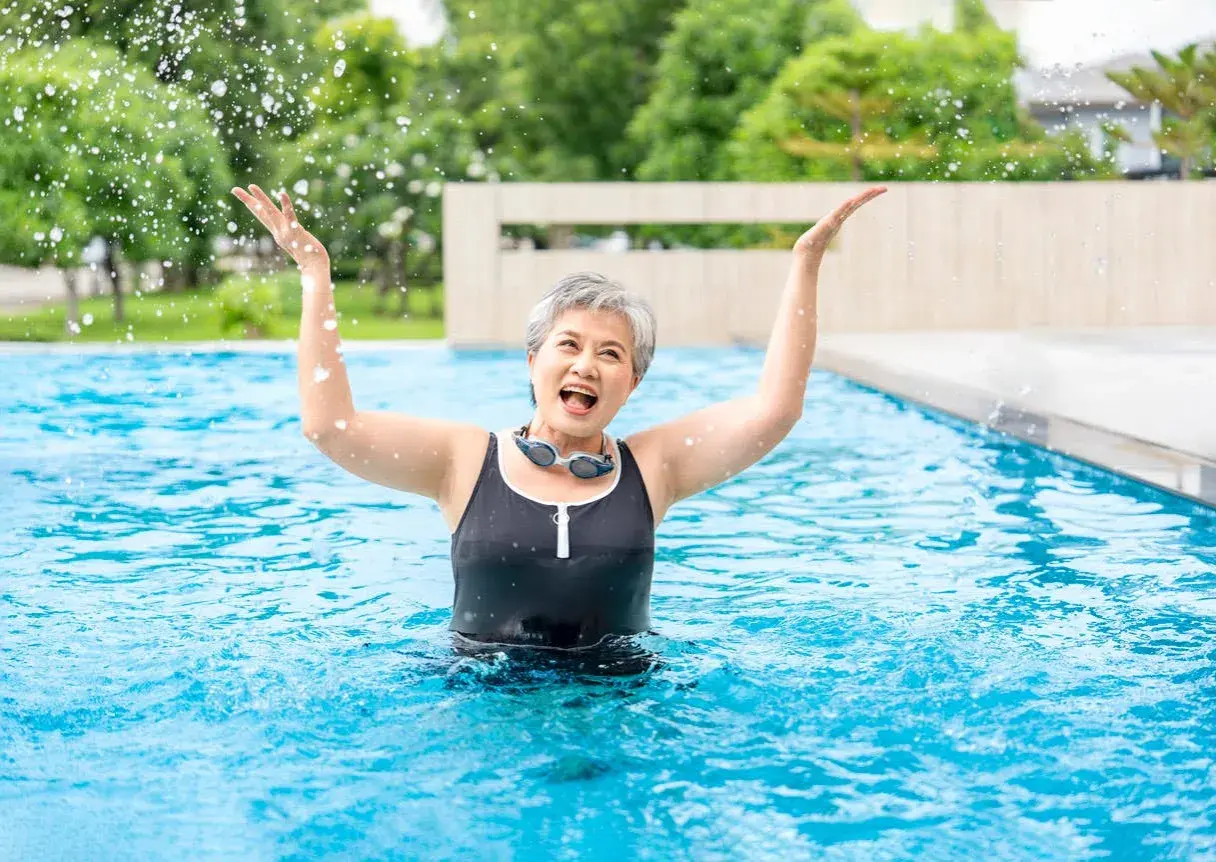
A beginner swim workout should feel structured, not punishing. It needs to build breathing control, body position, and enough endurance to keep your technique intact, not just your heart rate high. I’m focusing here on the kind of session that helps new swimmers leave the pool more confident, not more wrecked.
The best first sessions are short, calm, and repeatable
- Start with short repeats and generous rest so your stroke stays clean.
- Keep the total session around 20-40 minutes and roughly 400-800 yards or meters, depending on comfort.
- Freestyle can do most of the work at first; add backstroke or gentle kicking to stay relaxed.
- Use one cue at a time, such as “exhale underwater” or “long body line.”
- Progress by adding a little distance or one extra repeat, not by turning every lap into a sprint.
What a new swimmer needs from the water
The first job of a starter swim session is not speed. It is to make breathing feel normal, keep the hips and legs from sinking, and teach the arms to move without panic. If those three things are in place, fitness comes faster because you can actually stay in the water long enough to train.
I usually tell beginners to think in this order: breathe, balance, then effort. Continuous exhaling underwater matters more than most people expect, because holding your breath makes the next inhale feel rushed and raises tension through the neck and shoulders. Once breathing calms down, body position improves, and once body position improves, every stroke gets cheaper.
- Breathing control keeps the session from becoming a series of panic stops.
- Body line reduces drag and helps the legs stay near the surface.
- Short repeats give you enough recovery to repeat good movement patterns.
- Simple strokes let you focus on a few basics instead of trying to master everything at once.
On a 10-point effort scale, most early repeats should sit around a 3 to 5. That feels purposeful but controlled: you are working, yet you can still think about exhaling, body line, and one cue at a time.
That is why I prefer freestyle and easy backstroke for most beginners, with light kicking mixed in for balance and feel. Once that foundation is in place, the next question is how to shape the whole workout so it actually works.
The structure I use for a first month in the pool
Most beginner sessions work best when they follow the same rhythm every time. You warm up, do a short skill block, finish with a main set, and cool down before you get sloppy. That pattern sounds simple because it is, but simple is exactly what helps new swimmers progress without getting overwhelmed.
| Part | How long or how much | What it should accomplish |
|---|---|---|
| Warm-up | 5-10 minutes | Raise temperature, settle breathing, and avoid that first-lap shock. |
| Skill block | 4-8 short repeats | Give one clear technical cue, such as relaxed recovery or steady exhale. |
| Main set | 10-20 minutes | Build easy endurance with rest between repeats. |
| Cool-down | 5-10 minutes | Bring effort down and finish with good form. |
I like this structure because it prevents the most common beginner problem: starting too hard, then spending the rest of the session trying to survive. If you can complete the same session twice in a row without form falling apart, you are on the right track. That leads straight into the part most readers want most, which is a real session they can copy.

A session you can swim today without overthinking it
The goal here is not to impress anyone. The goal is to leave the pool with enough energy to come back in two or three days and do it again. I would rather see six clean 25s than one ugly 200, because clean movement teaches the body faster than a desperate grind.
| Segment | 25-yard pool | 25-meter pool | Coach note |
|---|---|---|---|
| Warm-up | 4 x 25 easy freestyle or backstroke, 20 seconds rest | 4 x 25 easy freestyle or backstroke, 20 seconds rest | Keep the first two lengths almost embarrassingly easy. |
| Kick | 4 x 25 flutter kick with a board or on your back, 20-30 seconds rest | 4 x 25 flutter kick with a board or on your back, 20-30 seconds rest | Kick from the hips, not from stiff knees. |
| Skill set | 4 x 25 drill swim with catch-up or fingertip drag, 20 seconds rest | 4 x 25 drill swim with catch-up or fingertip drag, 20 seconds rest | Pick one drill and repeat it; do not collect drills. |
| Main set | 6 x 25 freestyle at easy-moderate effort, 20-30 seconds rest | 6 x 25 freestyle at easy-moderate effort, 20-30 seconds rest | Think smooth, not fast. If the stroke breaks, add rest. |
| Finish | 2 x 50 easy choice stroke, 30 seconds rest | 2 x 50 easy choice stroke, 30 seconds rest | Use backstroke here if freestyle breathing is tiring. |
| Cool-down | 2 x 25 very easy swim | 2 x 25 very easy swim | Leave the water feeling better than when you started. |
Catch-up drill means one hand waits in front until the other hand reaches it; it slows the stroke down so you can feel balance. Fingertip drag keeps the recovery arm relaxed and close to the surface, which is helpful when beginners swing the arm too wide. I use both because they force attention onto shape, not just effort.
If flip turns scramble your breathing, use a simple touch-and-go wall instead. I would rather see a steady push off and a clean line than a rushed turn that derails the next length.
If 25s still feel like too much, cut them in half mentally and rest longer between lengths. A good rule is simple: if you need to gasp before the next repeat starts, the set is too aggressive for today. It is better to finish a modest session with control than to scrape through a bigger one with broken technique.
How I would progress it over four weeks
The first month should feel like a gradual conversation with the water, not a punishment cycle. I usually change only one thing at a time: a little more distance, one extra repeat, or slightly less rest. If you change all three at once, beginners tend to lose the one thing they need most, which is confidence.
| Week | Sessions | Typical total | Main focus | Move up when |
|---|---|---|---|---|
| 1 | 2 | 400-600 yards or meters | Breathing, comfort, and simple movement patterns | You can finish without panic or shoulder tension. |
| 2 | 2-3 | 500-700 | Same workout, slightly more repeat volume | Your first and last repeats look similar. |
| 3 | 2-3 | 600-800 | Cleaner stroke and steadier pacing | You recover quickly between repeats. |
| 4 | 3 | 700-1000 | Confidence and consistency | You can add a little distance without losing form. |
I also watch stroke count, which is just the number of arm pulls it takes to get across a length. When the count climbs fast, the swimmer is usually getting tired or losing body position, and that is my cue to hold the distance steady for another week.
Two sessions a week is enough to make real progress if your schedule is tight. Three shorter sessions are even better when you can recover well, because they keep water feel fresh and reduce the awkward restart that happens after long gaps. I would not push a beginner into one huge weekly swim and call it training.
There is also a hidden benefit to repetition: you learn your own baseline. Once you know what 25 easy lengths feel like on a good day, you can spot when fatigue, stress, or a busy schedule starts to change your stroke. That awareness is what keeps small problems from becoming bad habits.
The mistakes that make new swimmers tired too fast
The most common beginner error is treating the first ten minutes like a test. People push hard immediately, miss their breathing rhythm, and then assume swimming is just an exhausting sport. In reality, the problem is usually the pace selection, not the pool.
- Sprinting the opening repeat makes your breathing noisy and ruins the rest of the session.
- Holding your breath underwater creates tension and makes each inhale feel urgent.
- Skipping the warm-up is a fast way to feel stiff, especially in cold pools.
- Using too many tools too early can hide technique problems instead of fixing them.
- Chasing distance before control usually leads to sloppy turns, sloppy strokes, and less confidence.
- Staring forward the whole time lifts the head, drops the hips, and adds drag you do not need.
I also see beginners underestimate rest. A 20-second pause between 25s is not laziness; it is often the thing that keeps the next repeat useful. If the stroke quality drops sharply, extend the rest before you reduce the workout to a survival drill.
Gear and pool setup that make the session easier
You do not need a bag full of equipment to get started. In most cases, a secure pair of goggles, a suit that stays in place, and a pool lane that does not feel crowded are enough to make the session manageable. Everything else should support the workout, not complicate it.
| Item | Why it helps | What I would do with it |
|---|---|---|
| Goggles | Protects your eyes and makes breathing rhythm easier to settle | Choose a comfortable seal before you worry about style. |
| Swim cap | Keeps hair out of your face and can reduce distraction | Optional for many adults, but useful in public lanes. |
| Kickboard | Lets you isolate the legs and body position | Use it if it helps; skip it if it makes your shoulders tense. |
| Fins | Can improve confidence and body position briefly | Useful later, but I would not make them a crutch. |
| Hand paddles | Add resistance | I would leave these out until your stroke is stable. |
If you are still nervous in deep water, a calmer lane and a quieter time of day matter more than any gadget. The same workout feels very different in an overcrowded lane versus a lane where you can settle into your own rhythm. That matters because beginners do best when the environment removes friction instead of adding it.
One practical detail I value: if freestyle breathing still feels awkward, use backstroke for recovery instead of forcing more freestyle when you are already stressed. That small adjustment keeps the session moving without reinforcing bad habits. It is a simple switch, but it saves a lot of frustration.
What I would check before the next session
Before you get back in the pool, pick one thing to improve and leave the rest alone. That might be a calmer exhale, a straighter body line, or simply finishing the set with the same stroke quality you had at the start. Small, specific progress is what turns a beginner session into a training routine.- Did my breathing stay calm for most of the set?
- Did I keep the same stroke shape from the first repeat to the last?
- Did I finish with enough energy to swim again in two or three days?
If the answer is yes, the session was probably pitched well. If the answer is no, I would shorten the repeats, add more rest, or simplify the drill work before trying to make the workout harder. That is the simplest way I know to build confidence, and it is exactly why a beginner swim workout should stay short, repeatable, and calm enough that technique holds together from start to finish.