
Chlorine sensitivity is usually less about the chlorine itself and more about how your skin, eyes, or airways react to chlorinated water and the by-products that build up in busy pools. For swimmers, that can mean dry patches, stinging eyes, a scratchy throat, or a cough that starts halfway through a session and hangs around afterwards. I’m going to cover what is actually happening, how to tell it from eczema or asthma, and what makes a pool session much easier to tolerate.
The key points to know before your next pool session
- Most pool reactions are irritant rather than a true allergy.
- The strong indoor-pool smell usually comes from chloramines, which form when chlorine reacts with sweat, dirt, and other waste.
- Eczema-prone skin, asthma, and crowded indoor sessions make symptoms more likely.
- Showering before and after swimming, using the right emollient, and choosing well-ventilated pools can make a real difference.
- Breathing problems, swelling, or a rash that keeps coming back deserve medical advice.
What pool reactions usually mean
When swimmers talk about pool irritation, they are usually describing irritant dermatitis or airway irritation, not a true immune allergy. I usually see three patterns: the skin becomes dry or itchy, the eyes sting and go red, or the chest feels tight and wheezy during harder sets. Chlorinated water can do all three because it dries the skin barrier and can aggravate existing eczema or sensitive airways.The important distinction is this: a true allergy involves the immune system, while irritant reactions happen because the skin or mucous membranes are being stressed. That is why one swimmer can finish a whole lane set with no issues, while another gets red eyes after twenty minutes in the same pool. Once you know which pattern you are seeing, the next question is what in the pool is actually causing it.
Why indoor pools can feel harsher than outdoor ones
The chemical smell most people notice is often not “extra chlorine” in the water. It is usually combined chlorine, better known as chloramines, which form when disinfectant reacts with sweat, urine, skin cells, and other organic matter that swimmers bring into the pool. Those compounds can irritate the eyes, nose, throat, and lungs, especially when they build up above the water in a poorly ventilated indoor space.
| Pool factor | Why it matters | What I would do |
|---|---|---|
| High bather load | More sweat and organic matter means more chloramines | Choose quieter lanes or off-peak hours |
| Poor ventilation | Irritant gases linger above the water, especially indoors | Pick a better-ventilated leisure centre if you can |
| Unbalanced water | Water that is off-target feels harsher on skin and eyes | Use pools that test and record water quality regularly |
| Hot tubs and spas | Heat increases the way irritants move into the air | Limit time if you react easily |
In many UK pools, free chlorine is managed in a narrow mg/L range and the pH is kept close to neutral, because balanced water is more comfortable and more effective. The practical point is simple: a pool that is well run will usually feel clean, not sharp. If the air burns your nose the moment you walk in, the problem is often ventilation and chloramines, not just the water itself. That is why separating this from other look-alike problems matters next.
How to tell it apart from eczema, eye irritation, or asthma
I would not blame the pool for every symptom that appears after a swim. A rash might be eczema, a pair of goggles may be rubbing too tightly, and a cough can come from asthma or from irritated airways. The pattern tells you much more than the word “chlorine” does.
| What you notice | More likely explanation | What it suggests |
|---|---|---|
| Dry, itchy patches on arms, neck, or behind the knees after swimming | Eczema flare or irritant dermatitis | Focus on emollients and showering, not just goggles |
| Red, burning eyes in a crowded indoor pool | Chloramines or poor ventilation | Try another pool or better-fitting goggles |
| Cough, wheeze, or chest tightness during intervals | Airway irritation or asthma | Stop the session and review asthma control |
| Rash where straps, seams, or latex touch the skin | Contact irritation from kit | Change goggles, cap, or suit before blaming the water |
One useful rule: ear pain, muffled hearing, or discharge is usually more in line with swimmer’s ear than with pool-water irritation. And if the symptoms are happening in every setting, not just the pool, then the pool may only be part of the story. Once you can see the pattern, the fix becomes much more specific.
What helps before, during, and after a swim
This is the part that usually makes the biggest difference. I would rather see a swimmer improve a few habits consistently than buy expensive kit and hope for the best.
| When | Practical step | Why it helps |
|---|---|---|
| Before | Shower with lukewarm water, apply a thick layer of emollient if your skin is eczema-prone, and use goggles that seal properly without digging in | Reduces sweat and dirt on the skin and gives the barrier a better chance of holding up |
| Before | Avoid heavily fragranced lotions, body sprays, and harsh face washes | These can make the skin more reactive before you even get in the pool |
| During | Swim off-peak when possible and keep your reliever inhaler nearby if you have asthma | Lower crowding usually means fewer chloramines and less irritation in the air |
| During | Stop early if your eyes sting, your throat starts to burn, or coughing begins to build | Ignoring early warning signs usually turns a mild reaction into a ruined session |
| After | Rinse off promptly, wash with a gentle cleanser, moisturise again, and dry the ears and skin folds carefully | Removes residue and helps stop the skin from staying dry and irritated |
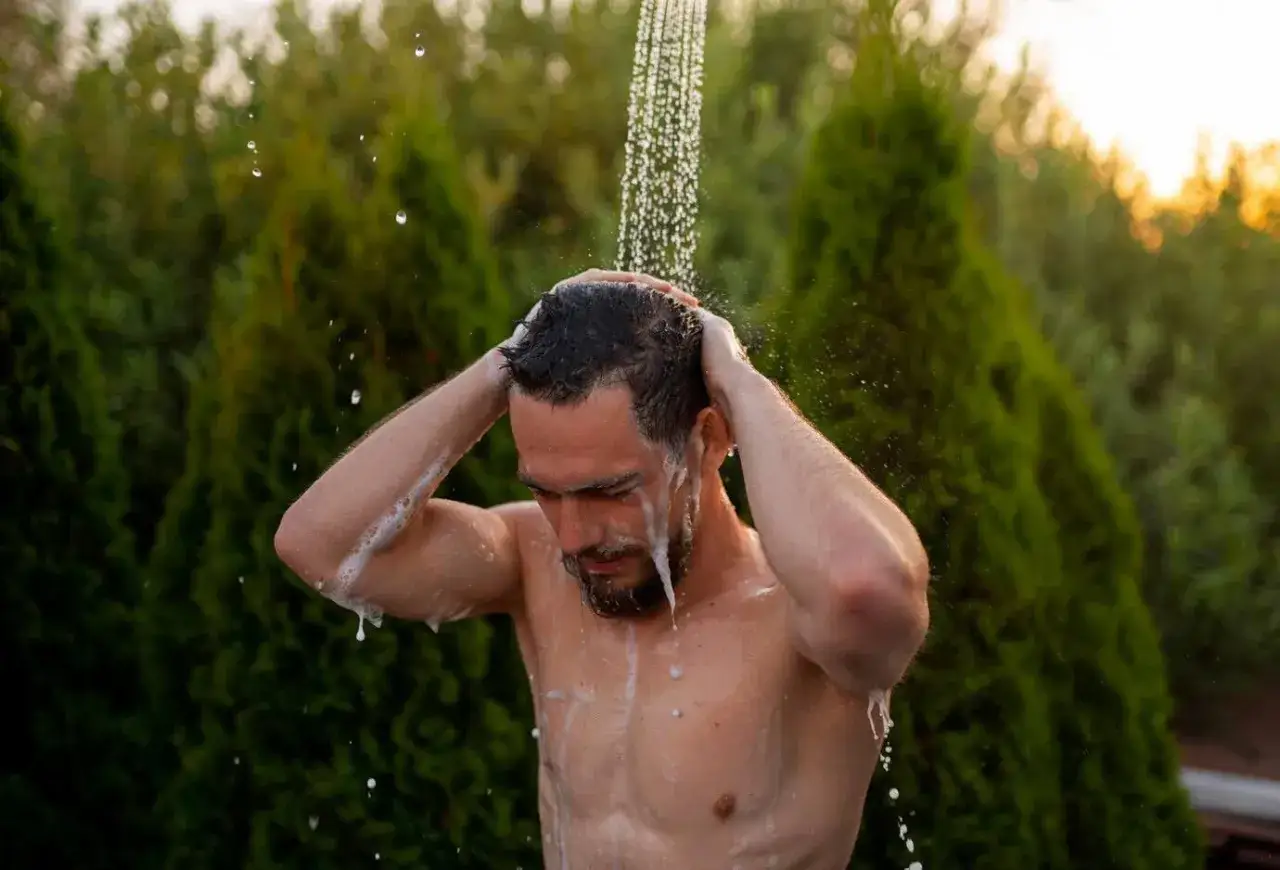
For swimmers with eczema, I would add one more detail: showering after the session should be thorough, but not scalding hot. Hot water strips the skin faster. A simple, repeatable routine often beats any special product, and that is especially true if you train several times a week. The next step is choosing the pool and kit that support that routine instead of working against it.
Choosing the right UK pool and kit
Not every pool will feel the same, even if the water is technically safe. A well-ventilated indoor pool, a quieter off-peak session, or an outdoor pool in mild weather can feel noticeably easier on the skin and airways. A saltwater-labelled pool can also feel softer, but I would not treat that as a cure-all: many salt systems still generate chlorine, so the water is not chlorine-free in the way people imagine.
| Choice | Best for | Limits |
|---|---|---|
| Well-ventilated indoor pool | Swimmers who want year-round training with less irritant build-up | Still chlorinated, so not a full fix |
| Outdoor pool | People whose eyes or chest react to indoor fumes | Weather and season matter a lot |
| Saltwater-labelled pool | Swimmers who prefer a softer feel | Often still uses chlorine or chlorine generation |
As a rough working range in many UK pools, free chlorine is often kept around 1.5 to 2.0 mg/L, with pH near 7.2 to 7.4, while combined chlorine should stay low. Those figures vary by venue and treatment system, but they give you a useful benchmark when a leisure centre talks about water quality. If a pool cannot explain how it tests free chlorine, combined chlorine, and pH, I would view that as a comfort issue as much as a hygiene issue.
For kit, the simplest upgrades are usually the most useful: a softer goggle seal if the eyes are sensitive, a cap that fits without rubbing, and swimwear that does not chafe when wet. I would also replace worn straps sooner than most people do. A leaking goggle can make water irritation look worse than it really is.
When to stop pushing through it and get checked
Some reactions are a clear sign to stop the session and speak to a clinician. I treat the following as red flags:
- Wheezing, chest tightness, or shortness of breath that does not settle quickly
- Facial swelling, hives, or dizziness after leaving the pool
- Eye pain, blurred vision, or a chemical-burn feeling
- A rash that is spreading, blistering, or lasting into the next day
If the problem is recurring, a pharmacist, GP, or allergy/skin specialist can help separate eczema, asthma, and contact irritation from genuine pool-related symptoms. That matters because the treatment is different: eczema may need stronger barrier care, asthma may need a review of control and trigger exposure, and a contact reaction may come down to changing a product or a piece of kit. If the symptoms happen in only one facility, the pool itself is a stronger suspect than your body. If they happen everywhere, I would look wider.
Keeping swimming in the plan when the pool keeps irritating you
The goal is not to make every pool perfect. It is to make swimming sustainable. I usually ask swimmers to keep a very simple two-week log: which pool they used, what time they went, how crowded it was, what their skin or chest did afterwards, and which products they used before and after. That is often enough to show whether the trigger is the water, the air, the kit, or a skin barrier that needs more support.
If you can cut out the specific trigger, most people do not need to give up swimming. They just need a better routine, a better lane choice, or a better pool. That is the practical answer here, and it is the one that keeps training on track without turning every visit to the leisure centre into a guessing game.