A relay format changes triathlon from an individual endurance test into a shared execution problem: one athlete handles the swim, another the bike, and a third closes the day on the run. The format looks simple on paper, but the teams that do it well are the ones that get the handoffs, pacing, and race-week logistics right. Here I’ll break down how it works, who it suits, and where relay teams usually save time or lose it.
Key things to know before you build a relay team
- Official relay entries are generally offered at IRONMAN 70.3 events, while full-distance IRONMAN races do not offer relay entries.
- Most teams are made up of two or three athletes, with one timing chip passed from leg to leg.
- The swim, bike, and run roles should be assigned by strength, calm under pressure, and transition discipline, not just by ego.
- Relay teams usually share the same cutoff pressure as solo athletes, so the slowest leg still matters.
- A clean finish is a team effort, but only if everyone knows the meet point before race day.
What an IRONMAN relay actually is
In practical terms, a relay team covers the same triathlon distances, but the workload is split across teammates instead of one athlete taking on every discipline. For the standard relay format most people mean, that usually happens at an IRONMAN 70.3 event: 1.9 km swim, 90 km bike, and 21.1 km run. If you mean the full 140.6-mile Ironman distance, the important correction is blunt: official relay entries are not offered for full-distance IRONMAN races.That distinction matters because it changes the whole decision-making process. A relay is not a shortcut into a full-distance finish; it is its own race format, with its own logistics, timing rules, and team strategy. In 2026, I would still tell any first-time team to check the specific event page before registering, because relay availability and setup can vary by race.
Once that difference is clear, the real question becomes how to make the handoff sequence as smooth as the team itself.

How race-day handoffs work
The relay handoff is the part that looks small from the outside and turns out to be huge on race day. Most official guides use a dedicated relay zone in transition, and that is where the team passes the timing chip from swimmer to cyclist and then from cyclist to runner. In many events, the chip acts like a baton: one chip for the team, not one chip per person.
That single detail is where a lot of teams get sloppy. If the swimmer does not know exactly where to meet the cyclist, or the cyclist is unsure where to wait after racking the bike, seconds turn into confusion very quickly. Some race guides also specify that the chip must be worn on the ankle during the leg, so I treat that as non-negotiable until the event guide says otherwise.
I also like teams to walk transition together before the race. That sounds basic, but it prevents the classic mistakes: leaving gear in the wrong rack, missing the relay flag, or searching for the meet point while the next teammate is already moving.
Once the transitions are clear, the next step is making sure each leg belongs to the right person.
How I would split the swim, bike, and run legs
My rule of thumb is simple: assign the swim to the athlete who handles open water best, the bike to the rider who can hold power without overcooking themselves, and the run to the person who finishes strongly when the day gets long. That is not always the fastest athlete in the group. It is usually the athlete with the best control.
| Leg | What matters most | Best fit | Common mistake |
|---|---|---|---|
| Swim | Sighting, comfort in contact, calm pacing | The strongest open-water swimmer, not just the fastest pool swimmer | Sending a nervous athlete into a crowded start because they are “fresh” |
| Bike | Steady power, aero discipline, fueling control | The most durable rider who can ride hard without fading | Choosing the athlete with the biggest ego instead of the best pacing |
| Run | Pacing, heat management, finish strength | The most reliable runner in the last third of the day | Picking the fastest 10K runner who falls apart after 8 miles |
For the swim leg, I would be especially strict. The swimmer needs more than speed; they need the ability to start cleanly, sight well, and stay composed when the water gets messy. That matters even more in open water than in pool-based training, because the athlete who swims straight and relaxed often beats the athlete who looks better on paper.
If your team has only two people, the same logic still applies, but the handoff plan becomes even more important. Some events allow two-person teams and let them split the work in different ways, so check the race rules before you assume one person must cover a certain discipline.
With the roles assigned properly, training becomes much easier to organize.
What to train before race week
Relay teams do not need three athletes training like solo Ironman contenders, but each athlete still needs a targeted block. I would keep the work specific, efficient, and realistic. The swimmer should not try to build bike fitness, and the runner does not need to chase open-water volume. Each person should sharpen the one leg they actually own.
- Swimmer: practice open-water starts, sighting every few strokes, and swimming straight under pressure. If the event allows wetsuits, do at least one session in the suit before race week.
- Cyclist: build one or two longer rides at target effort, then rehearse nutrition and bottle setup. The bike leg is often where teams gain or lose the most time.
- Runner: focus on pacing, heat control, and finishing well off moderate fatigue. A controlled brick run is more useful than a heroic interval session.
- Team: rehearse the chip handoff, agree on the meet points, and decide exactly who handles what at check-in and transition.
I also like teams to run a dry rehearsal of the handoff sequence. It sounds almost too simple, but a 10-minute walk-through of who stands where, who carries what, and who hands off the chip can save more time than a month of vague planning.
Once the training is sorted, the bigger decision is whether a relay is actually the better race choice for your group.
Relay racing versus solo racing
People often ask whether a relay is “easier” than racing solo. My honest answer is that it is easier in one sense and harder in another. The physical burden is shared, but the logistics become a team sport. You are not just racing the course; you are managing people, timing, and communication.
| Factor | Relay | Solo race |
|---|---|---|
| Training load | Split among specialists | Covered by one athlete across all three disciplines |
| Race-day pressure | Lower physical load, higher coordination needs | Higher physical demand, simpler logistics |
| Best for | Mixed-ability friends, clubs, or athletes who want a shared experience | Athletes chasing a personal endurance challenge |
| Championship pathway | Relay teams are not eligible for IRONMAN or IRONMAN 70.3 World Championship qualification | Solo athletes may be eligible, depending on event and age group |
| Official availability | Common at IRONMAN 70.3 events, not full-distance IRONMAN | Available at both 70.3 and full-distance events |
If your goal is a shared finish and a cleaner build-up, relay racing is a strong option. If your goal is the full personal test, solo racing is the better route. I would never sell a relay as a diluted version of triathlon; it is simply a different event with different rewards.
The teams that enjoy it most are usually the ones that understand the rules before they start making strategy mistakes.
The mistakes that most often hurt relay teams
A relay team usually does not fail because one athlete is slightly slower than expected. It fails because the team overlooked something basic and paid for it later. In my experience, the most common mistakes are surprisingly boring.
- Assuming a full-distance IRONMAN has relay entries, when it does not.
- Letting only one teammate read the race guide and assuming everyone else will “pick it up later.”
- Choosing the swim, bike, or run assignment based on pride instead of race-day control.
- Not confirming the relay meet point in transition before race morning.
- Forgetting that a single timing chip has to move cleanly from one athlete to the next.
- Ignoring cutoff pressure and assuming the team can recover from a bad first leg.
That cutoff point matters more than many newcomers realize. On event pages I checked, relay teams were held to the same discipline cutoffs as individual athletes, which means if the swimmer or cyclist misses the allowed time, the whole team can be recorded as a DNF. That is not the kind of rule you want to discover on race day.
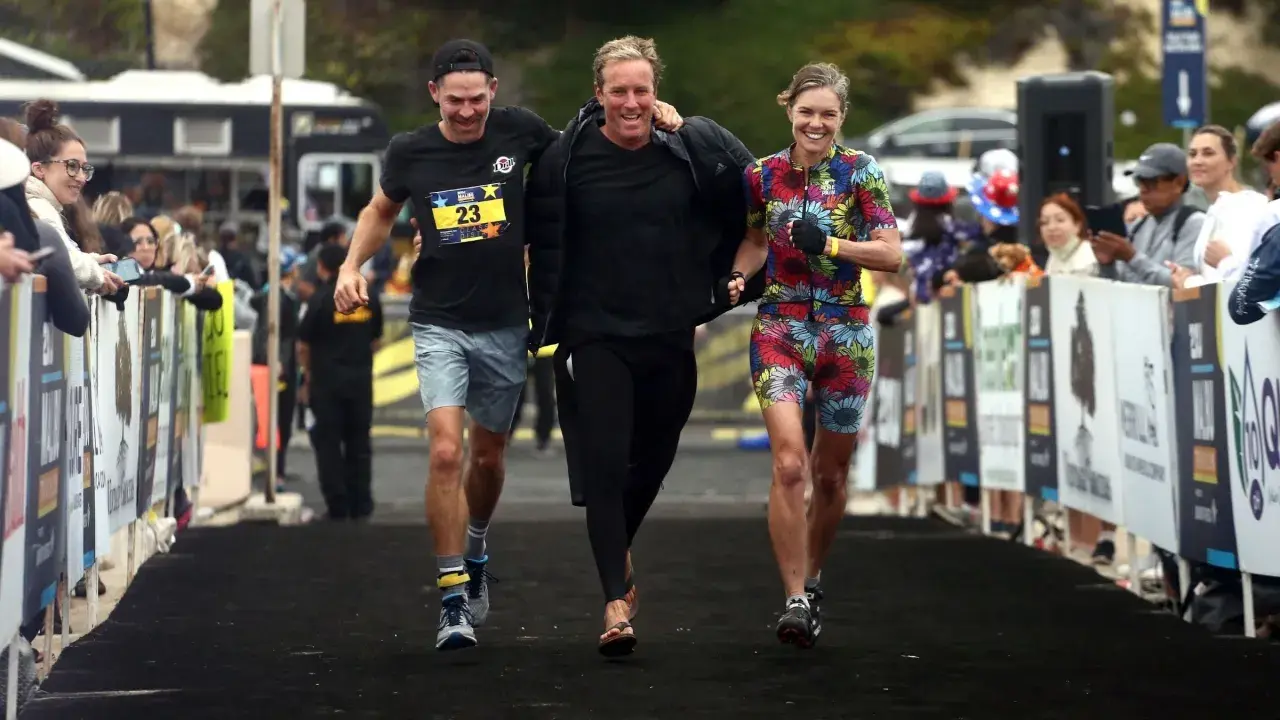
I also tell teams to pay attention to the finish-line setup. Many races let the whole group reunite close to the chute and cross together, but the exact meet point is still specific to the event. If you want that shared finish, you need to know where to stand before the runner arrives.
With those traps out of the way, the last thing I would do is simplify race week as much as possible.
The race-week checklist I would use
- Confirm that relay entries are available for your specific event, not just for the series in general.
- Lock in the swimmer, cyclist, and runner early enough that each athlete can prepare for the correct leg.
- Make sure all team members attend athlete check-in and sign whatever waiver or registration step the race requires.
- Walk transition together and physically locate the relay exchange area, the bike rack, and the finish-line meet point.
- Pack the small things that save a race day: spare goggles, an extra gel, a backup number belt, and any gear the swimmer needs to feel calm at the start.
- Agree on communication before race morning: who tracks the split, who waits where, and how the team will handle a delay or weather change.
That is the version of relay racing I trust: clear roles, simple handoffs, and no unnecessary drama. When the team treats the format as a shared execution challenge instead of a casual split of three sports, the day gets a lot more enjoyable and a lot less chaotic.