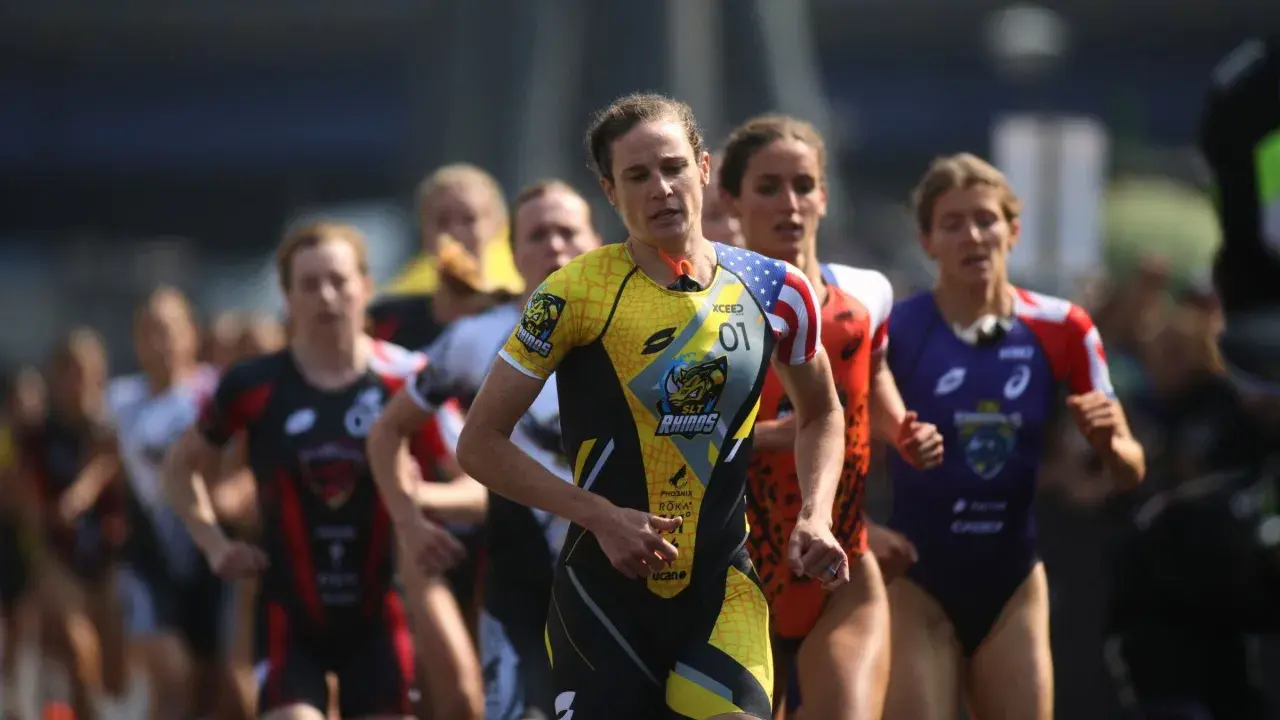
Katie Zaferes is a strong example of how modern triathlon rewards repeatable execution, not just raw talent. Her path runs from track and field at Syracuse to Olympic bronze, a world title, and eventually a coaching role that now shapes the next wave of American athletes. In this article, I break down her background, the results that define her, the race habits that made her hard to beat, and the practical lessons swimmers and triathletes can actually use.
Key facts to know first
- She turned consistency into a world title, not a one-off breakout result.
- Her biggest career markers are the 2019 world title plus Olympic bronze and mixed relay silver in Tokyo.
- World Triathlon lists 98 starts, 46 podiums, and 15 wins, which shows rare durability at elite level.
- After retiring in 2024, she moved into coaching and now leads AUXO Collective in North Carolina.
- For swim-focused readers, her value is in race positioning, transitions, and calm pacing under pressure.
From track runner to triathlon champion
She came out of Hampstead, Maryland, and Syracuse University, where her first elite path was track rather than triathlon. That detail matters, because it explains why her career reads like a study in adaptation: she learned to turn three disciplines, plus two transitions, into one coherent race.
I find that progression especially useful for age-group athletes. It shows that you do not need to be born into triathlon to become excellent in it, but you do need patience while the three parts of the race start working together. In triathlon, T1 is the swim-to-bike changeover and T2 is the bike-to-run changeover, and both can quietly shape the final result.
That foundation sets up the bigger story, which is not just where she came from, but how she turned steady progress into results that held up on the biggest stages.
The results that define her career
For me, the most telling number is not the title itself. It is the consistency behind it. World Triathlon records list 98 starts, 46 podiums, and 15 wins, which is the profile of someone who could race well across seasons, courses, and conditions. In 2019 alone, she won Abu Dhabi, Bermuda, Yokohama, Montreal, and the Grand Final in Lausanne, then converted that momentum into the overall world title.
| Milestone | Why it matters |
|---|---|
| 2019 world title | Shows she could peak when the pressure was highest and still close the season with authority. |
| Tokyo individual bronze | Proves she could deliver in the Olympic individual race, where the margins are brutally small. |
| Tokyo mixed relay silver | Shows value in a faster, more tactical team format where decisions happen almost immediately. |
| 46 podiums in 98 starts | Reveals a racer whose baseline level was already elite, not merely occasional. |
That is the reason her career still stands out now. It was never only about one medal or one season. It was about building a repeatable system that kept her near the front long enough for the big wins to arrive. The next question is what that system looked like on race day.

What made her race style so hard to beat
In Olympic-distance triathlon, the swim is only 1.5 km, but it can decide everything that follows because it shapes the bike group you end up riding with. That is why I pay attention to the pattern in her best races rather than just the final placings. The best triathletes do not just swim fast, they swim in a way that keeps the rest of the race manageable.
| Race phase | What worked | Why it mattered |
|---|---|---|
| Swim | Stayed close enough to the right group to avoid a late chase. | Saved energy before the bike and reduced damage from bad positioning. |
| Bike | Raced with discipline instead of wasting effort on unnecessary surges. | Kept podium options alive going into the final run. |
| Run | Held form under accumulated fatigue. | Converted a good position into a result. |
| Transitions | Protected free seconds instead of giving them away. | At this level, a few seconds can change the race entirely. |
What I see here is a racer who understood that triathlon is a timing sport as much as an endurance sport. The swim matters because it decides who gets to spend the next 40 km in control, not because it is the longest leg. That is a useful reminder for swimmers moving into triathlon, and it leads straight into the practical takeaways.
What swimmers and age-group triathletes can copy
If you are coming from swimming, her career is a good reminder that raw pool speed is only part of the equation. The goal is to make the swim leg useful, not just impressive. I would focus on a small set of habits that translate cleanly into triathlon performance.
| Training focus | Why it helps | Simple way to practice it |
|---|---|---|
| Open-water sighting | Keeps your line clean and reduces wasted distance. | Practice lifting your eyes every 6 to 10 strokes when conditions are messy. |
| Threshold swimming | Threshold pace is the highest effort you can hold without falling apart, and it builds durable speed. | Use controlled hard intervals, such as 8 x 100 or 10 x 200, with enough rest to keep form clean. |
| Transition rehearsal | Makes T1 and T2 automatic when your heart rate is high. | Run through the gear changes after key sessions instead of treating them as an afterthought. |
| Brick training | A brick is a bike-run workout done back to back, and it teaches your legs to respond after cycling. | Finish a ride with 10 to 20 minutes of easy running, then gradually make it more race-specific. |
If your swim is already solid, this is where triathlon becomes more interesting. The question is not whether you can get through the water, but whether you can exit it calm, organized, and ready to make the bike easier. That discipline also explains why her next career move makes sense.
Why her retirement changed the story, not the value
She announced retirement from professional racing in 2024 after an 11-year pro career, and as of 2026 she is coaching the AUXO Collective in North Carolina. That shift matters because it changes her influence from one athlete’s results to the development of other athletes, which is often where the deeper knowledge lives.
USA Triathlon’s current material reflects that transition, and I think it is the right move for someone whose career was built on process, not just outcome. Coaches who have raced at the highest level can be especially valuable because they know where athletes usually waste energy, overcomplicate pacing, or panic in the wrong moments.
In other words, her retirement does not reduce her relevance. It makes her perspective more useful for the next generation, because she can now pass on the details that are hardest to learn from a results list alone.
What her career leaves behind for swimmers and triathletes
- Build enough swim strength to make the bike relevant, not just survivable.
- Practice transitions until they stop stealing attention on race day.
- Train for repeatability, because one perfect race rarely matters as much as a stable season.
- Respect the tactical side of triathlon, especially how the swim shapes the rest of the day.
That is the main lesson I take from her career: triathlon rewards athletes who can keep solving the same race problem under fatigue, pressure, and changing conditions. If you are a swimmer moving toward triathlon, or a triathlete trying to improve the front half of the race, her example is a reminder that the cleanest path to the podium is usually the most disciplined one.