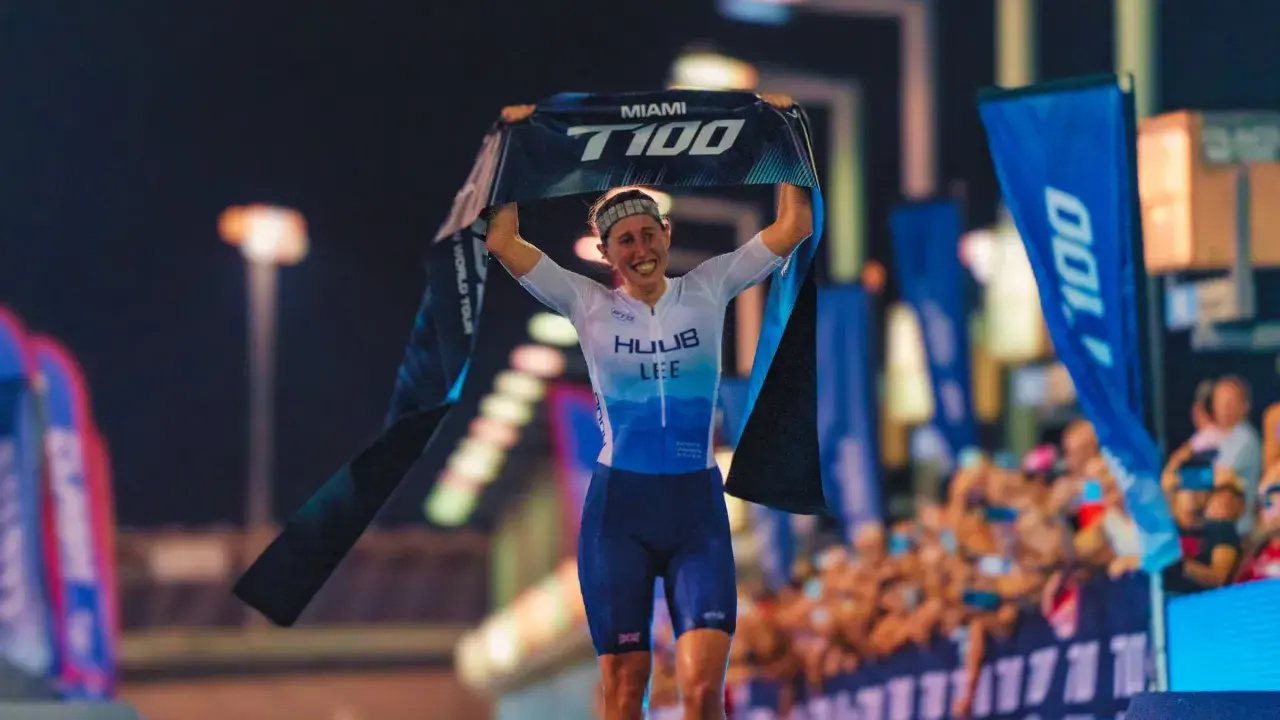
Elite triathlon is often decided by small advantages that are easy to miss: a cleaner swim exit, a steadier first hour on the bike, or the discipline to avoid forcing pace when the race is not there yet. India Lee is a useful example because her career has moved from short-course speed into middle-distance racing, where patience and efficiency matter as much as raw talent. In this piece I look at what stands out in her profile, what her recent results suggest, and what swimmers and triathletes can actually learn from it.
Key facts worth keeping in mind
- She is a Great Britain triathlete born in 1988 with a long elite record across short-course and middle-distance racing.
- Her results make more sense when you read them as a pattern, not as isolated finish places.
- A strong swim still matters, but it only pays off if the bike and run stay controlled.
- For age-group athletes, the biggest gains usually come from swim efficiency, transitions, and pacing discipline.
- The most useful lesson is simple: triathlon rewards the athlete who can keep making good decisions after the start horn.
How her profile changed as the distances got longer
World Triathlon lists Lee as a Great Britain athlete with 53 starts, 14 podiums, and 5 wins, which is the kind of record that tells you she has spent years learning how to race rather than just how to suffer. Her early career was built through duathlon and short-course triathlon, but the move toward middle-distance racing, usually the 70.3 to 100 km range, gave her a different kind of room to work: more time to build a race, more emphasis on pacing, and more reward for patience.
220 Triathlon notes that the shift to middle-distance in 2018 gave her career fresh momentum. I think that matters because a lot of athletes assume a breakthrough has to come from fixing everything at once; in reality, sometimes the right distance is the real fix. That is also why her racing is worth studying from a swim and endurance perspective, because the first discipline only creates an advantage if the rest of the day is managed well.
That background matters most when you watch how she handles the water, which is where triathlon starts to split into winners, chasers, and people who spend the rest of the day digging out of a hole.

Why the swim leg is still the race's first real filter
In long-course triathlon, the swim is not always where the race is won, but it is still where bad days start to form. A five-second loss per 100 meters becomes a 75-second gap over 1.5 km, and that is before you count the time lost fighting for feet, breathing too high, or wasting energy in a poor line to the first buoy. Lee’s kind of racing reminds me that the best swim is rarely the prettiest one; it is the one that gets you into the bike with the least damage.
| Swim habit | Why it matters | What to practise |
|---|---|---|
| Stable body position | Reduces drag and saves energy before the bike | Short aerobic sets with form checks every 100-200 m |
| Draft awareness | Lets you sit on better feet instead of fighting alone | Pack swims, shoulder-to-shoulder starts, and buoy turns |
| Sighting without panic | Keeps the line straight and avoids zig-zagging | Lift every 6-8 strokes in open water, then reset rhythm |
| Fast but calm exit | Sets up the bike without spiking effort | Swim-to-bike transitions in training |
Once the swim is clean, the next question is whether that early position survives when the race stretches out and the mistakes get harder to hide.
What recent results say about consistency in long-course racing
The latest official results show a third place at Oropesa in September 2025, a seventh at the Qatar final in December 2025, and a DNF in Spain in May 2026. I would read that as a realistic portrait of elite long-course racing, not as a contradiction. A podium means the engine was there; a DNF usually means something disrupted the plan before the finish line.
This is the part many recreational athletes miss. They see a result sheet and try to flatten it into a single story, but triathlon is messy enough that two races in the same month can demand different lessons. If anything, her recent pattern is a reminder that consistency is not about never going wrong. It is about making enough good decisions that the good days still turn into points, podiums, and momentum.
That is why her progression into longer racing matters so much: it shows how an athlete can change the type of problem she is trying to solve, not just the amount of suffering she can tolerate.
Why the move up in distance matters more than a single podium
The shift from short-course speed to middle-distance racing changes what success looks like. Drafting still matters, but so does fueling discipline, effort control over the bike, and the ability to hold form when fatigue blunts your normal sharpness. In a pure sprint race, one mistake can be fatal; in middle-distance, you can still rescue the day if the rest of your system is strong enough.
That is where Lee’s career becomes useful as a model. Rather than chasing the idea that every athlete must peak in the same way, her results show that a better race type can unlock more of the fitness you already have. For readers who come from swimming, that is a familiar lesson: the fastest lane swimmer is not always the best open-water racer, and the athlete with the prettiest stroke on deck is not always the one who handles chop, contact, and sighting best.
Once you see it that way, the training priorities become much clearer, especially for age-group athletes trying to turn decent swim fitness into a real race advantage.
What age-group athletes can borrow from her racing style
If I were building a race profile with the same broad strengths, I would keep the focus tight. The point is not to copy a pro’s volume. It is to copy the decisions that actually survive contact with race day.
- Swim three times a week if you can. One technique session, one threshold set, and one open-water practice in season will usually do more than random hard efforts.
- Practise the first 200 meters on purpose. A controlled hard start helps you settle into the pack instead of reacting to it.
- Rehearse transitions. Two short transition drills a week can save measurable time without adding fitness at all.
- Fuel the bike early. In middle-distance racing, 60 to 90 grams of carbohydrate per hour is a realistic target for many athletes if the gut tolerates it.
- Keep one eye on the first run kilometer. The run off the bike should feel disciplined, not heroic.
The simplest version of this advice is also the most useful: if your swim is strong, protect it; if your swim is average, make it efficient; and if your swim is weak, stop pretending the answer is another all-out run block. The body adapts best when the weak link is trained with intent, not panic. That leads straight to the final question, which is what I would prioritise first if I were trying to race more like Lee.
What I would prioritise if I were chasing that kind of race day
I would start with the swim, but I would not stop there. The first priority is always to leave the water with a body that still feels capable of making decisions. The second is to keep the bike from becoming a stress contest. The third is to run the final part of the race with enough control that the finish line reflects fitness, not just survival.
That is the real value of studying an athlete like Lee. She is not just a name in the results; she is a case study in how a strong swim, better distance fit, and patient race management can turn a good athlete into a consistently relevant one. If you are building your own triathlon season in 2026, that is the pattern worth stealing: make the swim useful, make the bike sustainable, and make every decision after that one count.
