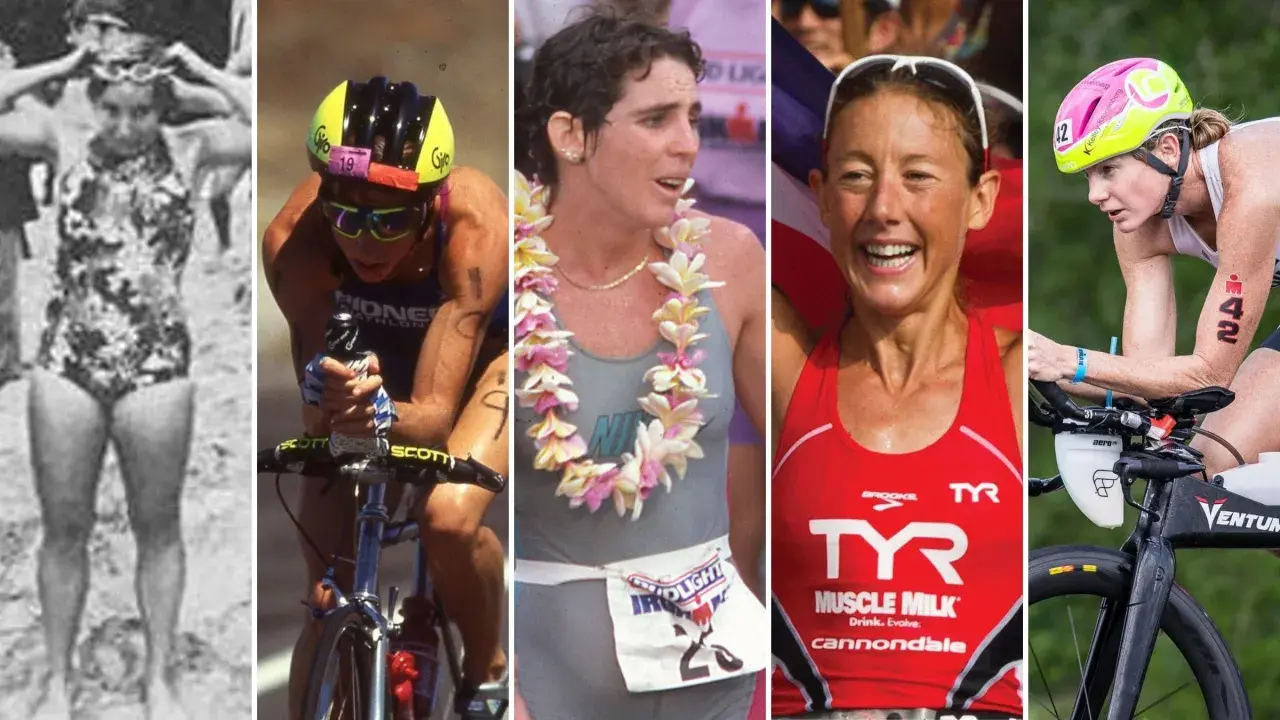
Paula Newby-Fraser remains one of the clearest examples of how swimming strength, pacing discipline and mental control can shape a long-course triathlon career. Her story is not just about winning races; it is about repeating excellence under pressure, especially in an event where a fast start means nothing if you cannot keep your form for hours. Here I focus on what she achieved, why she mattered, and what modern triathletes can still learn from her in 2026.
Why her legacy still matters to today’s triathletes
- She is a Zimbabwean triathlete best known for dominating Ironman distance racing.
- She won the IRONMAN World Championship eight times and became known as the “Queen of Kona.”
- She was the first woman to break the nine-hour barrier in Kona, with an 8:55:28 performance.
- Her career still matters because it shows how swim efficiency, pacing and composure work together.
- For age-group athletes, her example is less about copying volume and more about copying execution.
Why her name still matters in triathlon
What stands out to me most about Paula Newby-Fraser is not simply the win total, but the way she turned Ironman racing into a benchmark for what elite female endurance could look like. Born in Zimbabwe, she became one of the defining athletes of long-course triathlon and a reference point for anyone who cares about Kona performance.
That matters because Kona is not a normal race. Heat, wind, pacing discipline and nutrition all punish small mistakes, so repeated success there usually means an athlete has mastered more than fitness. It means she could make good decisions while tired, stay calm when conditions shifted, and protect her run by respecting the swim and bike from the start.
In practical terms, her legacy tells us that the best long-course athletes do not just go fast. They stay efficient long enough for fast to matter. That idea leads directly to how she won so often.
What made her so hard to beat in Kona
A swim leg that set up the whole day
In Ironman, the swim is not where you win the race, but it can absolutely decide how clean the rest of the day feels. A controlled, well-positioned swim saves energy, reduces surging and makes the bike far easier to manage. That kind of early discipline is one reason her performances aged so well as a model for modern racing.
Pacing that respected the distance
I see a lot of amateurs confuse confidence with aggression. Long-course racing punishes that mistake. Newby-Fraser’s record shows the opposite approach: keep effort just below the point where form starts to unravel, then let patience do the heavy lifting. In a race that can last eight, nine or even more hours, that restraint is a weapon.
Read Also: Road Triathlon Guide - Master Your Race Day Strategy
Mental steadiness when others cracked
The best triathletes are rarely the ones with the loudest early race. They are the ones who can absorb discomfort without changing the plan too soon. That mental steadiness is hard to measure, but it is often what separates a champion from a strong contender. Her reputation was built on exactly that kind of composure.
Once you see those three pieces together, the results make more sense. The numbers are not a mystery; they are the record of a very disciplined race craft.
The results that turned her into a benchmark
Her career is easier to appreciate when the major milestones are placed side by side. I think that helps cut through the mythology and shows why her name still comes up whenever people talk about long-course greatness.
| Milestone | Why it mattered | What it tells modern athletes |
|---|---|---|
| Eight IRONMAN World Championship wins | Unmatched consistency at the sport’s hardest race | Repeatable execution is usually more valuable than a single peak performance |
| 8:55:28 in Kona | First woman to break nine hours at the World Championship | The barrier moved because pacing and efficiency were finally aligned |
| IRONMAN Hall of Fame recognition | Her influence was acknowledged while she was still shaping the sport | True breakthroughs change expectations for everyone who follows |
| The “Queen of Kona” nickname | A shorthand for dominance at the venue that defines the sport | Some reputations are earned by winning where conditions are hardest |
If I had to reduce that entire record to one idea, it would be this: she made excellence look repeatable. That is the part that still matters when we turn from history to training.
What swimmers and triathletes can copy from her approach
Most athletes cannot copy her talent, and they do not need to. What they can copy is the structure behind the results. For age-group triathletes, that usually means building a swim that is calm, economical and honest about what the rest of the day will demand.
| Area | What to do | Why it matters |
|---|---|---|
| Swim start | Keep the first 200 to 300 metres controlled instead of chasing adrenaline | Prevents an early lactate spike, which is the burn that can wreck stroke quality |
| Open-water practice | Train sighting every 6 to 10 strokes when conditions are messy | Helps you hold a straighter line and avoid wasting metres |
| Weekly swim load | Aim for 3 swims per week if you are building toward long-course racing | One technique session, one harder set and one longer aerobic swim is a practical pattern |
| Transition habits | Rehearse wetsuit removal, helmet flow and mount-line movement | Easy seconds add up, and they cost less energy than trying to push harder on the bike |
| Race mindset | Use a short cue word or breathing pattern when fatigue rises | Keeps panic from taking over when pace starts to drift |
The gear and race-day habits that matter most
Because this site cares about swimming performance, I want to be practical here. Gear does not create champions, but the wrong setup can absolutely sabotage a race. The best athletes are usually obsessive about removing avoidable friction.
| Item | What matters most | Common mistake |
|---|---|---|
| Goggles | Trusted fit, anti-fog that actually lasts, and a spare pair for race morning | Buying by brand alone and discovering leaks or glare in open water |
| Wetsuit | Snug torso, free shoulders and a neck seal you can tolerate for the whole swim | Choosing extra buoyancy at the cost of breathing comfort |
| Tri-suit | Low chafe, quick-drying fabric and enough compression to feel secure, not restricted | Assuming a flashy suit will fix weak pacing |
| Nutrition | A bike plan that can often reach 60 to 90 g of carbohydrate per hour for long-course athletes, adjusted to body size and gut training | Waiting until race week to test fueling |
| Bike fit | A position you can hold for hours without locking up the hips or shoulders | Chasing aero gains you cannot sustain past the first hour |
The deeper lesson is simple: make the swim and the transition predictable, so the bike and run can be fought on fitness instead of chaos. That is the sort of efficiency Newby-Fraser’s career still argues for.
What her career still teaches in 2026
Her legacy is useful because it is actionable. You do not need eight Kona titles to benefit from the same principles: build a swim you trust, manage effort instead of chasing emotion, and make every part of the race support the next part.
If I were coaching a developing Ironman athlete today, I would use her career as a reminder that strong performances are usually constructed, not improvised. The athlete who stays calm in the water, protects the bike and keeps enough in reserve to run with intent is still the one who gives themselves a real chance.
That is why Paula Newby-Fraser remains relevant. Her story is a history lesson, but it is also a training manual for anyone who wants to race long course with more control, better swimming habits and fewer wasted watts.
