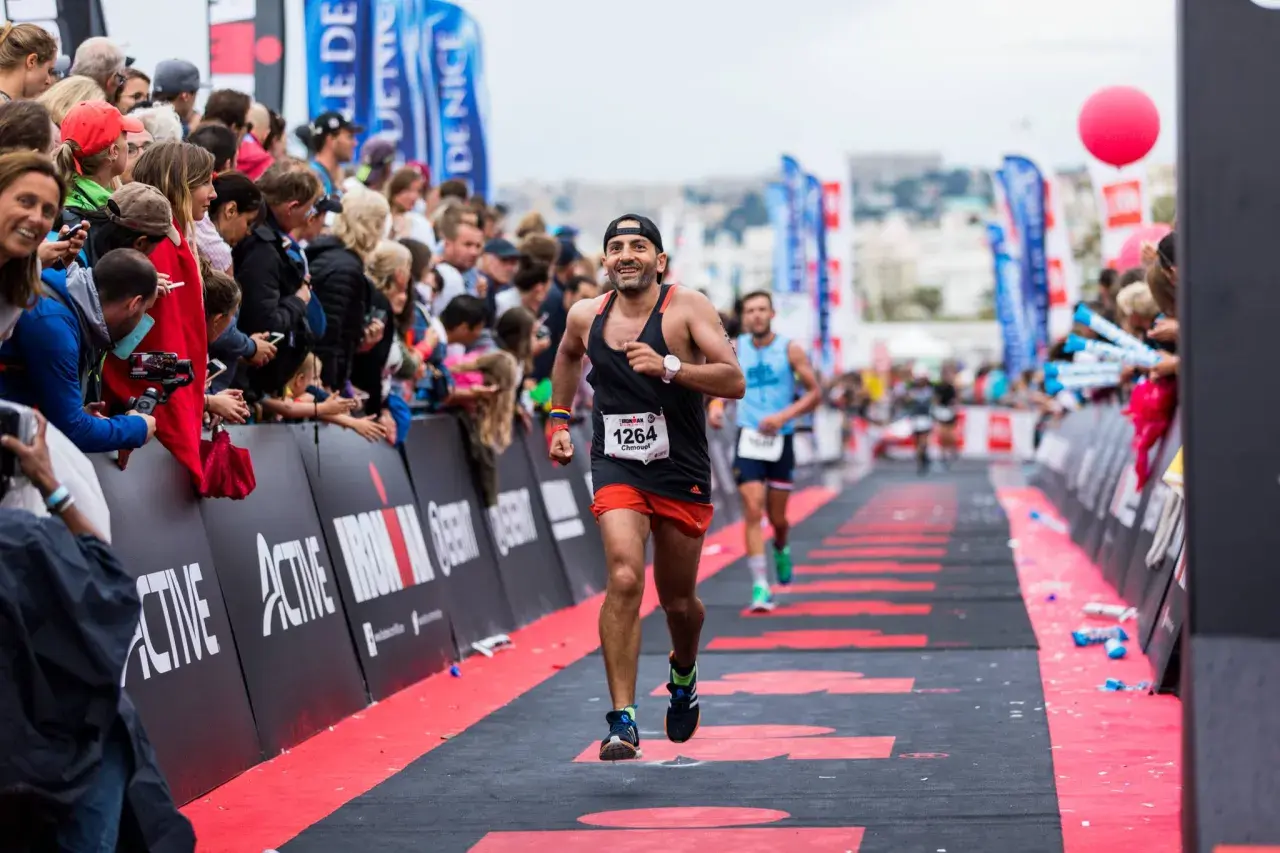
The Ironman finish line is the point where pacing, nutrition, and mental discipline finally show their result. In this article I break down what the final metres feel like, the rules that matter, how the course cut-off works, and how to prepare so you can finish in control rather than simply survive. I also cover what happens after you cross, because the race is not really over until your body has settled down.
The finish is earned long before the banner comes into view
- A full IRONMAN covers 140.6 miles, so the final chute is usually decided by how well you swam, biked, and fuelled earlier in the day.
- Most full-distance events run to a strict course cut-off, so the official athlete guide matters as much as your watch.
- Spectators, children, and animals are normally not allowed into the finish chute with athletes.
- The best last-kilometre plan is controlled and steady, not a desperate sprint.
- Recovery starts immediately after the line, especially if the race is cool, windy, or wet.
What the finish line means in an Ironman race
For me, the finish is never just a banner and a photo. It is the moment when months of early mornings, long bricks, and imperfect training days collapse into a single result. In a full-distance race, that matters because the last few minutes are often the first time all day an athlete has space to feel what the effort has cost.
The race itself is 140.6 miles: a 2.4-mile swim, 112-mile bike, and 26.2-mile run. That is why the final stretch is so emotional. You are not celebrating a short race win; you are closing out a day that has already asked you to solve pacing, hydration, digestion, and fatigue under pressure. When people talk about the finish line as a life-changing moment, they are usually talking about that accumulation, not the tape itself.
That is also why I think the swim matters more than many newcomers expect. A calm open-water start can save energy, lower stress, and give you a better bike and run later on. The finish is earned early, and the water is often where the day begins to either settle or unravel. From there, the next thing that matters is how the chute is managed.

What happens in the finish chute
The finish chute is the controlled corridor that leads you to the line. It is usually lined with barriers, volunteers, cameras, and spectators who can watch from outside the athlete area. The atmosphere can feel unreal after hours of solo effort: loud, close, and slightly disorienting, especially if you have been in survival mode for the last hour.
The safest way to handle it is simple. Keep moving. Do not stop in the middle of the chute for a long embrace, a phone call, or a victory dance that blocks other athletes. Let the emotion happen, but keep the body walking until the officials and volunteers direct you onward. If you have trained in British weather, you will also know how quickly sweat turns into a chill once the effort drops, so do not underestimate the need for a dry layer after you finish.
- Expect a narrow, managed approach to the line rather than a free-for-all.
- Expect volunteers to guide you through the finish area and post-race flow.
- Expect a quick photo moment, medal, and then movement into recovery space.
- Expect the crowd energy to feel bigger than your actual energy reserves.
The key idea is that the chute is designed to celebrate you without letting celebration become chaos. That matters because the next part of the race is really an administrative and safety process, which is where the rules come in.
The rules and cut-offs that can decide your result
There are two finish-line realities I would never ignore: the time limit and the access rules. On many full-distance events, the official course cut-off is 17 hours, but the exact timing belongs to the race-specific athlete guide. If you go over that limit, the result can become a DNF, even if you physically make it to the line.
| Race detail | Why it matters | What I would check |
|---|---|---|
| Course cut-off | Crossing after the course closes can change the official result | Your event guide, timing rules, and any intermediate cut-offs on the bike or run |
| Finish chute access | Family members and spectators are usually kept outside for safety | Where supporters can stand, meet, and take photos after the line |
| Medical control | Hard finishes can hide dehydration, heat stress, or a delayed collapse | Where to go if you feel dizzy, nauseous, or unable to walk steadily |
In 2026, IRONMAN’s competition rules also make one point very clear: friends, family members, children, and animals are not allowed to cross the finish line or enter the finish chute with participating athletes. That may sound strict, but it protects tired athletes and keeps the last metres safe and orderly. I actually think it improves the experience for most people, because it leaves space for the athlete to have a clean, personal moment at the line.
If you are racing an event in the United Kingdom or travelling from the UK to race elsewhere in Europe, treat the athlete guide as non-negotiable reading. The finish feels emotional, but the official details are what decide whether your day ends in a celebration, a DNF, or a frantic last-minute mistake. Once those rules are clear, the real question becomes how to arrive at the finish with something left in the tank.
How to set yourself up to reach it in good shape
The strongest finishers I see are not the ones who race hardest from the start. They are the ones who make small sensible decisions for eight to fifteen hours, then still have enough control to enjoy the final stretch. That is where the swim, bike, and run all feed into the same outcome.
Start the day with a calm swim
A controlled swim is a finish-line decision, not just a swim split. If you spike your breathing in the first 400 metres, you often pay for it later through poor bike pacing and a messy nutrition plan. I would rather see an athlete exit the water slightly conservative than arrive at T1 already borrowing energy from the run.Fuel the bike like the marathon depends on it
This is the section where many finish dreams quietly die. The bike is where you can absorb most of your calories and fluids, so under-fuelling here makes the run feel like a different sport. A good target for many athletes is a steady carb intake that they have practised in training, plus fluids and sodium matched to the weather and sweat rate. There is no magic number that suits everyone, which is why rehearsal matters more than guesswork.
Pace the run for the finish you actually want
The marathon off the bike is not the place to prove toughness by chasing old road-running habits. I would start by asking one question: do I want to arrive at the finish line running, or crawling? If the answer is running, then the first half of the marathon needs restraint. When athletes blow up late, it is usually because they treated the early miles like an open invitation to bank time, which never works for long.
Read Also: Ironman Checklist - Master Your Race Day Prep
Practise the final hour in training
That final hour is where race-day decisions become physical reality. Practise your nutrition under fatigue, rehearse the clothing you will need when the weather turns, and run the last part of brick sessions with the same mental cues you want on race day. If you are training in the UK, that should include wet and cool conditions, because a damp, windy finish can drain you faster than the effort itself.
When all of that is in place, the final kilometres stop feeling like a rescue mission and start feeling like an earned conclusion. The next risk is not lack of fitness; it is making avoidable mistakes when the finish is already within reach.
Mistakes that make the final kilometre feel longer
The last stretch does not usually punish weakness as much as it punishes impatience. I see the same few errors again and again, and most of them are avoidable.
- Sprinting too early. Athletes hear the crowd and surge before they can hold the effort, then implode 200 metres later.
- Stopping abruptly. The body is already under stress; going from full movement to total stop can trigger dizziness or cramp.
- Forgetting temperature change. In cool or windy conditions, especially in the UK, sweat loss plus exposed skin can make the finish area feel colder than expected.
- Trying to share the chute with supporters. Family energy is helpful, but the finish lane is not the place to break the rules or lose focus.
- Ignoring warning signs. Nausea, chest discomfort, confusion, or a wobbling gait are not normal badges of honour.
The pattern here is simple: excitement narrows judgement. The athletes who finish well are usually the ones who have already decided how they will behave before they are exhausted. That pre-decision is what makes the last few minutes calm enough to remember.
What to do in the first 30 minutes after you cross
The finish line is not the end of recovery; it is the start of it. What you do in the first half hour shapes how hard the rest of the day feels, especially after a hot race or a long, draining run.
- Keep walking for a few minutes instead of collapsing straight away.
- Take fluids first, then food if your stomach allows it.
- Put on dry clothes or an extra layer quickly if the air is cool.
- Use the medical area if you feel faint, confused, unusually cold, or unable to steady yourself.
- Reunite with supporters only after you are through the athlete flow and fully alert.
I also like athletes to think about recovery as a sequence, not a single action. For many people, that means a drink with carbohydrates and around 20 to 30 g of protein within the first hour, then more food once nausea settles. If the event offers a recovery tent, soup, or a simple snack, use it. Fancy nutrition is less useful than easy calories and common sense.
Once you have stabilised, then the celebration can actually mean something. That is the point where the day stops being about managing damage and starts becoming a memory you can keep.
Why the last metres deserve as much respect as the swim, bike, and run
I think the best reason to respect the finish is that it exposes everything that went right before it. A steady swim, disciplined bike nutrition, and a sensible run do not look glamorous in isolation, but they are exactly what lets an athlete cross the line with dignity instead of desperation. That is true whether you are racing for a personal best, a first finish, or simply a cleaner experience than the last time.
If I were giving one practical takeaway, it would be this: train the final hour before you race the final hour. Build a swim that keeps you calm, a bike that keeps you fuelled, and a run that keeps you honest. The finish itself is only a few dozen metres, but the habits that earn it start weeks and months earlier.
The finish line rewards control, not theatrics. If you want the moment to feel big in the right way, train the swim for calm, the bike for fuel, the run for restraint, and the last hour for composure. That is the version of an Ironman day I trust most.