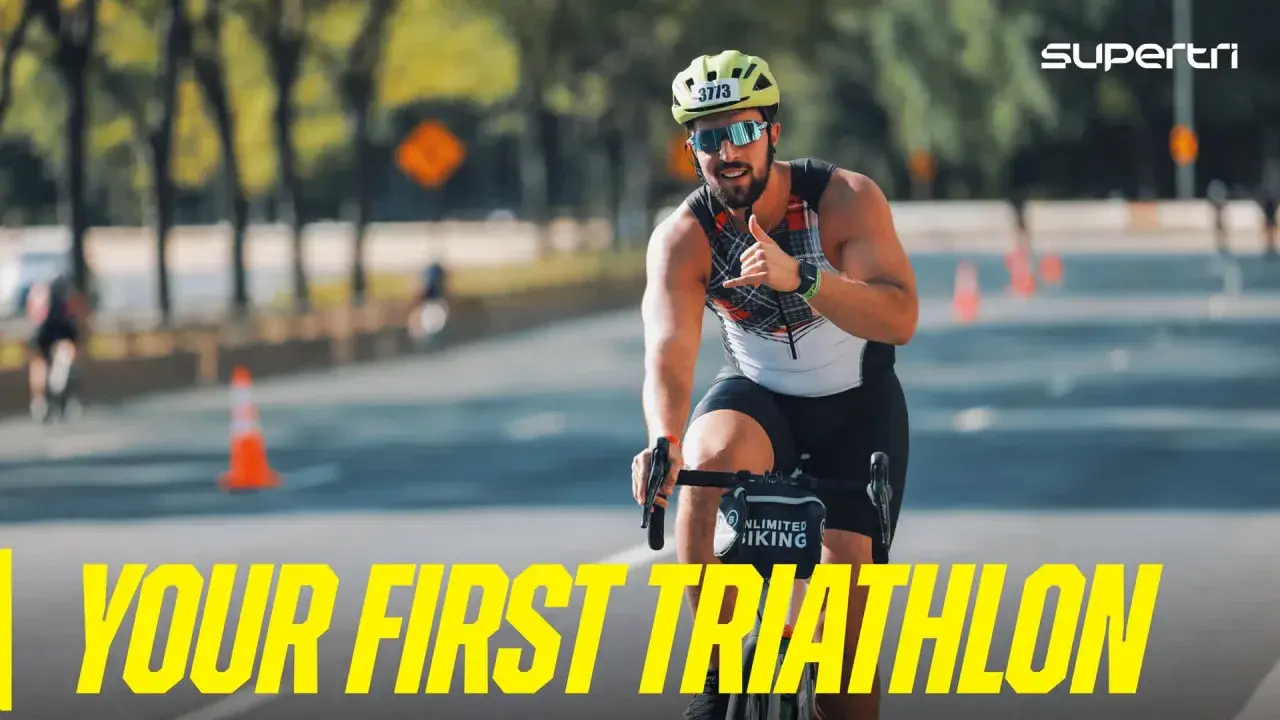
What first-time triathletes need to get right first
- Start with a short race distance unless you already have a strong endurance base.
- Spend more time on swim calmness than swim speed; breathing and body position matter early on.
- Buy the basics first: a safe bike, a helmet, goggles, and shoes you can actually run in.
- Practise transitions before race day so T1 and T2 do not feel like chaos.
- Keep fueling familiar and avoid experimenting with new gels, drinks, or kit on the day.
- Expect the swim to feel different in open water, especially in colder UK conditions.
Choose a first race you can finish with control
I usually steer first-timers toward the shortest sensible event they can complete with confidence, because the first race should teach you how triathlon feels, not punish you for being ambitious. In the UK, the most beginner-friendly entries are usually labelled Try-a-Tri, super-sprint, or sprint, and the labels matter less than the actual course details. Course format varies by organiser, but the common sprint benchmark is still roughly 750m swim, 20km bike, and 5km run.
| Distance | Typical format | Who it suits | My take |
|---|---|---|---|
| Super-sprint | About 200-400m swim, 5-10km bike, 2-3km run | Very new athletes, nervous swimmers, anyone who wants a low-stress first race | The safest entry point if you want to focus on learning the sport rather than surviving it |
| Sprint | About 750m swim, 20km bike, 5km run | Most first-time triathletes with a decent fitness base | The best balance of challenge, value, and beginner friendliness |
| Olympic / standard | About 1500m swim, 40km bike, 10km run | People who already train regularly in at least one discipline | Doable for some beginners, but not the default choice I recommend |
If you can already swim continuously for several hundred metres, ride for an hour without discomfort, and run 5km without needing a recovery day, a sprint race is usually realistic. If the swim still feels shaky, I would rather see you choose a shorter event or a pool-based race than gamble on an open-water start you are not ready for. Once the distance is fixed, the training becomes much more straightforward, which is exactly where most beginners need help next.
Build a training week that leaves room for recovery
A first triathlon does not require a pro-level schedule. For most newcomers, 8 to 12 weeks of consistent training, with 3 to 5 sessions per week, is enough to arrive prepared for a sprint-distance race. I prefer a simple approach: keep most sessions easy, add one slightly longer session for each sport over time, and avoid stacking hard workouts just because you feel motivated.| Day | Session | Why it matters |
|---|---|---|
| Monday | Rest or mobility work, 15-20 minutes | Recovery is what lets the next session stick |
| Tuesday | Swim technique, 30-45 minutes | Builds confidence, breathing control, and relaxed form |
| Wednesday | Easy bike, 45-60 minutes | Creates aerobic base without beating up your legs |
| Thursday | Easy run, 25-40 minutes | Teaches steady pacing and running on tired legs |
| Saturday | Brick session, 60-75 minutes total | Practises the bike-to-run transition, which is what a brick workout means |
| Sunday | Longer easy ride or swim, 45-90 minutes | Gently extends endurance without turning every week into a test |
If you only have time for three sessions, make them one swim, one bike, and one run. That is enough to make progress if you stay consistent. I also like to add a short strength session once a week, because stronger hips, calves, and core muscles usually mean fewer niggles as the training load rises. Keep the final 10 to 14 days lighter, and reduce volume rather than trying to cram in fitness you should already have built by then. That balance matters even more once the swim stops being theoretical and starts feeling real.
Use the swim to calm the whole race down
Swim anxiety is common, and in my experience it is rarely about fitness alone. Most beginners are not afraid of the distance so much as the combination of breathing, cold water, and not knowing where they are going. The answer is usually not more punishment in the pool. It is better technique, better breathing habits, and a little open-water rehearsal if the race will not be pool-based.
When I help a beginner focus on the swim, I start with four things:
- Exhale underwater so you are not holding your breath and spiking panic.
- Keep your stroke relaxed; tension burns energy very quickly.
- Practise sighting, which means lifting your eyes briefly to check direction without lifting your whole head.
- Swim continuously at an easy pace instead of only doing short, high-effort repeats.
A useful pool session for a newcomer might be 200m easy warm-up, then 6 x 50m relaxed with short rest, followed by 4 x 100m at steady effort, and finally 200m continuous at an easy pace. That kind of session teaches control better than a heroic interval set. If you can, practise at least one open-water session before race day, even if it is short. Open water changes everything at once, especially in the UK, where temperature, visibility, and chop can all be different from what you expect in a pool. A wetsuit can help with buoyancy and warmth, but it is not a substitute for comfort in the water, and the fit has to be snug enough to avoid rubbing and restriction. Once the swim feels manageable, the gear question becomes much easier to answer.
Buy only the kit that changes race day
In Britain, the boring list usually wins. A roadworthy bike, a helmet, goggles, and shoes that fit are far more important than any flashy upgrade, and I would take a reliable setup over an expensive but awkward one every time. The rest of the kit is mostly about comfort, convenience, and how much time you want to save in transition.
| Item | Essential or optional | Typical UK spend |
|---|---|---|
| Bike you can trust | Essential | Already owned to about £300-£700 for a decent used road bike |
| Helmet | Essential | About £30-£100 |
| Goggles | Essential | About £10-£25 |
| Running shoes | Essential | About £70-£160 |
| Wetsuit | Useful for open water, optional for pool races | About £120-£400 |
| Tri-suit or race kit | Convenient, not mandatory | About £40-£150 |
| Race belt | Optional but handy | About £8-£20 |
| Carbon wheels, aero bars, power meter | Optional | Nice later, not necessary now |
The most useful rule I know is simple: do not buy speed before you buy fit. A perfectly ordinary bike with working brakes, the right tyre pressure, and no mechanical issues is more valuable to a first-timer than a fancy setup you cannot use comfortably. British Triathlon-style race checklists usually start with that same practical mindset, because race day is easier when the basics are sorted and you are not improvising under pressure. Once the kit is sorted, the next place beginners leak time is the transition area.

Learn transitions before race day
Transitions, or T1 and T2, are the pauses between swim and bike, then bike and run. They are not where you win a first race, but they are where many beginners lose unnecessary energy because everything feels rushed. The solution is to practise a simple sequence until it becomes boring.
- Lay out your gear in the order you will use it.
- Keep your helmet open and visible so you do not fumble with straps.
- Put shoes, socks, race belt, and sunglasses in one tidy area.
- Practise the movement from swim to bike and from bike to run at home.
- Know your rack location, your mount point, and your exit route before the start.
The helmet rule is worth respecting because in a race it is non-negotiable once you touch the bike. I tell beginners to rehearse one clean transition rather than ten messy ones, because confidence comes from repeating the same sequence, not from rushing through it. If you are racing open water, also leave yourself enough time to walk the course, find the swim exit, and understand where the first few corners are on the bike. Those details sound small, but they settle nerves in a way fitness cannot. From there, the main race becomes a pacing problem, not a panic problem.
Pace and fuel like a beginner, not like a highlight reel
The fastest rookie mistake is usually starting too hard in the swim, then trying to rescue the day on the bike, and finally discovering there is nothing left for the run. I would much rather see a beginner start conservatively and build through the race than turn the first 10 minutes into a fight for survival. The goal is a controlled effort across all three legs, not a single heroic segment.
For race day, I keep the advice deliberately plain:
- Eat a familiar breakfast 2 to 3 hours before the start.
- Do not try a new gel, new drink, or new bar on race morning.
- Drink normally before the race, then sip rather than chug.
- For shorter sprint races, simple hydration is often enough.
- For anything longer, practise taking carbs on the bike first, because that is the easiest place to fuel.
The biggest mistakes I see from first-timers are rarely exotic. They are starting the swim too aggressively, underestimating cold water, buying too much kit before they know what they need, and ignoring the fact that the bike leg is the best place to settle your breathing and nutrition. I also see newcomers waste energy trying to look like experienced triathletes in transition instead of just moving calmly and cleanly. My advice is blunt: keep the effort honest, keep the fueling familiar, and keep the brain quiet enough to execute the plan. Once you can do that, the finish line stops feeling like a one-off event and starts feeling like a base you can build from.
What I would write down the minute you finish
After the race, do not rush straight into upgrading gear or signing up for something longer. I would first write down three things: what felt easier than expected, what felt messy, and what I would change before the next start. That note becomes more valuable than a medal photo, because it gives you a real training plan for the next 6 to 8 weeks.
If the swim was the hardest part, the next investment should be technique and open-water comfort. If the bike felt rough because you started too hard, the answer is better pacing, not a faster frame. If the run fell apart because your legs were cooked, I would add more brick work and a little more controlled riding before I moved up a distance. The smartest progression for most beginners is another sprint, a cleaner transition sequence, and a swim that feels less like a survival task and more like a skill you can trust.