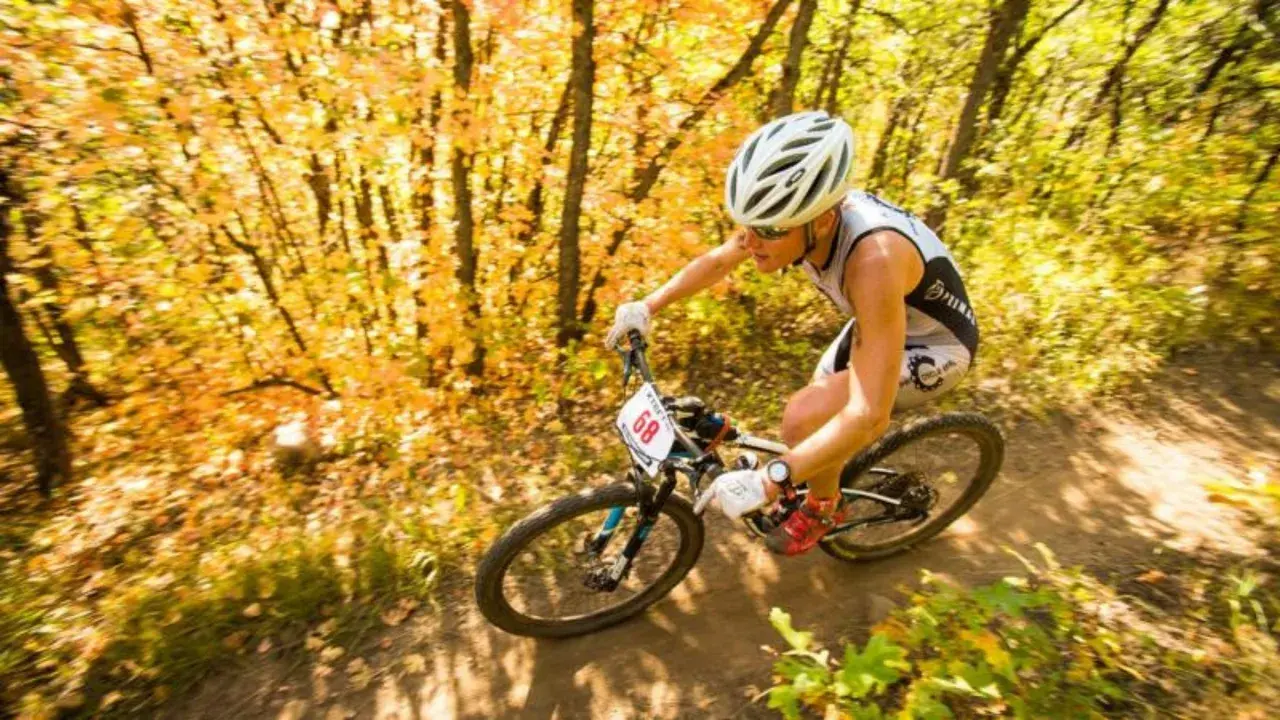
An off road triathlon is still a swim-bike-run race, but the terrain changes the whole script. On dirt, roots, gravel, sand, and steep grades, the athlete who handles the course well often beats the athlete who is merely the strongest on paper. In this article I break down what that means in practice: the course, the bike, the run, the swim, the training, and the race-day decisions that actually matter.
What matters most before you line up
- The bike leg usually decides the race because technical terrain rewards control more than raw speed.
- Common formats range from short sprint races to full-distance courses built around open-water swim, mountain bike, and trail run segments.
- A mountain bike, trail-ready shoes, and smart tire pressure matter more than aero gear.
- Training should include short climbs, descents, balance work, and open-water swim practice.
- For a first start, choose a course with manageable elevation and a forgiving trail run instead of the hardest venue you can find.
What an off-road triathlon really asks from you
An off-road triathlon is still the same basic endurance puzzle, but it rewards a different set of instincts. Smooth pacing matters less than traction, balance, and the ability to keep producing power when the surface keeps changing under you. In XTERRA-style racing, the sport is often framed as roughly 10% swim, 65% bike, and 25% trail run, and that split tells you where the real challenge lives.
In the U.S., you will see this format described as off-road racing, cross triathlon, or mountain-bike triathlon. The swim is usually open water, the bike is usually on dirt or mixed terrain, and the run is usually on trails rather than pavement. That combination sounds simple until you race it, because every leg asks for a little more stability than the road version does.
| Element | Road triathlon | Off-road version |
|---|---|---|
| Swim | Open water or pool, usually focused on rhythm and position | Open water too, but starts can feel rougher and the exit often matters more |
| Bike | Pavement, steady power, aero position | Trails, gravel, roots, loose corners, and frequent body-position changes |
| Run | Road or packed path, pace is usually more predictable | Trail surfaces, short climbs, descents, and more emphasis on footing |
| What wins | Threshold power and even pacing | Handling skill, traction, strength endurance, and smart risk management |
That difference changes how I think about the race. On the road, a strong engine can hide a lot. Off the road, it cannot. Once you accept that, the next question becomes obvious: which part of the course gives you the biggest advantage, and which part can break your day the fastest?
Why the bike leg changes everything
The bike is where most first-time racers lose the most time, and not because they are weak. They lose time because the course punishes hesitation. A clean line through a corner, a calm braking pattern, and the ability to keep the bike stable over rough ground matter more than a heroic watt number.
If I were coaching someone for their first start, I would tell them to choose control over ego. A true off-road course usually favors a mountain bike with flat bars, and many technical races are simply not built for aero positions or delicate road-bike handling. Some gravel-focused events are more forgiving, but if the course includes repeated rocks, tight turns, or steep descents, a mountain bike is usually the safer and faster choice.
- Tire width matters. Wider mountain-bike tires give you more grip and more confidence in loose corners.
- Pressure matters just as much. Many riders go lower than they would on the road, but only as low as the tire casing, rider weight, and terrain allow.
- Pedal choice should match your skills. Clipless pedals are efficient if you are already confident clipping in and out; flat pedals are simpler on technical courses and for nervous beginners.
- Descending skill is not optional. If you brake too late or stay too stiff, the course will make every bump feel bigger.
- Course recon is free speed. A single pre-ride of the worst climbs and descents can save more time than a new wheelset.
I also think riders underestimate how much repeated acceleration costs on dirt. You are not just pedaling; you are restarting the bike after every corner, every climb, and every patch of loose ground. That is why the bike leg is not just the longest section of the race in terms of time. It is also the one that most changes the overall rhythm of the day, which brings us to the gear that actually earns its place in the transition area.

Gear that actually earns its keep
My rule here is simple: buy for control before you buy for speed. On an off-road course, the wrong setup is more expensive than the wrong pacing strategy. A flashy aerodynamic detail does very little if your tires slide on loose gravel or your shoes feel unstable on a rocky run.
| Item | What I would prioritize | Why it matters |
|---|---|---|
| Bike | A reliable mountain bike that fits well | Stability, braking confidence, and easier handling on technical terrain |
| Tires | Grippy tread and a width suited to the course | Traction is the difference between flowing through a corner and walking it |
| Pedals | Mountain-bike pedals or flat pedals if you are new to technical terrain | You need to get in, out, and reposition quickly without panic |
| Run shoes | Trail shoes with secure footing | Better grip on rocks, roots, and loose dirt than road shoes can offer |
| Swim gear | Comfortable goggles, anti-fog, and a suit you have already tested | Open-water starts are not the place to discover leaks or bad lens choice |
| Hydration | Bottles or a setup that stays put on rough ground | Rattling gear and poor access to fluids become a real problem on long climbs |
If I had to trim the budget, I would spend first on tires, shoes, and fit before I touched anything cosmetic. I would also resist the temptation to race in gear that only feels fast on smooth pavement. A stable setup is usually the faster setup once the course turns rough. With the equipment sorted, the next job is training the body to tolerate the specific demands of dirt racing, not just generic triathlon volume.
How I would train for the swim, bike, and trail run
Training for this format is not about doing everything harder. It is about practicing the exact kinds of stress the race will throw at you: short surges, uneven footing, and repeated transitions between controlled effort and controlled chaos. I usually build that in three layers: base fitness, technical skill, and race-specific intensity.
| Race goal | Practical weekly volume | Main focus |
|---|---|---|
| First sprint-style race | About 6 to 8 hours | Open-water comfort, technical bike handling, short climbs, and trail running basics |
| Longer full-distance race | About 8 to 12 hours | Longer trail rides, brick workouts, strength endurance, and fueling practice |
Swim
The swim still matters, even though the bike usually steals the headlines. I want athletes to practice open-water starts, sighting every 6 to 10 strokes, and swimming with a little contact and chaos around them. If the race is in cold water and the wetsuit is allowed, do at least one or two sessions in the suit before race day so you know how it changes your breathing and shoulder feel.
For pool work, I like a mix of technique and effort. A set such as 8 x 100 meters at firm but controlled pace, with good rest and deliberate sighting practice every few repeats, teaches you more than endless easy laps. In this sport, a clean, calm swim exit is worth more than a dramatic first 200 meters.
Bike
On the bike, I would spend at least one session each week on dirt or gravel and one session on sustained climbing. A good off-road workout is not just about power; it is about repeating short bursts and recovering while the terrain forces you to stay engaged. Three to five minute climbs, then controlled descents, are excellent because they teach the body to work hard and then stay technically sharp.
Strength-endurance work also pays off. Lower-cadence efforts, hill repeats, and cornering drills build the kind of stability that protects you when the course gets rough late in the race. If you already ride well on roads, do not assume that skill transfers automatically. The surface is different, and so is the timing of every decision.
Read Also: Ironman Finish Line - Cross Strong, Not Just Survive
Run
The trail run is where many road triathletes make the same mistake: they chase pace instead of effort. On dirt, pace swings naturally because the terrain keeps changing. I coach athletes to shorten their stride, keep their feet moving quickly, and accept a slightly more upright posture so balance stays under them.
Trail shoes help, but footwork matters more. Practice quick feet on descents, power hiking on steep grades, and small bouts of faster running when the trail opens up. That teaches you how to stay efficient without fighting the course. Once the training is specific enough, race day becomes less mysterious and more about execution, which is where the real minutes are won or lost.
Race-day tactics that save minutes on rough terrain
The best off-road races usually go to the athlete who wastes the least time being surprised. I like a calm, practical race plan: get through the swim efficiently, enter the bike with control, and keep the run honest without forcing road pace onto trail terrain.
- Start the swim under control. A hard first minute is fine; a blown first five minutes is not.
- Transition with purpose. Mud, sand, and grass get into everything, so keep your shoes and glasses simple.
- Fuel earlier than you think. For races longer than 90 minutes, a practical starting point is 30 to 60 grams of carbohydrate per hour, 500 to 750 ml of fluid per hour in warm weather, and roughly 300 to 600 mg of sodium per hour, then adjust to sweat rate and conditions.
- Brake before the corner. Braking in the middle of a loose turn is where most mistakes happen.
- Run by effort, not GPS pace. Trail pace lies, especially on climbs and technical descents.
I also think athletes should be honest about risk. There is a difference between racing aggressively and racing recklessly. If you are unsure about a descent, stay smooth and conserve the race you can still win later. The fastest line is not always the smartest line, and on dirt that trade-off becomes obvious very quickly. That leads naturally to the most practical decision of all: choosing the right first event.
How I would choose a first U.S. race
For a first start, I would choose the course that gives me the best learning value, not the most intimidating brand name. In the United States, you will find everything from park-based races with manageable trails to mountain events that are designed for athletes who already feel at home on technical ground. If you are coming from road triathlon, start with the version that teaches you, not the version that punishes you.
- Choose a sprint or super-sprint distance first if you are new to trail racing.
- Look for a bike course description that mentions wide trails, moderate climbing, or mixed surface rather than repeated technical singletrack.
- Check whether the event is truly mountain-bike friendly or whether it quietly expects a very specific setup.
- Read the elevation profile before you register, because 500 feet and 1,500 feet are very different days.
- Confirm aid station spacing, cutoff times, and whether the run is mostly runnable or heavily hike-heavy.
- Look for course maps and race photos from previous years; they tell you more than marketing copy ever will.
If I had to reduce all of this to one decision rule, it would be this: pick the race that matches your handling skill on the bike and your confidence on uneven ground. That is how you make the sport challenging in the right way. Get that choice right, and the rest of the preparation becomes much more useful, because you are training for a course you can actually race well rather than merely survive.