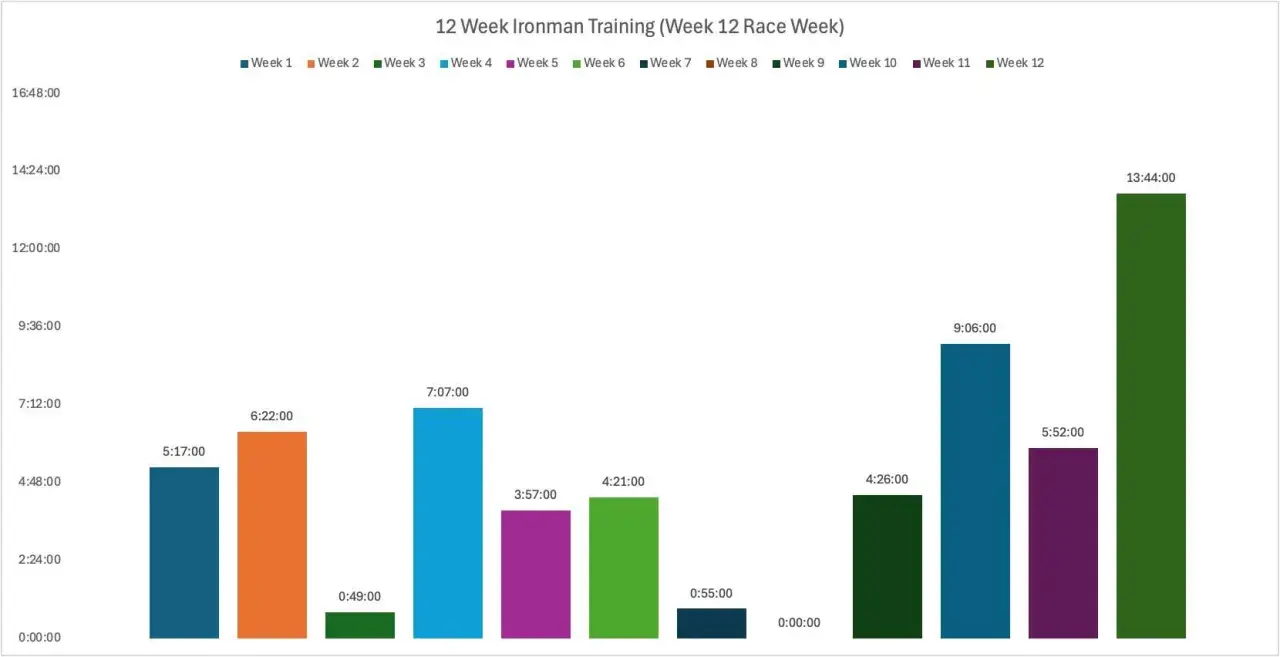
The honest answer to how long to train for Ironman is that the calendar depends far more on your starting point than on grit alone. A strong age-group athlete with triathlon experience may need months; a complete beginner may need years if the goal is to arrive healthy, confident, and able to finish without gambling with injury. In this article, I break down the realistic timelines, the factors that stretch or shorten prep, and the milestones I would want before committing to a full-distance race.
The shortest safe answer is usually longer than people expect
- Experienced triathletes often need about 6 to 9 months of specific Ironman preparation.
- Athletes coming from single-sport backgrounds usually need closer to 9 to 18 months, depending on swimming skill and endurance base.
- True beginners should think in terms of 18 to 36 months if they want a durable, low-drama build.
- The swim matters more than most people think, because technique and open-water comfort can save energy all day.
- The best plan is phased: base, build, peak, and taper, with recovery built in from the start.
The honest answer depends on where you are starting
I usually tell athletes to stop looking for a single number and start with a more useful question: what can you already do well, and what still needs to be learned? If you have already raced shorter triathlons and maybe a 70.3, you are not starting from zero. If you have endurance background but no triathlon experience, you still need time to build bike durability, swim efficiency, and run resilience. And if you are trying to go from very little fitness to a full-distance finish, the process is less about “training harder” and more about building the body to tolerate months of work.
IRONMAN’s own coaching guidance points to that same reality. For many age-group athletes with triathlon experience, nine months is a realistic sweet spot. For someone with single-sport history but no recent endurance base, the answer can stretch to around two years. For a true beginner, especially one who has to learn all three sports from scratch, three years is not an exaggeration. That is not a sign of failure; it is what happens when the goal includes both fitness and skill acquisition.
The key point is simple: the more ground you need to cover in technique, endurance, and confidence, the longer the runway should be. That is why the next question is not “How many weeks?” but “What is actually slowing this down?”
What changes the timeline the most
When I map out an Ironman build, I do not start with race-day ambition. I start with constraints. A fast runner who cannot swim efficiently will need a very different timeline from a solid swimmer who is new to long rides. The same is true for athletes with full-time jobs, family commitments, or a history of tendon or back issues.
- Swim skill matters because poor technique burns energy early. If the swim is stressful, every later session feels harder than it should.
- Weekly time availability is usually the biggest real-world limit. A person who can train six hours a week needs a longer runway than someone who can consistently handle nine to twelve.
- Injury history changes everything. If your body has to be reconditioned carefully, the plan should grow slower even when your motivation is high.
- Bike durability is a major separator. The bike leg is where athletes often underestimate how long their body has to stay composed.
- Race goal matters too. Finishing safely is one timeline; trying to race the event aggressively is another.
- Support system and logistics are not soft factors. If work and family life are unstable, the training block usually needs more padding.
In practice, the athletes who progress fastest are not the ones who squeeze in the most heroic weekends. They are the ones who can repeat good training weeks without breaking down. That is why the next step is translating these variables into actual timelines.
A realistic training timeline by starting point
Here is the cleanest way I know to think about preparation. This is not a promise of performance; it is a practical estimate of how long it usually takes to become race-ready without cutting corners.
| Starting point | Realistic prep time | What that usually means |
|---|---|---|
| Consistent triathlete with 70.3 experience | About 6 to 9 months | You already understand the sport, so most of the work is building endurance, sharpening pacing, and extending long-session tolerance. |
| Strong endurance athlete new to triathlon | About 9 to 18 months | You have fitness, but you still need swim technique, bike handling, run durability, and race-specific nutrition practice. |
| Returning athlete after a long layoff | About 12 to 24 months | You are rebuilding old capacity while protecting joints, tendons, and consistency. |
| True beginner | About 18 to 36 months | You are learning three sports, not just adding volume. That learning curve deserves patience. |
The table is blunt on purpose. A lot of people want the optimistic answer, but the optimistic answer is only useful if it is also honest. If your current training week is already around 9 to 12 hours, the specific build to race day may begin only 10 to 12 weeks out. If your normal week is closer to 6 hours, that final build may need 20 to 24 weeks just to raise the ceiling safely. The difference is not laziness; it is starting load.
What a proper Ironman build actually looks like
A strong Ironman prep is not one long grind. It is a sequence of different jobs, and each job has its own purpose. If you skip one phase, the race usually exposes it.
Base phase
This is where you build aerobic capacity, reinforce swim technique, improve bike posture, and get your body used to regular volume. I like this phase because it rewards restraint. You are not chasing hero workouts; you are making the easy days truly easy and the consistent days truly consistent.
Build phase
This is where long rides get longer, bricks become more specific, and race pacing starts to matter. For many athletes, this is also when weekly load becomes the most demanding. The point is not to prove toughness. The point is to teach the body how to absorb work and still function the next day.
Peak phase
Peak training is the narrow window where the longest rides, the most race-specific sessions, and the hardest fatigue live. This is also where poor nutrition or sloppy recovery can wreck the block. I treat peak weeks as a test of discipline, not bravado.
Read Also: Triathlon Training - Your First Race Guide
Taper phase
IRONMAN commonly recommends a three-week taper for the average age-group athlete, and that lines up with what I see in practice. Training volume drops, but the body stays awake. The mistake is to panic when the volume falls. That reduction is what lets all the work land.
There is a useful detail here: if your typical week is already high, your taper needs to be more gradual; if your volume has been modest, the taper can be a little simpler. Either way, the final month should feel controlled, not chaotic. That leads directly to the question athletes ask after planning the structure: how do I know I am actually ready?
Readiness signs that matter more than the calendar
A race date can be fixed, but readiness cannot be faked for long. I pay more attention to performance markers than to wishful thinking, because they tell me whether the athlete is prepared to absorb the race, not just survive it.
- You can swim comfortably and consistently, including in open water if the race will be non-pool.
- You can ride for several hours without collapsing in position, energy, or attention.
- You can run after the bike without your form breaking down immediately.
- You can recover within a normal day or two after long sessions instead of staying trashed all week.
- Your fueling is practiced, not improvised. Race-day nutrition should already have been tested in training.
- Your body has stayed mostly healthy through the build, with no recurring pain that changes how you move.
If those signs are missing, I do not care how close the race is. You probably need more time. The good news is that most of the delays are predictable, which means they are also avoidable if you catch them early.
The mistakes that add months to preparation
The slowest Ironman plans are usually slowed by self-inflicted problems, not bad genetics. I see the same patterns over and over, and they are almost always preventable.
- Skipping swim technique work and trying to solve the problem with more yardage alone.
- Building the run too aggressively, which is the fastest way to trigger injury in an already fatigued body.
- Ignoring recovery and treating rest as optional instead of as part of the program.
- Doing long rides without a fueling plan, then wondering why the final hours of training and racing feel brutal.
- Neglecting bike fit, which can waste fitness and create avoidable pain.
- Training in bursts rather than staying consistent week after week.
The swim deserves special attention here. On a full-distance day, poor water comfort does not just cost time in the first leg; it raises stress, burns energy, and can distort the rest of the race. That is why I think many athletes should start with swim efficiency before they start obsessing over long weekend mileage. Once that piece is stable, the whole plan becomes easier to execute.
The safest way to choose your race date
If I were choosing an Ironman date for someone in the United States, I would work backward from the athlete’s actual life, not from the calendar fantasy. A good race date gives you enough time to build a base, enough time to absorb the build, and enough room for a real taper. It also leaves margin for illness, travel, work spikes, and the ordinary interruptions that happen to everyone.
My practical rule is this: if the swim is weak, start technical work early; if the bike is weak, protect the long rides; if the run is weak, slow the progression and keep the body healthy. For most athletes, the smartest choice is the race that allows a calm, repeatable block rather than the earliest event that feels emotionally exciting. I would rather see someone arrive slightly later and much better prepared than force a timeline that looks good on paper but breaks down in real life.
If you keep the timeline honest, train in phases, and respect the limits of your current fitness, you give yourself the best chance not just to finish an Ironman, but to actually enjoy the build toward it.