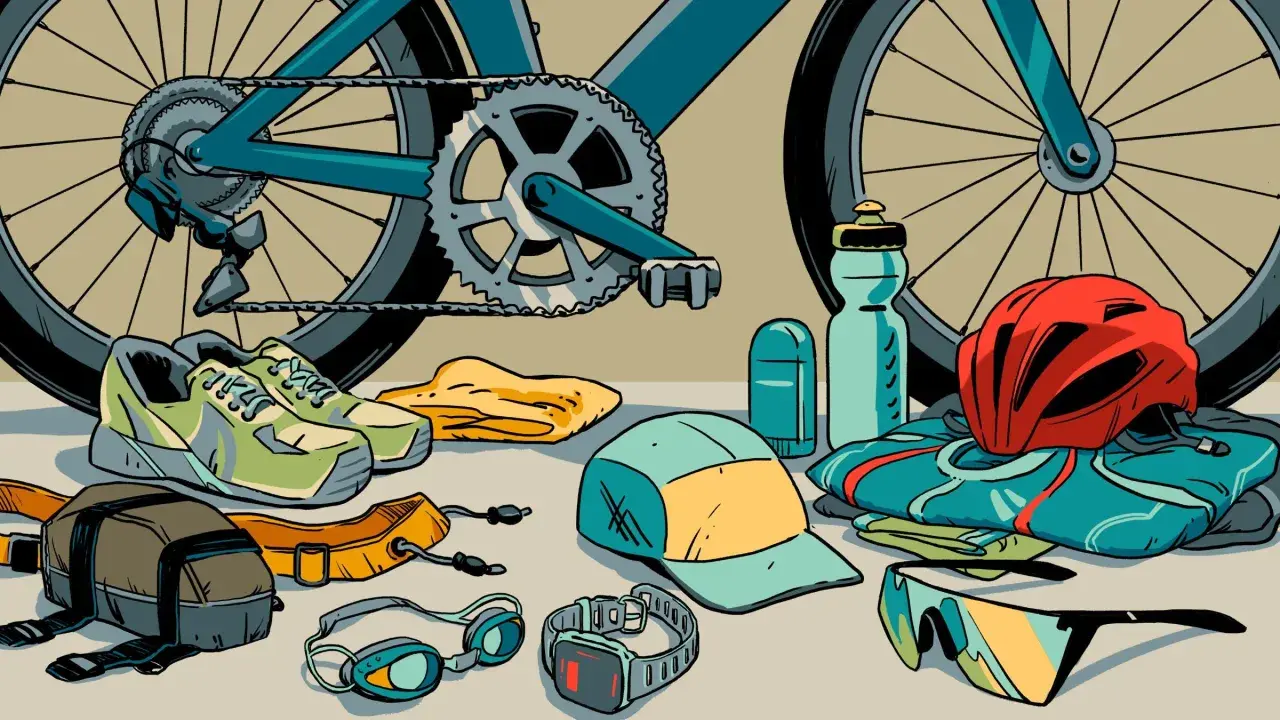
The smartest kit covers every discipline without overbuying speed
- Start with the basics for swim, bike, and run before you think about aero extras or race-only items.
- Keep at least one backup for the things that fail most often, especially goggles and small bike spares.
- Put your first money into fit, safety, and comfort; that is where the biggest training payoff usually lives.
- A wetsuit is useful for open water, but it is not the first purchase I would make for most beginners.
- One reliable bike setup beats a stack of half-used accessories that never solve a real problem.
- Buy the pieces you touch every week, then add the specialty gear once your training is consistent.

The smallest kit that actually covers triathlon training
USA Triathlon’s beginner guidance is refreshingly plain: swimwear, a bike, a helmet, and running shoes already cover the core of the sport. That is the right mental model for triathlon equipment, because the real job is not to own everything at once; it is to remove friction from the sessions you repeat most often.
I usually separate the kit into four buckets, then decide what belongs in each one before I spend more money. The table below is the short version I wish more first-time athletes used.
| Area | Buy first | Add later | Rough US budget |
|---|---|---|---|
| Swim | Swimsuit or tri shorts, goggles, cap, towel | Pull buoy, fins, snorkel, second pair of goggles | $50-$200 |
| Bike | Bike, helmet, bottles, flat kit, shoes or pedals | Trainer, bike fit, bike computer, power meter | $150-$500 for accessories, excluding the bike |
| Run | Running shoes, socks, technical clothing | Second shoe pair, GPS watch, hydration belt | $90-$250 |
| Transitions and data | Race belt, anti-chafe cream, small training bag | Heart-rate strap, structured storage, spare hardware | $30-$120 |
That is why I am careful about buying shiny extras too early. If the basic pieces are not already making training smoother, the problem is usually not a missing gadget. It is a gap in the swim bag, the bike fit, or the shoe choice, which is where I would look next.
Swim gear that earns its space in your bag
I keep swim gear simple because that is where small annoyances become habits fast. If goggles leak, the cap slips, or the suit chafes, you do not just lose a session; you start associating the pool with friction.
- Goggles should be the first real decision. I like one pair for the pool and one backup pair in the bag, because seals fail and straps snap at the worst possible moment.
- Swimsuits or tri shorts should fit snugly without dragging on the shoulders or pinching at the hips. I usually prefer two or three in rotation so one can dry fully before the next swim.
- Swim caps matter more than most people think. Silicone lasts longer, latex feels thinner, and a neoprene cap can be worth it if you are doing cold open-water work.
- Wetsuits are a strategic buy, not a mandatory one. Triathlete’s 2026 wetsuit coverage puts current options roughly between $300 and $1,700, which is exactly why I would not tell a beginner to start at the top of that range.
- Technique tools like pull buoys, fins, paddles, and a front snorkel can help, but only if they support a clear purpose. I use them to isolate body position, catch mechanics, or kick timing, not because a bag full of tools looks serious.
For open-water sessions, I also like a bright tow float when I am swimming alone. It is not a speed tool; it is a visibility tool, and that distinction matters. Once the swim bag is stable, the next place where gear makes a visible difference is the bike, because comfort and safety have a much larger effect there than most athletes expect.
Bike equipment where fit matters more than gadgets
For the bike, I rank helmet, position, and basic repair ability ahead of flashy upgrades. A fast setup that hurts your back or leaves you stranded on the shoulder is not useful training gear, and I would rather see a slightly modest bike that gets ridden often than a race machine that stays clean in the garage.
I think about bike choices in terms of how much of your current training they actually solve.
| Option | Best for | Tradeoff |
|---|---|---|
| Road bike | First season, group rides, mixed training | Less aerodynamic, but far more versatile |
| Tri bike | Long steady efforts and race-specific work | Costly and less forgiving in everyday riding |
| Indoor trainer | Winter, intervals, safety, repeatability | No handling practice, so it cannot replace all outdoor rides |
The rest of the bike kit should serve that choice, not fight it. I would keep these items close:
- Helmet with a fit that feels stable when you look down and turn your head. I do not care how fast it looks if it shifts around every time you climb.
- Bike shoes and pedals, often with clipless pedals, which simply means the shoe locks into the pedal for a more efficient connection.
- Repair essentials such as a spare tube or tubeless plug kit, tire levers, a CO2 inflator or mini pump, and a multitool.
- Hydration with at least one bottle cage, and ideally two for longer rides in warm weather.
- Ride clothing like bib shorts or tri shorts, a breathable jersey, and chamois cream if you ride long enough for saddle friction to become a real issue.
- Optional tech like a bike computer or power meter, which becomes more useful once your training is structured enough to act on the data.
Bike fit is the most underrated part of the entire setup. A small adjustment in saddle height, reach, or bar position can solve pain faster than a pile of accessories, and once the bike stops fighting you, the run starts to feel much more manageable.
Run apparel that keeps mileage sustainable
Running gear is where many triathletes overspend on the wrong thing. I would rather have one pair of shoes that genuinely fits my stride than three pairs that simply look fast, because the run leg exposes bad decisions quickly and without much mercy.
USA Triathlon’s run-specific guidance gets the order right: shoes, technical fabrics, and weather-appropriate clothing first, everything else later. That is also how I would buy for training in the US, where humidity, heat, and shoulder-season weather can change a week’s requirements almost overnight.
- Running shoes should match your feet, not the internet. If a shoe creates hot spots, it does not matter how much cushioning or carbon it promises.
- Socks should be synthetic or merino, not cotton. Seamless or low-seam designs are worth it if you are prone to blisters.
- Technical shirts, shorts, or tights should wick sweat and avoid bulky seams. Cotton is fine for errands, but it is a poor choice for bricks and long runs.
- Hat or visor and sunglasses help with sun, glare, and sweat management, especially on exposed routes.
- Anti-chafe cream earns its place quickly during longer sessions, humid runs, or any workout where salt and friction start to stack up.
- GPS watch or heart-rate strap is useful for pacing, but I treat data as support, not as a substitute for effort control and good fueling.
For higher mileage, I like having a second pair of shoes in rotation so one pair is never always damp, compressed, or overdue for retirement. The next question is what to wear when the weather is the main problem, because in the United States that can be as important as the discipline itself.
Weather layers and race-day clothing deserve their own plan
This is the section people underestimate. In hot states, the issue is heat and sun; in colder regions, it is starting warm enough to function without overdressing to the point that every hill becomes a steam bath. The answer is not more clothing. It is the right clothing.
A tri-suit is often the cleanest solution if you are training in a race-like format or doing long brick workouts. It saves a clothing change, usually handles swim-to-bike transitions well, and gives you one garment to test for chafing before race day. The tradeoff is simple: it costs more than separate pieces, and it is not always the most comfortable thing for a random pool session or a casual recovery ride.- Lightweight layers such as arm warmers, a thin vest, and gloves are ideal when the morning starts cool and the day warms up.
- Thermal tights and long-sleeve technical tops help in cold weather, but I still avoid bulky fabrics that hold sweat.
- A wind shell is often more useful than a heavy rain jacket for training because it blocks chill without trapping too much heat.
- Sun protection matters as much as warmth in many US climates, so breathable caps, visors, and sun sleeves can be practical training gear rather than accessories.
- Reflective details and lights are worth adding for pre-dawn or evening sessions, especially on roads with traffic.
My rule here is straightforward: if the piece does not improve comfort, visibility, or temperature control, it probably belongs in the “maybe later” pile. Once the clothing is sorted, the remaining decision is how to spend money in a way that supports training instead of collecting categories.
How I would spend the money in order
If I were starting from zero, I would buy in the order of safety, comfort, then specialization. That keeps the kit useful even if training volume changes, and it prevents the common mistake of funding a premium accessory while ignoring the item that actually blocks workouts.
| Priority | Buy first | Why it comes first | Approx. US spend |
|---|---|---|---|
| 1 | Helmet, goggles, shoes, swimsuit or tri shorts | These are the items that make the next session safe and possible | $150-$400 |
| 2 | Bike repair kit, bottles, bib shorts, second pair of goggles or shoes | They prevent canceled sessions and reduce small annoyances | $100-$350 |
| 3 | Tri-suit, wetsuit, GPS watch, indoor trainer | These improve training flow once the basics are already working | $300-$1,700 depending on the item |
| 4 | Power meter, aero helmet, premium race-day upgrades | Useful, but only after consistency is already locked in | $300-$2,000+ |
I am also selective about used gear. I am comfortable buying a used bike or trainer if it has been inspected properly, but I would never buy a used helmet. That is not a place to gamble, and it is one of the few rules in this space that is too important to soften.
The small extras that make training feel less chaotic
The last layer of gear is not glamorous, but it reduces the number of tiny problems that can drain energy before a workout even starts. I keep these extras around because they save time, protect the main kit, and make the whole routine feel less fragile.
- A spare pair of goggles in the bag, because the cheapest equipment failure is the one you prevent before the session starts.
- A simple transition bag or mesh bag so wet and dry items do not fight for space.
- A bike multitool, spare tube or tubeless plug kit, and CO2 so minor mechanical issues do not become a missed ride.
- Two sets of laces or an extra pair of socks, which sound minor until one shoe or one sock pair fails at the wrong time.
- A wash and dry routine for swimsuits, tri-suits, and bike kit, because good gear lasts longer when heat drying and rough storage are not part of the process.