What matters most before you book a lesson
- Most UK parent-child programmes are aimed at babies and toddlers, but the exact start age depends on the pool, the teacher and how ready you feel after birth.
- Good instructors are qualified, baby-aware and safety-focused; the best sessions have clear safeguarding, first-aid cover and small groups.
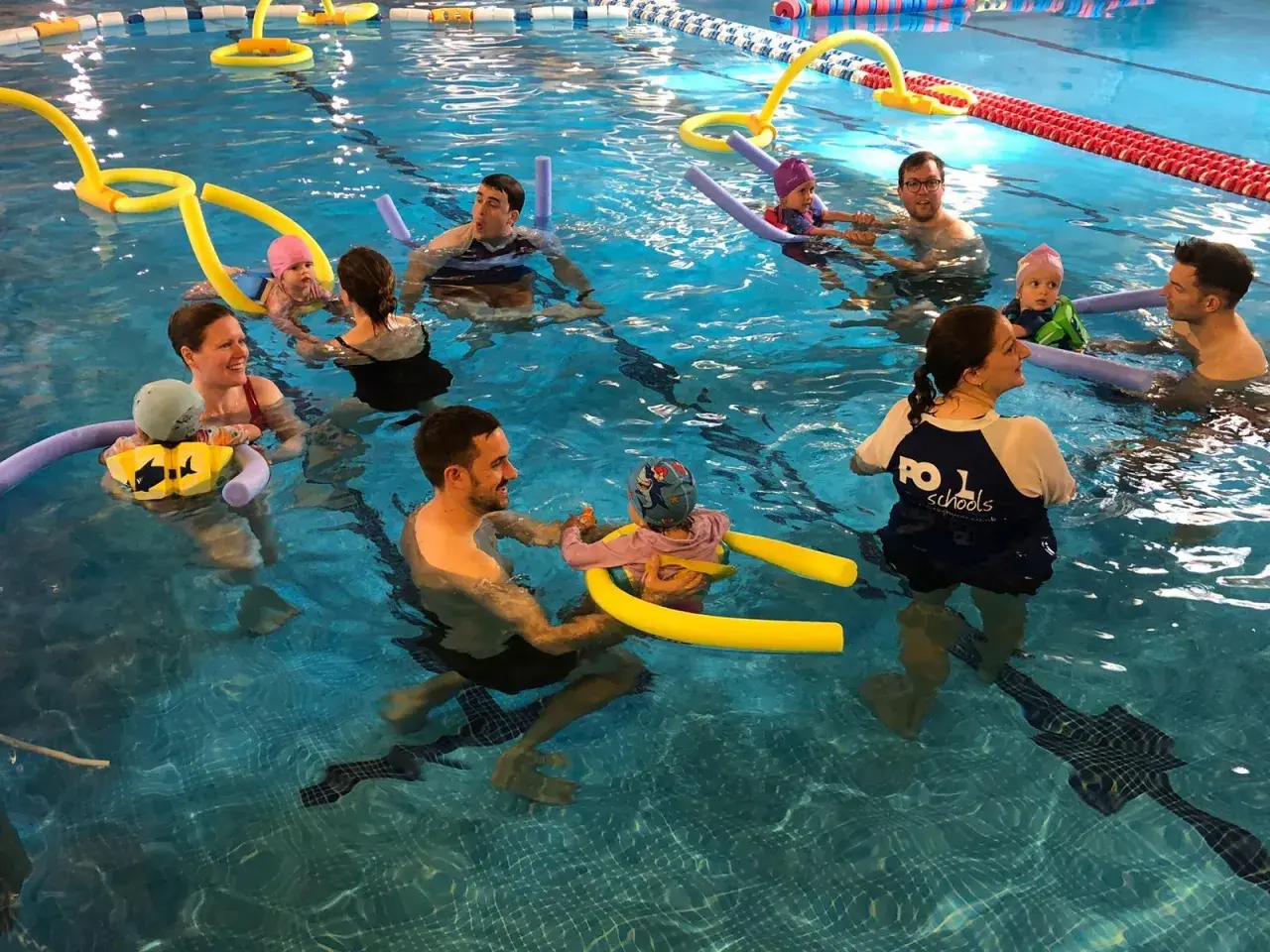
- Expect short, playful lessons with songs, holds, gentle splashes and simple water skills, not early stroke training.
- A warm teaching pool matters more than glossy branding, especially for younger babies.
- Pricing can vary widely, from budget leisure-centre sessions to more specialist programmes that cost noticeably more.
What these lessons really teach
Good parent-and-child lessons build three things at once: comfort in the water, routine and basic safety habits. Babies and toddlers are not being rushed towards solo swimming; they are learning how water feels, how to settle with a trusted adult nearby, and how to respond to simple cues from a teacher.
In a well-run class, I expect gentle entries, supported floating, kicking, reach-and-grab games, face-wetting in tiny steps and, only when a child is ready, very controlled submersion. The best teachers make progress feel boring in the right way: repetitive, calm and predictable. That is what helps children trust the pool instead of fighting it.
The other benefit is for the adult. If you are relaxed, your child usually settles faster. If you are tense, over-cueing or apologising for every splash, the child notices immediately. Once you understand that emotional side of the lesson, it becomes much easier to judge the instructor and the pool itself.
That leads directly to the part most parents get wrong: choosing the person who is actually running the class.
How I would choose the right instructor in the UK
I do not start with the brochure. I start with competence. A good baby-and-toddler instructor should have a recognised teaching qualification for early years swimming, current safeguarding training and clear emergency cover on site. The lesson should look controlled even when it feels playful.
| Check | What good looks like | Why it matters |
|---|---|---|
| Teaching qualification | A recognised baby, toddler or pre-school swimming qualification | Teaching a baby is not the same as teaching an older child; handling, pacing and confidence-building are different skills. |
| Safety cover | First-aid cover, lifeguard support and clear safeguarding policies | Young children need close supervision, and parents should know who takes charge if something goes wrong. |
| Pool conditions | A warm teaching pool with easy access and a sensible changing area | Cold water, awkward steps or a chaotic poolside can undo a lot of good teaching. |
| Group size | Small enough for the teacher to see every family pair clearly | If the class is too crowded, feedback drops and nervous children get less attention. |
| Teaching style | Clear structure, gentle progression and the flexibility to slow down | The best teachers adapt to the child in front of them instead of forcing a fixed script. |
When a programme has these basics, I care less about clever branding and more about whether the instructor notices small things: a baby getting chilly, a toddler becoming overstimulated, or a parent who needs a clearer hold. That level of attention is what turns a class into coaching rather than supervised play, and it sets up the next question, which is when to begin in the first place.

What a good first session should feel like
A first class should feel slower than most parents expect. You arrive a little early, change without rushing, settle the child and give them a minute to look around before the lesson starts. A strong teacher usually opens with songs, eye contact and simple routines so the water feels familiar before anything technical begins.
During the session, I would expect a mix of supported holds, gentle kicking, floating with help, water pours over the shoulders and very small confidence-building tasks. The point is not to prove anything. The point is to create repeatable positive experiences so the child starts associating the pool with safety and fun.
Most baby sessions are around 30 minutes, but the useful part is not the clock. What matters is whether the child still has energy and trust by the end. If a lesson keeps dragging after the child is tired, it stops being productive and starts becoming noisy.
If the first class looks hectic, rushed or oddly rigid, that is usually a warning sign, and it is worth checking whether you should start later, choose a different instructor or simply switch to a warmer pool.
When to start and when to wait
The NHS says babies can go swimming at any age, before or after vaccination, but that does not mean every family should start immediately. If you are the one in the water after birth, I would also respect your recovery: waiting until bleeding has stopped and you feel physically comfortable is more sensible than chasing an arbitrary date.
For the baby, pool comfort is a real limiter. RLSS UK notes a minimum pool temperature of around 30°C, with 32°C or above for babies under 12 weeks or 12 pounds. If the water feels cool to your forearm or you see shivering, that session will not be productive, no matter how good the class is.
I also recommend waiting on days when the baby is unwell, exhausted or overtired. The same applies to the adult. If you arrive stressed, hungry and already behind schedule, you are much more likely to cut the class short, and consistency matters more than heroics.
Once the timing feels sensible, the practical question becomes what to bring so the session actually runs smoothly.
What to pack so the class is easier, not harder
Most of the friction in baby swimming comes from the changing room, not the pool. I keep the kit simple and repeatable so I am not improvising while holding a wet child and a towel at the same time.
| Item | Why it helps |
|---|---|
| Swim nappy | Most pools require one for non-toilet-trained children, and it prevents avoidable mess. |
| Spare towel | One towel often gets wet fast; a second one makes drying and wrapping easier. |
| Easy-change clothes | Anything with fewer buttons, zips or layers saves time when the child is cold or tired. |
| Warm layer for after | Babies lose heat quickly after leaving the water, so a hoodie, robe or blanket helps. |
| Water, snack and nappy bag | A fed, comfortable child is easier to settle, and a dry bag keeps the rest of your day organised. |
| Simple adult swimwear | Adult comfort matters too; if your costume is awkward, you will feel it every week. |
I also avoid bringing anything bulky that the instructor has not asked for. Float aids, toys and extra gadgets can distract more than they help if they are not part of the lesson plan. The cleaner the setup, the easier it is to focus on the child and the teacher.
That practical kit decision leads naturally to the next choice: whether a group class or a private lesson is actually the better fit.
Group lessons or private sessions usually work for different reasons
People often treat group and private lessons as if one is simply better. I do not see it that way. They solve different problems, and the better option depends on the child, the adult and the budget.
| Format | Best for | Strengths | Trade-offs |
|---|---|---|---|
| Group lesson | Families who want routine, lower cost and a social setting | Children watch other swimmers, parents feel less isolated and the repetition can be reassuring. | Less personalised attention and less room to move at one child’s exact pace. |
| Private lesson | Nervous children, anxious parents or families who need targeted support | More direct feedback, faster adjustment of the lesson and a calmer environment. | Usually more expensive and less social, so it can feel intense if the child thrives on group energy. |
If I were helping a family choose, I would lean towards group lessons first unless there is a clear reason not to. Group settings are usually easier on the budget and better for normalising the pool. I would move to private sessions when a child is overwhelmed, when a parent needs technical reassurance or when progress has stalled in a standard class.
Once you know the format, the biggest gains usually come from avoiding a few predictable mistakes rather than chasing fancier equipment or a more expensive timetable.
The mistakes that slow progress or waste money
- Starting with unrealistic expectations. A first-term baby class is about familiarity and trust, not instant water skills.
- Choosing a cold or crowded pool. Warmth and space matter more than people expect, especially for younger babies.
- Forcing progress too quickly. A child who is rushed into submersion or busy tasks often becomes wary for weeks afterwards.
- Ignoring your own confidence. If the adult is anxious, the child usually feels it, so your comfort is part of the lesson.
- Missing the pattern. A single class tells you little; progress comes from repeat visits and predictable routines.
There is also a practical mistake that many families make: booking a time that clashes with naps or feeds and then wondering why the child melts down. A class that fits the day is worth more than one that looks perfect on paper but leaves everyone exhausted.
Fix those basics and the lessons become much easier to judge on merit, which is why I always finish by looking at the bigger picture, not just the first few sessions.
The detail that makes the whole programme worth it
If I were choosing for my own family, I would ignore the prettiest website and ask three questions: is the pool warm enough, is the teacher qualified for babies and toddlers, and does the class leave us calmer rather than frazzled? If the answer is yes, the lesson is probably doing its job. If not, keep looking.
When parent-child lessons work, they do more than fill a weekly slot. They build a routine, reduce fear and make later swimming lessons easier to handle. The child learns that water is manageable, the adult learns how to support safely and the instructor becomes the person who keeps that whole process steady.
That is the standard I would use in the UK in 2026: warm water, clear coaching, small groups and a pace that respects the child in front of you. If a programme delivers those things, it is doing the important work well.