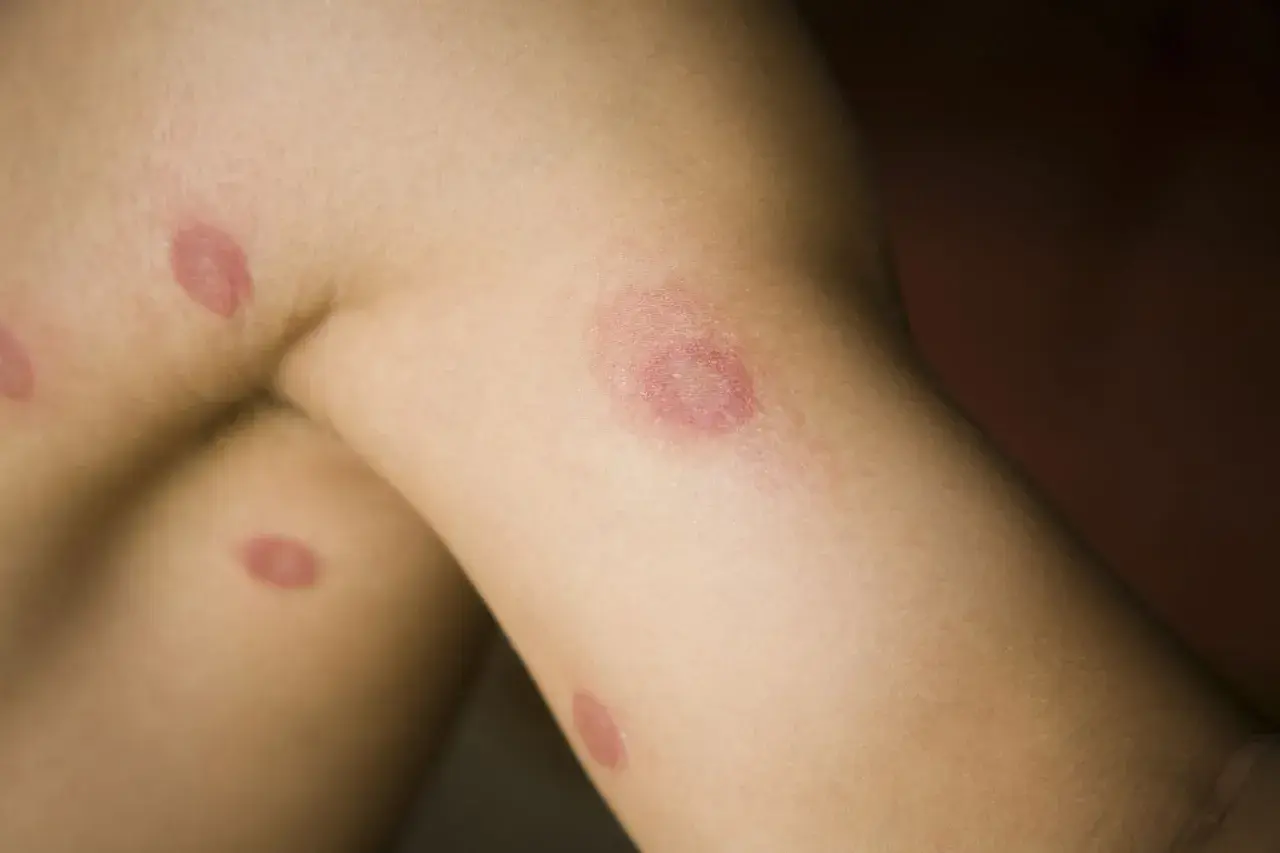
The short answer to can you swim with ringworm is usually “not yet” unless the rash is already being treated and can be fully covered. The real issue is not just the pool water itself, but whether you can keep the infection from spreading through skin contact, shared towels, locker rooms, and wet surfaces. I’d treat this as a swim-health decision: protect other people, protect your own skin, and do not assume chlorine makes an active fungal rash harmless.
The safest call depends on the rash, the treatment, and how well you can cover it
- Ringworm is a fungal infection, not a worm, and it spreads easily in shared, damp spaces.
- CDC notes that it can spread through direct skin contact, shared items, and moist locker-room or shower floors.
- If the rash is untreated, open, or on the scalp, I would skip swimming.
- If treatment has started and the lesion can be sealed and covered, a return may be possible under pool or team rules.
- Skin ringworm often needs daily antifungal treatment for up to 4 weeks; some cases take longer.
- The safest return to the water is the one that does not rely on guesswork.
Why the answer depends on where the rash is
Ringworm is a common fungal infection of the skin, hair, or nails, and the name is misleading because there is no worm involved. In swimming settings, the risk comes less from the water itself and more from the way swimmers move through shared spaces: benches, showers, pool decks, towels, and close contact with teammates or classmates. CDC notes that ringworm spreads through direct skin contact, shared personal items, and moist surfaces such as shower stall or locker-room floors, which is why I never treat pool day as a harmless exception.
That also explains why location matters. A small patch on the torso is a very different situation from ringworm on the scalp, feet, or a place that gets rubbed by straps, goggles, or wet fabric. The next question is simple: when does that become a hard no?
When I would skip the pool entirely
If any of the situations below apply, I would not swim that day.
| Situation | Why I would avoid swimming | Practical alternative |
|---|---|---|
| The rash has not been treated yet | You are still in the most contagious phase, and swimming adds shared surfaces and close contact. | Start treatment first and use dry-land cardio, strength work, or kicking drills without pool access. |
| The lesion is open, cracked, or being scratched a lot | Water and friction can irritate the area, and broken skin makes spread easier. | Give the skin time to settle and keep it clean, dry, and covered. |
| The rash is on the scalp | Hair makes full coverage difficult, and scalp ringworm often needs oral treatment rather than cream alone. | Wait for a clinician to clear you before returning to team practices or lessons. |
| You cannot keep it fully covered | If the dressing slips in water, the pool becomes a bad place to test it. | Skip the session and come back when coverage is secure. |
| You are following a team or facility rule that requires exclusion | Many US programs have their own return-to-play policy, and those rules take priority. | Ask the coach, lifeguard, or health office what documentation they need. |
I usually tell swimmers to think in terms of “coverability” and “contagiousness.” If you cannot honestly answer yes to both, the smarter choice is to sit out. That leads naturally to the situations where swimming may be reasonable with caution.
When swimming may be reasonable with caution
Once treatment has started, the equation changes. In many real-world swim programs, a swimmer with a small body lesion may be allowed back sooner if the rash is dry, clearly improving, and fully covered with a secure dressing. The details vary, but the logic stays the same: reduce skin contact, reduce moisture around the rash, and do not let the lesion touch shared surfaces.
Here is the standard I would use before getting back in the lane:
- Treatment has started, ideally with an antifungal recommended by a clinician or pharmacist.
- The rash is dry and stable, not actively spreading, oozing, or being rubbed raw.
- The area can be fully covered with a dressing that stays on in water.
- Pool or team policy allows it; if the rule says stay out, I would follow the rule.
- You can manage hygiene before and after, including showering, drying well, and changing out of wet gear quickly.
One useful benchmark: NHS guidance says skin ringworm often needs an antifungal every day for up to 4 weeks, and some infections need longer treatment. That is one reason I do not treat “feels better” as the same thing as “safe to ignore.” The next step is learning how to lower the spread risk if you do swim.

How to lower the chance of spreading it at the pool
If a clinician or facility says you may return, I would keep the routine strict. The goal is not perfection; the goal is to stop the fungus from finding warm, damp, shared surfaces.
- Use a secure dressing that fully covers the rash and stays sealed in water. If it peels, leaks, or rolls up, it is not good enough.
- Shower before and after swimming so sweat, skin flakes, and pool chemicals do not sit on the rash.
- Dry the area completely after bathing or training, because fungus likes moisture.
- Wear flip-flops in locker rooms and showers to avoid bare contact with damp floors.
- Use your own towel and wash it often; do not share towels, clothing, or swim gear that touches skin.
- Change out of wet suits quickly so the rash is not trapped under damp fabric for hours.
Those steps sound basic, but in practice they make a large difference. Most people do not get into trouble from one dramatic exposure; they get into trouble from repeated sloppy habits. That is why treatment timing matters just as much as pool etiquette.
What treatment usually looks like and how long the wait can be
Ringworm treatment depends on where it appears. Skin infections are often treated with topical antifungal creams, sprays, or ointments, while scalp or nail infections can need prescription medicine and a longer timeline. I find it helpful to separate the common swimming-related cases rather than treat all ringworm as one thing.
| Type of ringworm | Typical treatment | What it usually means for swimming |
|---|---|---|
| Body ringworm | Topical antifungal medicine, often used daily for a few weeks | May return sooner if treatment has started and the spot can be fully covered |
| Scalp ringworm | Often requires oral antifungal treatment and careful follow-up | Usually a no until a clinician says the infection is controlled |
| Athlete’s foot | Topical antifungal plus aggressive drying of the feet | Sometimes easier to manage, but do not swim if skin is cracked or you cannot keep feet clean and dry |
| Nail ringworm | May take months and sometimes needs oral medicine | Less of a pool exclusion issue than exposed skin, but still a real infection that needs treatment |
The important part is not the medication name alone; it is whether the infection is actually under control. I would never stop treatment early just because the rash looks quieter. That is the mistake that keeps ringworm coming back.
A simple rule I use before getting back in the water
When I have to make a fast decision, I use this rule: if it is untreated, can’t be fully covered, or sits in a place that is hard to keep dry, I skip swimming. If treatment has started, the spot is dry, the dressing stays on, and the pool policy allows it, then swimming may be reasonable with strict hygiene.
That approach is conservative, but it is also practical. It protects your lane mates, avoids the embarrassment of being sent out of practice mid-session, and gives the antifungal treatment a fair chance to work. In a swim environment, those are usually the better trade-offs.
