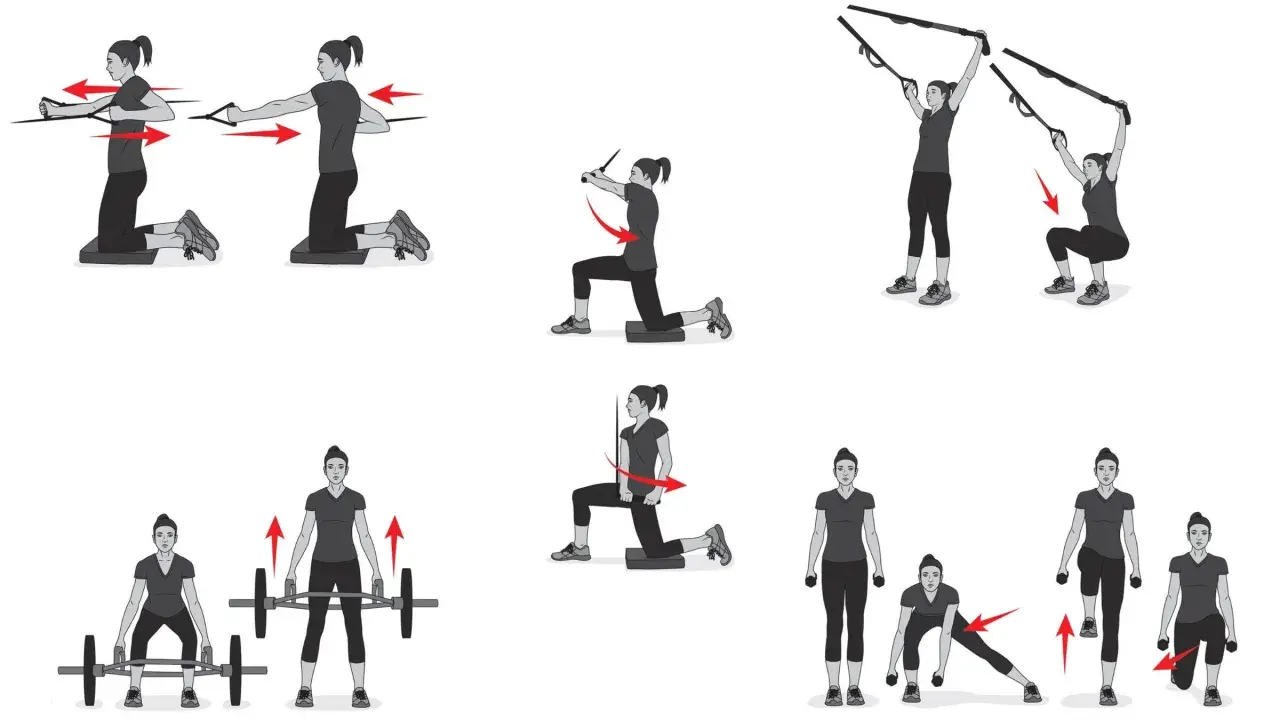
The best triathlon strength training programs are the ones that make swim-bike-run training feel more controlled, not more crowded. I’ll break down how to build a plan that improves force production, core control, and single-leg stability while still fitting real training weeks. I’ll also show how the schedule changes from off-season to race season, which exercises earn their keep, and the mistakes that quietly sabotage progress.
Strength work should support the race, not steal from it
- Off-season: build strength with 2 to 3 full-body sessions per week.
- In season: cut the volume, keep the main lifts, and avoid chasing soreness.
- Best movements: squats, hinges, split squats, rows, presses, and core anti-rotation work.
- Most triathletes need: more single-leg control and trunk stability, not a bodybuilding split.
- Session length: 20 to 60 minutes is usually enough if the work is well chosen.
What a good triathlon strength plan actually does
Strength work for triathletes has a narrower job than general gym training. I want it to improve the force you can produce on the bike and run, but also the positions you can hold when fatigue rises: tall posture on the bike, steady trunk in the pool, and cleaner mechanics late in the run. If a plan only adds muscle fatigue and does not improve movement quality, it is too expensive.
That is why I keep coming back to a few outcomes: better hip drive, better shoulder control, better calf and foot tolerance, and better trunk stiffness when the race starts to bite. USA Triathlon’s coaching guidance reflects the same broad idea: the useful dose is usually modest, repeatable, and built around a few high-value movements rather than endless variety.
- Force transfer: you get more from each pedal stroke and stride.
- Durability: your tissues tolerate miles better, especially when running form starts to fade.
- Posture: you hold position longer on the bike and in the water.
- Injury resistance: you close the common gaps in hips, ankles, trunk, and shoulders.
Once that goal is clear, the next question is how hard to push each phase of the year.
How to periodize the work across the season
The cleanest way to think about strength training is as a moving target. Early in the year, you can afford more volume and more learning; as race day gets closer, the work should get shorter, sharper, and easier to recover from. A recent Triathlete piece makes the same shift: reduce volume and specificity as endurance load rises, then use strength to maintain the qualities you already built.
| Phase | Weekly frequency | Main goal | Typical session length | Practical emphasis |
|---|---|---|---|---|
| Off-season | 2 to 3 sessions | Build strength and movement quality | 40 to 60 minutes | More total sets, controlled tempo, slightly higher rep ranges |
| Base or build | 2 sessions | Keep building, but start managing fatigue | 30 to 45 minutes | Heavy basics, fewer accessories, no junk volume |
| Race season | 1 to 2 sessions | Maintain strength and tissue tolerance | 20 to 35 minutes | Low volume, high quality, no soreness hunt |
| Taper | 0 to 1 session | Stay sharp without adding fatigue | 15 to 25 minutes | Light maintenance, mobility, a few crisp sets |
That pattern works because the gym is never the main event. In the off-season, I can let an athlete learn the lifts and accumulate more total work. In the build phase, I keep the best movements and trim the rest. Close to racing, I care less about progress in the mirror and more about arriving fresh enough to swim, ride, and run well.
With the schedule set, the next step is choosing movements that actually carry over to triathlon.
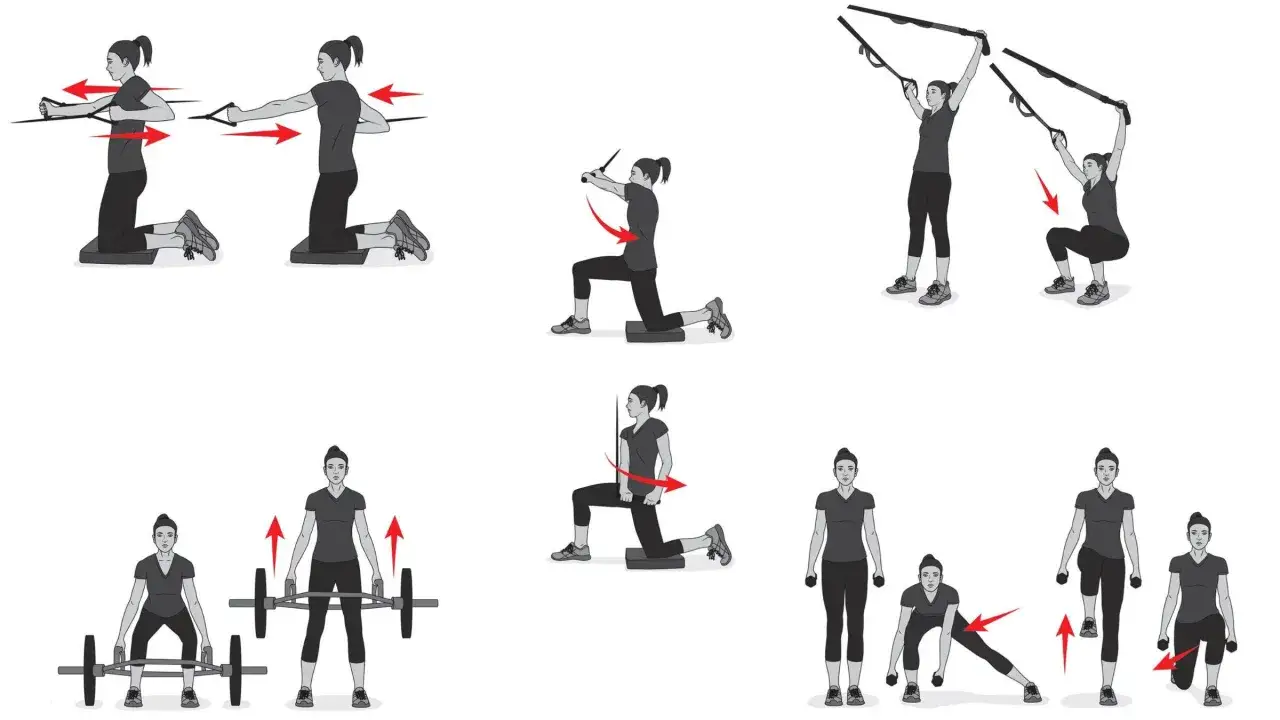
The exercises that earn the most return
I prefer movement patterns over a long list of isolated exercises. If an athlete only has 30 to 45 minutes, I would rather see six excellent reps of the right pattern than a 12-exercise circuit done in a hurry. The goal is not to win a gym session; it is to build a body that can tolerate swim, bike, and run volume.
Lower body and posterior chain
- Split squats and step-ups: they train single-leg force, which matters every time you run or stabilize on the bike.
- Deadlifts or Romanian deadlifts: they strengthen the hips and hamstrings without needing endless volume.
- Squats or goblet squats: they build general leg strength and bracing, especially useful in the off-season.
- Hip thrusts or glute bridges: they target hip extension when an athlete struggles to feel the glutes working.
Upper body and swim support
- Rows and lat pulldowns: they support pull strength and help balance all the forward-leaning work of cycling.
- Push-ups, dumbbell presses, or landmine presses: they keep the shoulders strong without beating them up.
- Face pulls and external rotations: they are small, but they matter when shoulder history is messy or swim volume is high.
Read Also: Silverman Triathlon - Training for the Toughest Desert Race
Core and control
- Pallof presses and side planks: they train anti-rotation, which is exactly what you need when fatigue wants to twist the torso.
- Dead bugs and carries: they teach the trunk to stay organized while the limbs move.
- Calf raises and tibialis work: they protect the lower leg and help absorb run volume.
For most athletes, the smartest prescription is 2 to 4 sets of 3 to 6 reps on the main lifts in the off-season, then 2 to 3 sets of 6 to 10 reps on accessories. That is enough to create adaptation without turning the gym into another endurance workout.
Once the movements are chosen, the real art is placing them so they help the week instead of stealing from it.
How to place lifting around swim, bike, and run
I like to stack strength work after a swim or bike session more often than before one. That keeps the run fresher, and the run is usually the discipline that complains first when the legs are already cooked. If you must lift on the same day as a quality run, lift after the run only when the run is the priority and the gym session is very short.
| Training situation | Best place for lifting | What to avoid |
|---|---|---|
| Heavy run interval day | Later in the day after an easy swim or bike, or on a separate day | Heavy leg work within 24 hours before the run |
| Big bike day | After the ride if the session is short and controlled | Turning the gym into a second hard cardio block |
| Technique swim day | After the swim is often fine, especially for upper-body and core work | Fatiguing the shoulders before threshold swim sets |
| Race week | One short maintenance lift early in the week, if at all | New exercises, failure sets, or high-volume leg work |
That placement rule sounds simple, but it solves a lot of problems. It keeps the gym from degrading the key sessions, and it makes the lifting feel like support work instead of a separate sport. The next step is translating that into a week that a normal athlete can actually execute.
Sample weekly routines for real-world training weeks
Here is how I would build two realistic templates. The first is for an athlete who needs the simplest possible structure. The second is for someone with more training time and a stronger base. In both cases, the lifts stay short enough that they do not wreck the rest of the week.
| Template | Weekly structure | Sample focus |
|---|---|---|
| Busy athlete | 2 full-body sessions of 35 to 45 minutes | Day 1: squat pattern, row, split squat, core. Day 2: hinge, press, pull, calf work. |
| Base-phase athlete | 3 sessions of 40 to 50 minutes | One heavier lower-body day, one upper-body and trunk day, one lighter power or mobility day. |
| Race-season athlete | 1 to 2 sessions of 20 to 30 minutes | One maintenance lift with 2 to 3 main movements, plus mobility and prehab. |
If I were writing the actual workouts, I would keep them boring on purpose. A two-day plan might use trap-bar deadlifts, split squats, chest-supported rows, and a carry on day one, then goblet squats, single-leg RDLs, presses, pulldowns, and side planks on day two. The point is not novelty; the point is repeatable quality.
As useful as the right template is, the wrong habits can still undo it, which is why the next section matters.
The mistakes that waste time or create extra fatigue
I see the same mistakes over and over, and most of them come from trying to make strength work feel harder than it needs to be.
- Turning every lift into a conditioning circuit: that creates fatigue, but not always useful strength.
- Chasing soreness: if your run quality drops for two days after lifting, the dose is too high.
- Ignoring unilateral work: triathlon is full of asymmetry, so single-leg training is not optional.
- Overloading the shoulders: swimmers often need more pulling balance and scapular control, not just pressing.
- Skipping calves and feet: weak lower legs show up late in the run, not in the weight room.
- Adding new exercises right before race day: the taper is for freshness, not experimentation.
- Letting sessions drift: random workouts make it hard to progress or recover consistently.
I also tell masters athletes to be a little more conservative with volume. Recovery is the bottleneck more often than motivation, and the best program is the one that leaves enough energy for the actual triathlon work. That tradeoff becomes even more important when you tailor the plan to race distance.
How to adjust the plan by race distance
Short-course racing and Ironman preparation do not need the same gym emphasis. The shorter the race, the more the strength work can lean toward power and force production. The longer the race, the more it should protect durability and keep fatigue low. That is not a hard rule, but it is a useful one.
| Race distance | Strength emphasis | Best weekly dose | What matters most |
|---|---|---|---|
| Sprint | Power, turnover, and clean mechanics | 2 sessions in the base phase, then 1 to 2 later | Fast force production, low-volume plyometrics, crisp lifting |
| Olympic | Balanced power and durability | 2 sessions most of the year | Single-leg strength, trunk control, and shoulder balance |
| 70.3 | Fatigue resistance and posterior-chain strength | 1 to 2 sessions, trimmed as volume rises | Keep the legs resilient without stealing from key bike and run days |
| Ironman | Durability with very careful fatigue management | 1 to 2 sessions early, then usually 1 maintenance session | Just enough stimulus to hold strength while the endurance load climbs |
That is why a short-course athlete can usually tolerate a little more intensity in the gym, while a long-course athlete benefits from smaller, cleaner doses. The stronger the endurance block gets, the more the lift has to serve the race rather than compete with it. That idea leads directly to the last details I would keep in place before the season peaks.
The details I would keep in place as race day gets close
When race day gets close, I simplify aggressively. I keep the same main patterns, cut the total sets, and stop every session before form gets sloppy. If an athlete asks me what to prioritize, I usually answer with five things: keep one or two benchmark lifts, avoid new movements, keep the sessions full-body, reduce load by roughly 30 to 50 percent in the final 7 to 10 days, and protect sleep and protein intake.
- Keep the plan familiar: the last block is for maintenance, not rebuilding.
- Protect the key sessions: if lifting hurts the long run or the quality swim, it is too much.
- Leave room for recovery: the adaptation happens between sessions, not during them.
- Use simple progress markers: better control, better range, and less post-workout fatigue often matter more than adding load.
If I were building a plan from scratch for a triathlete today, I would start with two short full-body sessions, bias one toward lower-body force and the other toward trunk and upper-body control, and then trim the volume as the racing calendar tightens. That is the cleanest way to get stronger without losing the feel of swim, bike, and run.