Triathlete training works best when it is built backward from race day: pick the distance, respect the swim, and make sure the weekly load is something you can actually repeat. I usually approach it as a balance of technique, endurance, and recovery, because most athletes do not fail from a lack of effort; they fail from training the wrong pieces in the wrong order. This guide breaks down the process in practical terms so you can train with purpose instead of collecting random workouts.
The essentials that decide whether your build works
- Start with the distance. Sprint, Olympic, 70.3, and full-distance races demand very different training loads.
- Protect the weekly rhythm. Most athletes need consistent swim, bike, and run frequency more than one huge session.
- Treat the swim as skill work. Pool fitness matters, but open-water comfort and clean technique matter more on race day.
- Use bricks sparingly but deliberately. They teach the legs to shift from cycling to running without panic.
- Fuel and recover on purpose. If recovery lags, the plan stops adapting and starts accumulating fatigue.
Choose the distance before you choose the load
Triathlon is not one training problem. A sprint race rewards sharpness and efficiency, while a full-distance event rewards durability, pacing, and the ability to recover day after day. The wrong mistake I see often is simple: athletes copy a plan for a race they are not actually prepared to train for.
| Race type | Standard distance | What training has to emphasize |
|---|---|---|
| Sprint | 750 m swim, 20 km bike, 5 km run | Technique, transition speed, and enough endurance to stay controlled from start to finish |
| Olympic | 1.5 km swim, 40 km bike, 10 km run | Steady aerobic work, pacing discipline, and a stronger ability to hold form under fatigue |
| 70.3 | 1.9 km swim, 90 km bike, 21.1 km run | Fueling practice, long-bike durability, and run resilience after sustained cycling |
| Full distance | 3.8 km swim, 180 km bike, 42.2 km run | Long-term base building, recovery discipline, and very careful race-day pacing |
A sprint build can be 8 to 12 weeks for a fit beginner, but longer races deserve a much bigger runway. That does not mean every athlete needs a massive schedule; it means the training has to match the event instead of the ego. Once the distance is clear, the weekly structure becomes much easier to design.
Build a week that can survive real life
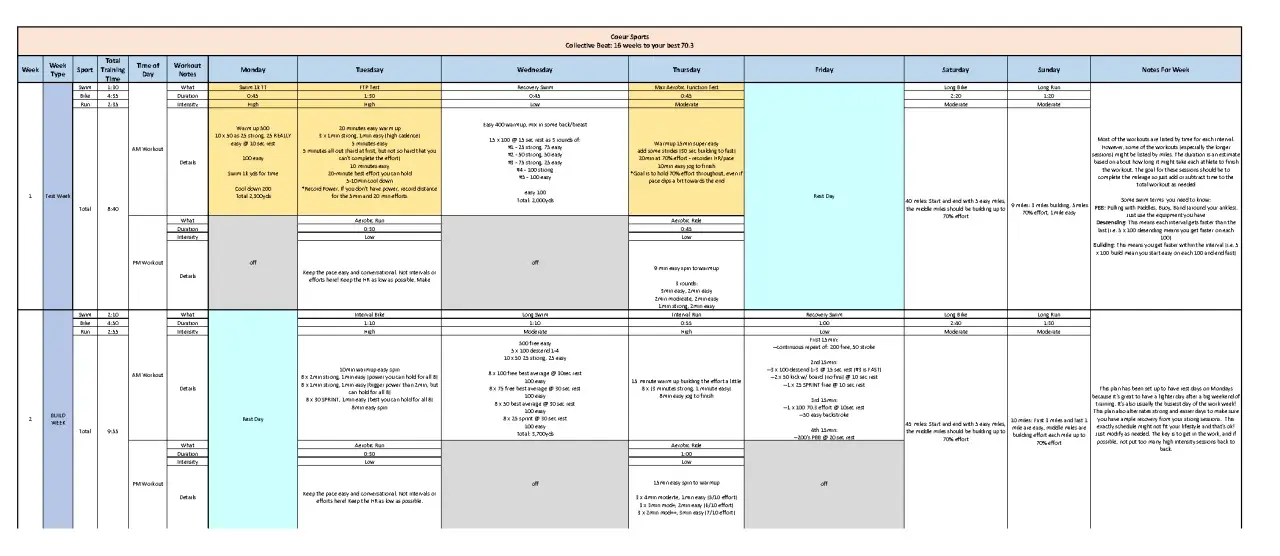
For most age-group athletes, I like to see 2 to 3 swims, 2 to 3 bike sessions, 2 to 4 runs, and 1 to 2 strength sessions each week, with at least one true rest day. USA Triathlon’s beginner guidance sits in that same neighborhood, and the reason is straightforward: triathlon rewards consistency more than heroic single workouts. A dependable week usually has one quality session in each discipline, one longer ride, one longer run, and enough easy volume to absorb the work.A practical week often looks like this:
- Monday rest, mobility, or a very light swim
- Tuesday swim technique plus a short run or strength session
- Wednesday bike intervals with a controlled aerobic finish
- Thursday endurance swim and easy run
- Friday recovery swim or complete rest
- Saturday long bike with a short brick run
- Sunday longer run and mobility work
If time is tight, I would protect the swim, the long bike, and one brick before I added extra intensity. That is the point where many athletes get tempted to do more, but a cleaner week usually wins. Once that rhythm is stable, the swim is where I spend the most technical attention.
Make the swim a technical advantage
The swim is where many triathletes lose the most free speed. USA Triathlon suggests beginners swim two to three times per week, and I would treat that as a floor if swimming is your weakest leg. One session should be technique-heavy, one aerobic, and one race-specific or open-water focused if you can access open water.
In practice, I want the swim work to solve a few specific problems:
- Body position so the hips do not sink and waste energy
- Breathing rhythm so you stay calm instead of fighting the water
- Sighting so you can swim straight in open water
- Starts and turns so crowded race conditions do not spike your heart rate
- Open-water comfort so the first 300 meters do not feel like a surprise
I like drills, but only when they connect to a real outcome. A few focused sets for catch, balance, and exhale control are useful; endless drill work without pace awareness is not. The goal is a swim that exits the water controlled and ready, because that is what makes the rest of the race easier. Once the swim stops feeling like chaos, the next question is what you wear and carry when you move from one leg to the next.
Keep the gear simple and race-ready
Good gear should remove friction, not create another decision tree. I would rather see an athlete with one reliable bike fit, one pair of goggles that never leaks, and shoes they have already used in bricks than someone chasing marginal gains before the basics are stable. The right setup is the one that lets you train consistently and race without second-guessing your kit.
- Swim goggles you trust, a suit or tri kit you have tested, and a wetsuit only if conditions and race rules call for it
- Bike a machine that fits well, shifts cleanly, and brakes predictably under fatigue
- Run shoes that you have already run in after cycling, not shoes you are trying for the first time on race week
- Transitions race belt, bottles, nutrition storage, and anything else you need to move quickly without fumbling
For most age-group athletes, the performance jump comes from fit and familiarity before it comes from expensive upgrades. If something rubs in training, it will annoy you more in the second half of the bike; if a transition setup is awkward at home, it will be worse when your heart rate is up. Once the kit is settled, the real race-specific work begins: teaching your body to switch from bike to run without hesitation.
Use brick sessions to teach your legs the switch
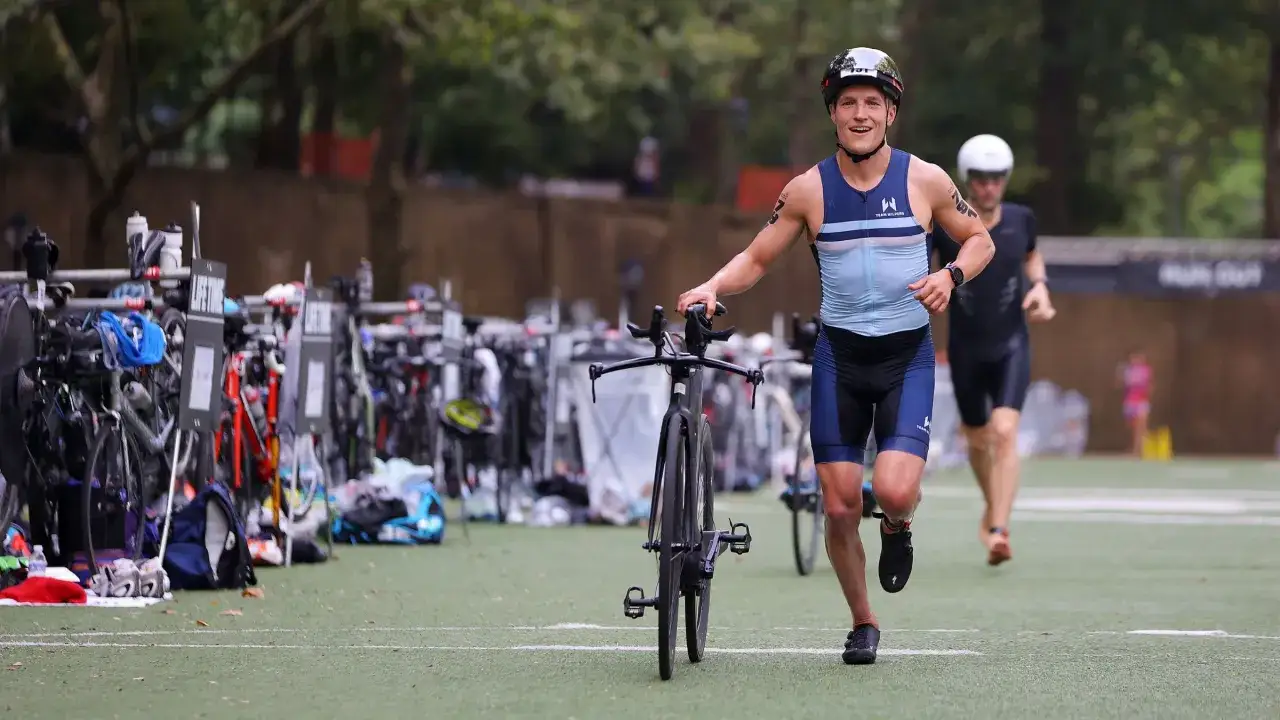
A brick is simply a bike followed immediately by a run. The point is not to impress anyone; it is to teach your nervous system what the run feels like after pedaling hard, when the legs are heavy and your cadence has changed. Brick sessions are where the race starts to feel familiar.
Useful bricks do not need to be extreme. A solid starter session might be 45 to 60 minutes on the bike plus 10 to 15 minutes of easy running. For Olympic and 70.3 training, I often stretch that into 60 to 120 minutes of riding with 15 to 30 minutes of controlled running, keeping the first few minutes intentionally easy. That early restraint matters more than most athletes think.
When I use bricks with athletes, I care about three things:
- Pacing the run should start smoother than your ego wants
- Transition practice shoes, helmet, nutrition, and layout should be rehearsed the same way each time
- Effort control the workout should simulate race stress without becoming a test of suffering
Bricks are useful because they expose mistakes you can still fix in training. If your run falls apart after every bike, the problem is usually pacing, fueling, or bike intensity, not bad luck. Those sessions only work if you can absorb them, which is where fueling and recovery stop being side notes and become part of the plan.
Fuel, hydrate, and recover like part of the plan
There is no clean separation between training and recovery in triathlon; they are the same system. I follow the same logic USA Triathlon uses in its recovery guidance: learn your sweat rate, practice fueling in training, and give the body enough easy time to adapt. That is the difference between building fitness and just collecting fatigue.
For longer sessions, I usually start athletes around 30 to 60 grams of carbohydrate per hour and let them test what their gut can tolerate as sessions get longer and more race-specific. Hydration should be based on sweat rate rather than guesswork, especially in warm American summers where fluid and sodium losses can climb fast. The point is not to memorize one perfect number; it is to stop showing up underfueled and hoping the bike ride will somehow fix it.
Recovery needs the same discipline. A recovery week every 3 to 5 weeks, with volume dropping to roughly 50 to 60 percent of peak load, usually keeps athletes improving instead of grinding down. Sleep matters just as much; USA Triathlon notes that sleep loss can reduce time to exhaustion by 11 percent, which is a large penalty for something many athletes treat casually.
When recovery is handled properly, the final question becomes less about survival and more about readiness.
The signs I watch before race week
By the time race week arrives, I want the athlete to feel rehearsed, not desperate. That does not mean fresh legs with no fatigue at all; it means the hard work has already been done and the final job is to taper into it. The best signs are usually simple: the swim feels controlled, the bike can be held at a steady effort, and the run off the bike no longer feels like a negotiation.
If one discipline keeps breaking down, I treat that as a training signal, not a personal flaw. Pull back the volume, keep the frequency, and fix the weak link before adding more work. That is the practical version of triathlon preparation: build the week, protect the swim, rehearse the transition, and recover hard enough to adapt. If you do those things consistently, race day stops feeling mysterious and starts feeling like the natural next step.