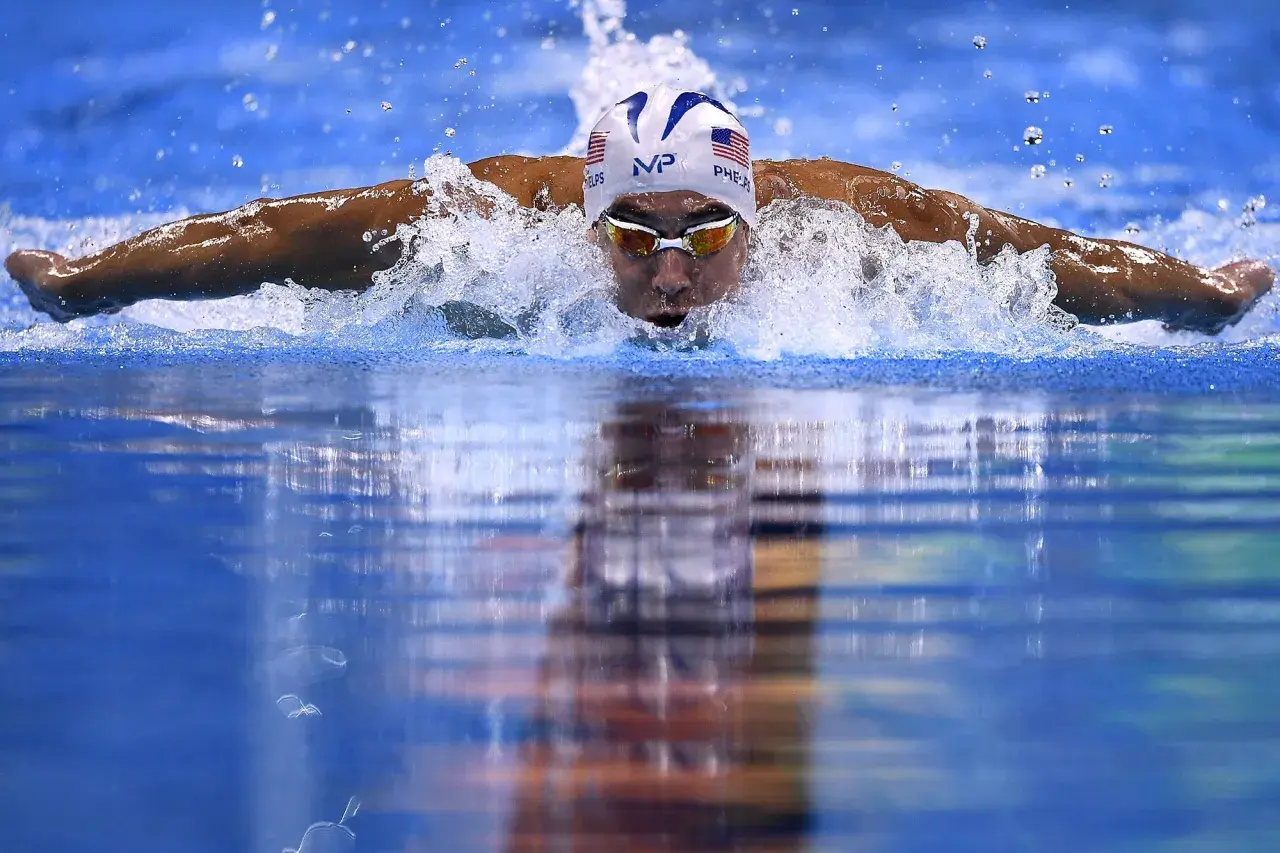
Butterfly began as a breaststroke development, then became its own stroke
- David Armbruster and Jack Sieg are the pair most often credited with the modern butterfly form.
- Earlier swimmers such as Henry Myers helped prove that an over-water arm recovery could be faster.
- Some histories also trace precursor ideas to Sydney Cavill, especially the arm recovery.
- FINA separated butterfly from breaststroke in 1952, which turned a workaround into a recognised stroke.
- The stroke made its Olympic debut in Melbourne in 1956.
- For swimmers, the big lesson is simple: butterfly depends on timing, rhythm, and body wave, not just raw strength.
The short answer is a team of innovators
If I had to give the cleanest historical answer, I would say the modern butterfly was developed by David Armbruster and Jack Sieg, but not invented in one neat moment. British Swimming describes butterfly as a 1930s development from breaststroke, which is the right frame: it was built in stages, not dropped into the sport fully formed.
That matters because the word "invented" can hide how swimming actually evolves. One swimmer tries a faster recovery, another adds a more efficient kick, a coach sees an advantage, and only later do the rule-makers decide whether the movement is a trick, a loophole, or a new stroke. Butterfly went through all three phases.
| Figure | What they contributed | Why it matters |
|---|---|---|
| Henry Myers | Used an over-water arm recovery for a full breaststroke length in 1933 | Showed that the recovery itself could be faster than the traditional underwater breaststroke action |
| David Armbruster | Systematised the dolphin-like kick and coached the experiments at the University of Iowa | Turned an experiment into something repeatable in racing |
| Jack Sieg | Demonstrated the body undulation and kick pattern that made the stroke fast | Provided the movement pattern that became the modern butterfly engine |
| Sydney Cavill | Appears in some older histories as an earlier source of the over-water arm idea | Important as a precursor, even if not the full inventor of the final stroke |
That table shows why the answer is often simplified too aggressively. The modern butterfly was not the work of a lone genius; it was a chain of refinements. The stroke only makes sense once you see how each part was added in sequence, and that is where the story gets more interesting.

How butterfly grew out of breaststroke experiments
The earliest version of butterfly was not a separate race stroke at all. It was a faster way to swim breaststroke, with the arms recovering above the water instead of being pushed forward under it. That change alone reduced drag and gave swimmers a more aggressive rhythm, but the stroke still lacked its final identity.The real breakthrough came when the over-water arm recovery was paired with a dolphin kick, meaning both legs moved together in a wave-like motion rather than kicking separately. In practice, that wave runs from the chest through the hips into the legs. When it is timed well, the swimmer feels as if the whole body is doing the work, not just the shoulders.
In the 1930s, that combination was fast enough to force attention. Swimmers who adopted it were suddenly breaking away from the old breaststroke rhythm, and officials had a problem on their hands: was this still breaststroke, or something new? Once a technique starts winning repeatedly, the sport has to decide whether to absorb it or separate it.That question led directly to the next phase of the story, when the rule book finally caught up with what swimmers were already doing in the pool.
Why the invention is credited differently depending on the source
The reason people disagree is that they are often talking about different parts of the stroke. The International Swimming Hall of Fame has long treated earlier arm-recovery ideas as a precursor story, while the Armbruster-Sieg experiments are the clearest origin of the modern, integrated butterfly. Those are related, but they are not the same claim.
Here is the practical way I think about it:
- Sydney Cavill is tied to the early over-water arm movement in some historical accounts.
- Henry Myers helped show that the arm recovery could be used over a full length, not just at the finish.
- David Armbruster and Jack Sieg made the stroke function as a speed system by pairing the arms with a powerful undulating kick.
So when someone asks for the inventor, the safest answer is not "one person" but "the modern butterfly came from Armbruster and Sieg, with earlier contributors laying the groundwork." That distinction is not nitpicking; it is the difference between a neat story and the actual history of sport.
And once you understand that, the rule changes that followed make a lot more sense.
When butterfly stopped being a breaststroke workaround
For years, butterfly lived in an awkward middle ground. Swimmers were using the arms and kick together because it was faster, but the sport still had to decide whether that combination belonged inside breaststroke or outside it. FINA finally separated butterfly from breaststroke in 1952, which is the moment the technique stopped being just a loophole.
The Olympic debut came in Melbourne in 1956, and that mattered just as much as the rule change. Once butterfly was visible on the Olympic stage, the stroke had a clear identity. From there, coaches could train it as its own event instead of treating it as a clever variation of breaststroke.
That shift also explains why the stroke still feels so demanding. It was not designed around comfort. It was designed around speed, and the rules had to catch up with that reality. In other words, butterfly was born from performance pressure, not from elegance for its own sake.
That history is useful because it tells swimmers where to put their effort today, and where not to waste it.
What this history means for learning the stroke
If I am coaching butterfly, I do not start by asking for more power. I start by looking at rhythm. The stroke is only efficient when the arms, kick, breathing, and body line work together. Break that chain, and the swimmer ends up fighting the water instead of moving through it.
The most common mistakes are easy to spot:
- Throwing the shoulders at the catch before the body is set.
- Lifting the head too early and killing the body wave.
- Kicking as if the legs are an afterthought rather than the timing engine of the stroke.
- Trying to muscle every length instead of letting the undulation carry momentum.
What usually works better is a simpler sequence. Keep the chest moving, let the hips follow, and let the kick support the arm recovery rather than chase it. When that timing clicks, butterfly looks less like force and more like controlled motion. That is why so many good flyers look calm even when they are swimming hard.
For swimmers in the UK, this is the part that matters most in training sessions: if the stroke feels heavy, it is usually a timing issue before it is a conditioning issue. Fix the sequence first, then add speed.
What I would remember from butterfly’s origin story
The origin of butterfly is useful because it strips away the myth of a single inventor and replaces it with a better lesson: the stroke was built by combining separate advantages until the combination became too effective to ignore. That is why Armbruster and Sieg are the names most people should remember, but not the only names worth remembering.
If I were teaching a newer swimmer today, I would use that history as a coaching shortcut. Butterfly is not about forcing the water; it is about linking movement. Once that idea is clear, the stroke becomes easier to learn, easier to pace, and far less mysterious than it first looks.
So the short answer is this: the modern butterfly was developed mainly by David Armbruster and Jack Sieg, while earlier swimmers helped shape the pieces that came before it. The longer answer is more useful, because it explains not just who invented the stroke, but why it works the way it does.