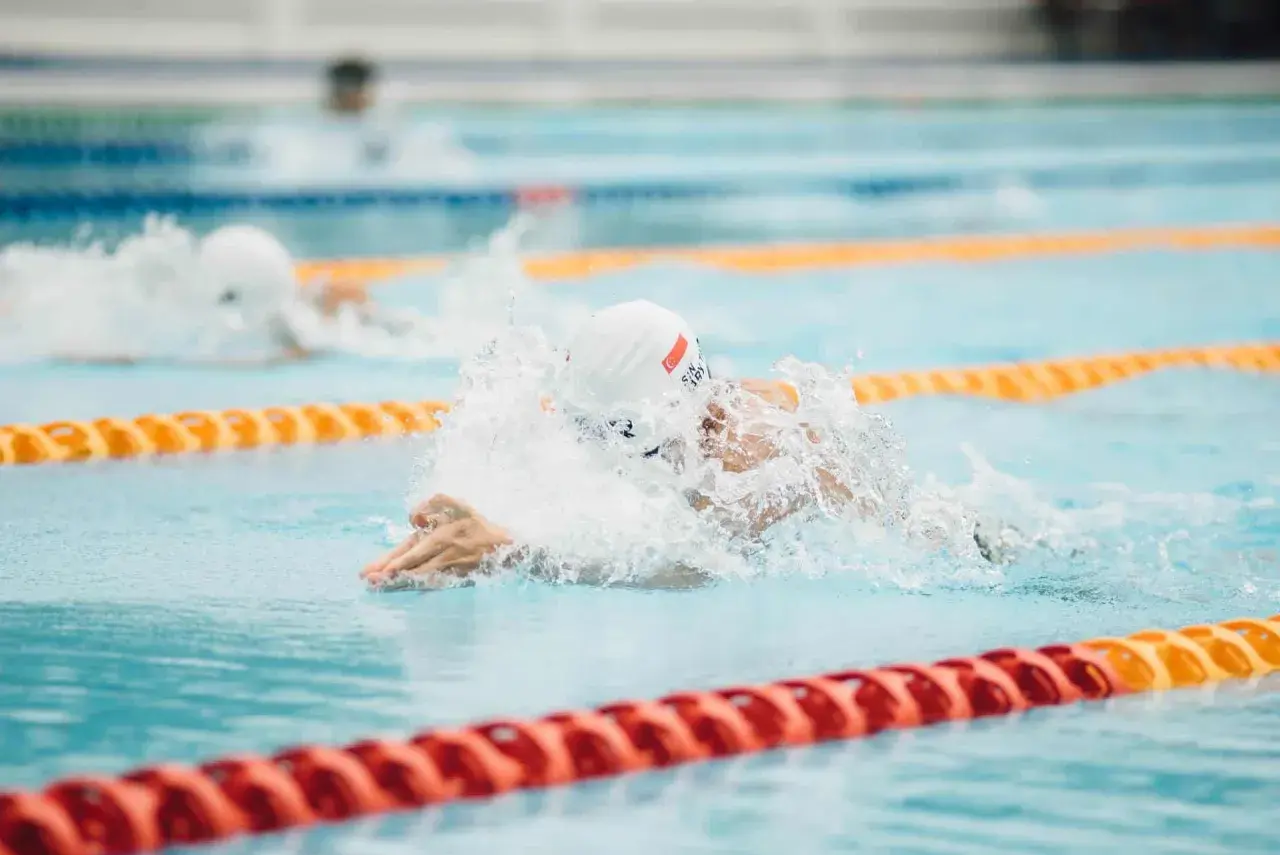
Good swimmer posture is less about holding a stiff shape and more about managing drag. In the water, small changes in head angle, hip height, or chest tension can decide whether your stroke feels smooth or labour-intensive. In this article I break down the body positions that matter most, how they change across the main strokes, and the drills I would use to make them stick.
The essentials at a glance
- A strong body line keeps the head, hips, and feet close to the surface without unnecessary tension.
- Head position is usually the first thing I check, because a lifted gaze often drops the hips.
- Freestyle and backstroke reward a flatter, more streamlined line, while breaststroke and butterfly need timed movement rather than a fixed flat shape.
- Most posture problems come from breathing faults, overkicking, or holding too much tension in the neck and lower back.
- Short drills and simple dryland work usually do more than trying to muscle through the issue.
What a strong body line looks like in the water
I start with three checkpoints: head, hips, and heels. The head stays neutral, the ribcage does not flare, the hips ride near the surface, and the legs trail behind rather than hanging under the torso. In freestyle and backstroke, that line is close to horizontal; in breaststroke and butterfly, it still needs to feel long, even though the body moves more.
The mistake many swimmers make is confusing length with tension. A good line feels stretched, but not rigid. The neck stays soft, the shoulders are settled, and the core supports the shape without locking it. That is the practical version of swimmer posture: long, calm, and minimally disruptive to the water.
Once you can recognise that line, the next question is why it matters so much.
Why alignment changes speed, breathing and effort
Water punishes extra surface area. If the head lifts, the hips usually sink, and the legs then have to work harder just to keep the body level. That creates drag, but it also changes rhythm: breathing gets rushed, the kick gets bigger, and the stroke starts to feel heavy even when your fitness is fine.
In coaching terms, I think of it as a chain reaction. A small head fault becomes a trunk fault, then a kick fault, then a fatigue problem. The swimmer thinks they need more power, but often they need less disruption.
- Less drag means the same effort covers more distance.
- Cleaner breathing means you can stay calmer under pace.
- Better timing means the arms, trunk, and kick work as one unit instead of fighting each other.
This is also why posture gets worse late in a set. When the body tires, the neck tightens, the lower back arches, and the hips start to trail. The stroke does not suddenly break; the alignment slowly leaks away. That leads straight into the stroke-specific differences that matter most.
How the main strokes ask for different positions
There is no single perfect shape for every stroke. The goal is not to copy one ideal silhouette, but to keep the body efficient in the position that each stroke demands.| Stroke | Body-position priority | Main cue | Common mistake |
|---|---|---|---|
| Freestyle / front crawl | Long, narrow, slightly rotating line | Head still, eyes down and slightly forward | Lifting to breathe and letting the hips drop |
| Backstroke | Flat, high, and relaxed through the chest | Hips near the surface, chin quiet | Pushing the chin up and arching the lower back |
| Breaststroke | Compact during the breath, long during the glide | Lift just enough to breathe, then lengthen | Sitting up too early and losing forward travel |
| Butterfly | Wave-driven body line with controlled rhythm | Chest leads, hips follow | Throwing the shoulders up and forcing the kick |
Freestyle and backstroke reward stillness and length; breaststroke and butterfly reward timing and rhythm. If you try to force a flat freestyle shape into breaststroke, the stroke feels blocked. If you over-lift in butterfly, the wave travels the wrong way and the hips disappear. The useful question is not “What should I look like?” but “What position helps this stroke move with less resistance?”
That also explains why the same swimmer can look tidy in one stroke and messy in another. The fix is usually stroke-specific, not a generic fitness problem.
The posture mistakes I see most often
When I review swimmers from the side, the same faults keep appearing. Most of them start small, but they compound quickly once speed or fatigue increases.
- Looking forward in freestyle. This is the classic hip-drop trigger. A neutral gaze keeps the spine long and the body higher in the water.
- Overarching the lower back. Swimmers often do this to feel “up” in the water, but it usually creates more drag and a tight lumbar feel.
- Breathing by lifting the whole head. The breath should come from a controlled rotation or lift, not a dramatic break in the body line.
- Letting the kick turn into a rescue action. A frantic kick often means the upper body has lost balance, so the legs are trying to save the shape.
- Clenching the shoulders and hands. Extra tension in the upper body makes the stroke shorter and reduces the smooth transfer of force.
- Dropping the hips under fatigue. If technique is clean for the first half of the set and collapses later, endurance of posture is the weak link, not motivation.
If I had to prioritise one correction, it would be head position first, then ribcage, then kick. That sequence solves more problems than attacking the kick alone. From there, the best progress usually comes from short, well-chosen drills rather than endless yardage.
Drills that make better alignment feel natural
I prefer short doses here: a few focused lengths, clean execution, then a reset. In a 25m pool, that might mean 4 x 25m or 6 x 25m per drill, not a long sloppy set where the movement pattern falls apart.
- Streamline push-offs. Push off in a tight line with arms locked overhead, ears squeezed between the upper arms, core braced, and toes pointed. Hold the line for 3 to 5 seconds before starting the stroke.
- Side-kick balance. Lie on one side with one arm extended and the other at the hip. This teaches you to keep the head calm while the body rotates around a stable line.
- 6-kick switch. Six kicks on one side, then a smooth roll to the other side. It is one of the best freestyle drills for learning rotation without a head lift.
- Backstroke kick with a quiet face. Keep the chin relaxed and the chest open while the kick stays close to the surface. If the lower back arches hard, the line is already leaking.
- Scull and glide. Use the hands to feel pressure in the water, then stretch back into a long position. This helps swimmers understand that support comes from balance, not tension.
These drills work best when they feed directly back into full stroke. I want the swimmer to notice one thing from the drill and hold onto it for the next full length, otherwise the skill stays isolated and never becomes normal swimming. Once that link is in place, dryland work becomes much more valuable.
Dryland work that supports a cleaner line
Posture in the pool is rarely only a pool issue. Tight thoracic spine movement, stiff hip flexors, weak glutes, and poor trunk endurance all show up in the water as a broken line. I am not looking for a bodybuilder’s core here; I am looking for the ability to keep shape while breathing, rotating, and kicking.
- Dead bug. Helps the trunk stay quiet while the arms and legs move.
- Glute bridge. Supports hip height and reduces the urge to overarch the lower back.
- Thoracic rotations. Improves upper-back mobility, which is useful for freestyle breathing and backstroke recovery.
- Wall slides. Encourages better shoulder positioning without forcing the chest to flare.
- Hip flexor stretch. Useful for swimmers who spend too much time sitting and then feel compressed in the pool.
A simple 5- to 8-minute routine before training is enough to make a difference if you do it consistently. Two rounds of 6 to 8 reps for each drill is usually plenty. The point is not to exhaust yourself; it is to make the right position easier to hold when you get in the water.
That brings me to the final check I use before I call a swimmer’s body line genuinely improved.
The checks I use before I call the line good enough
I like to test posture under ordinary training conditions, not just on a fresh sprint or a perfect single length. If the line looks good for the first 10m but collapses by the turn, it is not stable yet. If the swimmer can keep the hips up, the head quiet, and the breathing controlled through the middle of a set, that is a much better sign.
Video is useful here, especially from the side. Even a short clip from a phone at poolside will show whether the head is leading the body, whether the hips are staying close to the surface, and whether the legs are simply trailing behind or acting like anchors. I also watch what happens after a breath: if the body snaps out of shape every time air comes in, the breath pattern needs work more than the stroke itself.
When swimmer posture improves, the whole stroke becomes quieter: breathing settles, the kick stops fighting the body line, and pace feels easier to maintain. That is the change worth chasing, not a perfect pose.
