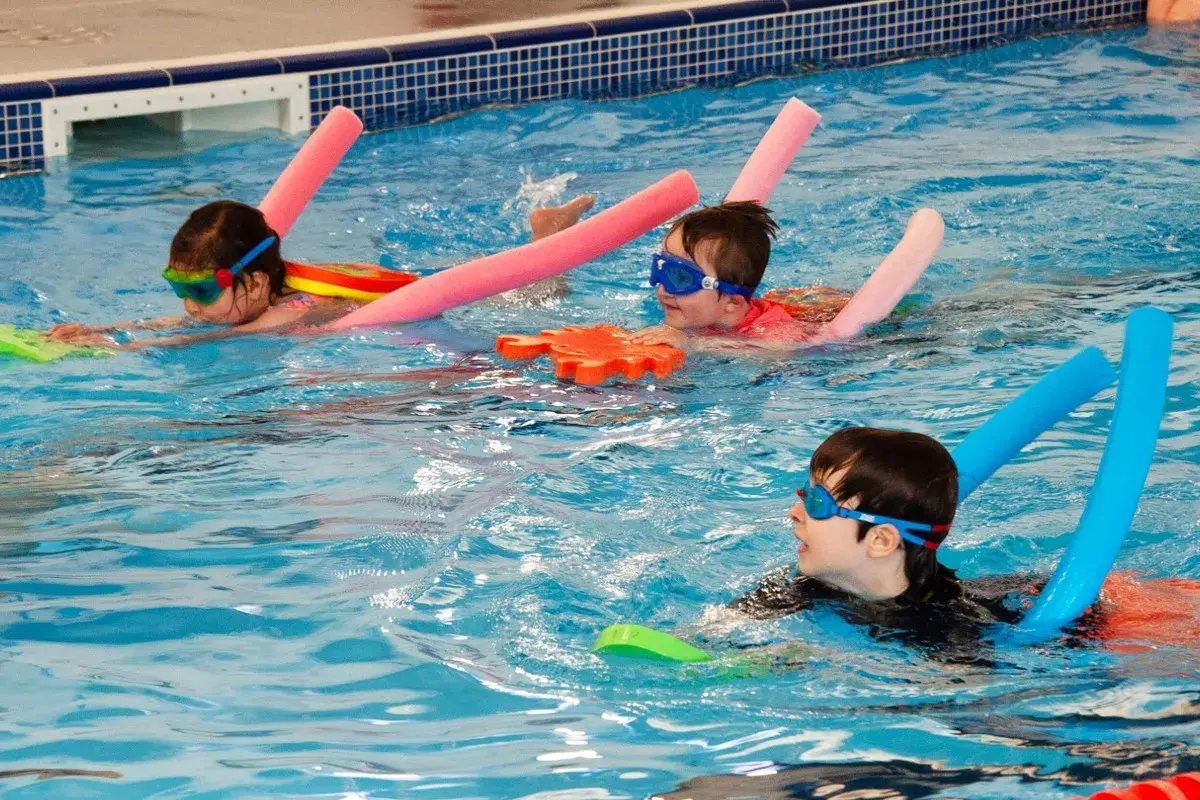
A good swim lesson should do more than keep someone busy in the pool. It should build water confidence, teach safe movement, and leave the swimmer with one clear next step. In the UK, the strongest programmes do this through structured stages, patient instructors, and regular feedback rather than big promises.
The main decisions to get right before you book
- Match the class to the swimmer's age, confidence, and current ability, not just the marketing label.
- Look for an instructor with a recognised qualification, current safety training, and a class size that allows real attention.
- Expect most children's lessons to run for about 30 minutes, while private coaching is usually longer and more expensive.
- Measure progress by calmness, breathing, floating, and control, not only by how far someone can swim.
- For nervous beginners, the first win is comfort and control, not perfect stroke technique.

What a well-run session should feel like
When I watch a good class, I look for rhythm. There is a short warm-up, one clear focus, a few repetitions, and feedback that is simple enough to act on immediately. Good teachers spend less time talking at the side of the pool and more time helping the swimmer feel what changed: a better body position, a calmer breath, a steadier kick.
For beginners, the session should feel safe and uncluttered. The swimmer should not be rushed into formal strokes before they can float, blow bubbles, recover from a brief submersion, and move comfortably from one side of the pool to the other. In most UK pools, children's classes run for about 30 minutes, including register and handover, so the lesson has to stay focused if it is going to be useful.
For stronger swimmers, the coach should still use clear objectives, because technique without structure usually stalls. In my view, the best sessions leave the swimmer with one thing to practise before the next visit. That is the difference between activity and instruction, and it leads naturally into the question of who is actually teaching.
How to judge the instructor and the pool
Qualifications matter, but not in a box-ticking way. Across the UK, providers often follow Swim England, STA, or their own progression systems, but the teaching markers I care about are the same. Does the instructor explain clearly, correct calmly, and adapt when a swimmer is anxious or confused?
A strong pool environment helps the coach do the job properly. I prefer facilities with sensible water depth for the class, clean sightlines, warm water for younger children, and enough deck space that families are not squeezed through a crowded handover. For children's lessons, ask whether staff have current safeguarding checks and first-aid cover, and whether the class ratio is tight enough for the teacher to actually watch every swimmer.
- Good signs: small groups, direct feedback, clear stage goals, and teachers who can explain the reason behind a correction.
- Mixed signs: classes that look busy but offer little individual attention, or lessons where the same drill repeats every week with no visible adjustment.
- Red flags: a teacher who ignores fear, relies on shouting across the pool, or cannot tell you what progress should look like next month.
Once the teaching environment is right, the real choice becomes format, because the best structure for a child, an adult beginner, and a nervous non-swimmer is not the same.
Group, private or intensive lessons
Each format solves a different problem. Group lessons are usually the best value if the swimmer needs steady progression and a bit of social confidence. Private coaching is more expensive, but it is the fastest way to fix specific issues such as breathing, body position, panic, or inefficient kicking. Intensive courses compress repetition into a short block, which can be useful when a child needs momentum or when a family wants quicker gains during a school break.
| Format | Best for | Main advantage | Main limitation | Typical UK price |
|---|---|---|---|---|
| Group lessons | Children and steady beginners | Lower cost, routine, peer motivation | Less individual attention | Often around £10-£15 per class |
| Private coaching | Nervous swimmers, adults, technique fixes | Fast feedback, full focus on one swimmer | Higher cost | Commonly about £35-£70+ per hour |
| Intensive blocks | Quick confidence or holiday progress | Frequent repetition in a short period | Can fade if practice stops | Varies widely by pool and duration |
I usually tell people to choose the format that removes the biggest barrier first. If cost is the barrier, group lessons make sense. If fear is the barrier, private coaching can be worth the premium. If consistency is the barrier, a short intensive block can restart momentum. That leads into another issue many families underestimate: different swimmers need different first milestones.
What children, adults and nervous beginners need first
The first few weeks should be matched to the swimmer, not to an abstract syllabus. A child who is happy in shallow water but avoids putting their face in will need different work from an adult who can float but panics when their feet lose contact with the floor.
Children
For children, the best programmes build confidence before speed. Swim England's stage-based framework is useful here because it rewards practical water competence rather than just distance. In plain terms, I want to see safe entries, controlled breathing, floating, rotation, and the ability to recover if something goes wrong. For younger children, parent-and-child classes are often more about water comfort and routine than stroke mastery, which is exactly how they should be approached.Adults
Adult swimmers usually need less play and more precision. Many adults are technically capable of moving through water but waste energy by lifting the head, holding the breath, or kicking too hard. A good adult coach works on posture, exhalation, and relaxed rhythm first. That sounds basic, but it is often the exact correction that unlocks progress after years of awkward swimming.Nervous beginners
For nervous beginners, confidence comes before technique. I would rather see a swimmer comfortable with stepping in, breathing out underwater, and floating on their back than forcing early front-crawl mechanics. Fear changes the body, and a tense body learns poorly. The right instructor understands that and builds control in small, repeatable steps.When these first goals are chosen well, progress becomes easier to measure, which is the next thing I always check.
How progress should be measured, not guessed
Good lessons create visible change within a few sessions, even if the swimmer is still very much a beginner. The signs are often subtle: less grabbing at the wall, a calmer face in the water, smoother breathing, or the ability to stay balanced while floating without panic.
- After 2-3 lessons: the swimmer should understand the routine, the safety rules, and the core focus of the class.
- After 4-6 lessons: you should normally see at least one technique improvement, such as better body position, more controlled breathing, or a steadier kick.
- After a term or block: the swimmer should be ready for the next stage, a harder drill, or a more demanding distance.
The red flags are just as useful. If the swimmer looks identical after several weeks, the class may be too large, the teaching too generic, or the goals too vague. Another warning sign is over-correction: too many technical cues at once can freeze a beginner and make the water feel harder than it is. Swim England also advises not stopping once a child can just about swim, because competence and safety grow with continued practice. Measurable progress is also tied to price, because value is not just about what a class costs but what it produces.
What UK families usually pay and what drives the price
Prices vary more than many parents expect. Community pool group lessons are often the lowest-cost option, while private coaching and premium city venues can climb quickly. In practical terms, I would treat the following as a realistic planning range rather than a fixed rule:
- Group lessons: commonly around £10-£15 per session, sometimes less in subsidised leisure centres.
- Private lessons: often around £35-£70+ per hour, with London and specialist coaching sometimes higher.
- Intensive courses: priced by block, so the headline number can look higher even when the per-lesson cost is reasonable.
The biggest price drivers are teacher-to-swimmer ratio, pool location, session length, and whether the lesson is delivered in a standard council pool or a more premium setting. A 30-minute class with a small group can be excellent value if the teacher is attentive and the progression is clear. A cheaper session is not automatically better value if the swimmer spends most of the time waiting. That is why the final decision should always come back to fit, not just the headline fee.
The details that separate a useful block from a wasted one
When I help people choose lessons, I usually tell them to look beyond the brochure. Ask how the class is organised, how progress is recorded, and what happens if the swimmer is anxious or falls behind. Bring the right kit, arrive early enough to avoid a rushed start, and keep the first goal simple: one comfort win, one technique win, and one reason to come back.
If you want the most value from the next session, judge it by whether the swimmer leaves calmer, clearer, and slightly more capable than when they arrived. That is the real test of a well-run swimming lesson, and it is the one I would trust every time.