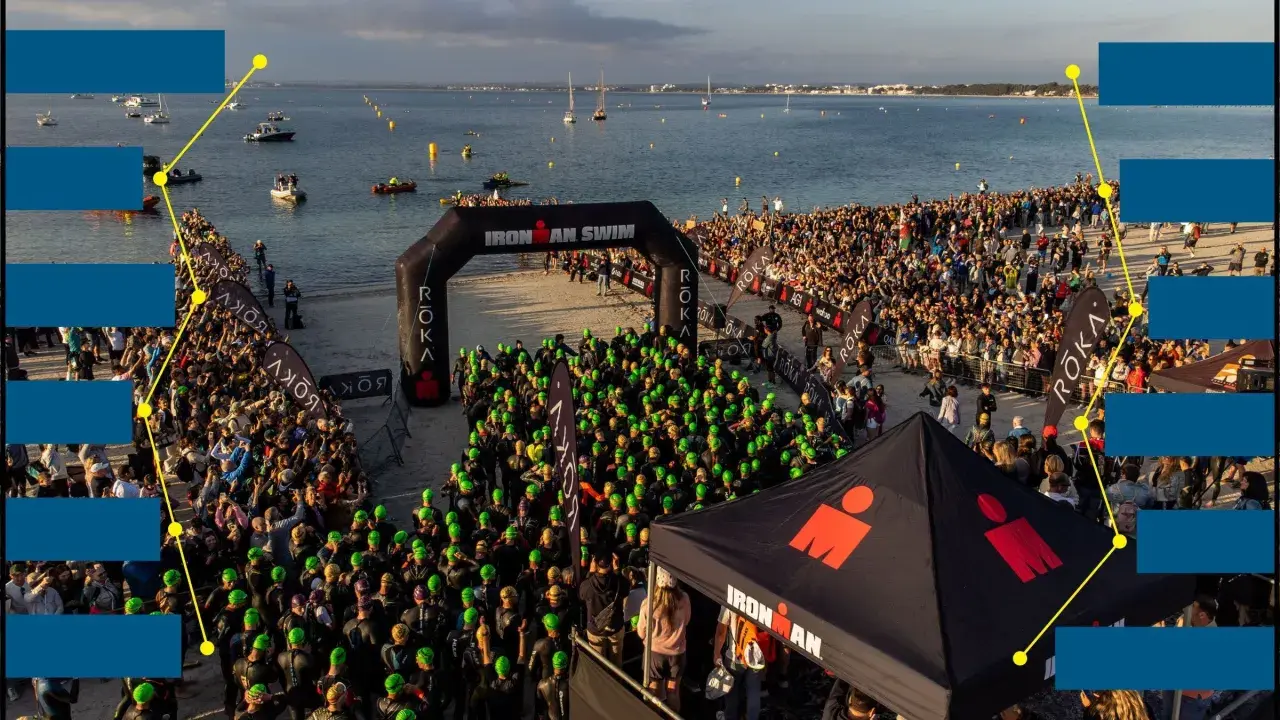
What people often remember as 70.3 Vineman is really a lesson in how venue, current, and pacing shape a half-distance triathlon. The race belongs to the same 1.2-mile swim, 56-mile bike, 13.1-mile run format that defines every IRONMAN 70.3, but its Sonoma County identity made it feel different from a generic half. In this guide I break down what the event was, what the course asked from athletes, and what matters if you are planning a similar California 70.3 in 2026.
The key things to know before you build a race plan
- This is a half-distance triathlon, so the pacing problem is more important than raw speed.
- The original Vineman identity came from the Russian River and wine-country roads in Sonoma County.
- Open-water swim control and steady bike execution matter more than a hard first hour.
- In 2026, the most relevant California comparisons are the current Northern California and Santa Cruz 70.3 events.
- The official Northern California registration page lists an all-in individual entry price of $515.01, though inventory-based pricing can change.
The real question is not just what the race looked like, but how that course profile should change the way you train and choose your next start line.
What this race really is
At its core, the event sits inside the standard half-iron format: a 1.2-mile swim, a 56-mile bike, and a 13.1-mile run. According to IRONMAN, that is the defining shape of every 70.3 race, and that matters because the same distance can feel completely different depending on water conditions, terrain, and heat.
The Sonoma County version built its reputation on atmosphere as much as difficulty. Triathlete reported that when Ironman acquired the event, the 70.3 course started at Johnson's Beach in Guerneville and finished in Windsor, which already tells you a lot about the race: it was point-to-point, scenic, and not the kind of course where you could settle into autopilot. That combination is why people still remember the old brand so clearly. Once you understand that, the next step is to look at what the course demanded in practice.

How the Sonoma County course shaped racing
The course was memorable because it rewarded control more than aggression. A river start changes the swim from a clean lane-style effort into something more tactical, and a wine-country bike route changes the day from simple wattage chasing into long, patient pacing. Athletes who handled the early chaos well usually had a better second half than athletes who tried to force the issue too early.
| Leg | What it demanded | What usually went wrong | What I would train for |
|---|---|---|---|
| Swim | Fast starts, clean sighting, and comfort in open water | Racing the first 200 meters too hard and losing rhythm | Open-water starts, sighting every few strokes, and relaxed bilateral breathing |
| Bike | Steady power on a course that is scenic but not trivial | Overbiking the early miles because the scenery makes the effort feel easier than it is | Long rides with race-pace blocks and disciplined fueling |
| Run | Controlled execution after the bike | Trying to “make up time” in the first 5K | Brick runs, tempo work off the bike, and a conservative first half |
If I were coaching someone for a course like this, I would spend as much time on restraint as I would on fitness. That is the part many strong athletes miss. The landscape invites big efforts, but the clock usually rewards the athlete who stays calm enough to keep everything under control. That shifts the focus directly to swim skill, bike discipline, and run durability.
The swim, bike, and run priorities that mattered most
For a race with a meaningful open-water component, the swim is not just about fitness. It is about starting cleanly, holding form under contact, and exiting the water with enough composure to execute the rest of the day. The athletes who handled the first leg well usually arrived in T1 less stressed, and that small advantage compounded for the next five hours.
The swim
I would treat the swim as a skills problem first and a conditioning problem second. A few race-specific habits matter a lot: enter crowded water without panicking, sight regularly instead of constantly lifting your head, and practice drafting so you can save energy without depending on other swimmers. If the water is wetsuit-legal, the suit should feel like part of your stroke, not a rental item you only wear on race day.
The bike
The bike is where half-distance races get won or wasted. A common mistake is leaving transition feeling fresh and then spending that freshness too early. I prefer to see athletes cap the effort hard enough to protect the run, then fuel on a schedule instead of reacting to hunger. For many age-group athletes, that means practicing 60 to 90 grams of carbohydrate per hour on the bike, adjusted for gut tolerance, sweat rate, and race intensity. It is much easier to execute that plan in training than to invent it on the fly.
Read Also: Triathlon Distances Explained - Find Your Perfect Race!
The run
The run after a demanding bike is rarely about bravery. It is about discipline, hydration, and knowing that the first few miles are a setup, not a verdict. If an athlete blows the first 20 minutes because the pace feels comfortable, the damage usually shows up late. A better pattern is a controlled opening, regular intake of fluids and calories, and a final 5K that is earned rather than forced.
Those priorities sound simple, but they only work if you arrive on race day with the right logistics already solved, which is where many otherwise prepared athletes lose free time and energy.
Race-day logistics that save time and energy
Point-to-point races and river starts make logistics matter more than people expect. You need to know where your gear goes, how long the walk or shuttle will be, and what you will do if the morning feels colder than expected. I always tell athletes to prepare for the boring problems before they become expensive ones.
- Pack your swim gear so goggles, cap, wetsuit, and timing chip are easy to reach, not buried under bike items.
- Label bottles and nutrition clearly so you do not waste mental energy checking them twice.
- Bring a backup pair of goggles and a simple race-morning warm layer.
- Practice your T1 sequence once with the exact gear you plan to race in, especially if you are using a wetsuit.
- Set your fueling order before the start so you are not guessing when the bike intensity rises.
These details do not sound glamorous, but they keep the race from turning into a series of avoidable decisions. Once the logistics are tight, the more interesting question becomes which current California race best matches that old Sonoma County feel.
What the current California 70.3 options offer in 2026
As of 2026, the practical comparison is not a direct Sonoma County Vineman listing. The California half-distance options that matter most are the current Northern California race in Redding and the Santa Cruz event. They solve different problems for different athletes, and choosing between them depends on what part of the old Vineman appeal you actually want to recreate.
| Race | Course feel | Best for | My read |
|---|---|---|---|
| IRONMAN 70.3 Northern California | Lake swim, rolling bike, flat run | Athletes chasing a cleaner PR-style day and predictable pacing | The official registration page lists an all-in individual entry price of $515.01, and the race also offers qualifying slots to the 2027 IRONMAN 70.3 World Championship. |
| IRONMAN 70.3 Santa Cruz | Ocean swim around the wharf, rolling Highway 1 bike, flat coastal run | Athletes who want a bigger coastal atmosphere and do not mind the ocean element | More scenic and more exposed, which can be great if you like variety, but it is less forgiving when the water is messy. |
If what you loved about the old race was the wine-country identity, no current option copies it perfectly. If what you want is the smartest contemporary substitute, Northern California gives you the cleaner speed profile, while Santa Cruz gives you the more dramatic environment. That choice leads naturally into the part most athletes can control anyway: the training block itself.
How I would train for a Vineman-style half in 2026
If I were building toward this kind of race now, I would not chase volume for its own sake. I would build around specific sessions that make the race feel familiar before race week arrives. The final 8 to 10 weeks are where the course-specific work pays off, especially if your background is stronger in the pool than on the bike or stronger on the bike than in open water.
- Swim three times per week: one technique session, one open-water or sighting-focused session, and one endurance set with longer repeats.
- Ride long once per week, then add a brick run that starts at controlled pace and finishes at steady effort.
- Run twice with intent: one easy aerobic run and one session that teaches you to hold form when slightly fatigued.
- Practice race fueling on at least two long rides so your stomach learns the plan before race day.
- Rehearse open-water skills, especially starts, turns, and breathing under pressure, because that is where a river or lake swim can feel messy fast.
- Keep one small checklist for race week so you are not improvising gear decisions the night before.
The best way to approach the old Vineman model is to treat it as a template: swim with calm skill, bike with restraint, and run with patience. That formula still works in 2026, whether you are targeting a current California 70.3 or using the historic Sonoma County course as the standard you want to match.