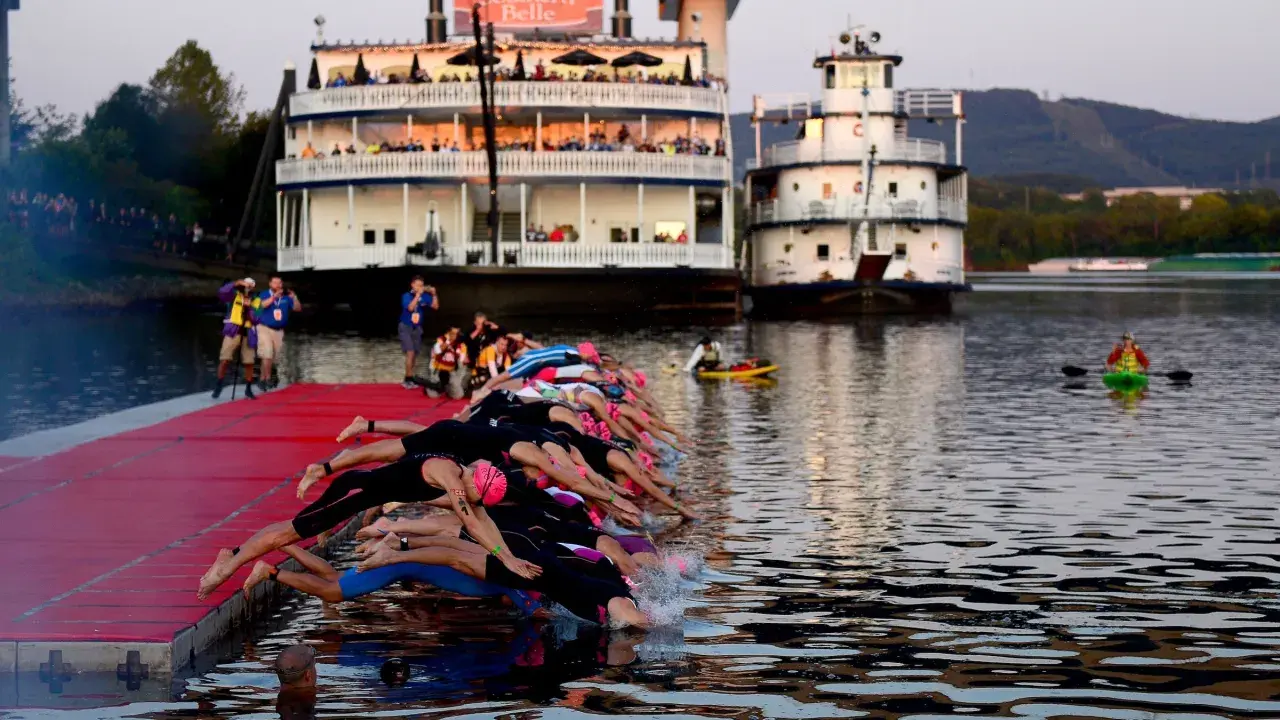
IRONMAN 70.3 Chattanooga is one of those races that looks friendly on paper and then quietly rewards disciplined pacing. The downstream Tennessee River swim, rolling bike through north Georgia, and downtown run make it a strong fit for athletes who want a scenic course with real execution demands. In this guide, I break down what the event feels like, how race week works, and what I would focus on in training.
The race at a glance
- The swim is 1.4 miles in the Tennessee River, with a rolling start and a downstream finish at Ross's Landing.
- The bike covers 56 miles, including 11 miles south of town and a rolling loop in north Georgia through the Chickamauga area.
- The run is 13.1 miles with two loops through downtown Chattanooga, the Riverwalk, North Shore, and Riverfront Parkway.
- For 2026, race weekend runs May 15-17, with age-group racing starting Sunday, May 17 at 7:05 a.m.
- The venue is compact enough for a smooth race week, but the course still rewards careful pacing and fueling.
- In 2026, athletes are also racing for World Championship slots in Nice, France.
Why this race keeps attracting first-timers and experienced athletes
What makes the Chattanooga course interesting is the balance. It is approachable enough for a first 70.3, but it is not a free ride. I like races like this because they expose pacing mistakes without feeling unnecessarily punishing, which is exactly what makes them valuable for athletes who want to improve.
The swim gives you a fast start, the bike asks for patience on rolling terrain, and the run brings you back into the city where support stays visible almost the entire day. That combination is why the race works for two very different groups: athletes chasing a personal best and athletes who simply want a well-run, memorable experience. The event hub at Ross's Landing also keeps much of the race within a compact downtown core, which reduces the usual triathlon chaos.
From a coaching perspective, I would describe it as a race that rewards structure more than heroics. If you can stay calm early, Chattanooga gives you room to race late. That is the part most athletes feel after the finish, and it leads naturally into the course details.
How the swim, bike, and run actually feel on course
The official course profile is not complicated, but the details matter. The swim is downstream, the bike is rolling rather than flat, and the run has enough turns and subtle elevation changes to punish sloppy pacing. I would prepare for the course as a steady endurance day, not as a place to force speed.
| Leg | What it looks like | What it rewards |
|---|---|---|
| Swim | 1.4 miles down the Tennessee River, starting upriver and finishing at Ross's Landing | Controlled effort, clean body position, and calm breathing |
| Bike | 56 miles total, with 11 miles south of town and a rolling loop through north Georgia and historic Chickamauga | Even power, disciplined climbing, and smart fueling |
| Run | 13.1 miles in two loops through downtown, the Riverwalk, North Shore, Veterans Bridge, and Riverfront Parkway | Rhythm, patience, and heat management |
The swim is the easiest place to go faster than you should. The river start and downstream current can make the effort feel deceptively smooth, especially if you are a strong pool swimmer who tends to overreach in open water. The average water temperature is usually in the low 70s Fahrenheit, so the bigger risk is not cold shock, it is starting too hard because the first few minutes feel easy.
The published course profile also puts the air temperature in a useful range for planning: an average high around 80 F and an average low around 64 F. In practice, that usually means a cool morning that can warm up meaningfully by midday, so I would plan clothing, hydration, and pace with that swing in mind.
The bike is where the day can quietly change. A rolling course with good pavement still demands respect, and the north Georgia section is the place to stay patient. I would not chase every rise. I would ride the rollers as if they were part of one long tempo effort, because that is exactly how they will feel by mile 40 if you waste matches early.
The run brings the race back into the city and keeps the atmosphere lively, but it also asks you to hold form after a full day of work. In 2026, the Walnut Street Bridge section is being detoured because of construction, so I would study the updated run map rather than rely on old footage or older race reports. That small detail can matter when you are trying to stay mentally organized on race morning.
When you understand the shape of each leg, the rest of race week becomes much easier to plan.
Race-week logistics that keep the day smooth
Chattanooga is one of those events where the practical details are worth more than another hard workout. The athlete village, check-in, briefings, and transition access are all centered around Ross's Landing, which keeps the race week compact but also means you should not leave anything to the last minute.
For 2026, athlete check-in opens on Friday, May 15, and continues on Saturday, May 16. Mandatory bike check-in is on Saturday as well, and race morning transition opens from 4:30 a.m. to 6:15 a.m. The age-group race starts at 7:05 a.m. on Sunday, May 17, after the pro fields go off at 6:50 a.m. and 6:55 a.m. If I were racing, I would plan to be in town early enough to remove all stress from those windows rather than trying to squeeze travel into them.
There is also a shuttle from transition to the swim start, which is a small but important detail if you are used to point-to-point logistics. You do not want to be inventing your morning routine on the spot. I would treat the entire race-week schedule like part of the event, not an administrative side note.
Two other practical points matter. Athletes must be 18 on race day, and if your USA Triathlon membership is not valid through the race date, you will need to buy one. Those are the kinds of details that are easy to overlook when you are focused on training, but they are exactly the kind of details that can create avoidable problems. Once those are handled, the real work is making the course fit your fitness.
How I would train for this course specifically
There is no magic Chattanooga workout, but there is a better way to prepare than simply logging more miles. I would build around controlled swim starts, rolling-bike stamina, and run durability off the bike, then rehearse fueling under race-like conditions. That combination matches the course much better than a generic endurance block.
Swim
I would prioritize open-water starts, straight-line swimming, and settling into pace after a short surge. The downstream river format is a gift only if you do not burn your best work in the first five minutes. Practice breathing both sides if you can, because river starts and crowded packs can pull your line a little off center even when the water itself feels fast.
Bike
For the bike, I would spend time on rolling terrain and include longer tempo intervals that force you to hold power without spiking. The goal is not to attack every hill. It is to keep your output smooth so the run starts with a usable set of legs. If you train indoors, make at least one long session feel like repeated low-variance efforts rather than a wide power range. Chattanooga punishes riders who keep reacting to every rise.
Run
The run should be trained as a controlled second half of the race, not as a standalone half marathon. I like brick sessions that begin with a steady bike and then move into a slightly conservative first 3 to 4 miles of running. That teaches the discipline most athletes need in downtown races: settle early, stay patient through the middle, then build only when your stride is truly there.
Read Also: Lucy Charles-Barclay - Swim Talent to Triathlon Dominance
Fueling
The official on-course fueling in 2026 includes Maurten gels and solids plus PH 1000 electrolyte drink, so you should know whether you plan to use that or bring your own. I would not improvise race nutrition here. A course that feels manageable in the first hour can still expose a bad plan by the second half of the bike, and it tends to show up most painfully on the run. A practical rule I use is simple: rehearse the exact carbs, fluids, and sodium you expect to tolerate on race day, then leave almost nothing to guesswork.
Once training is tied to the actual demands of the course, the most common mistakes become easier to avoid.
The mistakes that usually cost time here
Most bad Chattanooga races are not caused by a single blow-up. They come from a handful of small decisions that stack up. I see the same pattern over and over: athletes race the swim instead of the whole day, then spend the bike and run paying for that impatience.
- Starting the swim too hard because the downstream current makes the effort feel easier than it is.
- Chasing every roller on the bike instead of keeping power even and letting others surge away.
- Underestimating the run because downtown support makes the first miles feel deceptively smooth.
- Ignoring the 2026 run detour and mentally rehearsing an outdated bridge crossing.
- Trying a new fueling plan on race day instead of using something already tested in long training.
- Assuming the weather will stay mild because the morning starts cool, even though the day can warm up fast.
The deeper mistake behind most of those errors is emotional, not physical. Athletes often feel better early in this race than they expected, and that makes them overcommit. The more disciplined move is usually the less glamorous one: swim clean, ride steady, and keep the run under control until you have a real reason to push. That mindset pays off especially well in a city finish, which is the last thing to think about before wrapping this up.
What the finish in Chattanooga is really worth
I think the finish is part of why this race stays popular. The action stays close to the riverfront, the city is easy to navigate, and the crowd support feels genuine rather than staged. For spectators, that matters. For athletes, it matters even more, because a finish line that feels alive can carry you through the back half of a long day.
If you are racing in 2026, the event also matters as a qualification opportunity, with World Championship slots available for Nice. That does not change how you should pace the race, but it does raise the value of doing the small things well. A race like this rarely rewards chaos. It rewards repeatable habits, honest pacing, and a fueling plan you actually trust.
If you are bringing family or friends, I would keep them downtown near Ross's Landing, the riverwalk, or one of the bridges instead of trying to chase the course all morning. They will see more, stress less, and still get the full race atmosphere. My final advice is simple: treat the downstream swim as free speed, treat the bike as the place where the race is won or lost, and treat the downtown run as the test of whether your pacing was real.