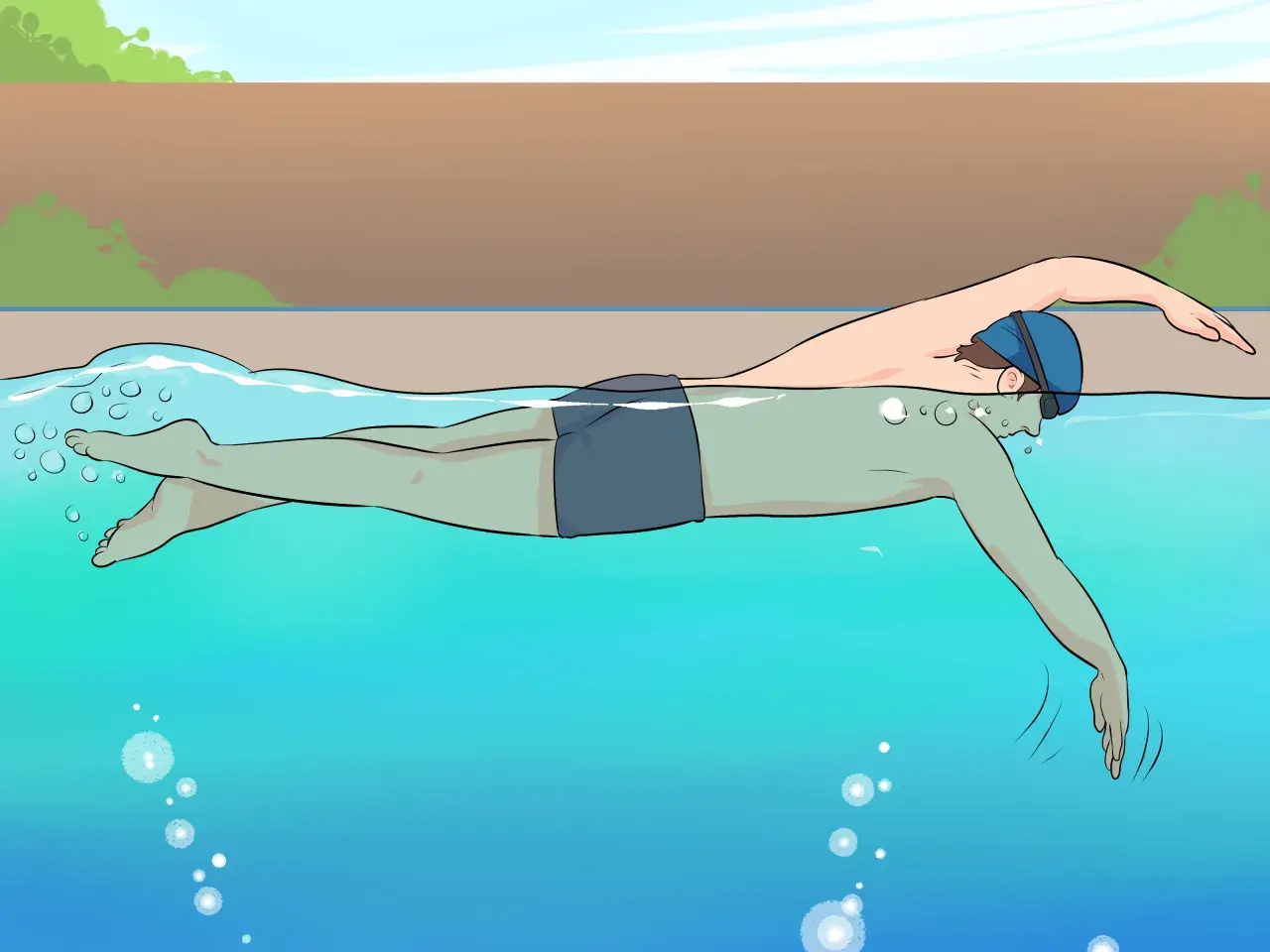
Adult swimmers usually do not need more motivation; they need a calmer path, a better sequence, and an instructor who understands how learning feels from the inside. This article breaks down what adult beginner lessons actually cover, how to choose the right format and teacher, what the first classes feel like, what to bring, and how much programs typically cost in the United States. I also focus on the parts that make the biggest difference when confidence in the water is still low.
What matters most before you enroll
- Adult beginner classes should start with breathing, floating, and water comfort before stroke mechanics.
- The best format depends on your confidence level: private lessons move fastest, group lessons usually cost less, and semi-private lessons sit in the middle.
- A strong instructor for adults is patient, safety-minded, and able to explain one skill in small steps.
- Most beginners improve faster when they repeat short, simple drills instead of trying to “swim laps” too early.
- In the U.S., prices vary a lot, but low-cost community options and short lesson packages are both common.
- If fear is part of the problem, the right pace matters more than how quickly you learn a stroke.
What beginner swim lessons for adults actually cover
The first goal is not speed. It is control. In a solid beginner class, the early lessons usually focus on getting comfortable in the water, exhaling without panic, putting the face in the water, floating on the front and back, and moving a short distance with support.That order matters more than most people expect. I have seen adults become discouraged when they are pushed into full freestyle before they can relax during a simple glide. A good lesson plan works the other way around: balance, breathing, floating, then propulsion. If an instructor skips the foundation, the student often spends more energy fighting the water than learning from it.
CDC data still shows why that foundation is worth taking seriously: drowning remains a major public-safety issue in the United States, with more than 4,000 unintentional drowning deaths each year. That does not mean every beginner is at immediate risk, but it does explain why basic water competence is treated as a real life skill, not a hobby skill.In practice, the earliest milestones are small on purpose. A beginner may spend one session just learning to blow bubbles and stand back up calmly, then another session learning to float with support, and only later start combining arm and leg movement. That pace is not a sign of slow teaching; it is usually a sign of good teaching. Once that foundation is in place, the next step is choosing the right instructor and setting.

How I choose the right instructor and lesson format
For adults, the teacher matters as much as the curriculum. I look for someone who can coach without rushing, who explains why a movement works, and who does not act surprised when a student is nervous. Adult beginners need more than enthusiasm; they need clear structure.
| Format | Best for | Pace | Typical trade-off |
|---|---|---|---|
| Group lessons | Adults who want lower cost and less pressure | Moderate | Less individual feedback, but often easier to normalize nerves |
| Semi-private lessons | Adults who want attention without full private pricing | Moderate to fast | More personalized than a group, but still shared time |
| Private lessons | Adults with strong fear, a tight timeline, or technique-specific needs | Fastest | Highest cost, but the most flexible pacing |
What a good instructor does
- Breaks each skill into one clear cue at a time.
- Lets you repeat a drill until it feels predictable.
- Balances safety talk with actual time in the water.
- Corrects body position without making the student feel rushed or embarrassed.
- Adjusts the lesson if the student is anxious, tired, or overwhelmed.
Read Also: First Swimming Dive - Master Safe Entry & Perfect Your Form
When the fit is off
- The lesson moves too quickly from one skill to the next.
- You hear vague advice but not enough demonstration.
- Fear is dismissed instead of managed.
- The class is so large that you spend too much time waiting.
- You leave every session more confused than when you entered.
A Red Cross-style progression is usually a good benchmark here: it starts with water adjustment and basic competency, then builds toward survival skills and simple movement. That is the kind of structure I want to see, because it tells me the instructor is teaching for confidence first and style second. Once the format feels right, the first few sessions become much easier to absorb.
What to expect in the first few sessions
The first class is often more about breathing than swimming. A new adult swimmer may spend time on the pool edge, in shallow water, or with a support device such as a wall, noodle, or kickboard. That is normal. A patient instructor is trying to teach your body that the water is not an emergency.
In a typical beginner sequence, the early sessions often look like this:
- Getting in and out of the pool calmly.
- Blowing bubbles and practicing exhalation underwater.
- Floating with support and standing up safely.
- Gliding and kicking short distances.
- Combining breath, balance, and simple arm action.
That does not mean everyone follows the exact same order. Some adults need more time with floating. Others can kick well but panic when they try to breathe. I usually tell people to judge progress by comfort, not by how fancy the movement looks. If you can stay calmer, recover faster, and repeat a drill with less tension, you are learning.
One thing I would not do in a first lesson is chase endurance. Long, tiring sets can make fear worse and technique sloppier. Early success should feel controlled, not heroic. If the first sessions are structured well, the next challenge is usually not technique alone but confidence.
When fear is the real obstacle
For many adults, the real problem is not that they “cannot swim.” It is that the body treats the water as a threat. That can show up as tight breathing, stiff legs, a strong urge to grab the wall, or complete resistance to submerging the face. None of that is unusual.
I prefer a gradual approach in those cases. Short exposures work better than dramatic leaps. A good teacher may begin with sitting at the pool edge, then stepping in, then leaning forward for bubbles, then floating with support, then letting go for a second or two at a time. The skill is not just physical; it is psychological calibration.
- Use shallow water first if depth triggers panic.
- Keep drills short so you do not spiral into fatigue.
- Practice exhaling underwater before trying to coordinate strokes.
- Ask for one cue only, not five cues at once.
- Repeat the same movement until it feels boring, because boring is often where comfort starts.
If your fear is intense, private lessons can be worth the extra cost because the instructor can slow the entire session down without affecting other students. If the fear is milder, a small group can actually help by making the environment feel normal. Either way, the key is not to fight the nervous system into compliance. It is to teach it that the water can be predictable. Once that happens, practical preparation starts to matter much more.
What to bring and how to prepare
Adult beginners do not need a lot of gear, but the right basics make the first lesson smoother. I would keep it simple: a well-fitting swimsuit, a towel, goggles if they help you relax, and a water bottle. If you are learning in a public pool or a cooler indoor facility, flip-flops, a swim cap, and a spare change of clothes can make the experience less distracting.
- Swimsuit: Choose something secure enough that you are not adjusting it between drills.
- Goggles: Helpful if water near the eyes increases anxiety, though they should not become a crutch for avoiding all face-in-water practice.
- Towel and dry clothes: Simple, but they matter more than people think after a cold or tiring session.
- Water bottle: Even a short lesson can be more draining than expected.
- Optional extras: Swim cap, earplugs, or a small notebook if you like to track cues and corrections.
Preparation is not just about packing the bag. I also recommend arriving a little early so you are not walking in already tense. Eat lightly beforehand, avoid showing up exhausted, and tell the instructor the truth about your comfort level. If you have a limitation, fear, or physical issue that affects movement, it is better to say it at the start than to hide it and struggle silently. That kind of honesty saves time and makes progress more likely.
How to keep improving between lessons
The fastest improvements usually come from short, repeatable practice rather than big, exhausting sessions. If you can get pool time between lessons, keep the work simple. You do not need a full workout; you need clean repetition.
- Practice bubbles and controlled exhalation for 1 to 2 minutes.
- Do a few supported floats on the front and back.
- Repeat short glides from the wall.
- Use a kickboard or wall support for relaxed kicking.
- Review one instructor cue at a time instead of trying to remember everything.
If you cannot get extra pool time, a few minutes of deck-side breathing practice can still help. Slow nasal inhales, steady mouth exhales, and a calm rhythm before the lesson can make the water feel less abrupt. I would avoid overcomplicating this phase. Adults often try to “study swimming” the way they would study a classroom subject, but the body learns better through repetition and tolerance than through memorization. That is also why cost and scheduling deserve a realistic look.
What adult lessons cost in the U.S.
Pricing varies a lot by city, facility, instructor ratio, and lesson length. In lower-cost community settings, adult lessons can fall in the $10 to $60 per session range. Short package programs may land around $120 to $160 for a small series of classes, often six lessons of about an hour each. Private instruction usually costs more, especially in larger metro areas or at facilities with limited pool time.
That spread is normal. A lesson at a public pool with a shared instructor is a different business model from a one-on-one session at an indoor school. Pool access, parking, scheduling flexibility, and the instructor-to-student ratio all change the number.
| What affects the price | Why it matters |
|---|---|
| Class size | Fewer students usually means more feedback and a higher price. |
| Lesson length | Thirty minutes, forty-five minutes, and sixty minutes are priced differently. |
| Facility type | Indoor pools and private swim schools often cost more than community pools. |
| Package size | Buying multiple lessons at once can lower the per-session cost. |
| Private vs group | Individual coaching is usually the fastest path, but it also carries the highest price. |
If your budget is tight, I would not rule out lessons too quickly. A group class may be enough to get you moving safely, and it can always be followed by a private tune-up later. The real question is not which option looks cheapest on paper; it is which option gives you enough attention to keep improving without wasting weeks on confusion. That brings us to the final check I use before I decide a program is worth staying in.
How I know the program is working
A good adult beginner program should feel structured, calm, and slightly repetitive in the best possible way. You should leave with one or two clear things you can now do better than before. If each lesson feels like a random collection of drills, the teaching probably needs adjustment.
- You understand what you are practicing and why.
- Your breathing gets easier before your stroke looks polished.
- You spend less time bracing against the water.
- You can repeat one drill without feeling lost halfway through.
- Your instructor corrects the problem without creating more tension.
If none of that is happening after several sessions, I would look at the fit before I blame myself. Sometimes the wrong instructor is simply too fast, too vague, or too focused on standard stroke mechanics for a student who still needs confidence and control. The right program makes the water feel more predictable, and that is usually the point where actual swimming starts to click.
For most adults, the smartest path is simple: choose the most patient format you can afford, focus on breathing and floating first, and let technique build on top of comfort instead of replacing it. If you do that, the lessons stop feeling like a test and start functioning like a skill-building system that actually holds up in real water.
