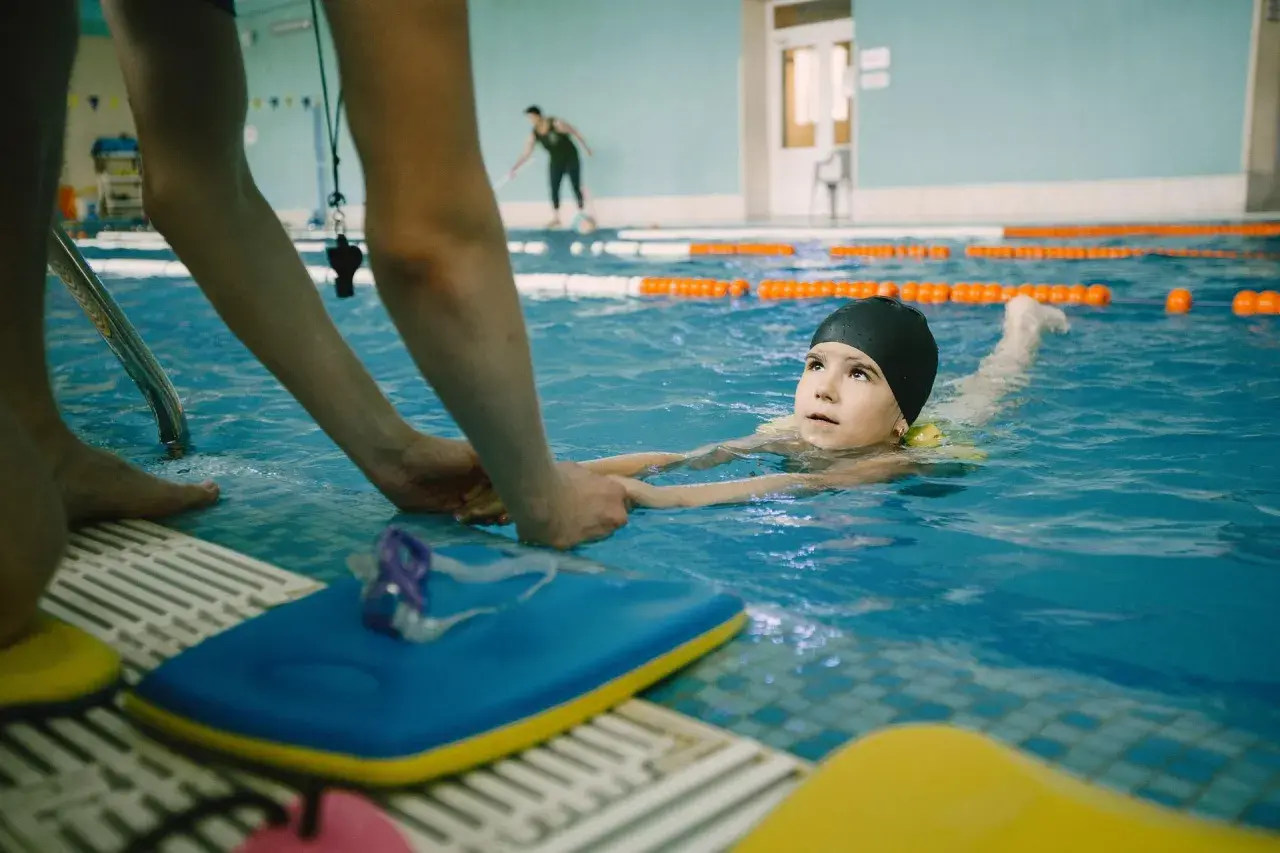
Learning to swim is one of the few skills that improves safety, fitness, and confidence at the same time. The benefits of learning to swim show up far beyond the pool, from calmer family outings to better control in open water and stronger conditioning with less joint stress. In the sections below, I break down what actually changes when someone learns well, why instructors matter, and how to judge a lesson program that will deliver real progress.
Key takeaways at a glance
- Swimming is not just exercise; it is a practical water-safety skill that matters in pools, lakes, beaches, and travel.
- Good lessons teach more than strokes. They build breath control, floating, safe entries and exits, and recovery skills.
- The physical payoff is strong: low-impact cardio, better coordination, and full-body conditioning.
- Confidence is a major return on investment, especially for children, nervous adults, and anyone who has avoided water.
- The CDC reports that more than half of U.S. adults have never taken a swimming lesson, which shows how common the learning gap still is.
- A skilled instructor usually shortens the learning curve and prevents bad habits that are hard to unlearn later.
Why swimming matters beyond the pool
I think of swimming as a carry-it-everywhere skill. It matters in a backyard pool, but it matters just as much at a lake house, on a beach vacation, at summer camp, or during a family weekend where water is part of the plan. That is why the topic is bigger than sport or recreation. It affects how safely a person can move through ordinary life.
There is also a practical side that people sometimes miss: swimming gives you a level of control in water that walking or running simply cannot provide. You learn how your body behaves when buoyancy, breathing, and movement all interact. That awareness becomes useful whether someone is a child, a teen joining a team later, or an adult who wants to stop avoiding water altogether. Once that foundation is clear, the safety benefits become much easier to appreciate.
The safety payoff is the strongest reason to start
The most important reason to learn is straightforward: water can turn risky very quickly. The CDC reports that more than half of U.S. adults have never taken a swimming lesson, and it also notes that swimming lessons can reduce drowning risk. In a country where pools, rivers, oceans, and lakes are part of normal life, that gap matters.
When I talk about water safety, I am not talking about vague confidence. I am talking about specific competencies. The American Red Cross frames water competency around five basic abilities: entering deep water, floating or treading, turning and finding an exit, swimming a short distance to safety, and getting out of the water. Those are not advanced skills. They are the difference between being comfortable and being vulnerable.- Enter and recover - being able to get into the water and regain control quickly.
- Float or tread - staying calm and buoyant long enough to think clearly.
- Orient - turning around, spotting a way out, and moving toward it.
- Swim to safety - covering a short distance without panic.
- Exit safely - leaving the water without needing help for a routine situation.
Pool skill and open-water skill are related, but they are not identical. Currents, waves, cold water, and visibility change the picture fast, which is why lessons should teach control first and style second. That leads directly into the next benefit: the body and mind both respond well to the sport when it is taught properly.
Physical and mental benefits that compound over time
Swimming is one of the best low-impact workouts I recommend because it asks a lot from the body without pounding the joints. It builds cardiovascular endurance, shoulder and back strength, core control, and coordination at the same time. It also rewards efficient breathing, which means people often notice that they are not just getting fitter; they are learning to move with more rhythm and less tension.
The mental side matters too. Water can be calming when the learner is not fighting it. Repetition, breathing control, and the feeling of being supported by the water can reduce that hyper-alert feeling many beginners bring into the pool. I would not oversell swimming as a cure for anxiety, but I do think it has a genuinely steadying effect for many people, especially when the lessons are paced well and the instructor does not rush the process.
There is a useful side effect here: swimming tends to improve body awareness. A person starts to notice head position, hip alignment, and the timing of their breath. That awareness helps in the pool, but it often carries into other activities too, from better posture to more efficient movement in other sports. Once that starts happening, confidence usually follows.
Confidence is the part people underestimate
Some of the biggest changes from swimming lessons are not visible in a stopwatch. They show up when a child stops clinging to the wall, when an adult finally gets into the deep end without fear, or when a family vacation feels easier because nobody is the person sitting out every water activity. That emotional shift is real. It changes how someone participates, not just how they perform.
For children, confidence grows when they realize a difficult thing can be learned step by step. For adults, the payoff is often more personal. I see a lot of adult beginners who are embarrassed before they are even in the water. Once they understand that progress comes from simple milestones, not instant grace, that embarrassment usually drops fast. They start to see swimming as a skill they can own instead of a situation they need to avoid.
Confidence also matters because it lowers panic. Panic is expensive in water. It burns energy, breaks breathing rhythm, and makes even easy movements feel harder than they are. Good instruction replaces that panic with routine, and routine is exactly what a beginner needs.

A skilled instructor shortens the learning curve
This is where the quality of the lesson really starts to matter. A self-taught swimmer can pick up a few basics, but a good instructor spots problems quickly and fixes them before they become habits. That usually means better breathing, better body position, less fear, and less wasted time.
| Area | Self-teaching | Instructor-led lessons |
|---|---|---|
| Safety | Easy to miss what is unsafe or incomplete | Skills are checked in real time |
| Feedback | No immediate correction for breathing or body line | Specific correction when something is off |
| Pacing | People often rush or stall | Progression is structured |
| Confidence | Can improve slowly and unevenly | Wins are more visible and consistent |
| Best fit | Already-competent swimmers refining on their own | Beginners, anxious swimmers, children, and returning adults |
Private lessons are usually the best fit when fear is high, the learner needs focused correction, or time is limited. Group lessons make sense when repetition, structure, and lower cost matter more. In my view, the right answer depends less on ego and more on what will keep the swimmer engaged long enough to build real skill. A coach who stays calm, gives precise cues, and does not rush the learner is worth far more than someone who simply gets bodies into lanes.
That is also why certified, experienced instructors matter. They do not just demonstrate a stroke. They read body language, adjust the lesson plan, and know when to slow down. From there, the next question is not just who is teaching, but what exactly the lessons should cover.
What good swim lessons should actually cover
A strong swim program starts with water comfort and moves toward survival skills before it chases speed. I like that sequence because it matches how real progress works. A beginner first needs to relax, breathe, float, and understand how the body behaves in water. Only after that does stroke refinement make sense.
- Breath control - learning to exhale in the water and inhale calmly above it.
- Floating and recovery - being able to rest on the back or regain balance without panic.
- Body line - keeping the body long and stable so movement costs less energy.
- Propulsion - using kicks and arm actions effectively instead of splashing hard.
- Treading water - staying afloat while staying alert, especially in deep water.
- Safe exits - getting to the wall, pool edge, or shore and leaving the water in control.
A useful technical term here is streamline, which means holding the body in a long, narrow position that reduces drag. Beginners do not need a perfect streamline on day one, but they do need to understand that water rewards efficient shape more than brute force. The Red Cross approach is helpful here because it treats water competency as a practical set of survival skills, not just a list of strokes to memorize.
For younger children, parent-and-child classes can be a good bridge into the water, but they should not be mistaken for independent safety. The real goal is to build comfort that later becomes competence. Once those building blocks are in place, the benefits start to look different for children, teens, and adults.
The benefits look different at every age
Children
For children, the biggest gain is safety, followed closely by coordination and confidence. Water lessons teach listening, waiting, taking turns, and following directions under pressure. They also help children feel less intimidated by new physical challenges, which is useful outside the pool as well. When a child learns to float, kick, and recover calmly, that is not just a swimming win; it is a small lesson in self-control.
Teens
For teens, swimming often becomes a mix of fitness and identity. It can be a sport, a cross-training option, or a way to stay active without the boredom some teens feel with other workouts. It also opens doors to lifeguarding, swim team, triathlon, or simply being the person who can enjoy water activities with friends instead of avoiding them. That social side is easy to overlook, but it is often what keeps teens engaged.
Read Also: ISR Swim Lessons - Is Survival Swimming Right for Your Child?
Adults
Adults usually arrive with a different kind of barrier: not a lack of ability, but a lack of exposure or a long history of avoiding water. The CDC’s numbers make that clear, since more than half of U.S. adults have never taken a lesson. I would never treat that as unusual. I would treat it as a common reason to start now. Adult lessons are valuable because they remove fear, build a fitness option that is easy on joints, and make trips, family events, and open-water situations less stressful.
Age changes the starting point, but it does not change the value of the skill. If anything, the payoff increases because safe movement in water becomes more useful as people get older and want exercise that feels sustainable. That makes the final question a practical one: which milestones should a beginner hit first before thinking about pace or fancy strokes?
The first milestones I would prioritize before chasing speed
If I were designing a beginner plan from scratch, I would focus on a small set of milestones before anything else. Speed is useful later, but it is a poor early goal because it often makes people tense and sloppy. Calm control is the real foundation.
- Stay relaxed while putting the face in the water.
- Exhale steadily instead of holding the breath.
- Float on the front and back without grabbing for the wall.
- Rotate and recover without panic.
- Travel a short distance with repeatable breathing.
- Reach an exit point and get out safely.
Once those pieces are reliable, stroke work becomes much easier to absorb. The learner has already built the hard part: calmness, orientation, and control. That is why I usually care more about how a person looks after 30 controlled minutes in the water than how fast they can move across the pool on day one. If the foundation is strong, everything else improves faster and lasts longer.
For most people, the smartest path is simple: start with a good instructor, focus on safety and comfort first, and let speed come later. Swimming then becomes more than a skill for occasional pool time. It becomes a reliable part of health, travel, family life, and everyday confidence.
