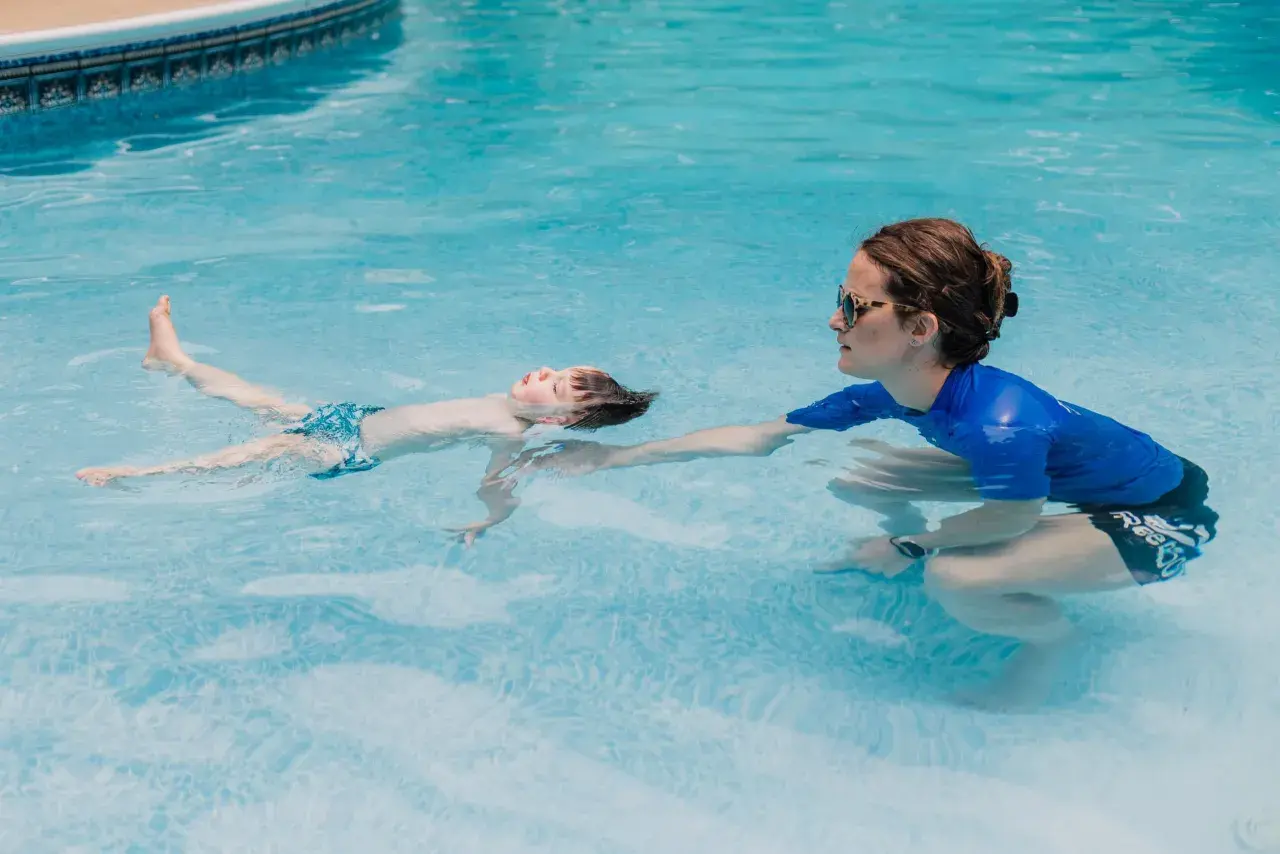
The essentials to know before you book
- ISR is a survival-swimming method for children roughly from 6 months to 6 years old.
- The core skills are rollback-to-float for younger infants and swim-float-swim for older, walking children.
- Lessons are private, highly structured, and usually run for 10 minutes a day, 5 days a week.
- The initial course is commonly measured in weeks, not months, but consistency matters more than speed.
- This is not a replacement for supervision, barriers, or general water-safety habits.
- For many families, the best outcome is a survival layer first, then broader swimming later.
What ISR teaches and why it is different
I treat ISR as a narrow tool with a very specific job: it gives a young child a rehearsed response to an accidental water entry. For infants who are not yet walking confidently, that response is rollback-to-float, meaning the child learns to roll onto the back, rest, and breathe until help arrives. Once a child is developmentally ready, the sequence expands into swim-float-swim, which teaches a short swim, a turn onto the back for a breath, and then more swimming towards safety.
That focus is what separates the method from standard swimming tuition. It is not built around badges, stroke perfection, or group confidence games. I think that distinction matters, because parents often want one lesson format to do every job at once, and water safety does not really work that neatly. ISR is about survival competence first, not competitive technique first.
The age range also matters. The programme is aimed at children from about 6 months to 6 years, but the exact skill emphasis changes with the child’s body control, emotional readiness, and mobility. That is why a good instructor should be able to explain not just what they teach, but why they are teaching a particular skill at a particular stage. From here, the real question becomes how the lessons are organised in practice.
How the lessons are structured
The structure is one of the most distinctive parts of the method. Lessons are usually private, one child at a time, and the daily format is intentionally short: typically 10 minutes per day, 5 days a week. The initial course is often measured in roughly 20 to 30 lessons, which usually puts the first phase at about 4 to 6 weeks, depending on the child and the instructor’s progression.
| Lesson element | What it usually looks like | Why it matters |
|---|---|---|
| Daily schedule | Short sessions, usually 10 minutes, on 5 consecutive weekdays | Repetition is high, fatigue is kept low, and the child sees the same task often |
| One-to-one instruction | Only the child and instructor in the water | The lesson can be adjusted precisely to the child’s pace and reactions |
| Progression | Skills are layered step by step rather than taught all at once | The child learns a repeatable survival sequence, not a random collection of drills |
| Clothed practice | Training eventually reflects real-life clothing conditions | Accidents rarely happen in neat swimwear, so realism is built into the method |
| Refreshers | Follow-up sessions are commonly used as the child grows | Body proportions, strength, and coordination change quickly in early childhood |
The short sessions surprise many parents at first, but I think the logic is sound. Young children learn well with focused repetition, and tired children learn badly. The bigger commitment is not the time spent in the water on any one day; it is the discipline of showing up consistently for several weeks and then revisiting the skills as the child grows. That commitment is the bridge to the next question: who this approach is really for.
When this method makes sense and when it does not
In my view, the strongest case for ISR is a family that needs a survival layer early. That might be a household with a pool, a child who spends time around boats or holiday homes, or parents who simply want a very clear emergency response before general swimming skill develops. It is also a sensible option for families who can handle the daily routine without missing lessons, because the method depends on rhythm.
- Good fit if your child is between 6 months and 6 years and has regular exposure to water.
- Good fit if you want a one-on-one format instead of a group class.
- Good fit if you care more about self-rescue than about early stroke badges.
- Poor fit if you mainly want social learning, games, and group confidence-building.
- Poor fit if you cannot commit to a frequent weekly schedule.
- Poor fit if you expect the course to replace supervision, gates, locks, and common-sense water rules.
That last point is the one I keep repeating to parents: no lesson format makes a child “drown-proof”. It can reduce risk and build skills, but it cannot cancel bad supervision or unsafe environments. I would also be cautious with any child who has a significant medical issue, severe sensory distress, or a history that makes water work more complex; that is a conversation for the instructor and, when needed, the child’s clinician. From there, it helps to compare this model with the lessons most UK families already know.
How it compares with mainstream UK swim lessons
Traditional UK swimming lessons usually aim to build broad aquatic confidence, basic propulsion, and stroke development in a group setting. That is a useful and normal path, especially as children get older. The ISR model is different: it is narrower, more intensive, and focused on what to do if a child is suddenly alone in water.| Factor | ISR-style survival lessons | Mainstream group lessons |
|---|---|---|
| Primary goal | Self-rescue and water survival | General swimming ability and water confidence |
| Class size | One child, one instructor | Several children per instructor |
| Lesson style | Short, frequent, highly structured | Longer sessions, often weekly |
| What the child learns first | Breathing, floating, turning, and reaching safety | Movement through the water, confidence, and basic strokes |
| Best use case | Young children around real water risk | Broader swim development and social learning |
| Main trade-off | Less group interaction and usually higher cost | Less individual attention and slower survival-specific focus |
For many families, this is not an either-or decision. I often think the strongest approach is survival-first when the child is very young, then broader swimming once the child is older and ready for group tuition. The right sequence depends on the child’s age and risk profile, which is exactly why choosing the instructor matters so much.
How I would choose an instructor in the UK
The instructor is the programme. That sounds blunt, but it is true here. Because the method is so specific, I would not choose on marketing alone; I would choose on clarity, consistency, and whether the instructor can explain the progression in plain English.
- Ask whether the instructor is currently certified and actively teaching the method.
- Confirm that lessons are genuinely one-to-one in the water, not a diluted version of the model.
- Ask what skill sequence your child will follow based on age and mobility.
- Check how missed sessions, illness, and holiday gaps are handled.
- Find out whether clothed practice is included and when it is introduced.
- Ask how progress is measured and what “ready to finish” actually means.
- Clarify the refresher plan, because growing bodies need follow-up work.
- Make sure the pool environment is practical for your child, especially in colder months.
I would also listen carefully to the language the instructor uses. If they cannot clearly explain rollback-to-float, swim-float-swim, or why the sessions are short and frequent, I would keep looking. A good teacher will sound precise without sounding defensive. They should be able to tell you what happens in week one, what changes by week four, and what the next stage looks like after the initial course. That naturally leads into the part many parents underestimate: what happens after the lessons end.
What I would do after the course to keep the skills useful
Children change quickly. Their legs lengthen, their coordination improves, and a skill that looked solid one month can feel different a few months later. That is why I would never treat the course as a one-time box to tick. I would treat it as the start of a routine that includes refreshers, supervision, and practical water habits.
- Keep barriers, covers, and household water rules in place even after the child learns the skills.
- Practise calm entry and exit habits at pools, baths, and holiday accommodation.
- Schedule refreshers on the instructor’s recommended cadence as your child grows.
- Do not let early competence create false confidence in adults around the child.
- Remember that open water is a different environment from a warm, controlled pool.
That last point matters in the UK. Open water can change fast, and confidence in a swimming pool does not automatically transfer to a river, canal, beach, or cold lake. A survival lesson can help, but it is only one layer of protection. If I had to reduce the whole topic to one practical rule, it would be this: choose the survival lesson, keep the supervision, and never assume one skill solves every water risk. If you do those three things well, the method earns its place.
The decision I would make first
- Choose this route if your child is very young and water exposure is real, frequent, or hard to control.
- Choose a mainstream group lesson first if your priority is broad swim development and social learning.
- Choose the instructor before you choose the schedule, because the teacher’s consistency shapes the result.
- Choose follow-up lessons before you assume the first course is enough for years.
