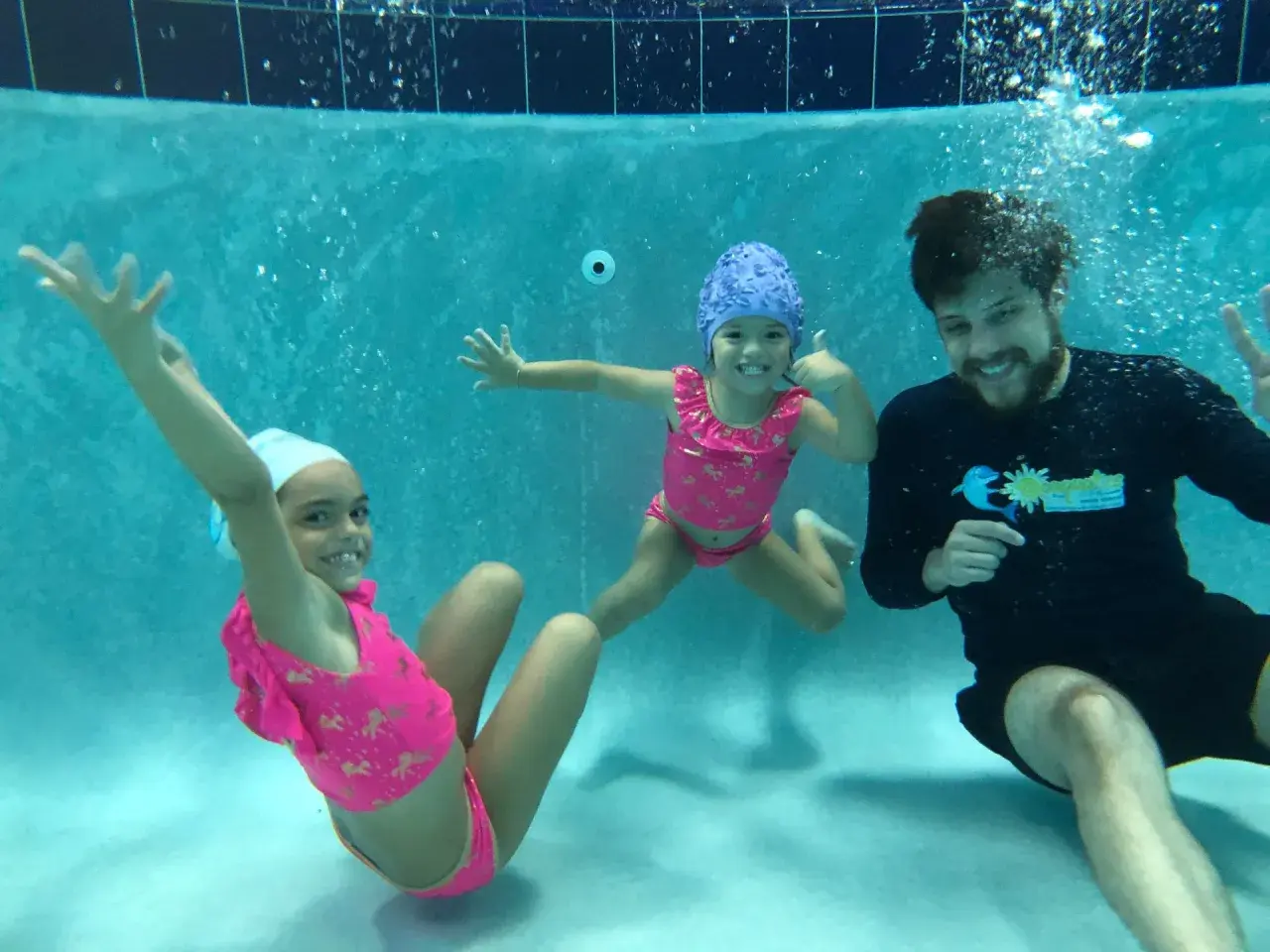
Safe breath control starts with calm bubbles, not forced underwater holding
- Start with voluntary breath control, not dunking or “holding it as long as possible.”
- Use bubbles and brief face dips to teach exhaling under water before full submersion.
- Keep sessions short and end while the child is still relaxed and successful.
- Choose instructors carefully; patience and small progressions matter more than speed.
- Stay within arm’s reach any time a toddler is near water, even during lessons.
- Watch for stress signals like coughing, stiffening, crying, or turning away from the water.
Why the goal should be breath control, not a long underwater hold
With toddlers, I do not frame this as “can you hold your breath?” I frame it as “can you stay calm, listen, and exhale when your face goes in?” That distinction matters. A toddler who learns to relax around water is building the foundation for every later skill: face immersion, floating, gliding, and eventually short underwater movement.
It also matters because toddlers are not miniature adults. They are still developing coordination, trust, and the ability to follow multi-step cues. The American Academy of Pediatrics treats swim lessons as one layer of drowning protection for many children starting around age 1, but that does not mean every child is ready for the same drill on the same day. Readiness is individual.
In other words, I would rather see a toddler blow one good set of bubbles and come up smiling than force a dramatic underwater moment that makes the next lesson harder. Once that goal is clear, the practical question becomes how to introduce the skill without creating resistance.

How I introduce breath control in a way toddlers actually accept
I start on the surface and keep the sequence simple. The child needs to learn that water on the face is normal, exhaling is allowed, and coming back up happens quickly. No long countdowns, no surprise dunks, and no pressure to “prove” anything.
1. Begin with air bubbles, then water bubbles
Before a child goes under, I have them blow pretend bubbles in the air, then real bubbles at the waterline. That gives them a rhythm: inhale, pause, blow out. The breath pattern matters more than the depth at first.
2. Move from lips to nose to eyes in tiny steps
I usually progress like this: lips touch the water, then mouth, then nose, then eyes, then a brief full-face dip. Each step should feel routine before you move to the next one. If a child stiffens or pulls away, I go back a step instead of pushing forward.
3. Keep the submersion brief and predictable
A useful rule is “in, out, up.” The face goes in for a moment, the child exhales or bubbles, and then they come up immediately. For toddlers, I want voluntary participation and a sense of control, not endurance training.
4. Use a cue every time
One short cue works better than a long explanation. I like a consistent phrase such as “ready, bubbles, up.” The predictability helps toddlers know what is coming, which lowers panic and makes the movement feel safer.
Read Also: Toddler Swimming Lessons - What You Need to Know Before Booking
5. End on a win
Two or three successful attempts are usually enough. If the child is still happy, you can repeat once or twice more. If the face gets tense, the lesson is over for that skill. Ending early is often what makes the next session better.
Once that sequence is in place, the instructor’s style starts to matter just as much as the exercise itself.
What a good swim instructor does differently with toddlers
A strong toddler instructor is not the one who gets the deepest submersion the fastest. It is the one who can keep the child regulated, make the skill feel safe, and pace the lesson so the child stays available to learn.
Good instructors usually do a few things consistently: they stay physically close, they explain the next step before it happens, and they watch for tension in the shoulders, jaw, and hands. They also know when to leave a skill alone for a week and come back to it later. That restraint is a sign of judgment, not hesitation.
| Lesson format | Best for | Strength | Tradeoff |
|---|---|---|---|
| Parent-child class | Anxious toddlers, first exposure, routine building | Comfort, familiarity, and a gentle pace | Less individualized correction if the class is busy |
| Small group preschool lesson | Children who copy peers well and enjoy structure | Social modeling and repeated practice | Pace depends heavily on the instructor’s skill |
| Private lesson | Children who need focused attention or have special concerns | Fastest way to adjust the lesson to one child | Usually more expensive and sometimes less playful |
| Safety-focused survival program | Families prioritizing water safety behaviors | Can teach boundary awareness and recovery skills | May feel intense if the child is not ready for that style |
When I evaluate a program, I ask a simple question: does the instructor build trust first, or do they chase compliance? The first approach usually works better for toddlers. The second often creates short-term performance and long-term hesitation.
That is also why the next step should always be practiced with care at home, never turned into a contest.
How to practice at home without making the water feel scary
Home practice should reinforce the lesson, not replace it. I would only use calm, supervised water play in a bathtub or shallow pool, never in deeper water and never as a solo activity. If your child is in or near water, stay within arm’s reach the entire time.
For a toddler, the best home work is simple and repetitive:
- Blow bubbles on command in the bath or at the sink edge with water nearby.
- Practice touching lips, then nose, then eyes to the water.
- Count one beat together, dip briefly, then come right back up.
- Use a toy or song so the skill feels playful instead of clinical.
- Stop after a few successful tries, even if the child wants to keep going.
I avoid turning it into “let’s see how long you can stay under.” That can easily become a breath-holding challenge, and challenges are not what toddlers need here. What they need is repetition that feels safe. The more relaxed the child is, the easier the skill becomes.
If you want a practical benchmark, I watch for comfort first, then for control: no gasping, no panic, no swallowing water, and no surprise reactions when the face goes in. That brings us to the moments when you should back off rather than push through.
When to slow down, stop, or choose a different approach
Some toddlers are ready for face immersion early. Others need weeks of water play before they tolerate even a small splash. Both are normal. The mistake I see most often is assuming that progress should look fast because the child can walk, talk, or follow instructions on land. Water changes the equation.
Pause the skill if you see any of these signs:
- Crying that escalates instead of settling after a short break.
- Stiff arms, clenched fists, or a rigid body.
- Repeated coughing, gagging, or swallowing water.
- Refusing the next step after a successful rep, which often means fatigue or stress.
- Breathing that stays fast or shallow after the child comes up.
There are also situations where I would not practice the skill at all that day: a child who is sick, congested, exhausted, overtired, or already upset before the lesson starts. Water work depends on regulation. If the child cannot regulate, the lesson becomes noise instead of learning.
And if a child ever has a real underwater incident, persistent coughing, trouble breathing, chest discomfort, or unusual sleepiness afterward should be taken seriously. That is not a lesson problem anymore; it is a medical one. Once you know where the limits are, it becomes easier to define what progress should look like over time.
What progress should look like over the next few lessons
I measure progress in small, observable steps. The child does not need to master everything in one session. In fact, toddlers usually learn best when each lesson has one clear win and one familiar review skill.
A healthy sequence often looks like this:
- Comfort with water on the cheeks and chin.
- Willingness to blow bubbles at the surface.
- Brief, voluntary face dips without distress.
- Short underwater exhale followed by an immediate return to the surface.
- Confidence repeating the same movement with a trusted adult or instructor nearby.
For parents and instructors alike, the best formula is boring in the best possible way: small steps, clear cues, steady supervision, and no pressure to perform. That is how a toddler learns to go under, come up, and stay calm enough to keep learning.