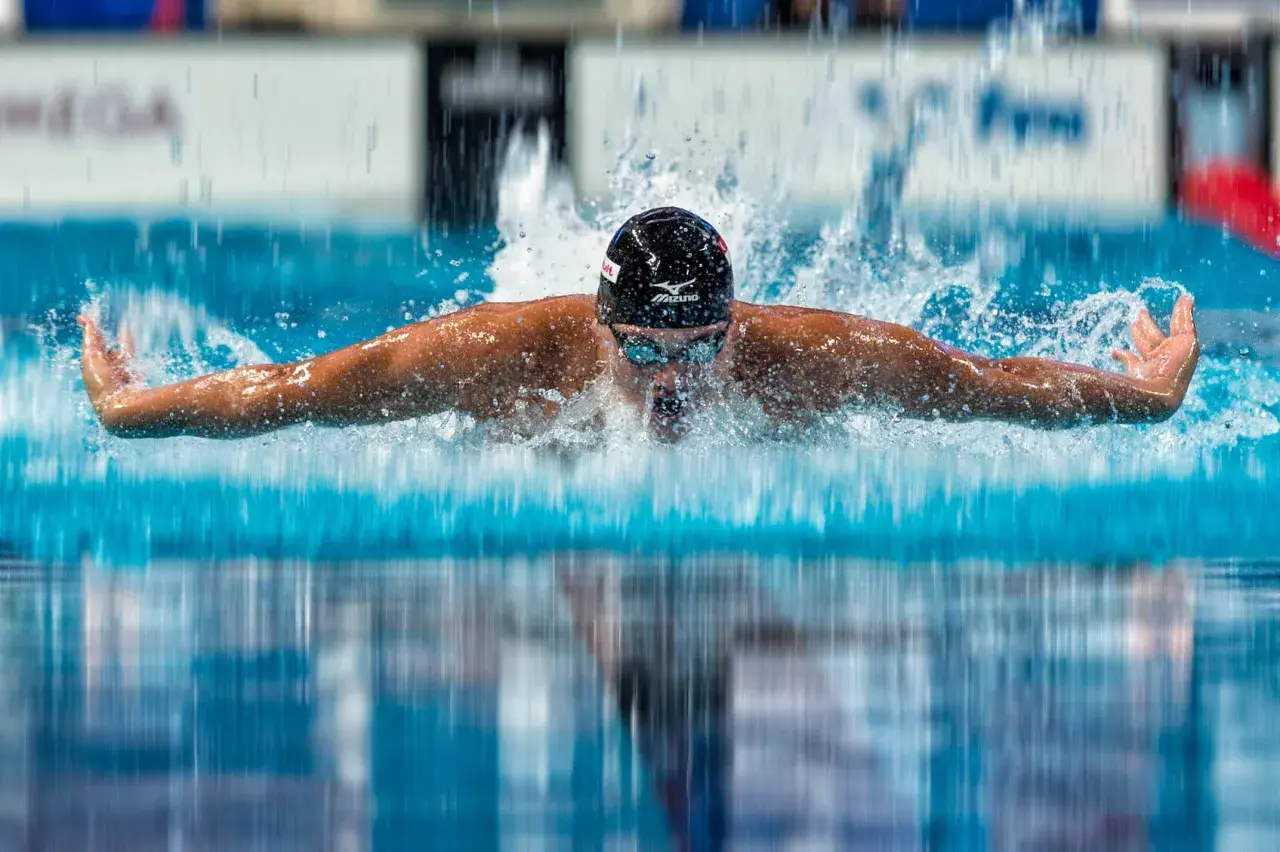
Butterfly breathing is less about taking a huge gulp of air and more about matching a quick inhale to the wave of the stroke. In this guide I cover the timing, head position, drills, and breathing frequency that keep butterfly efficient instead of frantic. The aim is simple: help the breath support the rhythm, not break it.
The essentials at a glance
- Take the breath late in the pull, as the shoulders and chest naturally rise.
- Keep the chin low and the inhale sharp; the head should return to the water quickly.
- Exhale underwater so you are never trying to breathe out and in at the same time.
- A small forward breath is the safest default for most swimmers in the UK.
- Use short repeats and focused drills before you worry about race-specific breath counts.

How the breath fits the butterfly rhythm
The cleanest breath happens during the end of the pull, during the upsweep, the last inward and upward part of the arm action, when the hands sweep in and the chest is already rising. I want the mouth to clear the surface for only a brief moment, long enough for a quick inhale, then the face drops back in before the arms recover. Swim England's expected standards describe that same idea: the breath comes while the hands are in the propulsive phase, and the face returns downward before the hands enter.
That is why I never treat the breath as a separate event. In a good stroke, it is part of the wave created by the chest, shoulders and hips; if the body line is organised, the inhale feels almost stolen from the stroke rather than forced into it. I also want the exhale to keep going underwater through the mouth and nose, so the next breath is ready before the hands start the recovery. Once that timing makes sense, the next question is how much the head is allowed to move.
Why head position changes everything
Most butterfly problems start with a head that rises too high. The higher the head goes, the more the hips drop, and the more the kick has to work uphill. I tell swimmers to think of the chin moving forward, not upward, and to let the eyes skim the water rather than stare at the ceiling.
| Good cue | What it looks like | Why it helps |
|---|---|---|
| Chin forward | Face clears the water without a big neck extension | Less drag and less strain |
| Chest leads the lift | The body wave brings the mouth up | The breath fits the stroke instead of interrupting it |
| Head returns early | Face re-enters before the hands recover | Keeps the hips high and the recovery relaxed |
If you want a single checkpoint, use this one: the breath should feel small and quick, not dramatic. I would rather see a swimmer take a modest breath every time than reach for air and pay for it in the next six metres. That distinction matters even more once you start choosing between different breathing patterns.
Front breath or side breath
For most swimmers, I still start with a forward breath. It is the most natural match for the stroke, it is easier to coach, and it is usually the safest way to keep the rhythm stable. A side breath can feel smoother for a few stronger swimmers because it may keep the body slightly flatter, but it asks for a cleaner neck turn and much tighter timing.
| Pattern | Best for | Main upside | Main trade-off |
|---|---|---|---|
| Forward breath | Beginners, club swimmers, race basics | Simple, predictable, easy to repeat | Can become too high if the head lifts |
| Side breath | Advanced swimmers with good body control | May keep the body closer to the surface | Less common, more neck rotation, harder to learn |
My view is blunt: unless a coach has a clear reason to change it, start with the standard forward breath and make it clean before experimenting. Once that choice is settled, the quickest way to improve is not more theory, but a few drills that make the timing automatic.

Drills that make the timing automatic
The best drills remove pressure without removing the shape of the stroke. USA Swimming's coaching progressions place the same emphasis on timing the pull, kick and breath together, and that is exactly what I try to preserve in drill work.
- Single-arm butterfly - Keep one arm forward and breathe as the working arm finishes the pull. This slows the stroke just enough to let you feel when the mouth should clear the water.
- Body dolphin with one breath - Push off, take a few dolphin kicks, then add a single breath on the next stroke. It teaches you not to rush the inhale when the body is already moving up.
- Snorkel and dolphin - Swim a short set with a front-mounted snorkel so you can lock in body line, then remove it and keep the same low head position. I use this when a swimmer is lifting the head out of habit rather than necessity.
- Short repeats - On 6 to 8 x 25 metres, rest 20 to 30 seconds and focus on one breathing cue per length. On a 25m pool, that gives you enough repetitions to learn the pattern without turning the set into survival swimming.
If a drill makes you faster but noisier, it is probably hiding the problem rather than fixing it. The next section shows the mistakes that most often show up when the breath starts to unravel.
The mistakes that cost the most speed
I see the same five errors over and over again, and they all have a habit of feeding each other. The table below is the fastest way to spot them.
| Mistake | What it causes | Better cue |
|---|---|---|
| Lifting the head too high | Hips drop and the kick works harder | Think chin forward, not chin up |
| Holding the breath underwater | Panic, late inhale, rushed recovery | Start exhaling as soon as the face re-enters |
| Trying to inhale too much air | Long pause at the surface | Take a quick sip, not a full reset |
| Breathing too late | The hands recover while the head is still up | Inhale as the pull finishes, not after it |
| Letting the kick fade | The body loses the wave that supports the breath | Keep both dolphin kicks active through the cycle |
When one of these faults shows up, I usually fix the exhale first. A swimmer who empties the lungs continuously underwater can breathe sooner, which calms the whole stroke. Once those errors are under control, the remaining variable is how often you actually need to breathe.
How often to breathe in training and racing
There is no universal breath count for butterfly. I would choose frequency based on distance, pace and how stable the stroke looks under fatigue.
| Situation | Practical approach | Why it works |
|---|---|---|
| Technique drills | Breathe every cycle if needed | Builds confidence and repeatability |
| 25 metre repeats | Keep the breath simple and consistent | Enough air without turning the set into a scramble |
| 50 metre effort | Many swimmers breathe every cycle, then reduce the number late in the race if control allows | Balances oxygen and drag |
| 100 metre and longer work | Use a regular pattern that you can hold under fatigue | Prevents the stroke from falling apart when the pace rises |
On a typical UK 25 metre pool, that means you can test breathing patterns quickly without waiting for a long set to tell you what is wrong. If you are still learning the stroke, I would not force breath-holding; a reliable rhythm is worth more than a theoretical speed gain you cannot keep for more than one length. Once the frequency is sensible, the final step is deciding what to fix first when the stroke still feels messy.
What I would fix first if the stroke still feels messy
If I were coaching a swimmer with a rough butterfly breath, I would keep the order very simple: exhale continuously, breathe small, return the head early. Those three changes solve more problems than any fancy cue, and they usually improve the stroke before the swimmer becomes stronger or fitter.
- Do not chase a bigger breath if the hips are sinking.
- Do not add side breathing before the standard forward breath is stable.
- Do not practise full-distance butterfly when short repeats would give you better feedback.
- Do use the quietest breath you can manage while keeping the rhythm intact.
That is the version of the stroke I trust in practice and in race prep: calm air intake, early face return, and a body line that never has to fight its own breathing.
