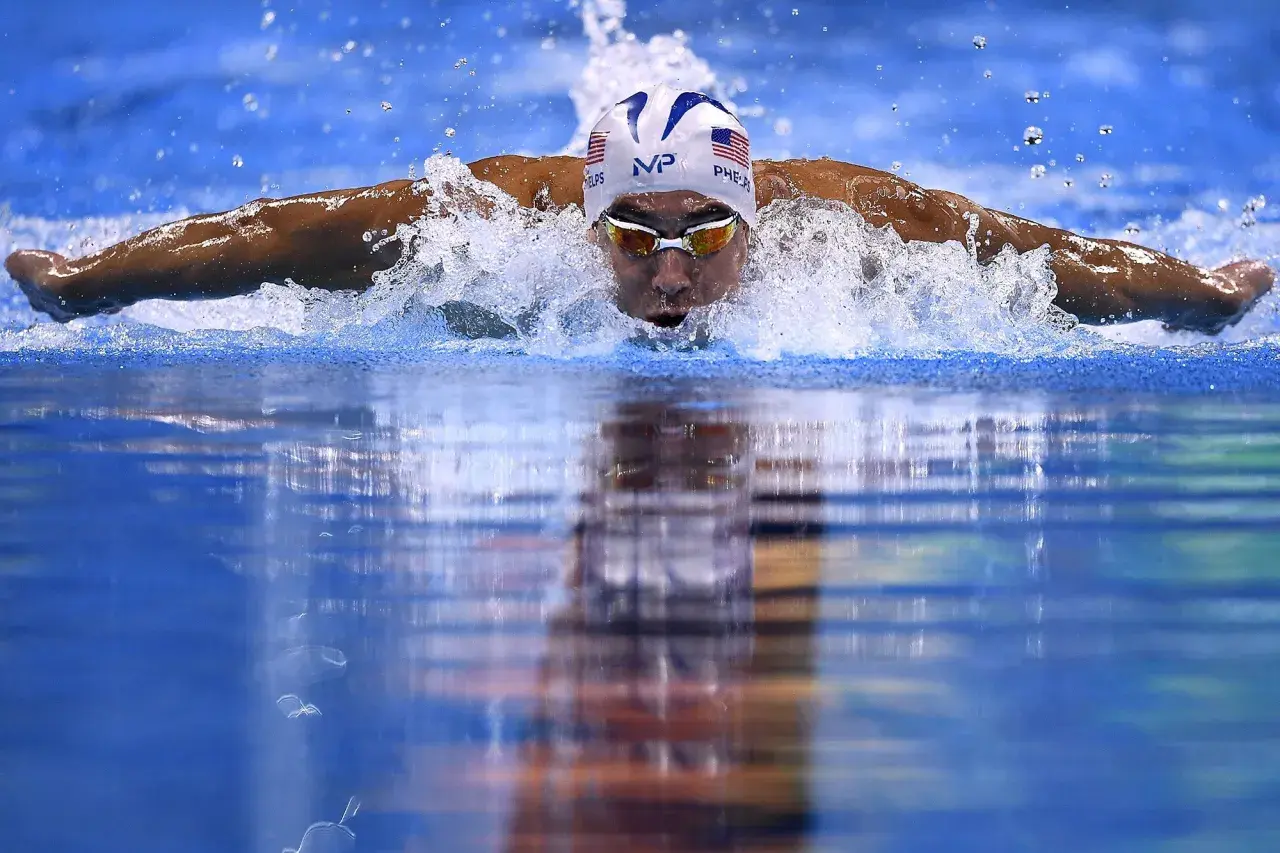
Butterfly becomes manageable when you stop treating it like a power stroke and start treating it like a timing problem. The body line, dolphin kick, arm recovery, and breathing all have to support each other, or the stroke turns into a fight with the water. In this guide, I break down how to swim butterfly stroke in a way that is practical for pool sessions, race prep, and cleaner, less exhausting technique.
The cleanest butterfly comes from body line, kick timing, and calm breathing
- Keep your body long and near the surface so the stroke does not collapse into a vertical struggle.
- Use two dolphin kicks in each cycle, and let them support the hand entry and recovery.
- Recover the arms close to the surface with relaxed shoulders, not with a wide, thrown-over motion.
- Breathe quickly and low so your hips do not drop every time you inhale.
- Short repeats and focused drills usually build better butterfly than long, sloppy swims.
Start with the body line, not the arms
The first thing I look for in butterfly is the body position. If the swimmer is floating too low in the water, everything else gets expensive. A strong butterfly feels like a controlled wave, with the chest pressing slightly downward, the hips rising, and the torso staying long instead of folding at the waist.
Think of the stroke as a forward glide that happens to have a wave through the middle, not as a series of upward lunges. Your head should stay neutral and low, with the eyes angled forward and slightly down. If the chin lifts early, the hips usually sink to compensate, and the arms suddenly have to move more water just to keep you alive.
I coach swimmers to stay patient here. The body line is not a cosmetic detail, it is the platform for everything that follows. Once that line is stable, the kick and pull can actually create speed instead of merely rescuing the stroke.
Use the dolphin kick as the engine
The dolphin kick is what gives butterfly its rhythm. As U.S. Masters Swimming notes, a full cycle uses two kicks, and the timing matters as much as the force. One kick supports the hand entry, and the other helps drive the recovery and the next stroke cycle forward.
The kick should start from the hips and core, not from a knee-bicycle motion. The knees bend naturally, but they should not become the main driver. I want to see the feet stay together, ankles relaxed, and the feet pressing backward through the water, not splashing upward for show.
Big splash does not equal big speed. What you want is a compact, continuous wave that helps the body move forward. If the kick is too wide, the swimmer creates drag. If it is too stiff, the stroke loses rhythm. The sweet spot is a narrow, rhythmic dolphin action that keeps the hips near the surface and makes the recovery feel lighter.
Once the kick starts doing that job, the arms no longer have to drag the whole body through the pool. That is the point where the pull can become efficient instead of frantic.
Set the arm path and recovery in the right sequence
The arms in butterfly move together, but the stroke is not just one giant pull. The hands enter just outside shoulder width, the forearms begin to angle into a catch, and then the hands press back through the water in a controlled arc. The catch, which is the moment the hand and forearm start to hold water, should feel firm without becoming deep or exaggerated.
I like to think of the pull as three simple jobs: find the water, hold the water, then push it back. If the hands sweep too wide, the stroke leaks energy. If they dive too deep, the shoulders work overtime and the swimmer often loses the surface rhythm that butterfly depends on.
The recovery over the water should be relaxed and close to the surface. Let the elbows travel naturally, and do not force the hands high just to clear the water. A quiet recovery is usually a faster recovery, because it keeps the stroke compact and lets the next entry happen without a pause.
When the arm path and body wave match up, butterfly starts to feel less like a strength test and more like a sequence. That rhythm matters even more once breathing enters the picture.
Breathe without breaking the rhythm
Breathing is where many swimmers sabotage their own butterfly. They lift the head too high, inhale too late, or stay up too long after the breath. The result is predictable: the hips sink, the pull slows down, and the whole stroke turns heavy.
The breath should happen as the chest naturally rises during the pull. Get the mouth clear of the water just long enough to take air, then return the face forward and down as soon as possible. The best butterfly breaths look calm and almost unremarkable, because the swimmer is trying to protect the line of the stroke rather than advertise the inhale.
If you are learning, breathing every stroke is fine. In fact, for many swimmers it is the safest way to preserve rhythm while the rest of the mechanics are still settling. As the stroke improves, some swimmers space their breaths out, especially in shorter races, but that only works when the body line stays stable.
The rule is simple: breathe low, breathe fast, and do not let the head lead the stroke. Once that feels more natural, the next step is to isolate the parts that are still causing trouble.
Use drills to isolate the hard parts
When butterfly falls apart, I usually do not add more effort. I remove complexity. Drills make it easier to feel the stroke piece by piece, and they are especially useful when the full stroke feels rushed or exhausting.
| Drill | What it helps | What to focus on |
|---|---|---|
| Body dolphin with arms extended | Body line and kick timing | Keep the chest pressing gently and let the hips follow the wave |
| Single-arm butterfly | Arm path and breathing control | Keep the non-working arm long in front and stay patient through the pull |
| Head-up butterfly | Breath timing and second kick | Use it briefly, keep the motion short, and feel how the kick supports the body |
| 12.5-meter build into full stroke | Connecting drills to real swimming | Finish the drill cleanly, then let the second half of the length stay smooth |
A simple practice set can be as basic as 4 x 15 meters body dolphin, 4 x 12.5 meters single-arm fly on each side, and 4 x 25 meters full butterfly with generous rest. That is enough to build awareness without turning the stroke into a survival exercise. I would rather see a swimmer execute four clean lengths than grind through ten bad ones.
Drills work because they make the important parts feel obvious. Once you can feel the timing, the biggest mistakes become easier to spot and fix.
Fix the mistakes that make butterfly feel impossible
Most butterfly problems are not mysterious. They are usually one of a handful of faults that show up again and again. The good news is that once you know what to look for, the fix is often simpler than the problem feels in the water.
| Mistake | What it causes | Better cue |
|---|---|---|
| Lifting the head too high to breathe | Hips sink and the stroke stalls | Inhale low, then return the face quickly |
| Kicking from the knees like a bicycle | Drag, fatigue, and poor rhythm | Drive the kick from the hips with soft knees |
| Pulling too deep under the body | Shoulders work harder and the stroke slows | Keep the catch firm and the pull compact |
| Recovering the arms with tension | The stroke feels heavy and choppy | Let the recovery stay relaxed and close to the surface |
| Trying to swim full butterfly before the timing is there | Everything falls apart under fatigue | Use short repeats and drill-swim combinations first |
If butterfly hurts in a way that feels sharp or persistent, I would not try to push through it and call it conditioning. Usually the stroke is asking for a cleaner line, a smaller kick, or a better breath. Technique should reduce strain, not create it.
When the stroke is cleaner on short repeats, the next challenge is making it work in a race context, where starts, turns, and underwater speed matter a lot.
Make starts, turns, and the breakout count
Butterfly does not begin at the first full stroke. It begins with the start, the underwater phase, and the breakout. USA Swimming’s current rulebook allows a swimmer to stay submerged for up to 15 meters after the start and after each turn, but the head has to break the surface by that point. That underwater section is valuable, but only if it stays tight and controlled.
I treat the breakout as a continuation of the stroke, not a reset button. The swimmer should leave the wall in a strong streamline, use underwater dolphin kicks without losing body tension, and surface into the first stroke without a long pause or a rushed grab for air. If the breakout is messy, the rest of the length starts from a deficit.
Turns matter for the same reason. A good butterfly turn preserves speed; a bad one dumps it. Touch cleanly, tuck efficiently, push off with purpose, and avoid letting the body unwind too early. The underwater work is where many swimmers pick up free speed, but only if the alignment stays honest.
That is why I like to teach butterfly as a repeatable pattern rather than a heroic effort. When the pattern is stable, speed becomes a consequence instead of a guess.
What I want swimmers to keep before they add more meters
The cleanest butterfly is usually the one that looks calm, not the one that looks loud. If you can keep the body high, let the dolphin kick support the stroke, recover the arms smoothly, and breathe without throwing the rhythm off, the stroke will already be far ahead of where most swimmers start.
I would rather see a swimmer hold that quality for 4 x 25 than survive a single long length with broken timing. Build the stroke in pieces, protect the line, and let the distance grow only after the movement stays repeatable. That is the fastest route to a butterfly that feels strong instead of chaotic.
When you are ready for the next step, the best test is simple: can you swim a short set of butterfly and still look the same on the last repeat as you did on the first? If the answer is yes, the stroke is starting to belong to you.