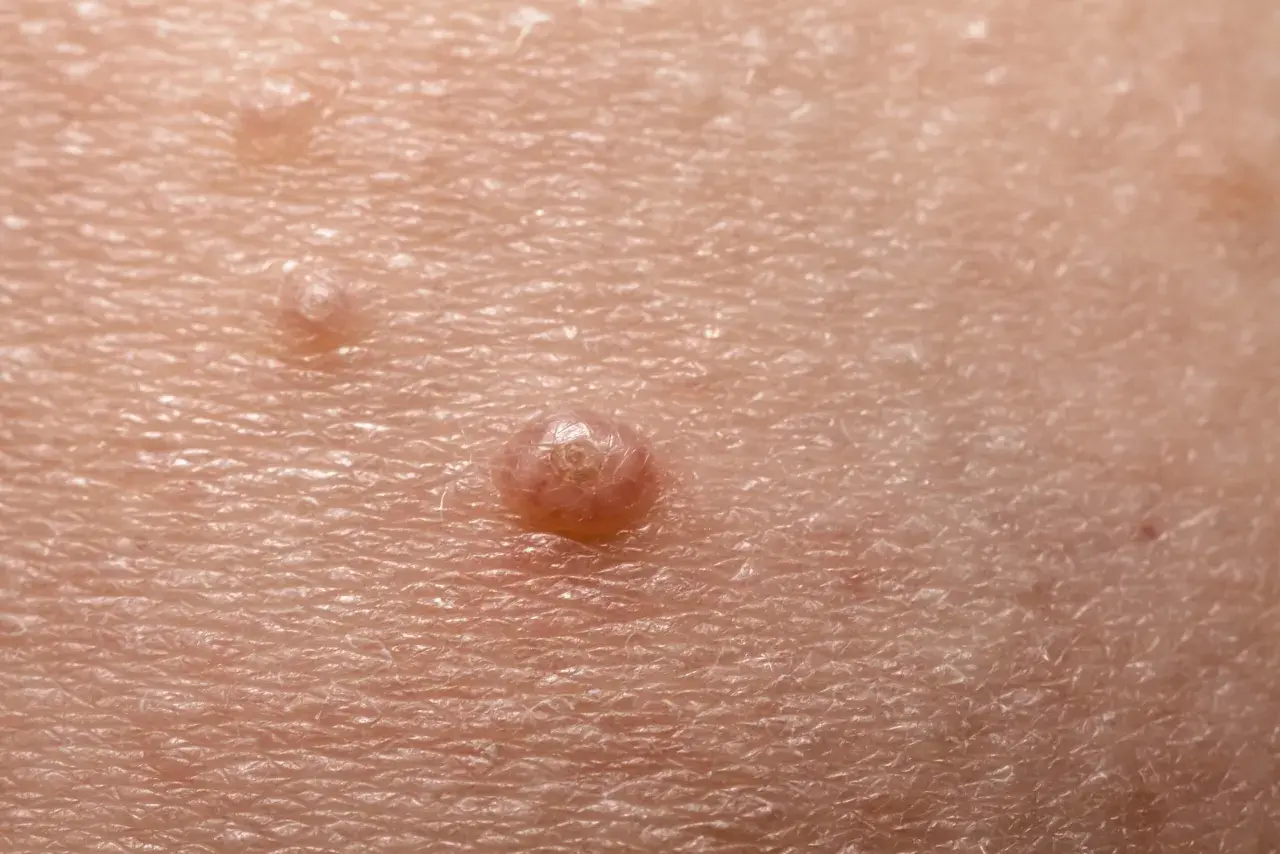
What matters most for swimmers with molluscum
- Chlorine is not a treatment for molluscum lesions and should not be used as one.
- The bigger spread risk in pools is usually skin contact and shared equipment.
- Covered lesions and good towel discipline matter more than the water itself.
- Skip swimming if the skin is open, crusted, painful, or infected.
- Most cases clear on their own, often within 18 months.
Why chlorine is not a reliable fix
Chlorine keeps pool water sanitary, but that is a different job from treating a virus living in the outer layers of skin. Molluscum contagiosum is caused by a poxvirus that sits inside bumps on the skin; pool chlorine does not reach into those lesions in a controlled, therapeutic way. Lab data suggest poxviruses can be susceptible to sodium hypochlorite at disinfectant-strength concentrations, but that is not the same thing as a swimmer sitting in chlorinated water and the infection disappearing.
I’d put it more plainly: chlorine may help with general pool hygiene, but it is not a cure for molluscum. If the lesions are still active, the practical questions are whether they are covered, whether the skin is intact, and whether swimmers are sharing towels or kit.
That distinction matters because people often assume “pool-safe water” means “virus-safe skin”, and those are not the same thing. The next step is understanding how the virus actually moves around swimming sessions.
How molluscum actually spreads around pools
Most pool-related cases are better explained by the behaviour around swimming than by the water itself. The virus can spread by direct contact with lesions or by contaminated items such as towels, kickboards, goggles, floats, and benches. The CDC notes that swimming-pool spread has been reported, but it has never been proven how it happens; it is more likely that shared items and close contact are the real route.
| Route | Why it matters | Practical risk |
|---|---|---|
| Skin-to-skin contact | Touching lesions can move virus to another person or to another body area | High in crowded lessons or contact sports |
| Shared towels and kit | Wet fabric and equipment can carry virus between swimmers | Moderate to high if items are shared |
| Pool water alone | Less convincing as a main route when the pool is properly managed | Lower than direct contact, but not something I would ignore in poor conditions |
The part people miss is scratching. If lesions are rubbed raw, the virus can spread to nearby skin and the area can become secondarily infected. That is why pool advice is usually about covering bumps and avoiding shared items, not about closing the pool.
Once you see it that way, the safest approach becomes much more practical: protect the skin barrier and reduce contact points, rather than hoping chlorine will do the heavy lifting.
How to swim safely if you have molluscum
When the skin is intact and the lesions are covered, many people can still swim. The NHS advises keeping the affected area covered, including with waterproof bandages if you go swimming. That is the approach I would take for club swimmers too: reduce friction, reduce sharing, and keep the bumps out of the line of contact.
| Do this | Avoid this | Why it helps |
|---|---|---|
| Cover each visible bump with a waterproof dressing or swimwear | Leaving lesions exposed in the water | Limits skin contact and reduces scratching |
| Use your own towel, goggles, kickboard, and pull buoy | Borrowing or lending pool kit | Stops fomite spread |
| Shower, dry gently, and re-cover lesions after swimming | Rubbing the skin hard with a shared towel | Protects irritated skin and cuts down spread |
| Check dressings stay sealed | Swimming with peeling or loose bandages | Loose dressings fail quickly in water |
For children, I am extra careful with armbands, goggles, floats, and lane ropes because those are exactly the things they grab repeatedly. If a dressing starts to slide after a few lengths, fix it rather than hoping it will hold for the rest of the session.
The one rule I would never bend is this: do not use chlorine or abrasive scrubbing as a shortcut. Neither removes the lesions safely, and both can irritate the skin enough to make spread more likely.
That said, there are times when the safest move is to sit the session out and let the skin settle first.
When you should skip the pool and call a GP
Not every case of molluscum needs treatment, but some situations do deserve a pause. If the spots are open, bleeding, crusted, very itchy, painful, or look infected, I would avoid the pool until they settle. Open skin can sting in chlorinated water, and the bigger problem is that broken lesions are easier to spread and easier to infect with common bacteria.
- Skip swimming if the bumps are open or have been scratched raw.
- Get medical advice if spots are near the eyes or genitals.
- Speak to a GP if the rash is spreading fast, unusually large, or not clearly molluscum.
- Be cautious if you have eczema, because dry, cracked skin makes spread easier.
- Seek advice sooner if the swimmer has a weakened immune system.
This is the point where I stop thinking about training schedules and start thinking about the skin barrier. In swimming, the skin is part of the system; once it is inflamed or broken, the odds of trouble rise quickly.
If the goal is to get rid of molluscum itself, the better answer is real treatment or watchful waiting, not stronger pool water.
Treatments that make more sense than chlorine
Molluscum is usually self-limiting. The NHS says it often clears within 18 months without treatment, and many cases resolve sooner. That is not always convenient, but it is a useful reminder that this is usually a harmless infection rather than a medical emergency.
If lesions are numerous, persistent, or socially disruptive, clinicians may use treatments such as cryotherapy or curettage, and sometimes other prescription approaches depending on age and skin location. The decision is usually about balancing speed against irritation and scarring risk. In a swimmer with eczema-prone skin, I tend to favour the least irritating effective option, because over-treating inflamed skin can create a bigger problem than the original spots.
I would be sceptical of any home remedy that promises to “burn out” the virus with acids, harsh soaps, or long chlorine soaks. Those approaches can damage healthy skin without reliably clearing the infection.
So the real choice is not between chlorine and no chlorine. It is between sensible skin care, sensible pool hygiene, and avoidable irritation.
The pool-side rule I would actually follow
So, does chlorine kill molluscum contagiosum? For a swimmer, the useful answer is no, not in a way you should rely on. Treat chlorine as one part of pool hygiene, not as a cure, not as a guarantee against spread, and definitely not as a reason to leave lesions uncovered.
- If bumps are covered, skin is intact, and kit is not shared, swimming is usually reasonable.
- If lesions are open, infected, or painful, skip the pool and get them checked.
- If molluscum keeps recurring in a squad or family, focus on towels, dressings, and shared equipment first.
That is the approach I trust: protect the skin, control contact, and use real treatment only when a clinician says it is worth doing.
